

Key Takeaways
-
A SIRS under Florida Statute 718.112 generally applies to residential condominium buildings three or more habitable stories tall, and must be obtained at least once every 10 years.
-
A SIRS plans long-term repairs and reserve funding, while a milestone inspection checks structural safety; they answer different questions and should not be treated as interchangeable.
-
The statute sets December 31, 2026 as an outside date for completing a SIRS, and a SIRS may be done alongside a milestone inspection due by then. Verify current statute text.
-
A SIRS must be performed or verified by a Florida-licensed engineer or architect, or a qualified reserve specialist as allowed by statute. Request license numbers and experience.
-
Confirm the statutory component list is fully covered in the report, including roof, waterproofing, fire protection, electrical systems, and windows and exterior doors.
-
Locate your certificate of occupancy date and measure distance from the coastline early, since these determine milestone inspection timing (25 years within three miles of the coast, otherwise 30).
Picture this: your condo board has a meeting on the calendar, a stack of notices on the table, and one big question hanging in the air. Do we need a structural integrity reserve study, a milestone inspection, or both? If that sounds familiar, take a breath. You are in good company, and you are asking the right question.
An Oakland Park structural integrity reserve study (SIRS) is one of the most talked-about compliance tasks for Florida condo associations in 2026. It is also one of the easiest to get wrong. Boards mix it up with milestone inspections. Some wait too long. Others hire the wrong professional or skip key building components.
The good news is that most of these mistakes are easy to avoid once you know what to watch for. In this friendly guide, we walk through 13 common slip-ups, explain how a SIRS differs from building recertification, and share simple steps to keep your building on track. We also remind you to verify current state law and local rules, since deadlines can change.
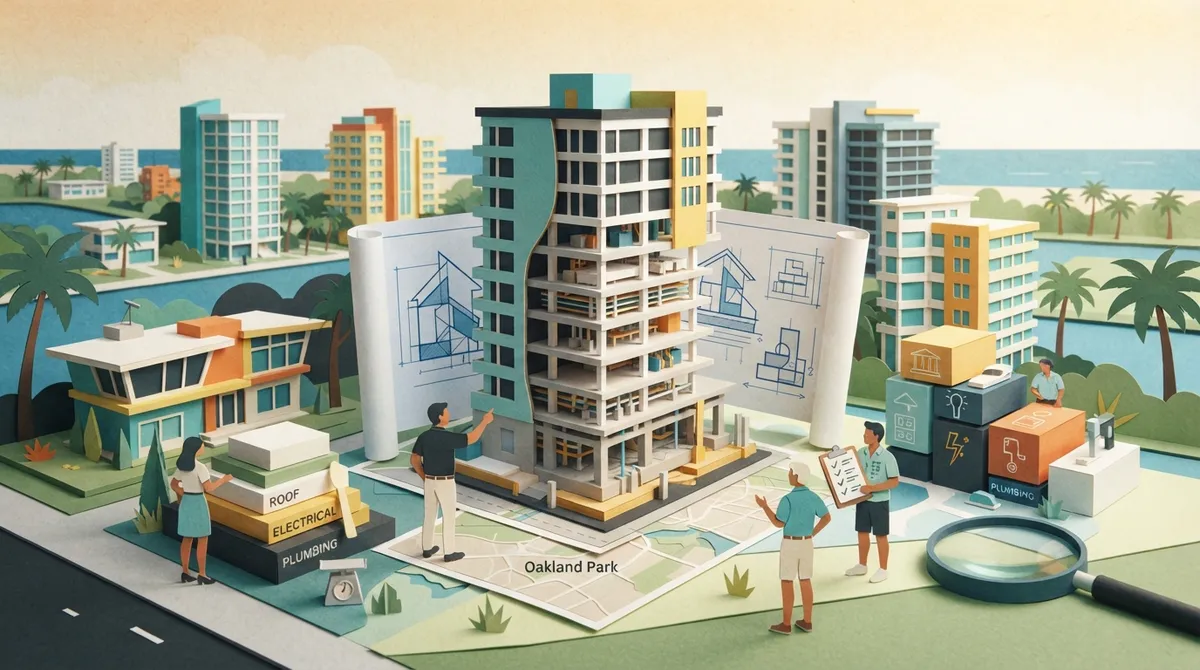
What Is a Structural Integrity Reserve Study in Oakland Park?
A SIRS is a Florida condominium requirement. It looks ahead at the big-ticket parts of your building and asks two simple questions. How long will each part last? And how much money should the association set aside to fix or replace it?
Under Florida Statute 718.112, a residential condominium association must obtain a SIRS at least once every 10 years for each building that is three or more habitable stories tall. Oakland Park sits in Broward County, and we did not find a separate Oakland Park SIRS program. The state rule is what drives the requirement for covered condos.
A SIRS is built on a visual inspection. It must identify each covered component, estimate its remaining useful life, estimate replacement cost or deferred-maintenance expense, and lay out a reserve funding plan. For a deeper local look, read what Oakland Park condos need to know about SIRS.
Components a SIRS Must Cover
The statute lists specific items. Boards should confirm the full, current list, but the core categories include:
- Roof
- Structure, including load-bearing walls and primary structural members
- Fire protection systems
- Plumbing
- Electrical systems
- Waterproofing and exterior painting
- Windows and exterior doors
- Any other item that costs more than $10,000 to replace and affects the items above, if required by statute
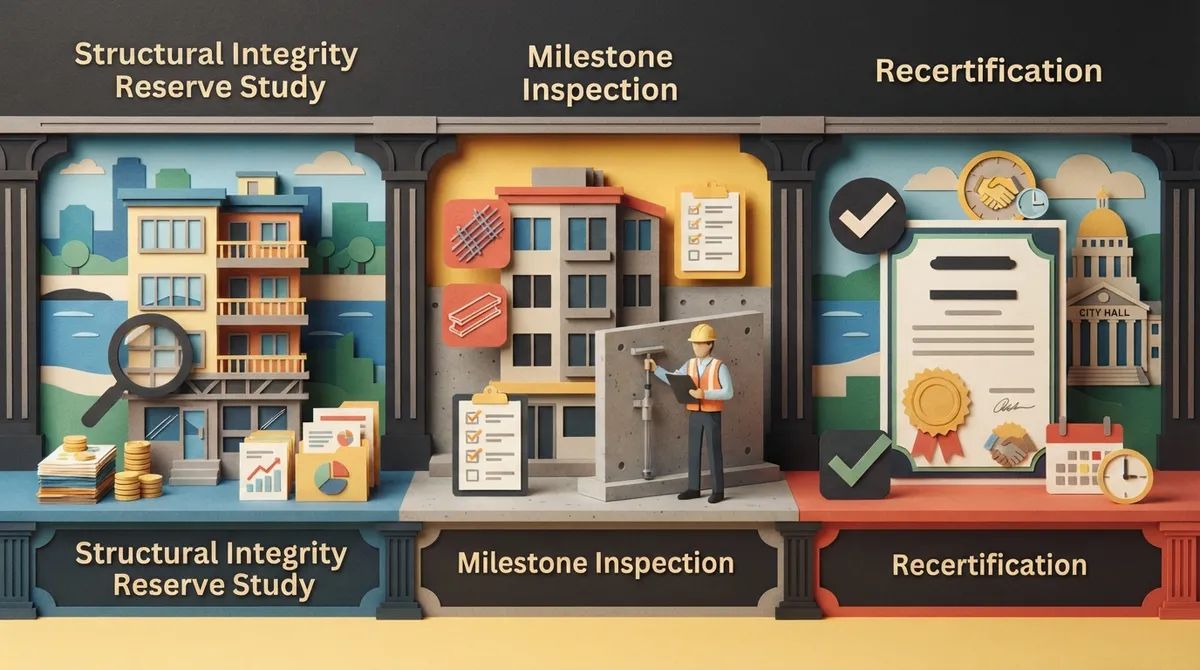
SIRS vs. Milestone Inspection vs. Recertification
Here is where many boards trip. These three processes are related, but they are not the same thing. Think of them as three different checkups from three different doctors.
| Process | Main Purpose | Who Performs It | Typical Timing |
|---|---|---|---|
| SIRS | Plan long-term repairs and reserve funding | Licensed engineer or architect, or qualified reserve specialist as allowed by statute | At least every 10 years for covered condo buildings |
| Milestone Inspection | Assess structural safety | Florida-licensed architect or engineer | Generally 30 years from certificate of occupancy, then every 10 years (25 years within three miles of the coast) |
| Local Recertification | Confirm building condition and safety under local rules | Licensed professional, per local requirements | Varies by city or county; confirm with the building department |
For a plain-English side-by-side, see our guide on SIRS vs. milestone inspection. If your board is also sorting out local rules, how Oakland Park building recertification works is a helpful read.
13 Oakland Park SIRS Mistakes to Avoid
1. Assuming Every Building Needs a SIRS
Not every property falls under the condo SIRS rule. The statute targets residential condominium buildings that are three or more habitable stories. Commercial buildings, rental apartments, and smaller condos may have different obligations. Check your building type first.
2. Treating a SIRS Like a Milestone Inspection
A SIRS plans money. A milestone inspection checks structural safety. They can share findings, but they answer different questions. Do not assume one replaces the other.
3. Skipping the Local Notice Check
Oakland Park or Broward County may send notices that apply on their own timeline. Call the city’s Building Division and confirm. Do not rely on a neighbor’s story or an old email.
4. Waiting Until the Last Minute
Florida’s statute sets December 31, 2026 as an outside date for completing a SIRS, and it allows a SIRS to be done at the same time as a milestone inspection due by that date. Please verify the current statutory text, since laws can be amended. Waiting leaves no room for delays, and qualified professionals get busy.
5. Hiring an Unqualified Provider
The visual inspection and study must be performed or verified by a Florida-licensed engineer or architect, or a qualified reserve specialist or professional as allowed by statute. Ask for license numbers and relevant experience. Our guide on choosing licensed building inspectors can help you ask the right questions.
6. Leaving Out Required Components
A study that skips the roof, waterproofing, or fire protection is incomplete. Use the statutory list as a checklist and confirm each item appears in the final report.
7. Forgetting the Certificate of Occupancy Date
Your CO date helps determine milestone timing. Dig it up early. Without it, you cannot know when your 25-year or 30-year trigger hits.
8. Ignoring Distance From the Coast
Buildings within three miles of the coastline generally face the earlier 25-year milestone trigger. Measure it. Do not guess.
9. Not Coordinating the Two Studies
If both a SIRS and a milestone inspection are due, doing them together can save time and cut duplicate site visits. Ask your provider whether they can coordinate the work.
10. Underfunding the Reserve Plan
A SIRS reserve plan only helps if the board follows it. Small, steady contributions beat sudden special assessments. Talk with your accountant or property manager about how to build the plan into the budget.
11. Overlooking Electrical and Life-Safety Items
Electrical systems and fire protection are on the statutory list for a reason. Older panels, wiring, and alarm systems deserve a careful look. See how to pass Oakland Park electrical safety inspections for more detail.
12. Keeping Owners in the Dark
Surprises upset people. Share timelines, costs, and findings in plain language. Residents who understand the why are far more supportive of the plan.
13. Filing the Report and Forgetting It
A SIRS is a living tool. Review it each year, update your budget, and track repairs. Filing it in a drawer wastes the whole effort.
Which Mistakes Matter Most for Each Property Type?
Different owners face different pressure points. Here is a quick look at how these mistakes tend to land.
- Condo association boards: Mixing up SIRS and milestone deadlines, and underfunding reserves.
- HOA property managers: Assuming a standard reserve study satisfies SIRS rules.
- Commercial property owners: Assuming the condo SIRS rule applies when local recertification may be the real requirement.
- Apartment building owners: Skipping a full assessment of structure, electrical, and life-safety systems.
- Real estate investment firms: Missing documents that lenders and insurers ask for during sales or refinancing.
If you manage an HOA, our article on Oakland Park HOA reserve studies explains how those studies differ from a SIRS.
A Simple 6-Step Plan for Your Oakland Park Building
Feeling a little overwhelmed? Here is an easy path to follow.
- Identify your building type. Confirm whether you are a residential condo, cooperative, commercial building, or apartment community.
- Gather key facts. Collect the number of habitable stories, certificate of occupancy date, and distance from the coast.
- Confirm notices and deadlines. Contact Oakland Park’s Building Division and check whether Broward County requirements also apply.
- Check the current statute text. Review Florida Statutes 718.112 and 553.899, since amendments can change deadlines.
- Hire a licensed professional. Look for a team experienced in both inspections and reserve planning.
- Act on the findings. Build the reserve plan into your budget and schedule repairs by priority.
If you want a broader look at the full process, our 8 key steps in the building recertification process gives a helpful overview.
Why Technology Matters for Inspections
Visual inspections are the foundation of both a SIRS and a milestone inspection. Better tools mean better visibility. Drones can safely scan roofs and tall facades without scaffolding. 3D laser scanning captures precise building geometry, which helps track movement and wear over time.
That kind of detail leads to sharper estimates and clearer reports. It also helps boards make smarter decisions about what to fix first. Curious about the structural side? Read about foundation cracks and hairline cracks in commercial buildings to see what inspectors look for.
How O’Reilly Consultants Can Help
You do not have to figure this out alone. O’Reilly Consultants is a small, specialized engineering team serving Broward and Miami-Dade Counties. We focus on building recertification and safety-focused inspections, and we guide you from the first county notice through final documentation.
Our team is led by owner and qualifying architect Sherard O’Reilly, supported by Construction Manager and Engineer Catalina Torres and Project Engineer Rafael Ojeda. Together, we handle structural, electrical, and illumination inspections, plus property condition assessments, SIRS, and HOA reserve studies. We use drones and 3D imaging to deliver fast, accurate evaluations and reports with clear, actionable recommendations.
Want to see what neighbors say? Visit us on Google — O’Reilly Consultants and read reviews from our Broward County clients.
Where to Look for Official Guidance
Rules differ from place to place, so it helps to see how other jurisdictions handle recertification. Miami-Dade County publishes helpful information on its building recertification program, and you can search Miami-Dade building recertification cases to understand how the process works. For Oakland Park specifically, always confirm details with the city’s Building Division and Broward County.
Wrapping Up: Stay Calm and Stay Ahead
An Oakland Park structural integrity reserve study does not have to be stressful. Know your building type, confirm your deadlines, hire qualified professionals, and keep your owners informed. Avoid the 13 mistakes above, and you will already be ahead of many boards.
Ready to take the next step? Request a free quote from O’Reilly Consultants, or call us at (512) 567-1191 and let us help you plan a smooth, on-time, low-stress process. Your building, your residents, and your budget will thank you.
FAQs
Q: Does Oakland Park require a structural integrity reserve study for every building?
A: No, and that is a common mix-up. The state SIRS rule generally applies to residential condominium buildings that are three or more habitable stories tall. Other building types may face different local recertification rules, so it is smart to confirm with Oakland Park’s Building Division.
Q: What is the difference between a SIRS and a milestone inspection?
A: A SIRS looks at long-term repair costs and reserve funding. A milestone inspection checks structural safety and is done by a licensed architect or engineer. They are related, but they answer different questions, and they can often be coordinated.
Q: Can a milestone inspection and SIRS be completed at the same time?
A: Yes, the statute allows an association with a milestone inspection due by December 31, 2026 to complete its SIRS at the same time. Doing both together can save time and avoid duplicate site visits. Always verify the current statutory text before relying on any deadline.
Q: Who is qualified to perform a SIRS in Florida?
A: The visual inspection and study must be performed or verified by a Florida-licensed engineer or architect, or a qualified reserve specialist or professional as allowed by statute. Ask for license details and relevant experience before you hire anyone.
Q: Where can Oakland Park owners confirm notices and deadlines?
A: Start with Oakland Park’s Building Division, and check whether Broward County requirements also apply. They can confirm your specific notice, deadline, and submission steps so you are never guessing.