
Key Takeaways
-
A SIRS is a reserve-planning study, not a recertification: it estimates remaining life and replacement costs for major components so boards can fund repairs over time.
-
Florida's SIRS generally applies to condo and co-op buildings at least three habitable stories high; check how parking, storage, or mechanical levels are counted before assuming you're exempt.
-
A SIRS must cover roof, structural systems, fireproofing, plumbing, electrical, waterproofing/painting, and windows/doors, plus certain additional items above a adjusted cost threshold.
-
A SIRS does not replace Pembroke Park's local Building Safety Inspection recertification, and a recertification report does not automatically satisfy SIRS requirements.
-
The visual inspection must be performed or verified by a Florida-licensed engineer or architect, or a certified reserve specialist or professional reserve analyst.
-
SIRS rules changed under Florida's 2025 HB 913; verify current deadlines, the 10-year update cycle, and the December 31, 2026 milestone-linked option before relying on them.
If you serve on a condo board in Pembroke Park, you have probably heard the letters SIRS more times than you can count lately. Maybe you have also heard words like milestone inspection and recertification, and wondered if they all mean the same thing. Take a deep breath. You are not alone, and the good news is that this is very manageable once you break it down.
A Pembroke Park structural integrity reserve study is a Florida planning tool that helps condo and co-op associations save the right amount of money for big building repairs. It looks at the major parts of your building, estimates how long they will last, and tells you what it will cost to fix or replace them. In this guide, we will walk through what a SIRS covers, who needs one, how it differs from local recertification, and how to get it done without the stress.
What Is a Structural Integrity Reserve Study?
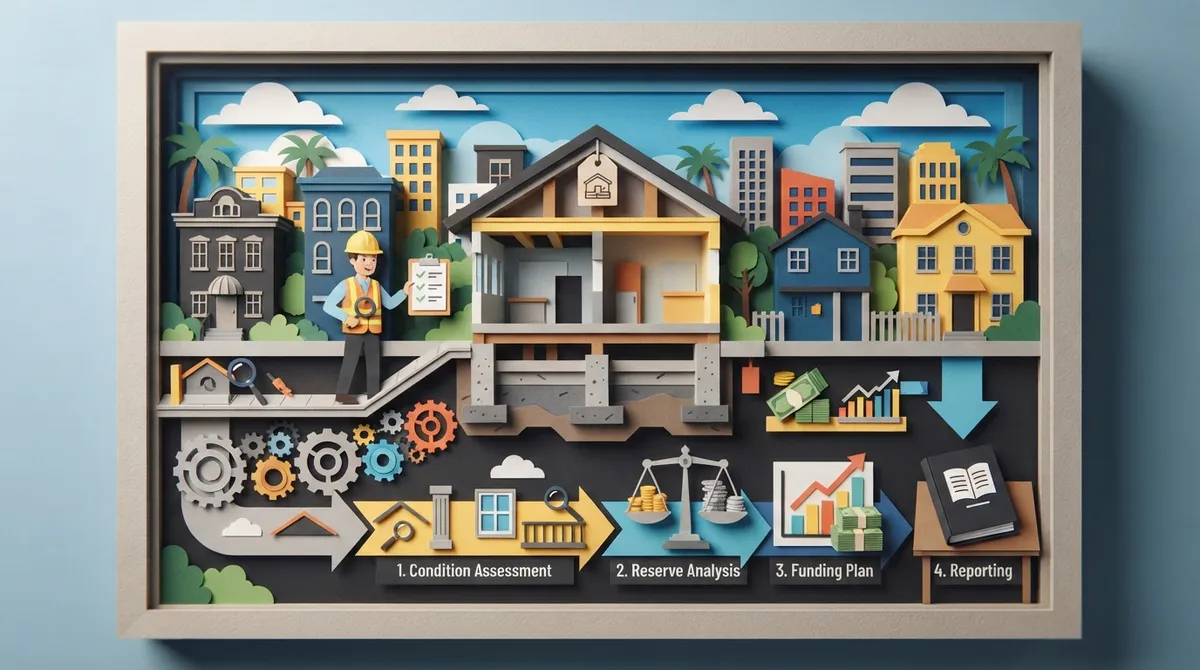
Think of a SIRS as a health checkup and savings plan for your building. A licensed professional looks at the key systems that keep your property safe. Then they estimate how many years each system has left and what it will cost to repair or replace it.
The goal is simple. Instead of facing a surprise bill that shocks every owner, your association can plan ahead and fund reserves over time. That protects residents, property values, and your board’s peace of mind.
A SIRS is a reserve-planning study. It is not the same thing as a building recertification or milestone inspection, even though the work can be coordinated. We will cover that difference in a moment.

Does Your Pembroke Park Building Need a SIRS?
Florida’s SIRS rule generally applies to condominium and cooperative buildings that are at least three habitable stories high. That means the building’s story count matters. Parking levels, storage areas, or mechanical floors may be treated differently, so it is smart to check how your building is configured before you assume you are in or out.
Here is a quick way to think about it:
- Condo or co-op associations: Buildings at least three habitable stories high are generally covered.
- Smaller buildings: Buildings under that threshold may not fall under the SIRS requirement, but you should confirm against the current Florida statutes.
- HOAs and single-family communities: These typically follow different reserve rules, though a standard reserve study is still a smart planning tool.
If you are not sure where your property stands, we have a helpful breakdown in our 9 Key Facts About Pembroke Park SIRS in 2026 article.
What Does a SIRS Have to Cover?
Florida sets a minimum list of building components that every SIRS must evaluate. The study reviews each one for remaining useful life and replacement cost.
- Roof: The covering, drainage, and related components.
- Structural systems: Load-bearing walls and other primary structural members.
- Fireproofing and fire protection systems: The systems that help protect residents during a fire.
- Plumbing: Major supply and drain systems in the common areas.
- Electrical systems: Main electrical components serving the building.
- Waterproofing and exterior painting: The barriers that keep water out and protect the surface.
- Windows and exterior doors: The building envelope openings.
- Additional items: Other components whose failure could affect the items above, when they meet the cost threshold.
That last item has a dollar threshold. Florida’s 2025 HB 913 analysis describes a $25,000 threshold for certain additional items, adjusted for inflation. One secondary source reports the adjusted 2026 figure as $25,675. Please verify the current number with the statute or Florida DBPR guidance before you finalize your scope.
SIRS vs. Milestone Inspection vs. Recertification
This is where most boards get tangled up. These three things sound alike, but they do different jobs. Here is a simple side-by-side view.
| Item | Main Purpose | Who It Helps Most |
|---|---|---|
| SIRS | Plans reserve funding for major building components | Condo and co-op boards managing budgets |
| Milestone Inspection | Checks a building’s structural condition at a set age | Owners and residents concerned about safety |
| Local Recertification (Pembroke Park Building Safety Inspection Program) | Confirms structural and electrical safety under local rules | Property owners meeting Town requirements |
The key takeaway is this: a SIRS does not replace a required structural recertification inspection. And a recertification report does not automatically satisfy SIRS requirements. They are related, but each has its own rules and paperwork.
If you want a deeper look at how these differ, read our guide on SIRS vs. Milestone Inspection: Which Does Your Condo Need?
How Pembroke Park’s Building Safety Inspection Program Fits In
Pembroke Park runs its own Building Safety Inspection Program. It is a separate local process from the state SIRS requirement. The Town’s April 2026 application packet lists an initial 25-year inspection, then later inspection categories at 35, 40, 50, and 60 years. You should confirm the exact cycle for your specific building with the Town.
The packet also calls for several documents, including:
- Structural and electrical inspection forms
- A property appraiser report
- An architect or structural engineer cover letter
The Town lists a $350 building-department review fee for the report package. That is a local review fee only. It is not the cost of a SIRS or the cost of hiring a professional to perform the inspection.
For more on the local side of things, check out our 15 Facts About Pembroke Park Milestone Inspections. You can also learn why wiring and power systems matter so much in Why Are Electrical Safety Inspections Critical in Pembroke Park?
Florida SIRS Deadlines You Should Know
Deadlines have shifted in recent years, so this is an area where it pays to double-check. Florida’s 2025 HB 913 changed parts of the SIRS rules and timelines.
Here is the general picture based on current research:
- A general December 31, 2025 deadline applied to certain existing owner-controlled associations.
- A limited option exists to complete the SIRS together with a qualifying milestone inspection due on or before December 31, 2026.
- Covered buildings generally need an updated SIRS at least every 10 years.
Because this is 2026, many boards are either catching up or planning their next steps. Please verify the current statutory text and your association’s eligibility before relying on any extension. When in doubt, ask a qualified professional or your association’s attorney.
Who Is Allowed to Perform a SIRS?
Not just anyone can sign off on this work. The visual inspection portion must be performed or verified by one of the following:
- A Florida-licensed engineer
- A Florida-licensed architect
- A reserve specialist or professional reserve analyst with the proper certification
Choosing the right professional matters. A careful inspector gives your board a report you can trust and use. Our guide on how to choose licensed building inspectors for recertification walks you through what to look for.
Can You Combine a SIRS With Recertification Work?
Yes, in many cases the work can be coordinated. Doing it together can save time because the inspector may already be on site reviewing structural and electrical systems. It can also help your board see the full picture of the building’s condition in one planning cycle.
Just remember that each report still has its own purpose and filing path. Coordination does not mean one report replaces the other. A smart schedule can reduce disruption for residents and cut down on repeated site visits.
Technology Makes the Process Faster and Clearer
Modern tools have changed how building assessments are done. At O’Reilly Consultants, we use advanced technology like drones and 3D laser scanning to see areas that are hard or risky to reach by hand. Drones can capture roof and facade conditions quickly. 3D scanning creates accurate records of the building.
For your board, that means faster evaluations, clearer photos, and more precise reports. You get detailed findings and practical recommendations instead of vague notes. That makes budgeting and repair planning much easier.
Simple Steps to Get Your SIRS Done
Here is an easy roadmap for your board to follow:
- Confirm your status. Check whether your building meets the three-habitable-story rule and review current deadlines.
- Gather your documents. Collect past reserve studies, plans, repair records, and inspection reports.
- Hire a qualified professional. Choose a licensed engineer, architect, or certified reserve specialist.
- Schedule the site visit. Coordinate access with your property manager and notify residents.
- Review the findings. Go over remaining life estimates and cost projections with your board.
- Update your budget. Adjust reserve contributions so you can fund the work over time.
- Plan repairs. Prioritize urgent items first, then schedule the rest.
Our 8 Key Steps in the Building Recertification Process is a handy companion if you are also handling local inspections.
Common Mistakes to Avoid
Boards often run into the same few problems. Watching for them can save you money and headaches.
- Mixing up the reports. Treating a SIRS and a recertification as the same thing can leave you out of compliance.
- Waiting too long. Deadlines move quickly, and good professionals book up fast.
- Skipping the budget follow-up. A study only helps if you actually adjust your reserve funding.
- Hiring an unqualified provider. The wrong credentials can mean a report that does not count.
For related reading, see our article on 5 PCA Mistakes Pembroke Park Building Owners Must Avoid.
Why Boards Choose O’Reilly Consultants
O’Reilly Consultants is a small, highly specialized engineering team serving Broward and Miami-Dade Counties. We focus on building recertification and safety-focused inspections, so this is what we do every day. Our work is led by owner and qualifying architect Sherard O’Reilly, supported by Construction Manager and Engineer Catalina Torres, who brings 27 years of civil engineering and construction management experience.
We guide you through the whole process, from understanding what you need to submitting the right documents on time. We also offer related services like electrical safety inspections, property condition assessments, and HOA reserve studies, so you can handle everything with one trusted team. If you would like to learn more about who we are, visit our About O’Reilly Consultants page. You can also see what our customers say when you visit our O’Reilly Consultants profile on Google.
For official background on how recertification works in the region, Miami-Dade County provides helpful resources on its building recertification page, and you can use the county’s tool to search Miami-Dade building recertification cases.
Final Thoughts
A Pembroke Park structural integrity reserve study is one of the best ways to protect your building and your neighbors from surprise costs. It gives your board clear numbers, a clear plan, and the confidence to make smart decisions. Pair it with your local recertification work, and you will be in strong shape for the years ahead.
Ready to take the next step? Request a free quote from our team today, or call us at (512) 567-1191 to talk through your building’s needs. We would love to help you get compliant and stay that way.
FAQs
Q: Does my Pembroke Park condo or co-op need a structural integrity reserve study?
A: Most likely, if your building is at least three habitable stories high. Parking, storage, or mechanical levels may be treated differently, so check your building’s setup against the current Florida statutes. A quick call with a qualified professional can clear it up fast.
Q: What is the difference between a SIRS and Pembroke Park building recertification?
A: A SIRS is a reserve-planning study that estimates repair costs and helps you fund them. Recertification is a local safety inspection under the Town’s Building Safety Inspection Program. They can be coordinated, but one does not replace the other.
Q: Who can perform a SIRS in Florida?
A: The visual inspection must be performed or verified by a Florida-licensed engineer or architect, or a certified reserve specialist or professional reserve analyst. Picking someone with the right credentials helps make sure your report is accepted.
Q: How often does a SIRS need to be updated?
A: Covered condo and co-op buildings generally need a new SIRS at least every 10 years. Deadlines and extensions have changed recently, so always confirm the current rules for your association.
Q: Can a recertification inspection and SIRS be done together?
A: Yes, the work can often be coordinated to save time and reduce repeat site visits. A limited extension may also apply when a SIRS is completed with a qualifying milestone inspection due by December 31, 2026. Verify your eligibility before relying on it.