Key Takeaways
-
Hire only licensed Professional Engineers or Registered Architects for building recertification; general home inspectors’ reports will not be accepted by Miami-Dade or Broward County regardless of thoroughness.
-
Coastal buildings require recertification at 25 years old, inland buildings at 30-40 years old, then every 10 years thereafter; missing the 90-day deadline triggers fines, liens, and potential building closure orders.
-
Recertification requires two separate detailed reports from licensed engineers: one for structural integrity and one for electrical systems, with thermal imaging required for buildings with 400+ amp service.
-
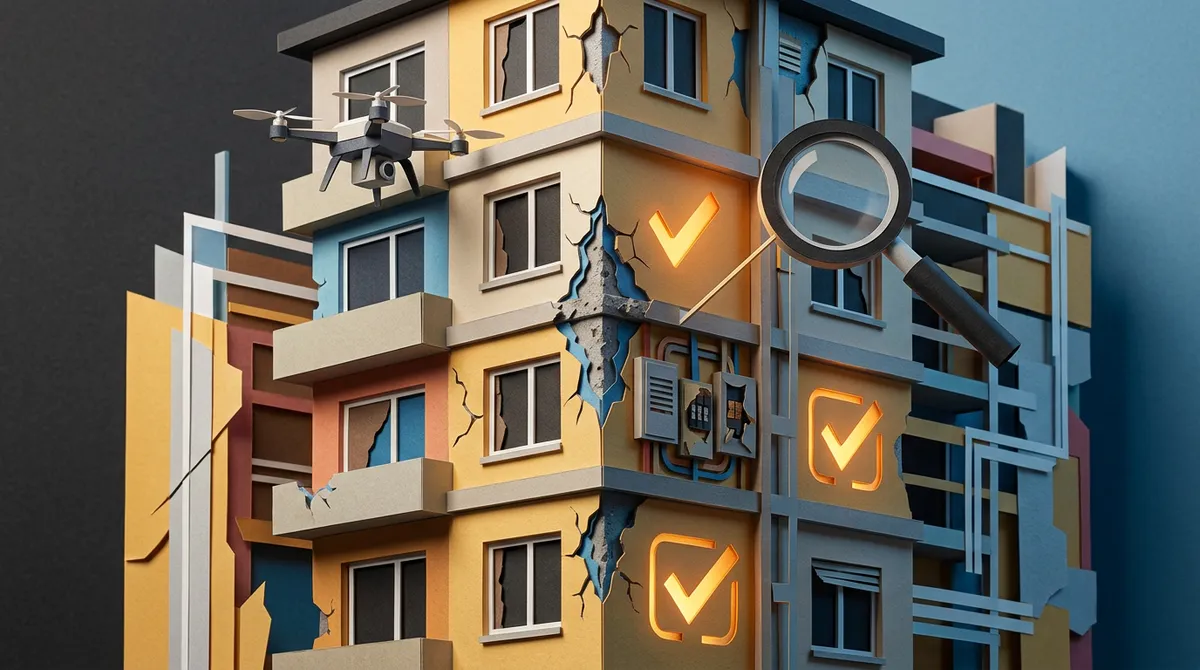
Common deficiencies include concrete spalling, electrical panel deterioration, façade cracks, balcony failures, and roof drainage issues; early detection through certified inspection prevents serious safety hazards.
-
Certified inspectors use advanced technology like drones and 3D laser scanning to evaluate hard-to-reach areas, providing faster and more accurate assessments than general inspections.
-
Non-compliance can trigger insurance problems, affect property values, and make refinancing or selling property significantly harder for commercial owners and real estate investors.
If you’ve received a notice from Miami-Dade or Broward County saying your building needs recertification, your first big question is probably: Who do I hire? It’s a fair question — and the answer matters more than you might think. Choosing the wrong inspector can lead to rejected reports, missed deadlines, and costly penalties. Choosing the right one means peace of mind, a smooth process, and a building that’s safe for everyone inside. In this guide, we’ll break down the difference between certified building inspectors who specialize in recertification and general home inspectors. By the end, you’ll know exactly who you need — and why it matters so much for your property in South Florida.

What Is Building Recertification — and Why Does It Require Special Inspectors?
Building recertification is a mandatory safety process required by local governments in Miami-Dade and Broward Counties. When a building reaches a certain age, the county sends a notice requiring the property owner to prove the structure is still safe and up to code. This isn’t a routine checkup — it’s a legal requirement with real deadlines and real consequences.
For coastal buildings within 3 miles of the shoreline, the first recertification is required at 25 years old. Inland buildings typically face their first recertification at 30 to 40 years old. After that, every building must be recertified every 10 years for its entire lifespan. You can learn more about the specifics of this process through the Miami-Dade County Recertification official guidelines.
The recertification process requires two separate, detailed reports — one for structural integrity and one for electrical systems. Each report must be prepared by a licensed engineer in that specific field. This is very different from what a general home inspector does, and that distinction is critical.

Certified Building Inspectors vs. General Home Inspectors: The Core Differences
Let’s get right to the heart of the comparison. A general home inspector is trained to assess everyday home conditions — leaky roofs, broken fixtures, HVAC basics. They’re great for buyers and sellers in residential real estate. But for building recertification? They simply don’t qualify.
Certified building inspectors for recertification work are licensed Professional Engineers (PEs) or Registered Architects. For buildings three stories or taller, a qualified Structural Engineer is specifically required by law. This isn’t just a preference — it’s a code requirement that county officials enforce strictly.
Here’s a clear side-by-side comparison to help you understand the difference:
| Feature | Certified Recertification Inspector (PE/Architect) | General Home Inspector |
|---|---|---|
| License Required | Professional Engineer or Registered Architect | Home Inspector License (state-level) |
| Recertification Qualified? | Yes — legally authorized | No — reports not accepted by county |
| Structural Report | Yes — detailed engineering analysis | No — limited visual observations only |
| Electrical Report | Yes — completed by licensed electrical engineer | No — not within scope |
| Thermal Imaging (400A+ systems) | Yes — Level II Infrared Thermographer used | Rarely — not standard practice |
| Advanced Tools (Drones, 3D Scanning) | Yes — used by specialized firms | Rarely used |
| Report Accepted by Miami-Dade/Broward | Yes | No |
The bottom line is simple: if your building needs recertification, you need a certified building inspector with the proper engineering credentials. A general inspector’s report will not satisfy the county’s requirements — no matter how thorough it is.
What Certified Building Inspectors Actually Examine
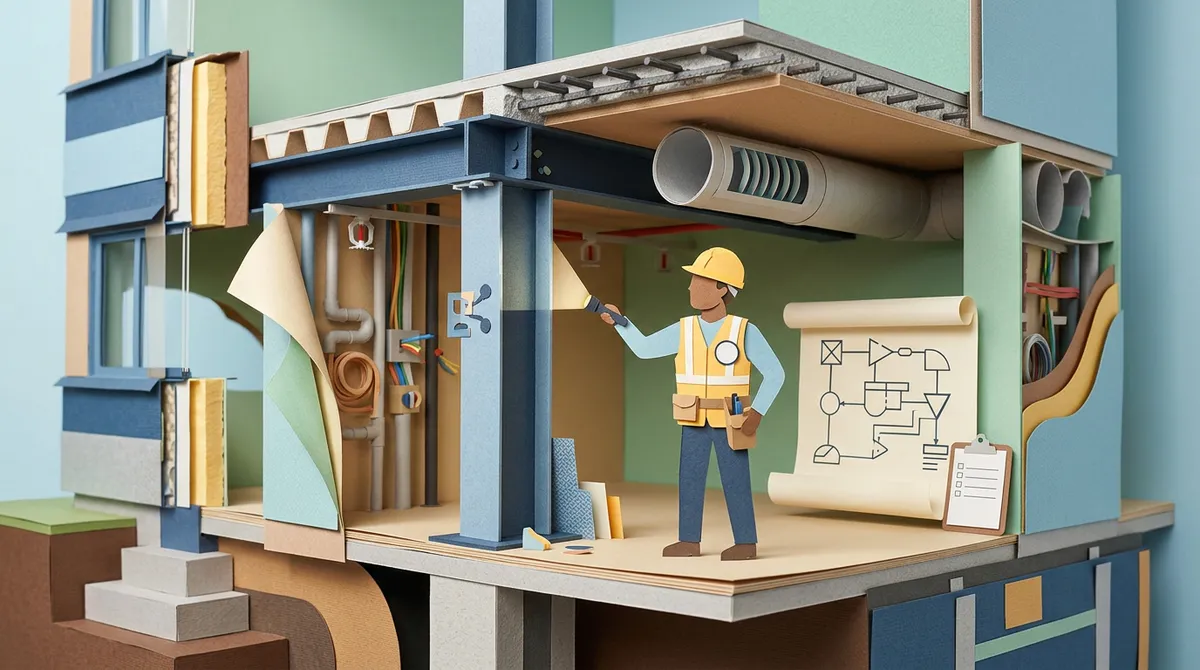
Certified building inspectors go deep when it comes to recertification. Their evaluations cover systems and components that affect the safety of every person in your building. Here’s what a thorough recertification inspection typically includes:
Structural Inspection Areas:
- Foundations and footings for settlement or cracking
- Load-bearing columns, beams, and slabs
- Exterior façades and cladding systems
- Balconies, railings, and elevated walkways
- Roof structure and drainage systems
- Evidence of water intrusion or corrosion
If you’ve ever wondered what causes cracks in older buildings, it’s worth reading about understanding foundation cracks and hairline cracks in commercial buildings — it’s more common than you’d expect, and early detection is everything.
Electrical Inspection Areas:
- Electrical panels and main service equipment
- Wiring conditions throughout the building
- Grounding and bonding systems
- Emergency lighting and exit systems
- Compliance with current electrical codes
For buildings with electrical service of 400 amps or greater, a Level II Certified Infrared Thermographer must perform thermal imaging to detect hidden electrical problems before they become dangerous. This is a specialized requirement that only certified inspectors can fulfill.

The 3-Step Recertification Process: What Certified Inspectors Guide You Through
One of the biggest advantages of working with certified building inspectors is that they don’t just hand you a report and walk away. They guide you through the entire process. Here’s how it typically works:
- Receive Your County Notice: Miami-Dade or Broward County sends your property a Notice of Required Recertification. From that date, you have 90 days to submit your inspection reports. Some jurisdictions offer a one-time extension of up to 60 days if requested in advance.
- Schedule Your Certified Inspections: A licensed Structural Engineer inspects the building’s physical components. A licensed Electrical Engineer assesses all electrical systems. Both prepare official reports that meet county formatting and content standards. You can search Miami-Dade Building Recertification Cases online to check your building’s status and deadlines.
- Submit Reports and Complete Repairs: Reports are submitted to the county building department. If deficiencies are found, the inspector identifies what needs to be corrected and by when. After repairs are completed, a follow-up inspection may be required to confirm compliance.
Missing that 90-day window can result in fines, liens, and even building closure orders. That’s why working with experienced certified building inspectors — who know the local requirements inside and out — makes such a difference.
Which Buildings Must Be Recertified?
Not every building in South Florida falls under the same recertification rules. Here’s a quick overview of who needs to pay attention:
- Coastal buildings (within 3 miles of the coast): First recertification at 25 years old
- Inland buildings: First recertification at 30–40 years old, depending on municipality
- All recertified buildings: Re-inspection required every 10 years after the initial recertification
- Commercial high-rises and older structures: Some may require review every 5 years
- Exemptions in Miami-Dade County: Single-family homes, duplexes, and buildings with 10 or fewer occupants and 2,000 sq ft or less are typically exempt from 40-year requirements
For a deeper look at why this process matters so much for your property’s long-term value and safety, check out this article on the importance of 40-year building recertification for property longevity.
Why Condo Boards, HOAs, and Commercial Owners Trust Specialized Firms
For condo association boards, HOA property managers, apartment building owners, and commercial real estate investors, the stakes of building recertification are especially high. A missed deadline or a rejected report doesn’t just create paperwork — it can trigger insurance issues, affect property values, and put residents at risk.
That’s why so many property stakeholders across Broward and Miami-Dade Counties turn to specialized firms with certified building inspectors who live and breathe this work. O’Reilly Consultants is one such firm — a small, highly specialized engineering team led by qualifying architect Sherard O’Reilly, with over 27 years of civil engineering experience through Construction Manager & Engineer Catalina Torres, and Project Engineer Rafael Ojeda bringing 16+ years in environmental due diligence across South Florida.
Their team uses advanced technology — including drones and 3D laser scanning — to evaluate hard-to-reach areas with precision. This means faster assessments, more accurate findings, and detailed reports that meet and exceed county standards. Whether you manage a high-rise condo, a commercial office tower, or a multi-family apartment complex, their team provides structural, electrical, and illumination inspections, plus property condition assessments, SIRS reports, and HOA reserve studies.
It’s worth noting that well-maintained properties extend beyond buildings alone — property managers who also work with service partners like All Trusted Lawn Care understand how curb appeal and site conditions contribute to the overall condition of a property during assessments.
Common Deficiencies Found During Recertification Inspections
Certified building inspectors are trained to spot problems that aren’t always visible to the untrained eye. Here are the most common issues they find during recertification inspections:
- Concrete spalling and corrosion of rebar — especially common in coastal buildings exposed to salt air
- Electrical panel deterioration — aging panels that no longer meet current code requirements
- Façade cracks and water infiltration — which can signal deeper structural issues over time
- Balcony and railing failures — one of the most cited safety hazards in older multi-family buildings
- Roof drainage deficiencies — improper slope or blocked drains leading to ponding and structural stress
Catching these issues early — before they become serious safety hazards — is exactly why building recertification exists. You can see a full list of 40-year recertification requirements to better understand what inspectors are looking for in older buildings.
What Happens If You Skip or Delay Recertification?
The consequences of ignoring a recertification notice are serious. Local building officials in Miami-Dade and Broward Counties have the authority to:
- Issue financial penalties and daily fines for non-compliance
- Place liens on the property that affect its title and sale-ability
- Order the building to be vacated if it’s deemed unsafe
- Require emergency inspections at the owner’s expense
For real estate investment firms and commercial property owners, non-compliance can also trigger problems with lenders and insurers — making refinancing or selling the property much harder. Don’t let a missed deadline derail your investment. Reach out early, hire the right certified building inspectors, and stay ahead of the process.
Making the Right Choice for Your Building
By now, the answer to the central question is clear. When it comes to building recertification in South Florida, a general home inspector simply isn’t the right tool for the job. You need certified building inspectors — licensed Professional Engineers or Architects with specific experience in structural and electrical assessments for recertification.
The right team will know local county requirements inside and out. They’ll use the right tools to evaluate every inch of your building. They’ll prepare reports that satisfy the county on the first submission. And they’ll guide you through the entire process — from the initial notice to final compliance — without unnecessary stress or confusion.
You can also visit O’Reilly Consultants on Google to see what property owners and managers across South Florida are saying about their recertification experience.
Don’t wait until the deadline is looming over you. Whether your building is approaching its 25-year, 30-year, or 40-year recertification milestone, now is the best time to get started. Request your free recertification consultation today and get the expert guidance your building deserves.
FAQs
Q: Can a general home inspector complete a building recertification inspection?
A: Unfortunately, no — and this is a really important distinction! General home inspectors are not licensed Professional Engineers or Architects, which means their reports won’t be accepted by Miami-Dade or Broward County for recertification purposes. You’ll need a certified building inspector with the proper engineering credentials to satisfy the county’s requirements.
Q: How often do certified building inspectors need to recertify a building?
A: After the initial recertification (which happens at 25, 30, or 40 years depending on the building’s location and age), every building must be reinspected every 10 years for its entire lifespan. Some commercial high-rises and older structures may require inspections as frequently as every 5 years — so it’s smart to stay ahead of your schedule!
Q: What qualifications do certified building inspectors need for recertification work in Florida?
A: Certified building inspectors performing recertification work must be licensed Professional Engineers (PEs) or Registered Architects in the state of Florida. For buildings three stories or taller, a qualified Structural Engineer is specifically required by law — and for electrical systems on buildings with 400-amp service or greater, a Level II Certified Infrared Thermographer must also be involved.
Q: What happens if I miss the 90-day deadline to submit my recertification report?
A: Missing the 90-day deadline can lead to financial penalties, daily fines, and even liens on your property — which makes selling or refinancing really tricky. In serious cases, county officials can order a building to be vacated if it’s considered unsafe. The good news is that some municipalities offer a one-time extension of up to 60 days if you request it in advance!
Q: What types of buildings are exempt from recertification requirements in Miami-Dade County?
A: In Miami-Dade County, single-family homes, duplexes, and buildings with 10 or fewer occupants that are 2,000 square feet or less are typically exempt from the 40-year recertification requirement. That said, it’s always a great idea to confirm your specific building’s status with the county or a certified building inspector — rules can vary by municipality!