
Key Takeaways
-
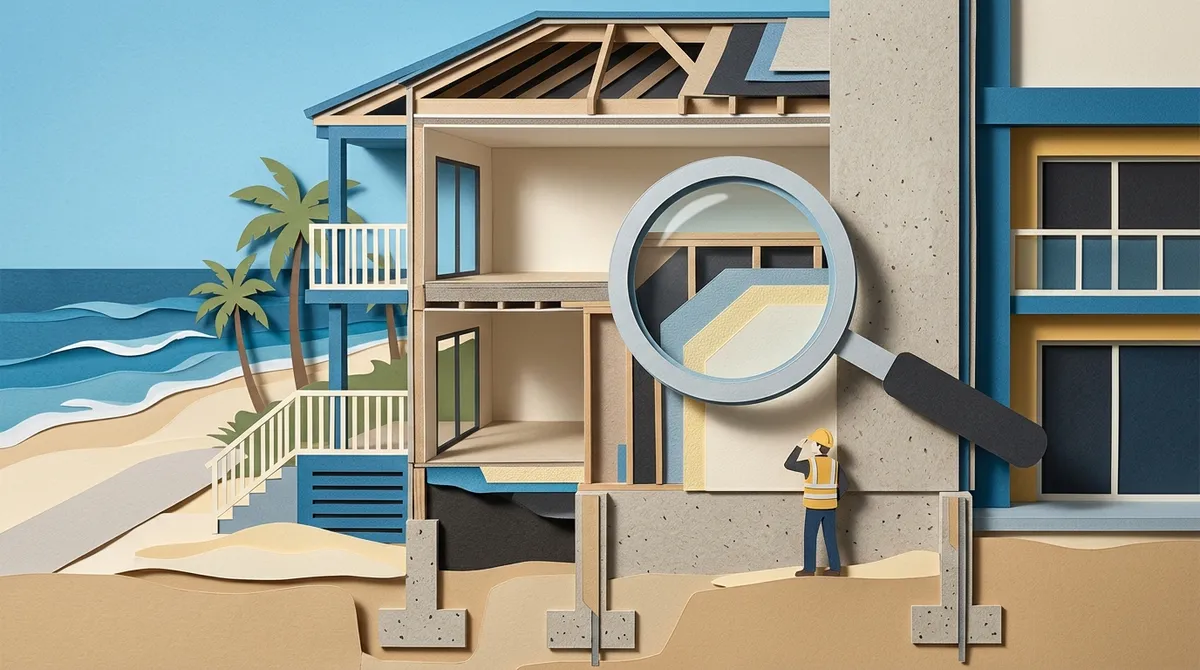
Florida law requires all condo buildings with 3+ habitable stories to complete a SIRS by December 31, 2025; non-compliance carries fines up to $15,000 from DBPR.
-
Unlike traditional reserve studies, SIRS funding cannot be waived—associations must set aside full amounts for repairs to the 8 mandated structural components.
-
SIRS must be performed by a licensed engineer or architect with mandatory on-site visual inspection; findings directly impact building recertification status and insurance eligibility.
-
Coastal exposure in Lauderdale-by-the-Sea accelerates wear on roofs, waterproofing, and exterior systems—exactly what SIRS focuses on—making studies essential for property longevity.
-
HB 913 (2025) extended deadlines, linked SIRS to milestone repairs, required conflict-of-interest disclosures, and clarified the $25,000 threshold for components requiring inclusion.
-
SIRS findings must be incorporated into annual budgets immediately and reported to DBPR online portal; missing documentation delays real estate transactions and raises red flags for buyers.
If you own or manage a condo building in Lauderdale-by-the-Sea, you’ve probably heard the term Structural Integrity Reserve Study (SIRS) floating around a lot lately. And honestly, it’s something you really need to pay attention to. After the tragic Surfside collapse in 2021, Florida lawmakers stepped up with sweeping new safety laws. The result? Every qualifying condo association must now complete a SIRS — a detailed engineering study that evaluates critical structural components and maps out how to fund their future repair or replacement. This isn’t just a paperwork exercise. It’s a serious safety and financial planning tool that directly affects your building’s recertification status, your residents’ safety, and your association’s bottom line. In this guide, we’ll walk you through everything you need to know about Lauderdale-by-the-Sea Structural Integrity Reserve Studies — from what they cover to how to get yours done right.

What Is a Structural Integrity Reserve Study (SIRS)?
A Structural Integrity Reserve Study is a mandated engineering assessment required under Florida law. It focuses on two things: evaluating the physical condition of your building’s most critical components, and creating a funding plan to cover future repairs or replacements. Think of it as a financial roadmap for your building’s long-term health.
Unlike a traditional reserve study, a SIRS has strict rules. You cannot waive full funding. The law requires associations to actually set aside the money — no shortcuts. This is one of the most important distinctions condo boards in Lauderdale-by-the-Sea need to understand. If you want to dig deeper into how these studies connect to the broader inspection process, check out this helpful overview of building inspection services and recertification.
Who Needs a SIRS in Lauderdale-by-the-Sea?
Florida law requires a SIRS for all condominium and co-op buildings with three or more habitable stories. If your association existed before July 1, 2022, the deadline to complete your initial study was extended to December 31, 2025, thanks to HB 913 passed in 2025. After that, studies must be updated every 10 years.
Lauderdale-by-the-Sea is packed with coastal high-rises and multi-story condo buildings — many of which fall squarely into this requirement. Whether you’re managing a beachfront tower or a smaller three-story complex, if your building meets the threshold, you need a SIRS. You can also learn more about building inspections in 2026 to understand how SIRS fits into the bigger picture.
Quick Eligibility Checklist
- Condominium or co-op building structure
- Three or more habitable stories above ground
- Association existed before July 1, 2022 (initial deadline: December 31, 2025)
- New associations after July 1, 2022 must complete within 3 years of turnover
- Studies must be updated every 10 years thereafter
- Non-compliance can result in fines up to $15,000 from the Florida DBPR
What Does a SIRS Actually Inspect?
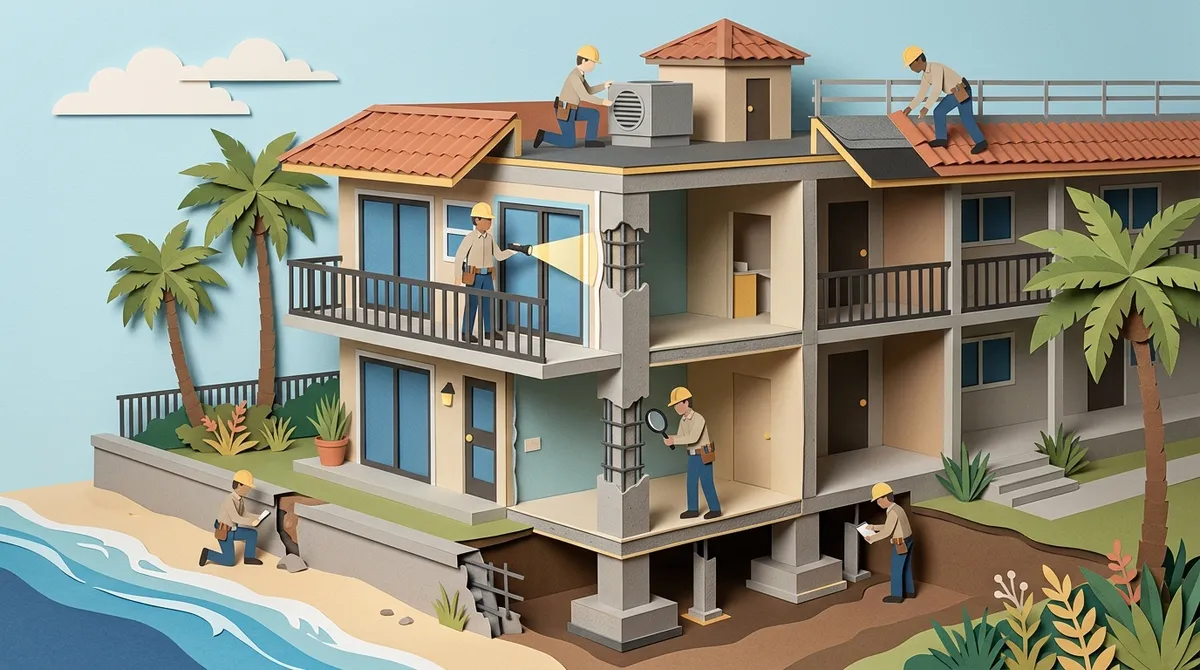
This is where it gets really specific. Florida law outlines the exact structural components that a SIRS must cover. These aren’t just general building features — they’re the elements most critical to a building’s long-term safety and structural soundness.
Understanding what’s included helps boards and property managers prepare for the inspection process. For a broader look at what goes into a full building assessment, this guide on what a commercial building inspection covers is a great resource.
The 8 Required SIRS Components
- Roof: Condition, remaining useful life, and projected replacement cost.
- Load-bearing walls and primary structural members: Evaluation of columns, beams, and structural supports.
- Floor and ceiling systems: Inspection of structural floor decks and overhead systems.
- Foundation: Assessment of the building’s base structural system. Learn more about foundation cracks and structural risks.
- Fireproofing and fire protection systems: Review of passive and active fire safety components.
- Plumbing: Common area plumbing and drainage systems.
- Electrical systems: Shared electrical infrastructure and systems.
- Waterproofing and exterior painting: Includes windows, exterior doors, and moisture barriers.
Additionally, any other item with a deferred maintenance cost exceeding $25,000 (or the adjusted DBPR threshold) that affects structural integrity must also be included in the study.

SIRS vs. Traditional Reserve Study: Key Differences
Many condo boards already have a traditional reserve study in place. So what’s different about a SIRS? Quite a bit, actually. The table below breaks down the key distinctions so you can see exactly where SIRS raises the bar.
| Feature | Traditional Reserve Study | SIRS (Florida Law) |
|---|---|---|
| Who performs it | Reserve specialist or accountant | Licensed engineer, architect, or Reserve Specialist with on-site visual inspection |
| Components covered | General common elements | 8 specific structural components (mandatory) |
| Funding waiver allowed | Yes, with owner vote | No — full funding is required by law |
| On-site inspection required | Not always | Yes — visual on-site inspection is mandatory |
| Reporting to state | Not required | Required via DBPR online portal by October 1, 2025 |
| Update frequency | Varies | Every 10 years (Florida Statute 718.112) |
As you can see, a SIRS is significantly more rigorous. It’s also directly connected to your building’s 40-year recertification obligations, which means staying on top of your SIRS keeps your building compliant on multiple fronts.
How SIRS Connects to Building Recertification
Here’s something many condo associations don’t realize right away: your SIRS findings and your building recertification process are deeply intertwined. Florida’s milestone inspection program (which requires structural and electrical inspections at the 25-year and 40-year marks) feeds directly into SIRS planning. If milestone inspections uncover structural issues, those findings must inform your SIRS — and vice versa.
For Lauderdale-by-the-Sea buildings, this connection is especially important. Coastal exposure accelerates wear on roofing, waterproofing, and exterior systems — exactly the components SIRS focuses on. Understanding your 40-year building recertification obligations in Florida is a smart first step before scheduling your SIRS. You can also review the 8 key steps in the building recertification process to see how everything fits together.
How SIRS Supports Recertification Goals
- Documents the current physical condition of critical structural components
- Provides cost projections that align with repair timelines
- Ensures reserve funds are available when recertification repairs are needed
- Reduces the risk of costly special assessments after surprise failures
- Strengthens your building’s overall compliance profile with Broward County
What Happens If You Miss the SIRS Deadline?
Non-compliance is not a light matter. The Florida Department of Business and Professional Regulation (DBPR) takes SIRS deadlines seriously. Associations that fail to complete or report their study on time can face fines of up to $15,000. Beyond the financial penalties, an incomplete SIRS can complicate your building’s recertification status, make it harder to secure property insurance, and even affect real estate transactions in your building.
Buyers and lenders increasingly review SIRS documentation before closing deals. If your association’s study is missing or outdated, it can stall sales and raise red flags for investors. You can check your building’s compliance history through Search Miami-Dade Building Recertification Cases and review official county guidelines at Miami-Dade County Recertification.
How HB 913 (2025) Changed the Rules
Florida’s HB 913, signed into law in 2025, brought some welcome updates to the SIRS process. Here’s what changed and what it means for your Lauderdale-by-the-Sea association:
- Deadline extended: The initial SIRS completion deadline was pushed back to December 31, 2025, giving associations more time to prepare.
- Linked to milestone repairs: If your building is already undergoing repairs from a milestone inspection, those findings can now be incorporated more seamlessly into your SIRS.
- Conflict disclosure requirements: Engineers and specialists performing SIRS must now disclose any conflicts of interest, improving transparency.
- Threshold adjustment: The “other items” threshold was set at $25,000 or an adjusted amount posted by DBPR, providing clearer guidance on what must be included.
These updates make the process more practical without reducing the safety standards that matter most. If you’re comparing study types for your community, this article on SIRS vs. standard reserve studies is a great read. You might also find it helpful to review Deerfield Beach SIRS requirements for a neighboring community comparison.
How to Get Your SIRS Done Right in Lauderdale-by-the-Sea
Getting your SIRS completed correctly the first time saves you headaches down the road. Here’s a straightforward process to follow:
- Verify eligibility: Confirm your building has three or more habitable stories and meets the legal threshold.
- Hire a qualified professional: A licensed engineer, architect, or certified Reserve Specialist must perform the on-site inspection. Choose someone with coastal building experience. See our guide on how to choose licensed building inspectors for recertification.
- Schedule the visual inspection: An on-site walkthrough of all required components is mandatory — no desktop-only studies allowed.
- Review the findings and funding plan: Your engineer will estimate remaining useful life and replacement costs for each component and build a baseline funding plan.
- Incorporate into your annual budget: SIRS findings must be reflected in your association’s annual budget starting immediately.
- Report to the DBPR: Submit required documentation through the Florida DBPR online portal by the applicable deadline.
Working with a team that knows Broward County’s specific requirements makes this whole process much smoother. O’Reilly Consultants brings deep expertise in structural assessments, building recertification, and SIRS for coastal South Florida properties — using advanced tools like drones and 3D laser scanning to deliver thorough, accurate results. Their team includes licensed engineers and construction professionals with decades of experience in the South Florida market. You can also check out O’Reilly Consultants’ reviews on Google to see what other building owners and associations say about working with them.
Common SIRS Mistakes Condo Boards Should Avoid
- Assuming your existing reserve study satisfies the SIRS requirement — it likely doesn’t
- Hiring a professional without on-site inspection experience in coastal buildings
- Waiting until the last minute and rushing through the funding plan
- Failing to incorporate SIRS findings into your annual budget right away
- Neglecting to report results to the DBPR on time
- Overlooking the link between SIRS and your upcoming milestone recertification inspections
For a broader look at inspection pitfalls, check out these 7 professional building inspection mistakes to avoid. You can also review common SIRS mistakes Coral Springs condo boards make — many apply directly to Lauderdale-by-the-Sea associations as well.
Wrapping It All Up
Lauderdale-by-the-Sea Structural Integrity Reserve Studies are not optional — they’re a legal requirement and a critical tool for keeping your building safe and financially sound. With the December 31, 2025 deadline in place and DBPR enforcement active, there’s no good reason to delay. The sooner you get your study done, the sooner you have a clear picture of your building’s condition and a solid plan to protect it.
For more information on Florida’s official building safety standards, the Florida Senate’s updated Statute 718.112 is the authoritative source on SIRS requirements for condominium associations statewide.
Ready to get started? Reach out to O’Reilly Consultants for a free consultation and let their experienced team guide your Lauderdale-by-the-Sea building through every step of the SIRS process — from the initial inspection all the way to DBPR submission. Your residents deserve a safe, well-maintained building, and your association deserves peace of mind.
FAQs
Q: What exactly is a Structural Integrity Reserve Study (SIRS) in Florida?
A: A SIRS is a mandatory engineering assessment for Florida condo and co-op buildings with three or more habitable stories. It evaluates critical structural components — like the roof, foundation, and electrical systems — and creates a funded plan for future repairs. Think of it as your building’s long-term health and savings plan, all rolled into one required document!
Q: When is the SIRS deadline for Lauderdale-by-the-Sea condo associations?
A: Thanks to HB 913 passed in 2025, associations that existed before July 1, 2022, have until December 31, 2025, to complete their initial SIRS. After that, studies need to be updated every 10 years. If you haven’t started yet, now is definitely the time — don’t let this one sneak up on you!
Q: Can a Lauderdale-by-the-Sea condo association waive SIRS funding requirements?
A: Nope — and this is a big deal! Unlike traditional reserve studies, Florida law does not allow associations to waive full SIRS funding. Every qualifying association must set aside the required funds as outlined in their study. This rule exists to prevent the kind of deferred maintenance issues that led to the Surfside tragedy.
Q: How is a SIRS different from a regular reserve study?
A: A traditional reserve study covers general common elements and can be waived by owner vote. A SIRS is far more specific — it requires a licensed professional, a mandatory on-site visual inspection, covers 8 defined structural components, and full funding cannot be waived. It also must be reported to the Florida DBPR through their online portal.
Q: What are the penalties for not completing a SIRS on time?
A: Missing your SIRS deadline can result in fines of up to $15,000 from the Florida Department of Business and Professional Regulation (DBPR). On top of that, non-compliance can complicate your building’s insurance coverage, affect property sales, and raise concerns for lenders and buyers. It’s really not worth the risk — getting it done on time protects everyone involved!