

Key Takeaways
-
Recertification and SIRS are two separate requirements that cannot substitute for each other: recertification verifies current structural safety while SIRS plans long-term reserve funding, and both must be completed independently.
-
Coral Springs buildings reaching 25 years old must undergo city recertification inspections, then every 10 years after; verify your building's specific timeline with the Building Department rather than assuming a predictable schedule.
-
SIRS applies to residential condos and co-ops at least three stories tall; Florida law now prohibits associations from voting to waive reserves for mandatory SIRS components in budgets adopted after December 31, 2024.
-
Hire a coordinated team of licensed engineers to handle both recertification and SIRS together, as these assessments examine overlapping building components like roofs and plumbing systems, saving time and money.
If you sit on a condo board in Coral Springs, you have probably heard two scary phrases lately: “building recertification” and “structural integrity reserve study.” They sound similar, but they are not the same thing. Mixing them up can cost your association time, money, and a whole lot of stress.
The good news? Once you understand how these two processes work together, the whole thing gets a lot less overwhelming. Grab a coffee, get comfy, and let’s walk through the nine things every board member, property manager, and building owner in Coral Springs needs to know about a Coral Springs structural integrity reserve study and how it connects to your city’s recertification requirements.
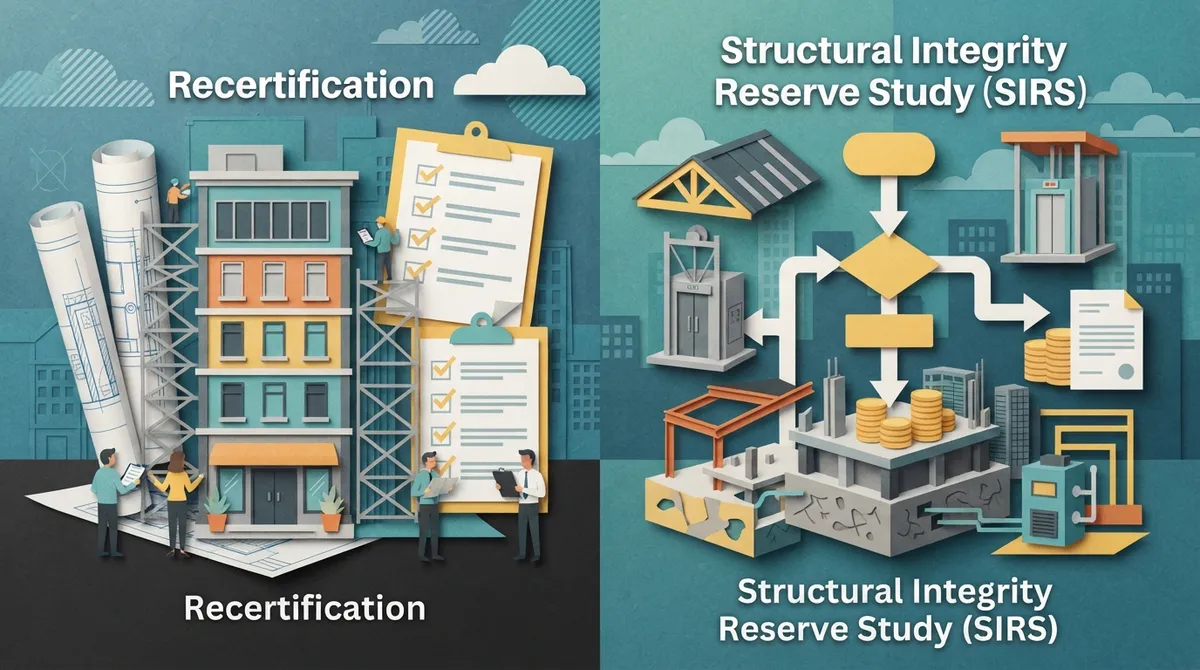
1. Recertification and SIRS Are Two Different Things
Let’s clear this up right away, because it trips up even experienced board members. Coral Springs’ Building Safety Inspection Program is a local recertification process. It checks whether your building is structurally and electrically safe. A Florida Structural Integrity Reserve Study, often called a SIRS, is a completely separate requirement. It focuses on reserve funding for condo and co-op associations.
Your building might need both. Or it might only need one. It really depends on your building’s age, height, and how it’s legally organized. The team at what building recertification really means for your property breaks this distinction down further if you want more background.
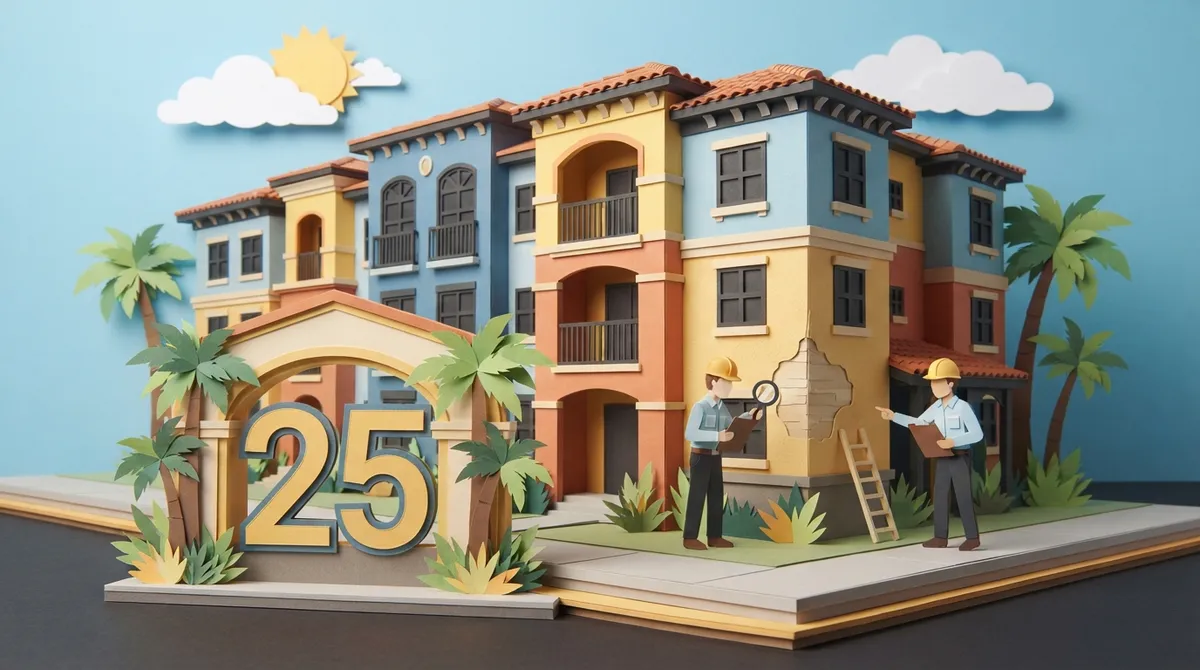
2. Coral Springs Recertification Kicks In at 25 Years
Here is a fact that surprises a lot of newer property owners. Coral Springs requires structural and electrical safety inspections once a building hits 25 years of age. After that first inspection, the city asks for a follow-up every 10 years. This program has been active in Broward County since January 2006.
Every building is a little different, so don’t assume your notice will arrive on a predictable schedule. Confirm your building’s specific timeline with the City of Coral Springs Building Department directly, since requirements can shift depending on your property type and any local rule updates.
3. A SIRS Is Not a Substitute for City Recertification
This is probably the single most important thing to remember. Completing a structural integrity reserve study does not check the recertification box with the city. And passing your city recertification inspection does not satisfy your SIRS obligation either. They are two separate boxes that both need checking.
Think of it this way: recertification asks, “Is this building safe right now?” A SIRS asks, “Do we have enough money saved to fix things later?” Both questions matter, but they are answered by different processes, different professionals, and sometimes different deadlines.
4. Not Every Building Needs a SIRS
Florida’s SIRS requirement generally applies to residential condominium and cooperative buildings that are at least three habitable stories tall. If your association is an ordinary homeowners association governed under Chapter 720, you likely won’t need a SIRS at all. Shorter buildings below that three-story threshold are usually exempt too.
That said, “usually” is doing some heavy lifting in that sentence. Every board should confirm applicability with a qualified professional adviser rather than guessing. Getting this wrong in either direction, assuming you’re exempt when you’re not, or spending money on a study you didn’t need, is a headache nobody wants.
5. Here’s What a SIRS Actually Evaluates
A structural integrity reserve study is more than a walk-through with a clipboard. It’s a visual inspection paired with detailed financial forecasting. The goal is to estimate how much useful life each major component has left, what it will cost to repair or replace, and how much your association should be setting aside in reserves.
Florida law currently requires SIRS studies to evaluate these component categories:
- Roof structure and covering
- Load-bearing walls and other primary structural systems
- Fireproofing and fire protection systems
- Plumbing systems
- Electrical systems
- Waterproofing and exterior painting
- Windows and exterior doors
- Any additional item that affects the components listed above, exceeding $25,000 in deferred maintenance
Our team frequently pairs SIRS work with related assessments, like the ones described in 8 things to know about Coral Springs property condition assessments, so boards get a complete financial and structural picture at once.
6. The Deadline Has Moved, So Double-Check Yours
Here’s where things get a little tricky, and honestly, a little important to verify carefully. The general initial SIRS deadline was extended to December 31, 2025. However, statutory coordination provisions and limited timing exceptions may apply to some associations, so don’t assume your building follows the exact same calendar as your neighbor’s building.
Because Florida’s legislature keeps revisiting this law, older articles online may reference outdated deadlines. Always verify your building’s current milestone-inspection status and SIRS deadline directly with a licensed professional rather than relying on last year’s blog post, including this one, as your only source.
7. Associations Can No Longer Skip Reserve Funding
Remember the days when a vote at the annual meeting could waive reserve funding for the year? For SIRS-covered components, those days are over for unit-owner-controlled associations. Florida law now bars associations from voting to waive or underfund reserves for mandatory SIRS components in any budget adopted on or after December 31, 2024.
This is a big shift in how boards need to think about long-term planning. A properly conducted study, paired with disciplined reserve funding, protects your building’s value and protects owners from sudden, painful special assessments down the road.
8. Who Should Actually Perform the Study
A SIRS needs to be conducted by a qualified professional, typically a licensed engineer or architect experienced in structural assessments. This isn’t a DIY project, and it isn’t something your property manager should be expected to handle solo, even a fantastic property manager.
Here’s a quick comparison to help boards understand who does what:
| Process | Who Requires It | Who Performs It | Main Purpose |
|---|---|---|---|
| City Recertification (25-year / 10-year) | City of Coral Springs Building Department | Licensed engineer or architect | Verify structural and electrical safety |
| Structural Integrity Reserve Study (SIRS) | State of Florida (condo/co-op law) | Licensed engineer or architect | Plan long-term reserve funding |
| Property Condition Assessment (PCA) | Lenders, buyers, or association choice | Qualified inspector or engineer | Evaluate overall property condition |
Choosing the right professional matters just as much as choosing the right process. Our guide on how to choose licensed building inspectors for recertification covers what credentials and experience to look for before you sign a contract.
9. A Coordinated Approach Saves You Time and Money
Here’s some genuinely good news to end on. Recertification inspections and SIRS studies often examine overlapping parts of your building, like the roof, plumbing, and electrical systems. When you work with a team that understands both processes, findings from one report can inform and speed up the other.
This is exactly why so many Coral Springs boards choose O’Reilly Consultants for combined recertification and SIRS work. Owner and qualifying architect Sherard O’Reilly brings deep expertise in property condition assessments and detailed building documentation, while the firm’s engineering team uses drones and 3D laser scanning to speed up evaluations without cutting corners.
Numbered Steps to Get Started
- Check your building’s age and story count to determine which requirements apply
- Contact the Coral Springs Building Department to confirm your recertification schedule
- Ask your association’s attorney or manager whether your building meets the SIRS height threshold
- Hire a licensed engineering team to handle both assessments together
- Review the findings with your board and update your reserve budget accordingly
Coral Springs directs building-program questions to its Building Department at 9500 West Sample Road, and you can reach their customer care line at 954-344-1025 for schedule confirmations. For a broader look at Broward County requirements, the Miami-Dade County Recertification program page offers useful comparison context, and you can even search Miami-Dade building recertification cases to see how nearby jurisdictions handle similar filings.
Common Pitfalls Boards Should Avoid
Before we wrap up, here are a few mistakes we see boards make again and again:
- Assuming a completed SIRS satisfies the city recertification requirement (it doesn’t)
- Waiting until a notice arrives instead of proactively checking building age against the 25-year threshold
- Hiring separate, uncoordinated teams for recertification and SIRS work, which increases costs and scheduling headaches
- Underestimating reserve funding needs to keep monthly dues artificially low
Avoiding these pitfalls keeps your association compliant, keeps owners informed, and keeps special assessments from feeling like a surprise attack. Many boards also review related guidance like 5 SIRS mistakes Coral Springs condo boards must avoid before finalizing their reserve budget each year.
Wrapping It All Up
Navigating both a city recertification inspection and a state-mandated SIRS can feel like a lot at first. But once you understand the difference, and get the right professionals involved, it becomes a manageable, even predictable, part of running a well-maintained building. Your owners will thank you for staying ahead of it, and your building’s value will reflect the extra care.
If you’re ready to get clear answers about your building’s recertification schedule or your SIRS obligations, our friendly team is here to help. Request a free quote today, or call us at (512) 567-1191 to talk through your building’s specific timeline. You can also visit us on Google to see what our O’Reilly Consultants customers say about working with our Broward and Miami-Dade team. We’re proud to serve Coral Springs boards, owners, and managers, and we’d love to help you feel confident about what comes next.
FAQs
Q: What is the Coral Springs building recertification inspection requirement?
A: Coral Springs requires structural and electrical safety inspections once a building turns 25 years old, then again every 10 years after that. It’s a local program separate from the state’s SIRS rules, so be sure to check with the city’s Building Department for your building’s exact schedule.
Q: Is a structural integrity reserve study the same as a building recertification inspection?
A: Nope, and this mix-up trips up a lot of boards! A SIRS focuses on reserve funding for condo and co-op associations, while recertification checks whether your building is structurally and electrically safe under city rules. Many buildings need both, but completing one doesn’t satisfy the other.
Q: Which Coral Springs condominium buildings need a Florida SIRS?
A: Generally, SIRS applies to residential condo and co-op buildings that are at least three habitable stories tall. Ordinary homeowners associations under Chapter 720 and shorter buildings usually don’t need one, but it’s always worth confirming with a qualified professional.
Q: What is the current deadline for a condominium association’s initial SIRS?
A: The general initial deadline was extended to December 31, 2025, though some associations may have exceptions based on statutory coordination provisions. Since rules keep evolving, it’s smart to verify your building’s specific deadline rather than relying on older information.
Q: Can a Florida condo association waive or reduce SIRS reserves?
A: Not anymore for the mandatory SIRS components! Florida law now prohibits unit-owner-controlled associations from voting to waive or underfund these reserves in budgets adopted on or after December 31, 2024. It’s a meaningful shift toward protecting long-term building health.