Key Takeaways
-
Licensed electrical contractors are legally required by Broward County to perform building recertification inspections for buildings 40+ years old; DIY inspections cannot be submitted for official BORA certification.
-
Buildings in Hallandale Beach over 40 years old must complete electrical safety inspections within 90 days of receiving notice, with any required repairs due within 180 days, or face fines and loss of occupancy status.
-
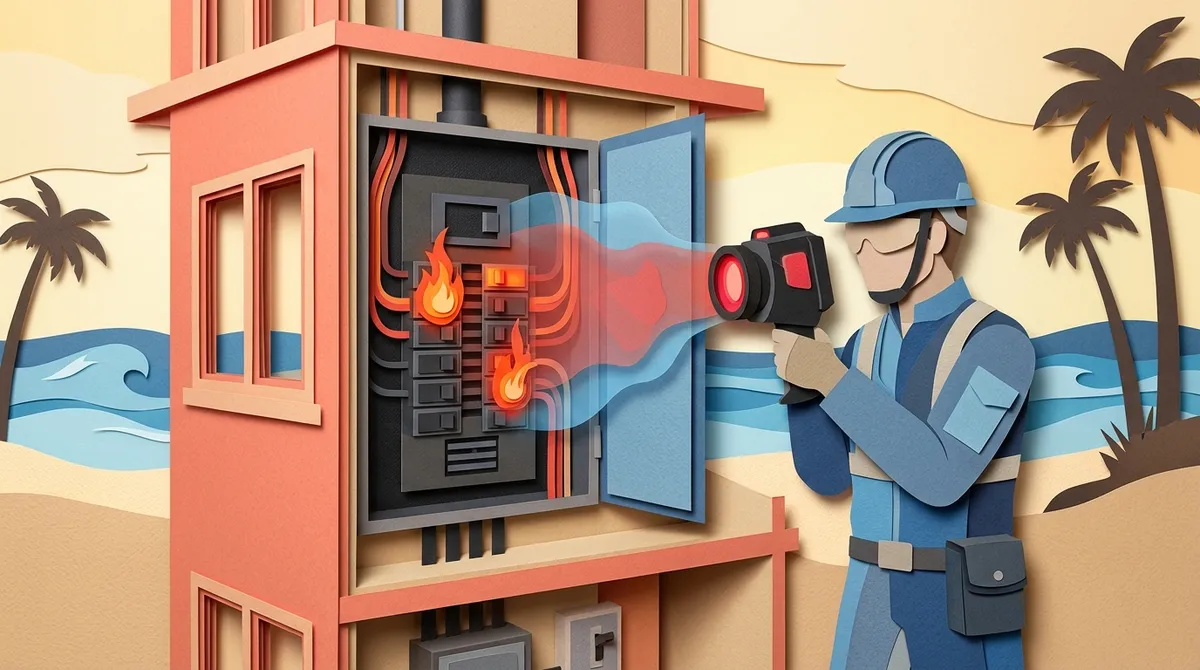
Infrared thermography technology detects dangerous heat anomalies in electrical panels and high-amperage systems that are invisible to the naked eye, making it essential for catching electrical faults before they cause fires.
-
After initial inspection, buildings require re-inspections every 10 years, and the inspection must cover electrical panels, branch circuits, emergency lighting, grounding systems, and conduit raceways.
-
Single-family homes, duplexes, government buildings, public schools, and structures under 3,500 square feet are exempt from Hallandale Beach electrical safety inspection requirements.
-
Advanced inspection tools like drones and 3D laser scanning provide thorough documentation and actionable repair recommendations, which helps prevent costly emergencies and protects long-term property investment.
If you own or manage a building in Hallandale Beach, Florida, you’ve probably received that official notice from Broward County — the one telling you it’s time for your building recertification. And if your building is 40 years or older, Hallandale Beach electrical safety inspections are a required part of the process. Now comes the big question: Can you handle any of this yourself, or do you need a licensed professional?
The short answer? Licensed professionals are required by law for building recertification electrical inspections. But understanding why — and knowing what to expect from the process — can save you a lot of stress, time, and money. Whether you’re a condo board member, a commercial property owner, or an HOA manager, this guide will walk you through everything you need to know in a clear, friendly way.
What Are Hallandale Beach Electrical Safety Inspections?
Hallandale Beach follows Broward County’s Building Safety Inspection Program (BSIP), which was created in 2005 and took effect in January 2006. Under this program, buildings that are 40 years or older — based on their certificate of occupancy date — must undergo both structural and electrical safety inspections. After the initial inspection, re-inspections are required every 10 years.
These inspections are not optional. They are a legal requirement for maintaining occupancy certification. If you skip them or miss deadlines, your building could face serious consequences, including fines or loss of occupancy status. You can learn more about what’s involved in our guide on the importance of 40-year building recertification for property longevity.
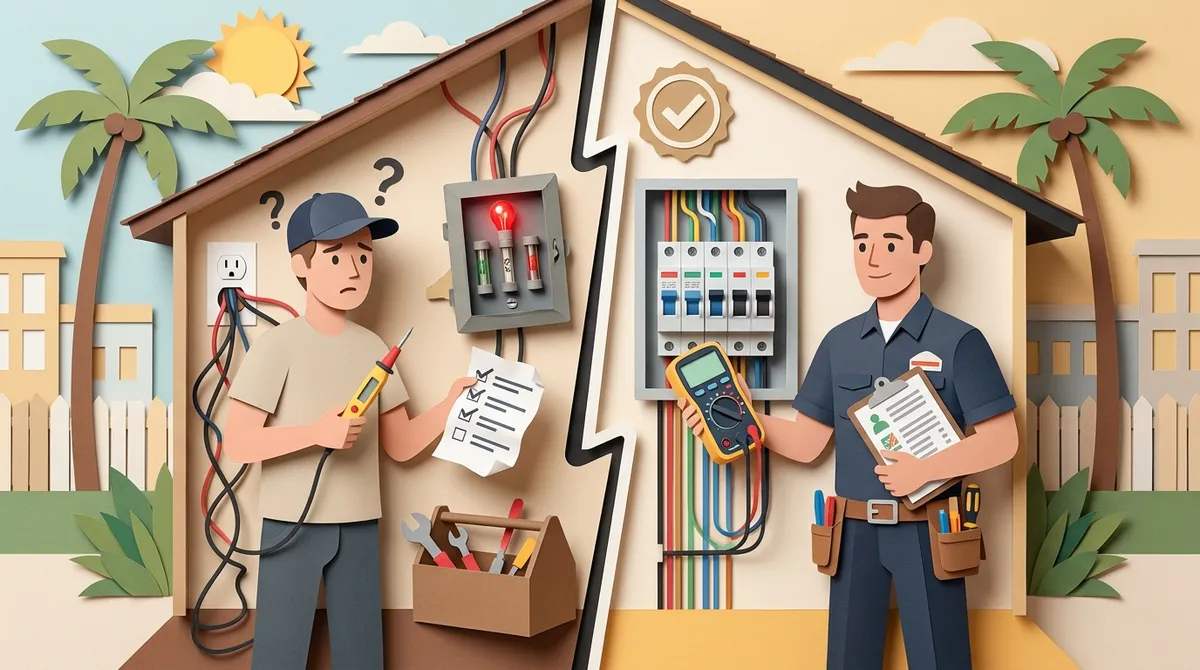
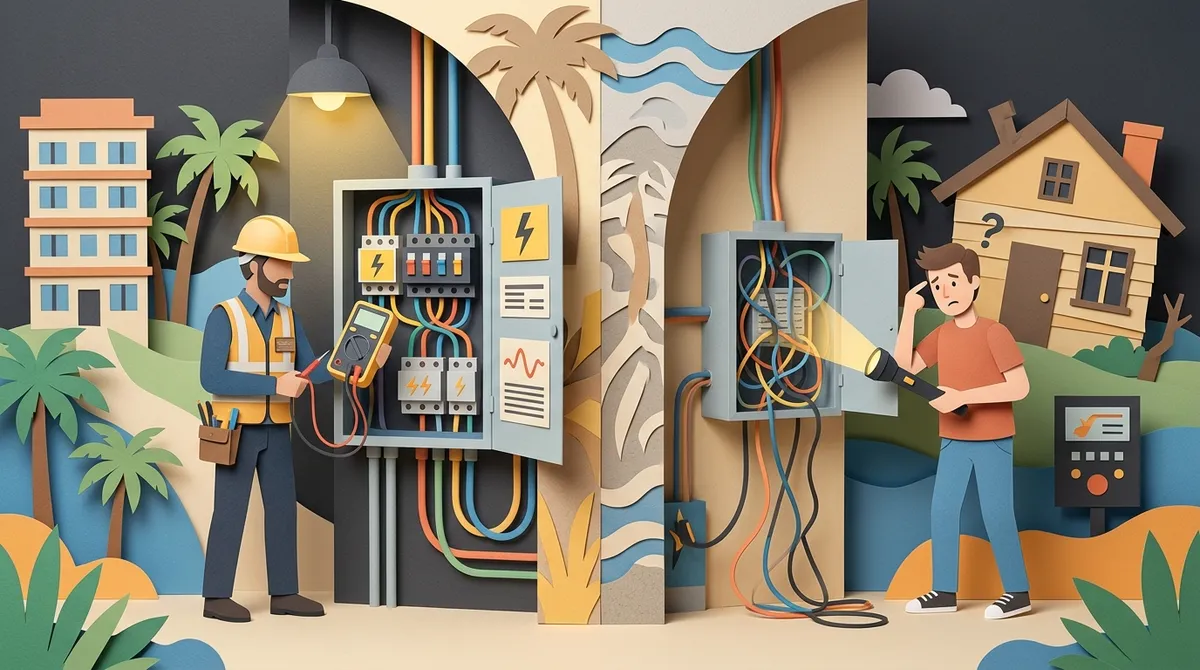
DIY vs. Licensed Inspections: A Quick Comparison
Let’s get right to the heart of it. Some property owners wonder if they can inspect their own buildings to save money. Here’s an honest, side-by-side look at both options when it comes to building recertification electrical inspections.
| Factor | DIY Inspection | Licensed Professional Inspection |
|---|---|---|
| Legal Compliance | Not accepted by Broward County | Fully compliant with BSIP requirements |
| Certification Eligibility | Cannot submit BORA form | Can complete and submit BORA certification |
| Infrared Thermography | Not available without specialized equipment | Included for systems over 400 amperes |
| Deficiency Reporting | No official documentation | Formal report with actionable recommendations |
| Risk of Missed Issues | High — untrained eyes miss serious hazards | Low — professionals use advanced tools |
| Peace of Mind | Limited | Full — certified for the next 10 years |
The verdict is clear. A DIY approach simply cannot replace a licensed electrical contractor when it comes to Hallandale Beach building recertification. The Broward County Board of Rules and Appeals (BORA) requires a certified professional to sign and submit the inspection form. No licensed signature means no certification — period.
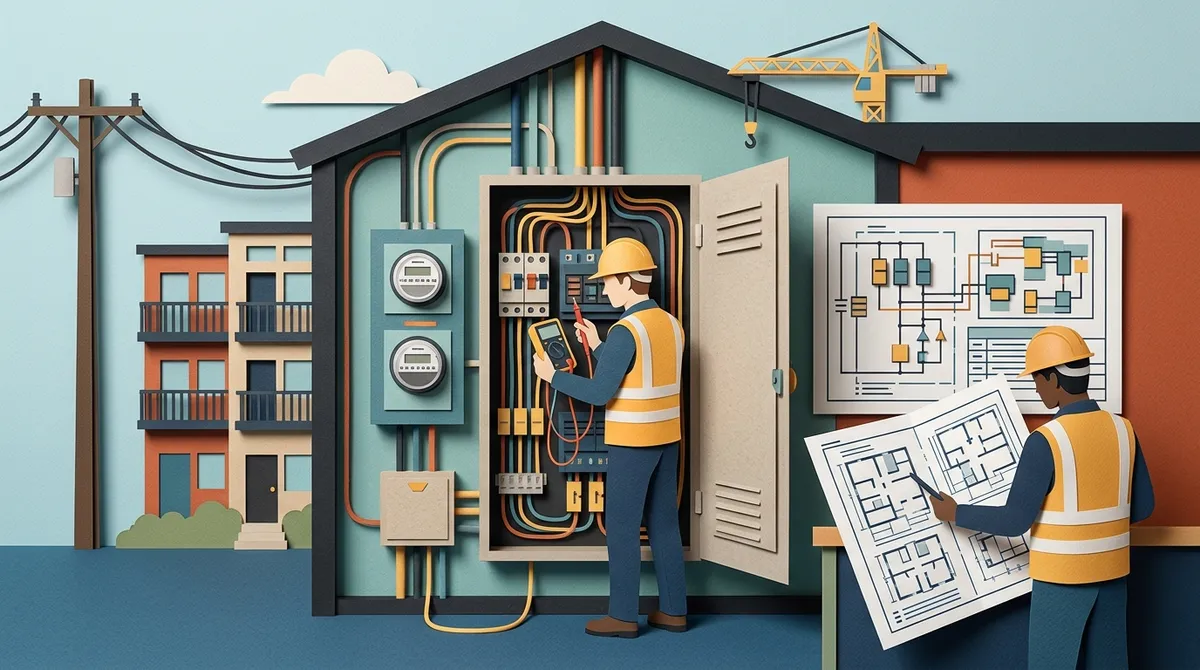
Why Licensed Electrical Inspections Are Required
Electrical systems in aging buildings can hide serious hazards. Outdated wiring, failing conduit raceways, and deteriorated emergency lighting are not always visible to the untrained eye. That’s why Broward County mandates that only a licensed electrical contractor can perform these inspections for recertification purposes.
Here’s what a proper licensed Hallandale Beach electrical safety inspection covers:
- Electrical service panels and main distribution boards
- Branch circuits and wiring throughout the building
- Conduit raceways and protective equipment
- Emergency lighting systems and exit signage
- Infrared thermography for electrical systems over 400 amperes
- General grounding and bonding systems
Infrared thermography deserves a special mention. This technology detects heat anomalies in electrical panels and high-amperage systems — problems that are completely invisible to the naked eye. It’s one of the best tools for catching dangerous electrical faults before they become fires or failures.

The Hallandale Beach Building Recertification Timeline
Understanding the timeline helps you stay ahead of deadlines and avoid penalties. Here’s the process in order:
- Receive your Notice of Required Inspection from Hallandale Beach or Broward County.
- Hire a licensed electrical contractor and a Florida-registered Professional Engineer or Architect for the structural portion.
- Complete your inspections and receive the professional’s signed report.
- Submit the BORA certification form within 90 days of receiving your notice.
- Complete any required repairs within 180 days if deficiencies are found.
- Receive your occupancy certification for the next 10 years.
It’s worth noting that Hallandale Beach coordinates directly with Broward County on these inspections. The city’s Building Division reviews reports without requiring on-site city inspections. Also, the Hallandale Beach Building Division schedules a maximum of 15 inspections per day, so booking early is always a smart move.
For a deeper dive into the full recertification process, check out our 40-year recertification overview.
Who Is Exempt from These Inspections?
Not every building in Hallandale Beach falls under the BSIP. The following types of properties are currently exempt:
- One- and two-family dwellings (single-family homes and duplexes)
- Government-owned buildings
- Public schools and educational institutions
- Indian Reservation structures
- Buildings under 3,500 square feet
If you’re unsure whether your building qualifies for an exemption, it’s always best to check with the Hallandale Beach Building Division directly or consult a licensed recertification professional. Don’t assume — the cost of getting it wrong is much higher than the cost of asking.
What Happens If Deficiencies Are Found?
Finding electrical deficiencies isn’t a crisis — it’s actually the whole point of the inspection. The goal is to catch problems early, before they become dangerous or expensive emergencies. Here’s what happens if issues are identified:
- Your inspector documents the deficiencies in a formal written report.
- You pull the necessary permits for the required electrical repairs.
- Licensed contractors complete the repairs within the 180-day window.
- Repairs are verified and your building receives its certification.
The key is not to panic. Most deficiencies found in 40-year-old buildings are manageable. The important thing is acting quickly once you receive your notice, so you have plenty of time to handle repairs within the required timeframe.
You might also want to review our article on understanding foundation cracks in commercial buildings to get a sense of how structural and electrical issues often go hand in hand in aging buildings.
Why Advanced Technology Makes a Difference
Not all inspections are created equal. The tools and technology your inspection team uses can significantly affect the quality and thoroughness of the report you receive. Advanced inspection services use tools like:
- Infrared thermography — detects hidden heat faults in electrical systems
- Drones — provide aerial views of rooftop electrical equipment and hard-to-reach areas
- 3D laser scanning — creates precise documentation of the building’s systems and conditions
- Detailed written reports — with clear, actionable recommendations for repairs
These advanced tools don’t just help you pass the inspection — they give you a real, thorough picture of your building’s electrical health. That’s the kind of information that protects your investment for years to come.
Choosing the Right Partner for Hallandale Beach Electrical Safety Inspections
When it comes to Hallandale Beach electrical safety inspections as part of building recertification, experience and local knowledge matter enormously. Broward County’s BSIP has specific requirements, and working with a team that knows them inside and out saves time and reduces stress.
O’Reilly Consultants is a small, highly specialized team serving Broward and Miami-Dade Counties with a sharp focus on building recertification and safety inspections. Led by architect Sherard O’Reilly, construction engineer Catalina Torres (with 27 years of civil engineering experience), and project engineer Rafael Ojeda (with 16+ years and over 1,000 Phase I Environmental Site Assessments completed), the team brings serious expertise to every inspection.
They handle the full process — from the moment you receive your county notice, all the way through submitting your BORA certification form. You can check out their reviews on Google to see what property owners across South Florida have to say.
For reference on county-level recertification requirements, you can also visit the Miami-Dade County Recertification page and use the Miami-Dade Building Recertification Case Search tool to look up existing cases in your area.
A Comparison of Property Types and Inspection Needs
Different property types have different priorities when it comes to electrical safety inspections. Here’s a quick reference guide:
| Property Type | Key Electrical Concerns | Inspection Priority |
|---|---|---|
| Condominium Buildings | Common area panels, emergency lighting, elevators | High — resident safety and HOA compliance |
| Commercial Office Buildings | High-amperage systems, data room circuits, HVAC electrical | High — business continuity and liability |
| Apartment Complexes | Unit branch circuits, service panels, common areas | High — tenant safety and legal compliance |
| Retail and Mixed-Use | Exterior signage circuits, tenant panels, emergency egress | Medium-High — customer safety and code compliance |
| Industrial Buildings | High-voltage equipment, industrial circuits, grounding | High — worker safety and equipment protection |
Top Tips for a Smooth Recertification Experience
Want to make the process as painless as possible? Here are some practical tips from experienced recertification professionals:
- Act as soon as you receive your notice. You have 90 days, but repairs can take time. Starting early gives you a cushion.
- Keep your building records organized. Have your original certificate of occupancy, past inspection reports, and maintenance logs ready.
- Choose a team that handles both structural and electrical. Coordinating one team for both assessments saves time and reduces confusion.
- Ask for a detailed written report. Vague reports lead to permit delays. You want clear, specific findings and recommendations.
- Budget for potential repairs. Older buildings often need some level of electrical upgrading. Planning ahead prevents financial surprises.
Conclusion: Don’t Leave Your Building’s Safety to Chance
Hallandale Beach electrical safety inspections are not a bureaucratic hurdle — they’re a genuine safety net for your building, your tenants, and your investment. The DIY route simply isn’t an option for official recertification. Only licensed professionals can provide the documentation and certification that Broward County requires.
Working with an experienced, technology-driven team means you get thorough inspections, clear reports, and expert guidance through every step of the process. Your building gets certified, your residents stay safe, and you get peace of mind knowing everything is in order for the next 10 years.
Ready to get started? Request a free consultation with O’Reilly Consultants today and take the first step toward a smooth, stress-free building recertification experience.
FAQs
Q: What buildings in Hallandale Beach require electrical safety inspections for recertification?
A: Any commercial or multi-family residential building in Hallandale Beach that is 40 years or older (based on its certificate of occupancy date) must undergo electrical safety inspections under Broward County’s Building Safety Inspection Program. Re-inspections are then required every 10 years after that. Single-family homes, duplexes, government buildings, schools, and structures under 3,500 square feet are exempt — so you’re in good company if your property falls into one of those categories!
Q: Who can legally perform electrical safety inspections for Hallandale Beach building recertification?
A: Only a licensed electrical contractor is authorized to conduct the electrical portion of a Hallandale Beach building recertification inspection. The structural assessment must be performed by a Florida-registered Professional Engineer or Architect. The results are submitted to the Broward County Board of Rules and Appeals (BORA) — no licensed signature means no official certification, so this is one area where you definitely want the right team in your corner!
Q: How long do I have to complete my Hallandale Beach electrical safety inspection after receiving a notice?
A: Once you receive your Notice of Required Inspection, you have 90 days to submit the completed BORA certification form. If electrical deficiencies are found, you then have 180 days to complete the required repairs. We always recommend starting the process as soon as you receive your notice — it gives you plenty of breathing room to handle any surprises without rushing.
Q: What happens if my building fails the electrical safety inspection in Hallandale Beach?
A: A “failure” really just means deficiencies were found — which is actually the whole point of the inspection! Your licensed inspector will document everything in a formal report, you’ll pull the necessary permits, and licensed contractors will complete the repairs within the 180-day window. Once repairs are verified, your building receives its certification for the next 10 years. Think of it as your building getting a health checkup and a clean bill of health once any issues are resolved.
Q: Does an electrical safety inspection cover emergency lighting in Hallandale Beach buildings?
A: Absolutely! Emergency lighting systems and exit signage are a key part of every Hallandale Beach electrical safety inspection under the BSIP. Inspectors also evaluate electrical service panels, branch circuits, conduit raceways, grounding systems, and use infrared thermography for any electrical systems over 400 amperes. It’s a thorough head-to-toe look at your building’s entire electrical health — so you can feel confident knowing nothing important is being missed.