

Key Takeaways
-
Florida law now mandates full reserve funding for SIRS-covered components with no waivers allowed under HB 913 (2024), requiring all qualifying Hallandale Beach buildings to maintain properly funded reserve accounts annually.
-
Hallandale Beach's coastal location creates unique structural challenges including salt air corrosion of rebar, accelerated waterproofing failures, hurricane exposure, and foundation settlement that require specialized SIRS assessments beyond inland standards.
-
SIRS must be performed by Florida-licensed Professional Engineers or architects and repeated every 10 years; coastal Hallandale Beach buildings also need separate 25-year Milestone Inspections, which can often be coordinated simultaneously to save time and costs.
-
A SIRS assesses eight specific structural components and creates a 30-year funding plan; any component costing over $25,000 to repair or replace must be included, helping boards prioritize early interventions that prevent expensive escalations.
-
The 2021 Surfside collapse triggered strengthened Florida legislation (SB 4-D, SB 154, HB 913) requiring SIRS compliance; non-compliance carries legal liability for board members and may block loan approvals and insurance coverage.
-
Early SIRS planning (6-12 months before deadlines) and hiring experienced coastal building specialists with advanced technology like drones and 3D laser scanning ensures accurate assessments and clearer, more actionable condition reports.
If you own or manage a condo or co-op building in Hallandale Beach, you’ve likely heard about Structural Integrity Reserve Studies (SIRS). Florida law now requires them — and for good reason. The 2021 Surfside collapse was a wake-up call for the entire state. Since then, lawmakers have moved quickly to protect residents in aging coastal buildings.
The good news? Getting your Hallandale Beach Structural Integrity Reserve Study done doesn’t have to be stressful. This guide walks you through the entire process — what SIRS means, what’s covered, who needs one, and how to stay compliant without losing sleep. Let’s break it all down in plain, simple language.

What Is a Structural Integrity Reserve Study (SIRS)?
A Structural Integrity Reserve Study is a two-part assessment required by Florida law. First, a licensed engineer or architect performs a visual inspection of your building’s key structural components. Second, a reserve specialist creates a 30-year funding plan to cover future repairs and replacements.
Think of it like a financial health checkup for your building. You find out what needs fixing — and how much money to set aside so you’re never caught off guard. This was established under Florida Statute 718.112(2)(g), which was strengthened after the Surfside tragedy through a series of legislative updates including SB 4-D (2022), SB 154 (2023), and HB 913 (2024/2025).
For buildings in coastal communities like Hallandale Beach, this matters even more. Salt air speeds up corrosion. Humidity causes waterproofing to break down faster. A proper SIRS helps you stay ahead of these issues before they become dangerous — or astronomically expensive.

Who Needs a SIRS in Hallandale Beach?
Not every building in Hallandale Beach requires a SIRS — but many do. Here’s who is required by Florida law to complete one:
- Condominium associations with buildings 3 or more habitable stories
- Cooperative (co-op) building associations meeting the same height threshold
- Associations that existed before July 1, 2022 (initial deadline was December 31, 2024)
- New associations formed after July 1, 2022 (must complete within specific timelines)
- All qualifying buildings must repeat the study every 10 years
It’s worth noting that Hallandale Beach sits in Broward County, where coastal proximity triggers the 25-year Milestone Inspection threshold (versus 30 years inland). While SIRS and Milestone Inspections are separate requirements, many buildings in Hallandale Beach will need both. Understanding the difference is key — which we’ll cover shortly.
What Structural Components Does a SIRS Cover?
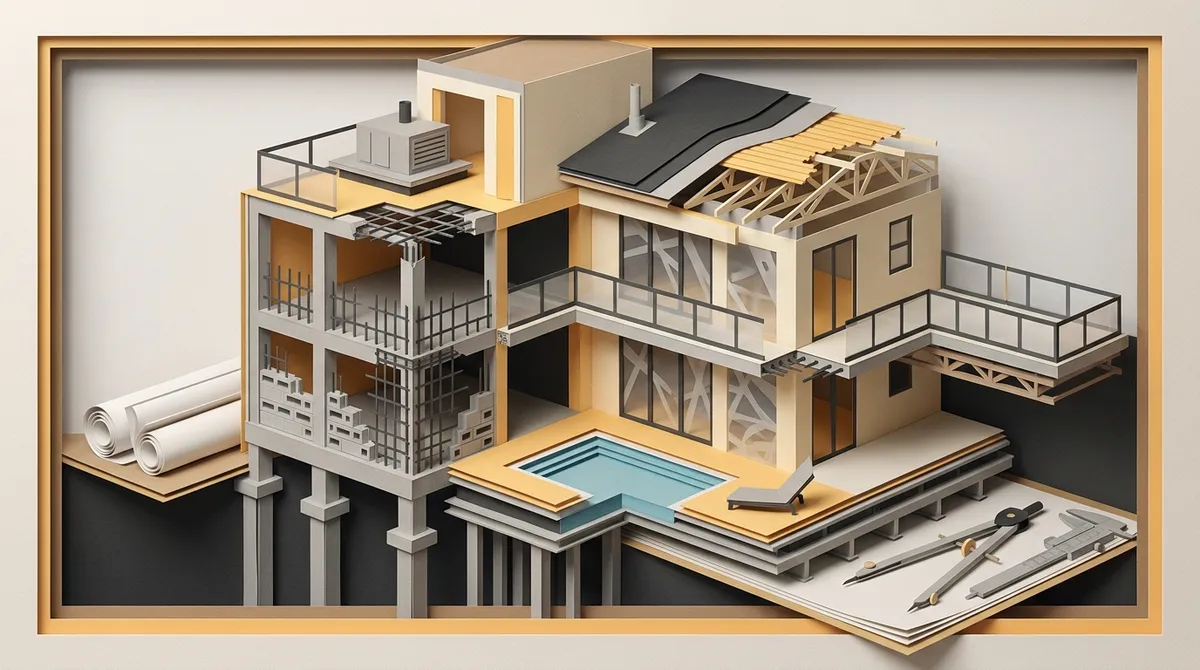
A Florida SIRS covers eight specific structural and life-safety components. Each one gets a visual condition assessment and a remaining useful life (RUL) estimate. If any item costs more than $25,000 to repair or replace, it must be included in the reserve funding plan.
Here’s a quick look at all eight covered components:
| Component | What’s Assessed | Common Hallandale Beach Issues |
|---|---|---|
| Roof | Condition, remaining life, waterproofing | UV damage, hurricane wear, membrane failures |
| Load-Bearing Structure | Concrete, columns, beams, slabs | Spalling, rebar corrosion from salt air |
| Fire Protection Systems | Sprinklers, alarms, suppression systems | Aging components, code updates needed |
| Plumbing | Pipes, drainage, water supply lines | Corrosion, leaks in older buildings |
| Electrical Systems | Wiring, panels, distribution systems | Outdated panels, moisture-related damage |
| Waterproofing | Balconies, decks, below-grade areas | Membrane failures, water intrusion |
| Windows and Exterior Doors | Seals, frames, impact resistance | Hurricane exposure, seal degradation |
| Items Over $25,000 | Any structural element above cost threshold | Elevators, parking structures, pool decks |
Each of these components tells a story about your building’s health. A thorough SIRS will catch early warning signs — like concrete spalling or balcony waterproofing failures — before they escalate into safety hazards. You can also learn more about how structural issues develop by reading about understanding foundation cracks and hairline cracks in commercial buildings.
SIRS vs. Milestone Inspection: What’s the Difference?
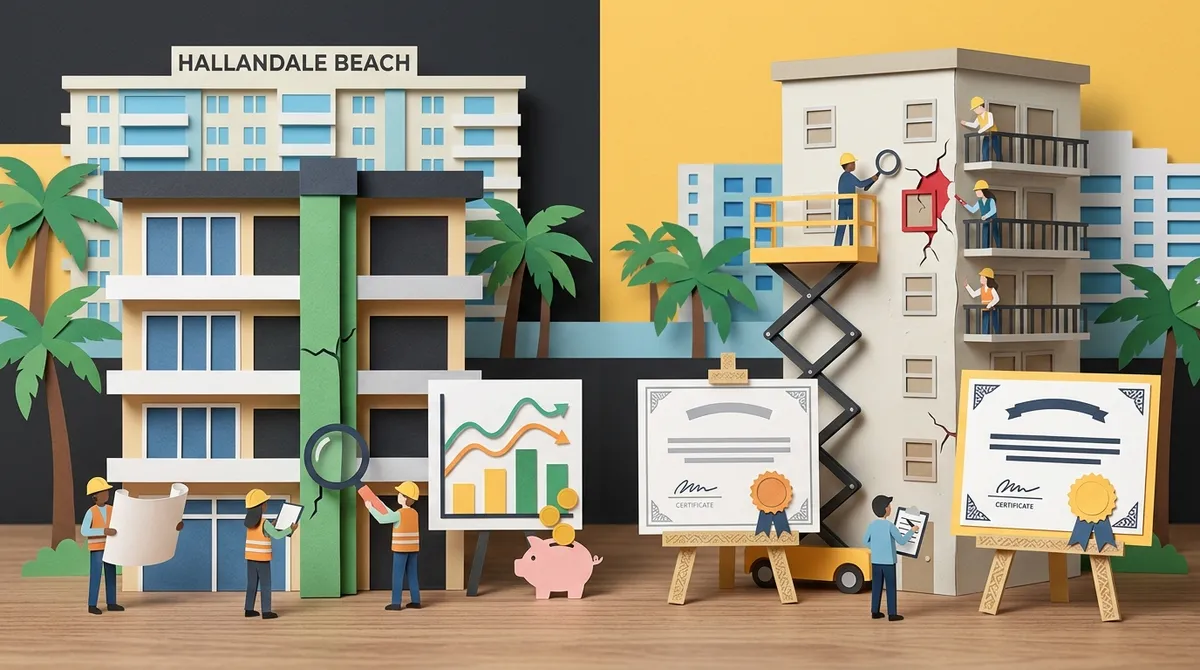
This is one of the most common questions condo board members ask. Both are required by Florida law, but they serve different purposes. Here’s a simple breakdown:
- Milestone Inspection: Focuses on structural safety. Triggered at 25 years for coastal buildings (like those in Hallandale Beach) and every 10 years after. Required under Section 553.899.
- SIRS: Focuses on reserve funding + visual condition. Required every 10 years. Ensures your association has the money to handle future repairs.
- Both must be done by a licensed Professional Engineer (PE) or architect.
- Many buildings in Hallandale Beach will need to coordinate both studies — sometimes simultaneously.
- The two studies can often be completed together to save time and reduce costs.
If you’re managing a building that’s approaching the 25-year mark, it’s smart to schedule both at once. This reduces disruption for residents and often makes the overall process more efficient. For a broader look at recertification timelines, see our resource on 40-year recertification requirements.
Step-by-Step: How to Complete Your Hallandale Beach SIRS
Ready to get started? Here’s a clear, numbered process to guide your condo association or property management team from start to finish.
- Confirm your building qualifies. Verify your building is 3 or more habitable stories and is a condo or co-op association. Check your association’s formation date to determine your deadline.
- Hire a licensed engineer or architect. Your SIRS must be performed by a Florida-licensed Professional Engineer (PE) or architect. Look for experience with coastal buildings and reserve studies. This is not a DIY task.
- Schedule the on-site visual inspection. The engineer will walk through all eight covered components. Plan for some temporary access to mechanical rooms, rooftops, balconies, and parking areas.
- Review the condition assessment report. You’ll receive a detailed report with findings for each component, estimated remaining useful life, and recommended repair priorities.
- Work with a reserve specialist on the 30-year funding plan. Based on the inspection findings, a reserve specialist will calculate how much your association needs to set aside annually. Under HB 913 (2024), full reserve funding is mandatory — no waivers allowed.
- Present findings to the board and owners. Florida law requires transparency. Share the SIRS results and reserve funding plan with association members.
- Submit to Florida’s SIRS database. Reporting is required through the state’s designated database. Your engineer or management team can help with this submission.
- Set a calendar reminder for your next SIRS. Mark your next 10-year renewal date. Don’t wait until the deadline creeps up again.
Following these steps keeps your building compliant and your residents safe. For details on what makes building recertification so important for property longevity, check out that resource as well.
Why Hallandale Beach Buildings Face Unique Challenges
Hallandale Beach sits right on the South Florida coast. That means your building faces conditions that inland properties simply don’t deal with. Here’s what makes coastal SIRS assessments especially critical in this area:
- Salt air corrosion: Chloride from ocean air penetrates concrete and attacks reinforcing steel (rebar). This accelerates spalling and structural weakening.
- High humidity: Year-round moisture speeds up mold growth, waterproofing failures, and window seal degradation.
- Hurricane exposure: Wind and rain from tropical storms stress roofs, windows, and exterior walls repeatedly over a building’s lifespan.
- Foundation settlement: South Florida’s sandy soil can shift over time, putting pressure on load-bearing structures.
- Balcony deterioration: Coastal buildings see faster balcony deck failures due to combined moisture and salt exposure.
These are not hypothetical risks. They are the real-world conditions that Hallandale Beach buildings face every single year. A well-conducted SIRS gives you a clear picture of where your building stands — and what to prioritize first. For official county-level requirements in the region, you can refer to Miami-Dade County Recertification guidelines as a helpful reference for understanding South Florida’s regulatory landscape.
The Financial Impact of SIRS Compliance
Let’s be honest — one of the first questions board members ask is: “How much is this going to cost us?” That’s a fair question. Here’s the financial picture in plain terms.
The cost of a Structural Integrity Reserve Study varies based on building size, number of units, and complexity. Larger buildings with more components to assess naturally cost more. However, think of the SIRS as an investment, not just an expense.
- Catching a $50,000 waterproofing issue early prevents a $500,000 structural repair later.
- A fully funded reserve plan keeps special assessments from shocking your residents.
- Lenders and insurers increasingly require SIRS documentation before approving loans or policies.
- Buyers and real estate investment firms specifically check reserve funding health before purchasing in a building.
- Non-compliance can result in fines and legal liability for board members.
The 2024 HB 913 update removed the option for associations to waive full reserve funding. This means every qualifying building in Hallandale Beach must now maintain a properly funded reserve account. Starting early and funding consistently is far less painful than playing catch-up.
If you’d like to understand the full scope of what a recertification inspection covers, the team at O’Reilly Consultants is an excellent resource. Their licensed engineers and architects serve Broward and Miami-Dade Counties with thorough SIRS assessments, Milestone Inspections, and full building recertification services — using advanced tools like drones and 3D laser scanning for greater accuracy.
How to Choose the Right SIRS Provider in Hallandale Beach
Not all engineering firms are the same. Choosing the right provider for your Hallandale Beach Structural Integrity Reserve Study can make the entire process smoother and more reliable. Here’s what to look for:
- Florida-licensed Professional Engineer or Architect: This is non-negotiable. Only licensed professionals can legally perform a SIRS under Florida law.
- Experience with coastal buildings: Look for a firm that understands the specific challenges of salt air, humidity, and hurricane-prone environments common in South Florida.
- Reserve study expertise: The funding plan portion requires specialized knowledge. Confirm your provider has reserve specialist experience, not just inspection skills.
- Advanced inspection technology: Firms that use drones and 3D laser scanning can assess hard-to-reach areas more safely and accurately — especially on high-rise buildings.
- Clear, actionable reports: A good SIRS report doesn’t just list problems. It explains them in plain language, ranks priorities, and provides cost estimates you can actually use.
You can also verify building recertification cases and compliance records by using tools like the Miami-Dade Building Recertification Case Search, which helps you cross-reference inspection history and compliance status for properties in the region.
O’Reilly Consultants brings together a team that includes a qualifying architect, a civil engineer with 27 years of construction management experience, and a project engineer with over 1,000 Phase I Environmental Site Assessments under his belt — all focused on South Florida’s unique building environment. You can visit O’Reilly Consultants on Google to read client reviews and learn more about their work in Broward and Miami-Dade Counties.
Common Mistakes Condo Boards Make with SIRS
Even well-intentioned boards can run into problems. Here are the most common mistakes to avoid:
- Waiting until the last minute: Scheduling a SIRS right before a deadline creates unnecessary pressure. Start the process 6-12 months early.
- Hiring an unqualified provider: Only Florida-licensed PEs or architects can legally perform the study. Always verify credentials.
- Ignoring the reserve funding requirement: Post-HB 913, full funding is mandatory. Underfunding reserves is no longer a legal option.
- Failing to communicate with residents: Florida law requires transparency. Share the SIRS results with your owners — don’t try to keep the findings quiet.
- Missing the 10-year renewal: SIRS must be repeated every decade. Put it on the association’s long-term calendar now.
Conclusion: Take Action Now for Long-Term Peace of Mind
A Hallandale Beach Structural Integrity Reserve Study is more than a checkbox. It’s a commitment to keeping your building safe, your residents protected, and your finances healthy for decades to come. With Florida’s new laws firmly in place and deadlines already passed for many associations, there’s no time to delay.
Whether you’re a condo board member, HOA property manager, apartment building owner, or real estate investor, staying ahead of SIRS requirements protects your most valuable asset. The process is straightforward when you work with the right team — and the benefits far outweigh the cost of compliance.
Ready to get your building’s SIRS completed by a licensed, experienced engineering team that knows Broward County inside and out? Request a free consultation with O’Reilly Consultants today and take the first step toward full compliance and lasting peace of mind.
FAQs
Q: What is a Structural Integrity Reserve Study (SIRS) in Florida?
A: A SIRS is a two-part assessment required by Florida law for condo and co-op buildings three or more stories tall. It combines a visual inspection of eight key structural components with a 30-year reserve funding plan — helping associations stay safe and financially prepared for future repairs.
Q: Who needs a SIRS in Hallandale Beach?
A: Any condominium or cooperative association in Hallandale Beach with a building that is three or more habitable stories is required to complete a SIRS. Associations that existed before July 1, 2022 had an initial deadline of December 31, 2024, and the study must be repeated every 10 years going forward.
Q: How is a SIRS different from a Milestone Inspection?
A: A Milestone Inspection focuses specifically on structural safety and is triggered at 25 years for coastal buildings like those in Hallandale Beach. A SIRS, on the other hand, combines a visual condition assessment with a long-term reserve funding plan. Both are required by Florida law — but they serve different purposes and can often be coordinated together.
Q: Can a condo association waive full reserve funding after a SIRS?
A: No — since the passage of HB 913 in 2024/2025, Florida law no longer allows associations to waive full reserve funding for SIRS-covered components. All qualifying buildings must maintain a fully funded reserve account based on their SIRS findings, with no opt-out options available.
Q: Who is qualified to perform a SIRS in Hallandale Beach?
A: Only a Florida-licensed Professional Engineer (PE) or architect can legally conduct a Structural Integrity Reserve Study. It’s also important to work with someone experienced in coastal building conditions and reserve funding — since Hallandale Beach buildings face unique challenges like salt air corrosion and hurricane exposure.