

Key Takeaways
-
Florida law prohibits reserve waivers for SIRS-identified structural components as of December 31, 2024, requiring West Park condo associations to fully fund reserves for all structural elements identified in the study.
-
SIRS is legally required for West Park condominium buildings with three or more habitable stories and more than four family units; it must be completed by a licensed Florida engineer or architect and is fundamentally different from standard financial reserve studies.
-
West Park associations that existed before July 1, 2022 had a December 31, 2025 deadline to complete their initial SIRS; missing this deadline creates legal compliance issues and potential personal liability for board members.
-
A SIRS evaluates eight mandatory structural components including roof systems, load-bearing walls, fireproofing, plumbing, electrical systems, waterproofing, windows/doors, and any items exceeding $25,000 affecting structural integrity.
-
SIRS must be updated every 10 years minimum and sooner after major storms or significant repairs; findings must be incorporated into the association’s annual budget to avoid legal exposure.
-
House Bill 913 (2025) clarified that buildings with four or fewer family units are exempt from SIRS requirements and extended the deadline to December 31, 2026 for associations with concurrent milestone inspections.
If you manage or own a condominium building in West Park, Florida, you’ve probably heard the term “Structural Integrity Reserve Study” (SIRS) floating around lately. And if you’re a little confused about how it differs from a traditional reserve study, you’re definitely not alone. Many condo board members, HOA managers, and building owners are asking the same question — and it’s a really important one to get right.
Florida law has changed significantly in recent years. The state now requires specific engineering-based assessments for multi-story condo buildings, and the rules are stricter than ever. Getting this wrong can mean fines, non-compliance, and serious financial headaches for your association. So let’s break down exactly what West Park Structural Integrity Reserves Studies (SIRS) are, how they compare to standard reserve studies, and which one your building actually needs.

What Is a Standard Reserve Study?
A standard reserve study is a financial planning tool. It estimates the future repair and replacement costs of common area components in a community. Think roofing, parking lots, pool equipment, and landscaping features. The goal is to help associations set aside the right amount of money over time so they’re not caught off guard by big expenses.
Standard reserve studies are typically conducted by reserve specialists or financial consultants. They can be done at different levels of detail — from a full on-site inspection to a purely paper-based analysis. While helpful for budgeting, they don’t require a licensed engineer or architect to perform them.
Here’s a quick look at what a standard reserve study typically covers:
- Pool and recreation equipment replacement timelines
- Parking lot repaving and line-striping schedules
- Landscaping and irrigation system costs
- Common area flooring and paint
- Clubhouse HVAC and appliances
- Fencing and gate systems
These studies are useful, but they focus primarily on financial forecasting — not structural safety. That’s where SIRS comes in.

What Is a Structural Integrity Reserve Study (SIRS)?
A Structural Integrity Reserve Study goes much deeper. It’s an engineering-based assessment required by Florida law for condominium and cooperative buildings that are three or more habitable stories tall. A licensed engineer or architect must physically inspect the building and complete the study.
The SIRS isn’t just about budgeting — it’s about safety. It evaluates the structural health of specific building components and sets up a funded reserve schedule to ensure those components are properly maintained. For West Park condo associations, this is now a legal requirement under Florida Statute 718.112(2)(g).
Under House Bill 913, signed on June 23, 2025, the definition of “three stories or higher” was clarified to mean three habitable stories. Additionally, buildings with four or fewer family units are now exempt from SIRS requirements. This is good news for some smaller West Park properties!
The eight mandatory structural components that every SIRS must evaluate are:
- Roof systems
- Load-bearing walls and primary structural members
- Fireproofing and fire protection systems
- Plumbing systems
- Electrical systems
- Waterproofing and exterior painting
- Windows and exterior doors
- Any other items exceeding $25,000 that affect structural integrity
If you want a deeper dive into what these inspections involve, check out this helpful resource on what a commercial building inspection really covers.
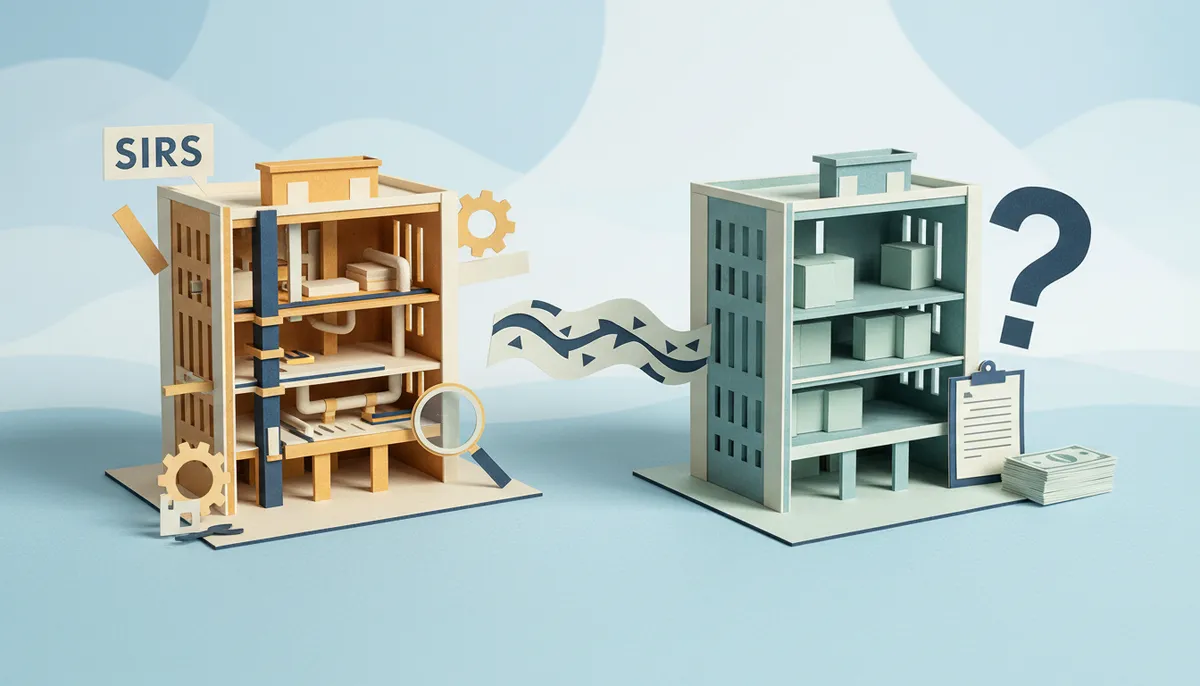
SIRS vs. Standard Reserve Studies: Side-by-Side Comparison
Let’s make this really easy to understand. Here’s a direct comparison of the two types of studies:
| Feature | Standard Reserve Study | Structural Integrity Reserve Study (SIRS) |
|---|---|---|
| Purpose | Financial planning | Structural safety + financial planning |
| Who Can Perform It | Reserve specialist or financial consultant | Licensed engineer or architect (required) |
| Florida Law Requirement | Recommended but not always required | Legally required for 3+ habitable story condos |
| Components Evaluated | Common area amenities and general systems | Eight specific structural components |
| Reserve Waivers Allowed | Yes (in most cases) | No — prohibited as of December 31, 2024 |
| Update Frequency | Varies by association | Every 10 years minimum |
| Physical Inspection Required | Optional depending on level | Yes, mandatory on-site inspection |
| Board Affidavit Required | No | Yes — board must sign receipt acknowledgment |
As you can see, these are fundamentally different documents with very different legal implications. For West Park buildings that qualify, a SIRS is not optional — it’s the law.

Key SIRS Deadlines West Park Associations Must Know
Timing matters a lot here. Missing a deadline can lead to serious consequences for your association. Here are the critical dates to keep in mind:
- December 31, 2024: Reserve waivers for SIRS-identified components became prohibited. Your association must now fully fund reserves for all structural elements identified in the study.
- December 31, 2025: Initial SIRS deadline for associations that existed before July 1, 2022. This is the primary compliance deadline under Florida Statute 718.112(2)(g).
- December 31, 2026: Extended deadline for associations that have a concurrent milestone inspection under House Bill 913 (2025).
- Every 10 years: SIRS must be updated after the initial completion. Updates may also be required sooner after major storms or significant repairs.
Understanding where your West Park building stands in relation to these deadlines is critical. You can also learn more about how this connects to broader compliance timelines by reading about 40-Year Building Recertification requirements for Florida owners.
How SIRS Connects to Building Recertification in West Park
Here’s something many West Park property owners don’t immediately realize — SIRS and building recertification are closely related, but they’re not the same thing. Building recertification (often called the 40-year or milestone inspection) focuses on verifying a building’s current structural and electrical safety. SIRS, on the other hand, looks at future maintenance planning and reserve funding.
That said, both processes often involve similar inspections, and the findings from one frequently inform the other. For instance, a milestone inspection might reveal significant concrete deterioration. That finding would then impact the reserve funding requirements in your SIRS. To understand how these intersect, explore more about the importance of 40-year building recertification for property longevity.
West Park falls within Broward County, which means condo associations here must comply with both Florida state SIRS requirements and any applicable county-level recertification mandates. For associations navigating both simultaneously, working with a qualified firm that understands both processes is extremely helpful. You can learn more about recertification requirements at the Miami-Dade County Recertification page for reference on regional compliance standards.
Who Needs a SIRS in West Park?
Not every building in West Park requires a SIRS. Here’s a quick checklist to help you figure out if your property qualifies:
- Your building is a condominium or cooperative (not a single-family home or rental apartment)
- The building has three or more habitable stories (as clarified by House Bill 913, 2025)
- The building has more than four family units
- Your association existed before July 1, 2022 (for the December 31, 2025 deadline) or was formed after that date
If your building checks all those boxes, you need a SIRS. Period. And keep in mind that the engineer or architect completing the study must be licensed in Florida and must physically inspect the building. This isn’t something that can be done remotely or on paper alone.
For more context on how structural inspections relate to broader compliance in our area, check out this article on how to complete a Structural Integrity Reserve Study in a neighboring Broward community.
Why You Can’t Skip or Waive SIRS Reserves
One of the biggest changes in recent Florida law is the prohibition on reserve waivers. In the past, condo associations could vote to waive or reduce reserve contributions — often to keep monthly fees lower. That option is now gone for SIRS-identified components.
As of December 31, 2024, your West Park association must fully fund reserves for all structural components identified in the SIRS. This is a major shift that affects budgeting, unit owner assessments, and long-term financial planning. Here’s why this rule matters so much:
- Safety first: Underfunded reserves lead to deferred maintenance, which leads to structural failures. The state wants to prevent another tragedy like Surfside.
- Legal liability: Boards that fail to fund SIRS-required reserves can face personal liability under Florida law.
- Property values: Lenders and buyers now scrutinize reserve fund adequacy. Underfunded buildings can become unsellable or uninsurable.
If your association has previously relied on reserve waivers, it’s time to re-evaluate your budget with the help of a licensed engineer who understands the full picture. You can also search Miami-Dade Building Recertification Cases to see how regional compliance is being tracked and enforced.
What to Expect During the SIRS Process
If you’re about to schedule a West Park Structural Integrity Reserves Study (SIRS) for the first time, here’s a step-by-step look at what the process involves:
- Hire a licensed engineer or architect with experience in Florida SIRS requirements and condominium building assessments.
- Schedule the physical inspection of all eight mandatory structural component categories. The engineer will examine the building in person.
- Receive the draft report with findings, estimated remaining useful life for each component, and replacement cost projections.
- Review and finalize the reserve funding schedule based on the engineer’s recommendations. This must be incorporated into your annual budget.
- Board members sign an affidavit acknowledging receipt of the completed SIRS report — this is a legal requirement.
- Implement the reserve funding plan and schedule the next update (typically within 10 years, or sooner after a major storm or significant repair).
It sounds like a lot, but working with an experienced team makes the process much smoother. O’Reilly Consultants specializes in exactly this type of work across Broward and Miami-Dade Counties, using advanced tools like drones and 3D laser scanning to ensure thorough, accurate assessments. You can read reviews from satisfied clients on Google — O’Reilly Consultants to see the difference a dedicated team makes.
To understand how the broader recertification process works from start to finish, review this helpful guide on the 8 key steps in the building recertification process for 2026.
Common SIRS Mistakes West Park Boards Should Avoid
Let’s talk about some of the most common missteps associations make when approaching their SIRS obligations:
- Assuming a financial reserve study is sufficient: If your building qualifies for SIRS, a standard financial reserve study does NOT satisfy the legal requirement.
- Hiring an unqualified professional: Only a licensed Florida engineer or architect can legally complete a SIRS. Always verify credentials before hiring.
- Missing the deadline: The December 31, 2025 initial SIRS deadline has already passed for most qualifying associations. If your building hasn’t complied, act immediately.
- Failing to update the budget: SIRS findings must be incorporated into your association’s annual budget. Overlooking this step creates legal exposure for the board.
- Ignoring post-storm update requirements: After a major hurricane or significant repair event, your SIRS may need to be updated sooner than the standard 10-year cycle.
For more tips on avoiding compliance pitfalls, check out the 5 SIRS mistakes Coral Springs condo boards must avoid — many of these apply directly to West Park associations too. You might also want to see how neighboring communities are handling this by reading about why Miramar condos need Structural Integrity Reserve Studies.
West Park SIRS: Making the Right Choice for Your Building
So, which does your West Park building need — a standard reserve study or a SIRS? The honest answer is: if your building qualifies under Florida law, you need both. A SIRS handles the mandatory structural components, while a standard reserve study may still be useful for non-structural amenities and amenities budgeting.
The good news is that working with a qualified team that handles both types of assessments makes this much easier to manage. You get a complete financial and structural picture of your building in one streamlined process. And when it comes to navigating West Park Structural Integrity Reserves Studies (SIRS) requirements, having the right expert in your corner is everything.
If you’re ready to get started or just want to talk through your options, reach out to O’Reilly Consultants to schedule your SIRS assessment today. Our licensed team is here to make the entire process clear, manageable, and stress-free for your West Park association.
FAQs
Q: What is the difference between a SIRS and a standard reserve study in West Park?
A: A standard reserve study is a financial planning tool focused on budgeting for common area components like pools and parking lots. A SIRS, on the other hand, is an engineering-based assessment required by Florida law that evaluates eight specific structural components of a condominium building — and it must be completed by a licensed engineer or architect. For qualifying West Park buildings, a SIRS is legally required, not optional!
Q: Which West Park buildings are required to complete a SIRS?
A: Any condominium or cooperative building in West Park that has three or more habitable stories and more than four family units is required to complete a SIRS under Florida Statute 718.112(2)(g). Thanks to House Bill 913 signed in June 2025, buildings with four or fewer family units are now exempt, and the three-story threshold specifically means habitable stories.
Q: Can our West Park condo association waive reserve contributions for SIRS-identified components?
A: Not anymore! As of December 31, 2024, Florida law prohibits reserve waivers for any components identified in a SIRS. Your association must fully fund reserves for all structural elements identified in the study. This is a big change from previous rules, so it’s important to update your budget and financial planning right away.
Q: How often does a West Park condo association need to update its SIRS?
A: After the initial SIRS is completed, your association must update the study at least every 10 years. However, updates may be required sooner if your building experiences a major storm event or undergoes significant structural repairs. Staying on top of this schedule helps keep your building safe and your association legally compliant.
Q: How does a SIRS relate to the 40-year building recertification requirement?
A: While both processes involve structural inspections, they serve different purposes. The 40-year recertification (or milestone inspection) verifies a building’s current structural and electrical safety, while a SIRS evaluates future maintenance needs and reserve funding for specific structural components. The findings from one often inform the other, and working with a team experienced in both processes — like O’Reilly Consultants — can make compliance much smoother.