

Key Takeaways
-
A Plantation SIRS is a reserve-planning study for qualifying condo and co-op associations, separate from the City's recertification safety check, so one does not replace the other.
-
Plantation's local recertification generally applies at age 25 and repeats every 10 years, so check your official City notice for your record number and deadlines.
-
Milestone inspections under Fla. Stat. §553.899 apply at age 30 (or 25 if local rules require), and phase one must be completed within 180 days after the official notice.
-
SIRS findings directly shape reserve contributions, and Florida law restricts waiving or underfunding reserves for covered components, so boards cannot skip them to hold down fees.
-
Plantation requires recertification reports to be submitted electronically and digitally signed and sealed by the licensed professional, so confirm current portal rules before submitting.
-
Start early by gathering past inspection reports, building plans, and repair records, then hire a licensed architect or engineer with local experience to avoid costly delays.
If you serve on a condo board or manage a building in Plantation, you have probably heard three terms tossed around at every meeting: recertification, milestone inspection, and structural integrity reserve study. They sound alike. They are not the same thing. Mixing them up can lead to missed deadlines, budget surprises, and plenty of headaches.
Here is the good news. Once you see how each one works, the path forward gets much clearer. A Plantation structural integrity reserve study (often called a SIRS) is a reserve-planning tool for condominium and cooperative associations under Florida law. It sits alongside the City’s building safety program, not on top of it.
In this guide, we walk through nine key facts in plain language. You will learn who needs a SIRS, what it covers, how it differs from local recertification, and how to get ready. Think of this as a friendly chat with someone who has been through the process many times.
1. A SIRS Is Not the Same as Building Recertification
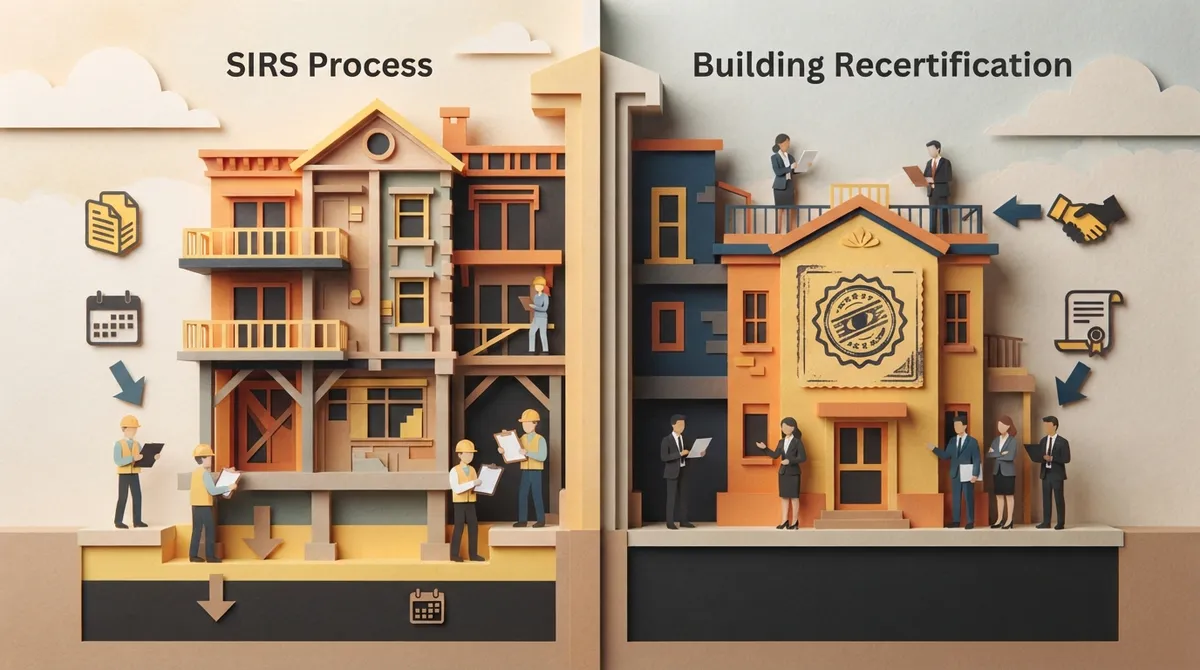
Let’s clear up the biggest mix-up first. A SIRS is a reserve-planning study. Recertification is a safety check required by the local government. One does not automatically satisfy the other.
In Plantation, the City runs a Building Safety Inspection Program that follows Broward County administrative provisions. The goal is to confirm that your building is safe. A SIRS, on the other hand, helps your association plan and fund future repairs. If you want a deeper look at the basics, read our guide on what building recertification is and why it matters.

2. Plantation’s Recertification Program Starts at 25 Years
Plantation’s local program generally applies to buildings that are at least 25 years old. After the first inspection, buildings are inspected again every 10 years. The City sends affected owners or their representatives a notice that includes a recertification record number and submission instructions.
Always check your official notice first. It tells you what applies to your property and when. For a closer look at how this plays out locally, see our post on 6 facts about Plantation building recertification.
3. Three Programs, Three Different Jobs
It helps to see these programs side by side. Each one answers a different question for your building.
| Program | Main Purpose | Who Performs It | Typical Trigger |
|---|---|---|---|
| Plantation Building Recertification | Local safety check of the building | Licensed architect or engineer | Age 25, then every 10 years |
| Milestone Inspection (Fla. Stat. §553.899) | Structural condition review | Florida-licensed architect or engineer | Age 30 (or 25 if the local agency requires it), then every 10 years |
| Structural Integrity Reserve Study | Reserve planning and funding for key components | Qualified professionals per Florida law | Required for applicable condo and co-op associations |
Knowing which box your building fits in saves time and money. Our article on SIRS vs. milestone inspection goes even deeper.
4. Who Needs a SIRS in Plantation?
A SIRS applies to qualifying condominium and cooperative associations under Florida law. It is a reserve-planning requirement, so it centers on the association’s budget and long-term care of the building.
If you manage a single-family HOA, your needs may look different. Many HOAs rely on a standard reserve study instead. We explain that in how to plan a winning Plantation HOA reserve study. When in doubt, check the current statute and ask a qualified professional.
5. What a SIRS Actually Looks At
A SIRS combines two things: a visual assessment of specific building components and a long-term reserve funding analysis. Florida law names the components that must be reviewed.
- Roofs and roofing systems
- Structural systems, including load-bearing walls and primary structural members
- Fireproofing and fire protection systems
- Plumbing systems
- Electrical systems
- Waterproofing and exterior painting
- Windows and exterior doors
- Other items specified by statute
This list shows why a SIRS feels broader than a simple inspection. It looks at the big-ticket items that cost the most to fix and replace.
6. The Milestone Inspection Has Two Phases
A milestone inspection is different from a SIRS, and it follows its own steps. Under Florida Statute §553.899, it applies to residential condominium or cooperative buildings that are at least three habitable stories tall. The general trigger is age 30, then every 10 years. A local enforcement agency may require the first one at age 25 based on local conditions.
Here is how the process works:
- Phase one is a visual examination and qualitative assessment of structural conditions.
- If a licensed architect or engineer finds substantial structural deterioration, phase two begins.
- Phase two takes a closer look at the affected areas and may include destructive or nondestructive testing.
- The licensed professional prepares a report with findings and recommendations.
Phase one must be completed within 180 days after the owner receives the local enforcement agency’s written notice. That clock moves fast, so do not wait. Learn more in when your Plantation milestone inspection is actually due.
7. Your SIRS Findings Shape Your Budget
This is where a Plantation structural integrity reserve study hits home for owners. The results guide how much your association sets aside each year for major repairs and replacements.
Florida law restricts waiving or underfunding reserves for the components covered by the study. That means boards cannot simply skip these contributions to keep monthly fees low. Check the current statute and any transition provisions when you prepare your budget.
Here is why that matters to each group:
- Condo boards avoid special assessments by planning early.
- Apartment owners understand repair costs before they hit.
- Investment firms protect market value, insurance, and refinancing options.
For a plain-English look at how the study ties into money, read 3 things Plantation condo boards must know about SIRS.
8. Plantation Wants Reports Submitted Electronically
Paper stacks are out. The City of Plantation states that required program documents must be submitted electronically. Narrative and safety inspection reports must also be digitally signed and sealed by the licensed professional.
Your official notice spells out the exact steps. Portal and document rules can change, so confirm current requirements directly with the City before you submit. A good inspector will guide you through this so nothing gets rejected over a small formatting issue.
Electrical safety is part of the broader picture too. See 7 mistakes to avoid with Plantation electrical safety inspections for common slip-ups.
9. Getting Ready: A Simple Step-by-Step Plan
Feeling a little overwhelmed? Totally normal. A steady plan makes all of this easier. Try these steps:
- Check your notice. Read the City’s official letter and note your record number and deadlines.
- Confirm which programs apply. Ask the City or Broward County about recertification, milestone, and SIRS timing.
- Gather your documents. Pull past inspection reports, building plans, and repair records.
- Hire the right pro. Pick a licensed architect or engineer with local experience. Our tips on how to choose licensed building inspectors can help.
- Schedule early. Deadlines, like the 90-day windows many owners face, come quickly.
- Plan repairs and reserves. Use the findings to build a realistic repair timeline and budget.
If you want a full walkthrough, our post on the 8 key steps in the building recertification process lays it all out.
Why Technology Makes This Easier
Modern tools take much of the guesswork out of building assessments. At O’Reilly Consultants, our small, specialized engineering team uses drones and 3D laser scanning to see areas that are hard or risky to reach on foot. That means faster work, clearer photos, and sharper data.
Our team brings real depth to the table. Owner and qualifying architect Sherard O’Reilly has deep experience in ASTM E2018 property condition assessments. Construction Manager and Engineer Catalina Torres adds 27 years of civil engineering and construction management experience. Project Engineer Rafael Ojeda brings more than 16 years in environmental due diligence. You can learn more on our About O’Reilly Consultants page.
We serve condos, high-rise and multi-family apartments, offices, industrial buildings, and more across Broward and Miami-Dade Counties. Our 10-, 25-, and 40-year recertification inspections help you stay on schedule, avoid penalties, and keep residents safe. We also offer SIRS, property condition assessments, electrical and illumination safety inspections, and HOA reserve studies, so you can handle everything with one trusted team. Curious about related work? Browse our guide to what Plantation property condition assessments include.
What About Repairs After the Inspection?
Sometimes an inspection finds items that need fixing. That is not a reason to panic. It is a reason to plan. Repairs must be completed within the timelines set by your enforcing agency, so move quickly once you have your report.
A clear, actionable report makes this much easier. It should rank issues by urgency, explain what needs to happen, and help your board prioritize spending. Small problems left alone can grow into costly ones, so early action almost always saves money. For example, tiny cracks can signal bigger issues, as we explain in understanding foundation cracks and hairline cracks.
For official guidance on how recertification programs work nearby, you can also review the Miami-Dade County recertification page. If you own property across the county line, you can search Miami-Dade building recertification cases online. And for the exact statute wording, see Florida Statutes §553.899.
Wrapping Up: You Have Got This
A Plantation structural integrity reserve study may sound heavy, but it is really a roadmap. It tells your association what your building needs and how to pay for it. Pair it with the City’s recertification program and any milestone inspection, and you have a solid plan for keeping residents safe and property values strong.
Remember the big takeaways. Recertification, milestone inspections, and SIRS are three separate pieces. Deadlines matter. Reports must be digitally signed and sealed. And the sooner you start, the smoother everything goes.
Ready for a low-stress experience? Our team would love to help. Request a free quote or call us at (512) 567-1191 to get started. You can also see what our neighbors say when you visit O’Reilly Consultants on Google.
FAQs
Q: What is the difference between a Plantation building recertification, a milestone inspection, and a SIRS?
A: Great question! Recertification is the City’s local safety check, a milestone inspection is a state-law structural review for qualifying condo and co-op buildings, and a SIRS is a reserve-planning study for budgeting future repairs. They are separate, so one does not automatically replace the others.
Q: Does a Plantation condominium need a structural integrity reserve study?
A: Qualifying condominium and cooperative associations generally do, because Florida law requires a SIRS for applicable associations. Since statutes and transition rules can change, confirm the current requirements and your building’s status with a qualified professional.
Q: What components must a Florida SIRS evaluate?
A: A SIRS reviews items like roofs, structural systems, fireproofing and fire protection, plumbing, electrical systems, waterproofing and exterior painting, and windows and exterior doors. It also covers other items named in the statute.
Q: Who is qualified to perform a milestone inspection in Florida?
A: A Florida-licensed architect or engineer performs a milestone inspection. Hiring a licensed team with local experience helps your report get accepted smoothly.
Q: How are Plantation recertification reports submitted?
A: The City requires electronic submission, and narrative and safety inspection reports must be digitally signed and sealed. Follow the steps in your official notice and double-check current portal rules with the City.