
Key Takeaways
-
Florida's milestone law requires a licensed architect or engineer to inspect qualifying condo and co-op buildings (3+ habitable stories) by December 31 of the year the building turns 30, then every 10 years.
-
Phase one must be completed within 180 days after receiving the local government's written notice, and phase two is required only if phase one finds substantial structural deterioration.
-
A general handyman or home inspector does not meet the requirement; Florida milestone inspections must be performed by a Florida-licensed architect or engineer.
-
Miami-Dade's recertification combines phase-one and phase-two elements into one inspection and applies 25 years for certain waterfront buildings, so local rules can differ from state law.
-
Milestone inspections produce a sealed report plus a separate summary of material findings, which the association must share with unit owners within the statutory timeframe.
-
Structural inspections are often paired with electrical reviews, reserve studies (SIRS), or property condition assessments, so bundling services can keep deadlines on track.
If you own or manage a building in South Florida, you have probably heard the words “structural inspections” more often lately. Maybe a notice landed in your mailbox. Maybe your board started asking questions. Either way, take a deep breath. You are in good company, and this is very manageable once you know the steps.
Structural inspections are the backbone of building recertification. A licensed professional checks the parts of your building that hold it up. They look at whether those parts are safe, sound, and ready for the years ahead. In 2026, with Florida’s milestone law and county recertification programs in full swing, understanding this process is more important than ever.
In this friendly guide, we will walk through what structural inspections are, which buildings need them, how the phases work, and what to do after you get your report. Whether you sit on a condo board, manage an HOA, or own an apartment complex or office tower, you will find clear answers here.
What Are Structural Inspections in Building Recertification?
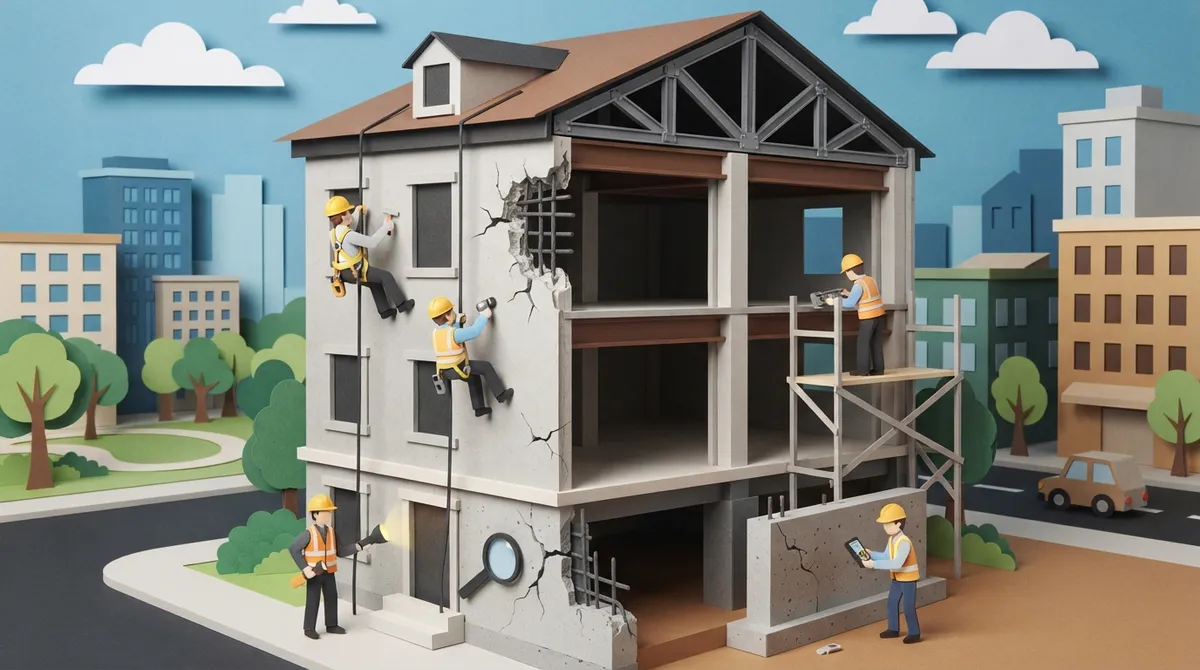
A structural inspection is a professional review of your building’s load-bearing parts and main structural systems. Think of it as a health checkup for the bones of your property. The goal is to find out whether the building is safe to keep using and whether any repairs or deeper studies are needed.
In building recertification, the inspector looks at items like:
- Foundations and footings
- Columns, beams, and load-bearing walls
- Floor and roof systems
- Balconies, walkways, and railings
- Parking structures and stairwells
- Signs of concrete cracking, spalling, or rusting rebar
The inspector then writes a report. That report says what they found, how serious it is, and what you should do next. Rules vary by city and county, so always confirm the details with your local building department. For a broader look at the big picture, see our guide on what building recertification is and why it matters.

Which Buildings Need Structural Inspections in Florida?
Not every building faces the same rules. Requirements depend on building type, height, age, and location. Here is a simple way to think about it.
Florida’s Milestone Inspection Law
Under the 2026 Florida statute (Section 553.899), milestone inspections apply to qualifying condominium and cooperative buildings that are three habitable stories or taller. The first inspection is due by December 31 of the year the building turns 30, based on its certificate-of-occupancy date. After that, it repeats every 10 years. A local government can require an earlier inspection if local conditions call for it.
Local Recertification Programs
Miami-Dade County runs its own recertification program. It is related to the state law but not identical. County guidance says its recertification meets or exceeds the state’s minimum requirements. Miami-Dade describes recertification at 30 years, or 25 years for certain buildings near the water, then every 10 years after that. You can review the program on the Miami-Dade County Recertification page.
Broward County and its cities also have their own approaches. If you are in Broward, our article on Broward recertification inspections is a great place to start.
| Program | Who It Covers | First Inspection | Repeat Cycle |
|---|---|---|---|
| Florida Milestone Inspection (Sec. 553.899) | Condo and co-op buildings, 3+ habitable stories | Year building turns 30 (due Dec. 31) | Every 10 years |
| Miami-Dade Recertification | Buildings under county rules | 30 years (25 years for certain waterfront buildings) | Every 10 years |
| Local city rules | Varies by city | Varies | Varies |
Because the rules differ, do not assume one schedule fits every building. When in doubt, ask your local building official. If you are weighing state versus local rules, SIRS vs. milestone inspection can help you sort out what applies to your condo.
Who Is Qualified to Perform Structural Inspections?
This part matters a lot. In Florida, the milestone inspection must be done by a Florida-licensed architect or engineer. Miami-Dade and some municipalities also require structural and electrical recertification reports from Florida-registered architects or engineers.
So a general handyman or a home inspector is not the right fit here. You want a licensed professional who knows the codes, the forms, and the submission process. If you are still deciding, our article on how to choose licensed building inspectors for recertification walks through what to look for.
This is where O’Reilly Consultants shines. Our small, specialized engineering team serves Broward and Miami-Dade Counties and focuses on recertification and safety-focused inspections. Our owner and qualifying architect, Sherard O’Reilly, brings deep experience in detailed building documentation. Construction Manager and Engineer Catalina Torres adds 27 years of civil engineering and construction management experience. Together, we deliver assessments that meet and often exceed county requirements.
How Does the Structural Inspection Process Work?
Florida’s milestone inspection has two phases. Miami-Dade’s recertification, by contrast, combines phase-one and phase-two elements into one inspection. Here is the state-level flow in plain steps.
- You receive a notice. The local government sends written notice that your building needs an inspection.
- You hire a licensed professional. This must be a Florida-licensed architect or engineer.
- Phase one begins. The inspector does a visual exam of habitable and nonhabitable areas, including major structural components. They give a qualitative assessment of structural condition.
- Phase one is completed on time. Under the 2026 statute, this must happen within 180 days after you receive the local government’s written notice.
- Phase two, if needed. If phase one finds substantial structural deterioration, phase two is required.
- Reports are submitted. The professional sends a sealed report and a separate summary of material findings and recommendations.
- Repairs follow. You complete any needed repairs within the mandated timeline.
Many property owners tell us the notice is the scariest part. Once the process starts, it feels much more doable. Our step-by-step breakdown, 8 key steps in the building recertification process, shows how it all fits together.
What Happens in Phase One vs. Phase Two?
Let us look at these two phases side by side, since this is where many boards get confused.
| Feature | Phase One | Phase Two |
|---|---|---|
| Purpose | Visual check of structural condition | Deeper look at areas of concern |
| Method | Visual examination of habitable and nonhabitable areas | Destructive or nondestructive testing |
| When required | Always, for covered buildings | Only if phase one finds substantial structural deterioration |
| Who directs scope | The licensed architect or engineer | The licensed architect or engineer |
In phase two, the inspector decides how much testing is needed. That might include taking small concrete samples or using tools that scan inside walls and slabs without damaging them. The scope depends on what phase one uncovered.
What Does Substantial Structural Deterioration Mean?
In simple terms, it means damage that weakens the building’s ability to carry loads or stay safe. If the inspector finds this, they will explain it in the report. Then you move on to phase two and a repair plan. The sooner you act, the easier and often cheaper the fix.
How Do Drones and 3D Scanning Improve Structural Inspections?
Here is some good news. Technology has made structural inspections faster and safer. At O’Reilly Consultants, we use drones and 3D laser scanning to look at hard-to-reach areas like high facades, rooftops, and tall exteriors.
Why does this help you?
- Better coverage: Drones capture high-resolution images of areas that are tough to reach.
- Faster timelines: Less scaffolding and less waiting means quicker results.
- Clearer records: 3D imaging creates a detailed record of your building’s condition.
- Safer work: Fewer people hanging off the side of your building. That is a win for everyone.
These tools help us deliver fast, accurate estimates and clear reports with actionable recommendations, which is exactly what boards and managers need when deadlines are tight.
What Documents Must Be Submitted After a Structural Inspection?
Paperwork is a big part of recertification, and missing a form can cause delays or fines. For Florida’s milestone inspection, the professional must submit:
- A sealed inspection report
- A separate summary of material findings and recommendations
These go to the association, other applicable building owners, and the local building official. The association must then share the summary with unit owners within the statutory timeframe.
For Miami-Dade, forms and submission steps follow county procedures. You can look up case details through the Miami-Dade Building Recertification case search. Always double-check deadlines, since local procedures and forms can differ.
How Do Structural Inspections Fit With Electrical Inspections and Reserve Studies?
Structural inspections rarely stand alone. Many local programs pair them with electrical reviews, and some buildings also need reserve planning.
Here is how they connect:
- Electrical and illumination inspections: Often required alongside the structural report. Learn more in our guide to electrical inspections for recertification.
- Structural Integrity Reserve Studies (SIRS): These plan for future repair and replacement costs of key building components.
- Property Condition Assessments (PCA): A broad review of overall property health, helpful for buyers, lenders, and investors.
If your board is trying to untangle all these terms, our article on PCA vs. building inspection clears things up nicely. Bundling services with one trusted team can also keep everything on schedule.
What Mistakes Should You Avoid With Structural Inspections?
We have seen good boards and owners trip up on a few common things. The good news is they are easy to avoid.
- Waiting too long. Deadlines are firm. Start early so you have time for repairs.
- Hiring an unqualified inspector. Make sure they are a Florida-licensed architect or engineer.
- Ignoring small cracks. Little problems can grow into big, expensive ones.
- Assuming one rule fits all. Check your local ordinance and building age triggers.
- Skipping the follow-up. Getting the report is only step one. Repairs and filings matter too.
For more ways to stay out of trouble, check out 15 condo 40-year inspection mistakes that cost you.
How Do Structural Inspections Help Different Property Owners?
Every owner has a slightly different reason to care. Here is how structural inspections help each group.
- Condo boards: You meet legal mandates, protect residents, and avoid fines.
- Commercial property owners: You keep offices, plazas, and hotels compliant and safe for tenants and guests.
- HOA managers: You hit tight deadlines and keep owners informed with clear summaries.
- Apartment owners: You confirm structural integrity and reduce legal and safety risks.
- Investment firms: You protect market value, support insurance, and speed up sales or refinancing.
No matter which group you fall into, a clean, well-documented report is one of the best assets you can have. It tells lenders, insurers, buyers, and residents that your building is cared for.
Why Choose O’Reilly Consultants for Structural Inspections?
When your building’s safety and your deadlines are on the line, you want a team that is calm, clear, and experienced. O’Reilly Consultants is built for exactly that.
Here is what you get when you work with us:
- Comprehensive 10-, 25-, and 40-year recertification inspections in Broward and Miami-Dade Counties
- Guidance from the moment you get your county notice through final document submission
- Drone and 3D imaging for thorough, efficient evaluations
- Detailed reports with clear, actionable recommendations
- Support for condos, high-rise and multi-family apartments, offices, and industrial buildings
- Related services like electrical and illumination safety inspections, SIRS, PCA, and HOA reserve studies
We believe recertification should feel smooth, timely, and low-stress. Curious what our clients say? You can visit us on Google and read O’Reilly Consultants reviews. To learn more about our approach, see About O’Reilly Consultants.
Ready to Move Forward With Your Structural Inspection?
Structural inspections do not have to be stressful. With the right team, you get a clear plan, honest answers, and peace of mind that your building is safe today and ready for tomorrow. Remember to check your local requirements, hire a licensed professional, and start early.
If you have a notice in hand or just want to plan ahead, we are here to help. Request a free quote today, or call us at (512) 567-1191 to talk with our friendly team. Let us help you cross this off your list with confidence.
FAQs
Q: What is a structural inspection for building recertification?
A: It is a professional check of your building’s load-bearing parts and main structural systems. A licensed architect or engineer looks for damage, decides if the building is safe, and recommends any repairs or further testing. Think of it as a checkup for your building’s bones.
Q: Who is qualified to perform a structural recertification inspection?
A: In Florida, milestone inspections must be done by a Florida-licensed architect or engineer. Miami-Dade and some cities also require Florida-registered architects or engineers for structural and electrical reports. A general home inspector does not meet this requirement.
Q: At what age is a building’s first recertification inspection due?
A: Under Florida’s 2026 milestone law, qualifying condo and co-op buildings are inspected by December 31 of the year they turn 30, then every 10 years. Miami-Dade describes 30 years, or 25 for certain waterfront buildings. Local governments may require earlier inspections, so always confirm with your building department.
Q: What happens if phase one finds substantial structural deterioration?
A: Then a phase-two inspection is required. This can include destructive or nondestructive testing aimed at the areas of concern. The inspector directs the scope, and you will receive recommendations for repairs.
Q: How do Miami-Dade recertification rules differ from Florida’s milestone law?
A: They are related but not identical. Miami-Dade combines phase-one and phase-two elements into a single inspection and says it meets or exceeds the state’s minimums. Forms, deadlines, and age triggers can differ, so check with your local authority.