
Key Takeaways
-
Broward County uses a unified 25-year initial inspection threshold followed by reinspections every 10 years, though older 40-year terminology still appears in some documents—always confirm your specific deadline with your county notice.
-
You must submit your recertification report within 180 days of receiving your official notice, with some scenarios requiring 90-day submission; missing deadlines can result in significant financial penalties.
-
Not all buildings require recertification; single-family homes, government buildings, schools, and structures under 3,500 square feet are typically exempt, so verify your property’s status before assuming compliance is required.
-
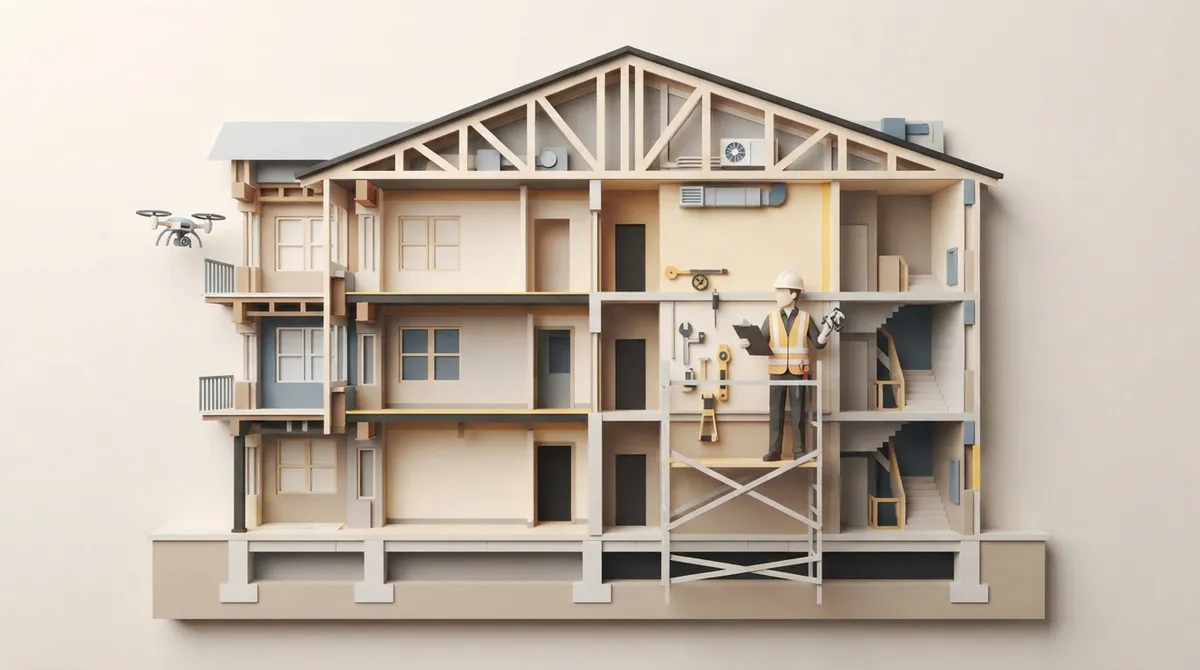
Licensed structural engineers and electrical contractors conduct separate assessments examining foundations, walls, roofs, wiring, and electrical systems, using modern tools like drone imaging and 3D laser scanning for thorough evaluations.
-
Commercial buildings, condominiums, multi-family residential properties, office towers, and HOA-managed complexes fall under the Building Safety Inspection Program; contacting a specialized team early prevents scheduling delays and ensures proper compliance.
-
Schedule your inspection immediately after receiving notice rather than waiting until the deadline approaches, as structural repairs and reinspections require significant time to coordinate and complete successfully.
If you own or manage a building in Broward County, you’ve probably heard the term “recertification” tossed around at HOA meetings or in emails from your property manager. Maybe it feels confusing, or even a little stressful. That’s completely normal! Building recertification inspection Broward requirements can seem like a maze, but we promise it doesn’t have to be overwhelming. Grab a cup of coffee, get comfortable, and let’s walk through exactly what you need to know together.
Whether you’re on a condo board trying to keep residents safe, a commercial property owner juggling deadlines, or an HOA manager who just wants clear answers, this guide is for you. We’ve pulled together the most current facts about Broward’s Building Safety Inspection Program (BSIP) so you can move forward with confidence instead of guesswork. Let’s dig in!

1. What Building Recertification Inspection Broward Actually Means
Broward County handles building recertification a little differently than some of its neighbors. Instead of leaving it up to each city, the county runs one unified system called the Building Safety Inspection Program, or BSIP. This means whether your property sits in Fort Lauderdale, Hollywood, or Pembroke Pines, the same countywide rules generally apply.
The goal is simple: make sure older buildings are still safe for the people living and working inside them. Inspectors look closely at structural elements and electrical systems to spot warning signs before they become real problems. It’s not about nitpicking every code detail, it’s about confirming your building is safe right now, in its current condition.
If this is your first time going through the process, our team at O’Reilly Consultants is happy to walk you through it step by step. You can learn more about what building recertification is and why it matters before diving into the details below.

2. The Age Thresholds Can Be Confusing (Here’s the Clarity You Need)
Here’s where a lot of property owners get tripped up, and honestly, we don’t blame them. Older Broward guidance referred to a 40-year recertification system, and some resources still use that language today. However, the modern Broward BSIP framework generally points to a 25-year mark for the initial inspection, followed by reinspections every 10 years after that.
Why the mixed messaging? Broward’s program actually dates back further than many people realize. Hollywood, Florida’s local guidance notes the county program was created in 2005 and became effective countywide in January 2006. Over time, terminology evolved, but some older documents and even a few service providers still use the original 40-year phrasing.
Here’s a quick breakdown to keep things straight:
- Initial inspection at 25 years is the commonly cited current standard for buildings covered under Broward’s BSIP
- Reinspection occurs every 10 years after that initial milestone
- Older references to a 40-year threshold still appear in some guidance and may apply depending on your building’s history
- Your local building official’s notice is always the most reliable source for your specific deadline
Confused about which timeline applies to your property? That’s exactly the kind of question our team at O’Reilly Consultants answers every single day. Feel free to request a free quote and we’ll help sort out exactly where your building stands.
3. Which Buildings Actually Need This Inspection
Not every structure in Broward County falls under the recertification umbrella, which is honestly a relief for a lot of small property owners. Understanding the exemptions can save you time and worry.
Buildings Typically Required to Recertify
- Commercial buildings over a certain size or occupancy threshold
- Condominiums and multi-family residential buildings
- Office towers, shopping plazas, and hotels
- HOA-managed residential complexes meeting size requirements
Common Exemptions
- Single-family homes and certain small residential dwellings
- Government buildings
- School buildings under the Broward County School Board
- Buildings located on tribal lands
- Some minor structures under 3,500 square feet
If you’re managing a larger commercial property, you might also want to check out what a commercial building inspection really covers so you know exactly what your inspector will be looking at during the visit.
4. What Actually Happens During the Inspection
So what does an inspector actually do when they show up at your building? It’s a fair question, and knowing the process ahead of time can ease a lot of nerves.
- A licensed structural engineer or architect reviews the building’s foundation, walls, roof, and overall structural integrity
- A licensed electrical contractor or engineer inspects wiring, panels, and electrical safety systems
- Both professionals document findings, including any cracks, corrosion, or code concerns
- A formal report is prepared summarizing the condition of the building
- The report is submitted to the county along with any required forms
- If repairs are needed, the property owner receives a timeline for completing them
Modern firms often use advanced tools to make this process faster and more accurate. Drones can capture high-resolution images of roofs and upper facades without anyone needing to climb a ladder, and 3D laser scanning creates detailed models that catch even small structural shifts. If you’ve noticed hairline cracks around your property, it’s worth reading about foundation cracks and hairline cracks in commercial buildings to understand what’s normal wear and what needs attention.
5. Deadlines, Fees, and Paperwork You Shouldn’t Ignore
Nobody loves paperwork, but missing a deadline here can mean real financial pain. Once you receive your official notice, the clock starts ticking.
| Requirement | Typical Detail |
|---|---|
| Compliance window after notice | Commonly cited as 180 days to complete and submit the report |
| Alternate submission deadline cited by some guides | 90 days in certain notice scenarios |
| Typical filing fee mentioned | Around $350, though this varies |
| Size exemption threshold | 3,500 square feet for certain minor structures |
| Reinspection cycle | Every 10 years following the initial inspection |
Because fees and deadlines can shift depending on your specific municipality and notice, always confirm the exact numbers with your local building official. For official Broward context alongside Miami-Dade’s parallel process, the Miami-Dade County Recertification page offers a helpful comparison, and you can even search Miami-Dade building recertification cases to see how similar buildings have handled the process.
Steps to Stay on Track
- Open and read your notice the moment it arrives, don’t let it sit in a drawer
- Contact a licensed inspection team right away to schedule your assessment
- Ask for a clear timeline so you know exactly when repairs, if any, need to be finished
- Keep copies of every report and receipt for your association or ownership records
- Submit your paperwork well before the deadline, not on the last possible day
Our friends at Academia Development and other Broward-focused resources have written extensively about these timelines, and we always encourage owners to double check current requirements directly with the county building department, since language around the program has changed over the years.
6. Why Choosing the Right Team Makes All the Difference
Here’s the honest truth: not every inspection company treats your building recertification with the same level of care. You want a team that understands both the structural and electrical sides of the process, uses modern technology, and communicates clearly at every step.
This is where O’Reilly Consultants truly shines. Led by owner and qualifying architect Sherard O’Reilly, our team brings deep experience in property condition assessments, covering everything from facades and fire systems to utilities and site characteristics. We’re also supported by Construction Manager and Engineer Catalina Torres, who brings 27 years of civil engineering and construction management know-how, plus Project Engineer Rafael Ojeda, who has completed more than 1,000 Phase I Environmental Site Assessments across South Florida.
We’re a small, specialized team, and that’s intentional. It means you get personal attention instead of getting lost in a big impersonal company. We serve buildings across Broward and Miami-Dade Counties, and we understand the local nuances that make each municipality’s process just a little different. Whether you need help with the full building recertification process or you’re just trying to figure out how to choose licensed building inspectors for recertification, we’re here to help.
Here’s a quick look at why property owners across the county trust us:
- Advanced drone and 3D laser scanning technology for thorough, non-invasive assessments
- Fast turnaround on estimates and detailed, easy-to-understand reports
- Experience with condos, apartments, office towers, hotels, and industrial buildings
- Support with related services like SIRS, PCA, and HOA reserve studies
- Deep familiarity with Broward and Miami-Dade county requirements
Curious what our clients think? You can visit us on Google to see O’Reilly Consultants reviews and get a feel for how we treat every building like it’s our own.
Comparing 25-Year vs 40-Year Terminology
Since so much confusion exists around these two numbers, here’s a side-by-side comparison to help you understand which one might apply to your situation.
| Aspect | 25-Year Framework | Older 40-Year Terminology |
|---|---|---|
| Common usage today | Widely cited as the current BSIP standard | Still referenced by some older documents and firms |
| Reinspection cycle | Every 10 years | Every 10 years |
| Best source of truth | Your county notice | Your county notice |
| Applies to | Buildings and structures under current BSIP | Older buildings under legacy terminology |
Still unsure which category your building falls into? That’s a completely reasonable question, and it’s one we hear all the time. Rather than guessing, reach out and let our licensed professionals review your building’s specific history and notice.
A Few Extra Tips Before You Move Forward
- Don’t wait until the deadline is close, inspections and repairs take time to schedule properly
- Ask your inspector whether your building qualifies for any exemptions before assuming you need a full inspection
- Keep your HOA or condo board informed throughout the process so everyone stays on the same page
- Save every report for future property sales, refinancing, or insurance renewals
- Consider pairing your recertification with a broader property condition assessment for added peace of mind
Building recertification inspection Broward requirements don’t have to feel like a burden. With the right partner guiding you, the process becomes a lot more manageable, and honestly, it can even give you a sense of pride knowing your building is safe and well cared for.
Ready to get started or just have questions? Request a free quote from O’Reilly Consultants today, or call us at (512) 567-1191 to speak with our friendly team. We’re honored to serve property owners across Broward and Miami-Dade Counties, and we’d love to help your building stay safe, compliant, and ready for whatever comes next.
FAQs
Q: Is Broward County recertification based on 25 years or 40 years?
A: Great question, and you’re not alone in wondering! The modern Broward BSIP framework is commonly described as requiring an initial inspection at 25 years, with reinspections every 10 years after that. Older guidance and some providers still reference a 40-year system, so always confirm with your county notice to be sure.
Q: Which buildings in Broward County need a recertification inspection?
A: Most commercial buildings, condos, and multi-family residential properties covered under the BSIP need recertification. Single-family homes, government buildings, school buildings, and some small structures under 3,500 square feet are typically exempt, but it’s always worth double checking your specific property.
Q: How long do I have to submit my recertification report after receiving notice?
A: Many Broward guides cite a 180-day window from the notice date to complete and submit your report, though some scenarios reference shorter 90-day deadlines. Your official notice will always have the exact deadline for your building, so read it carefully as soon as it arrives.
Q: Who is qualified to perform a Broward building recertification inspection?
A: You’ll need a licensed structural engineer or architect for the structural review, plus a licensed electrical contractor or engineer for the electrical portion. Working with an experienced, specialized team like O’Reilly Consultants ensures both sides are handled properly and on time.
Q: Does Broward recertification also satisfy Florida’s milestone inspection requirements?
A: In many cases, yes! Some guides note that Broward’s BSIP inspection can satisfy the statewide milestone inspection requirement for applicable buildings. That said, it’s smart to confirm this overlap with your inspector so nothing falls through the cracks.