
Key Takeaways
-
Confirm your building's exact recertification or milestone requirements with your local building department before hiring anyone, since local programs can differ on age limits, scope, forms, and deadlines.
-
Florida milestone inspections must be performed by a Florida-licensed architect (Chapter 481) or engineer (Chapter 471); a general home inspector usually cannot sign off on a recertification.
-
Verify the inspector's active Florida license and confirm the local building authority accepts them for your specific program, not just that they are nearby.
-
Florida milestone rules apply to condo and co-op buildings of three habitable stories or more at 30 years (25 near the coast), then every 10 years after that.
-
Get a written scope covering deliverables, schedule, fees, and follow-up inspections, and ask what happens if structural deterioration is found.
-
Keep the signed and sealed report, the summary of findings, photos, repair timelines, and proof of submission to the building official for insurance, financing, and future sales.
Picture this: a notice from the county lands in your mailbox, and suddenly your building needs an inspection. Your first move is probably to grab your phone and type “independent building inspector near me.” That is a smart start, and you are far from alone. But in building recertification, the right inspector is not just the closest one on the map.
An independent building inspector for recertification is a licensed professional who checks your building’s structural and life-safety condition under your local rules. This is very different from a home inspector who looks at a house before a sale. The word “independent” means the person has no stake in repairs, so you get honest findings.
This friendly guide explains what these inspectors do, which rules apply in South Florida, and how to pick the right one. Whether you sit on a condo board, manage an HOA, or own apartments or commercial space, you will leave with a clear plan.
What Does an Independent Building Inspector Do for Recertification?
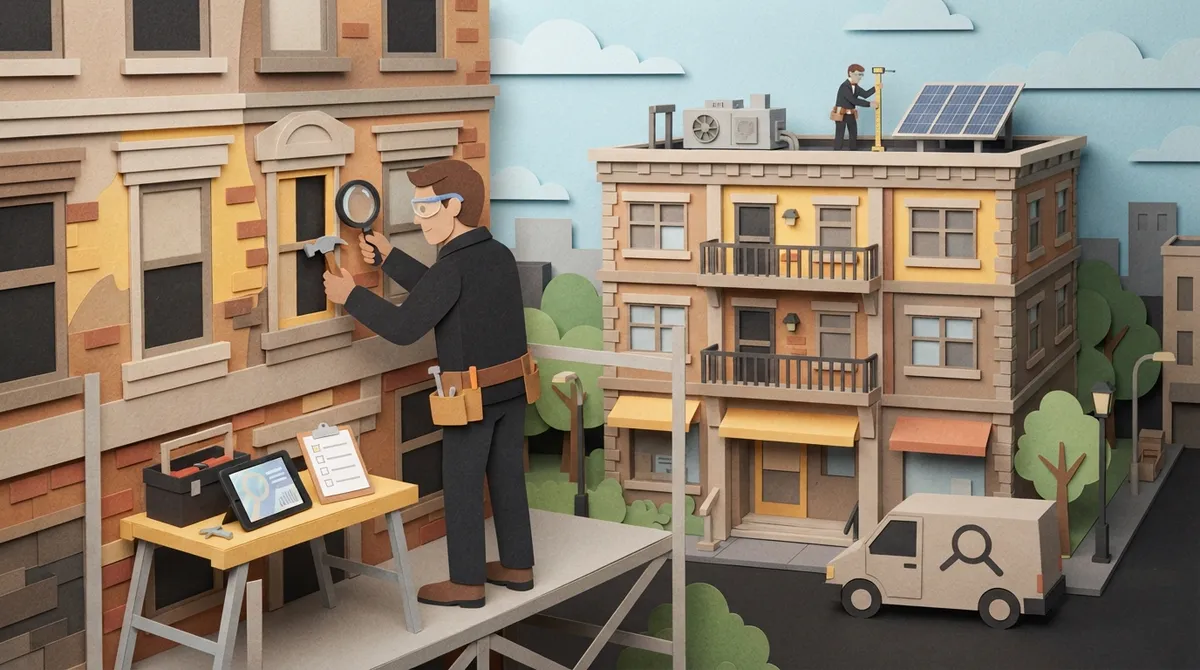
An independent inspector examines the parts of your building that keep people safe. They look at the structure, the electrical systems, and other life-safety items. Then they put their findings in a formal report that goes to you and to the local building official.
Think of the inspector as a trusted doctor for your building. They check the “vital signs,” spot small problems early, and tell you what needs attention. They do not sell you repairs, which keeps the advice honest.
A good inspection usually includes:
- A visual review of major structural components
- A look at habitable and non-habitable areas
- Checks of electrical and illumination systems, where your program requires them
- Photos and notes that document every finding
- A signed and sealed report with clear recommendations
If you want a deeper look at what the work involves, our guide to what structural inspections involve for recertification walks through it step by step.
Is It a Recertification or a Milestone Inspection?
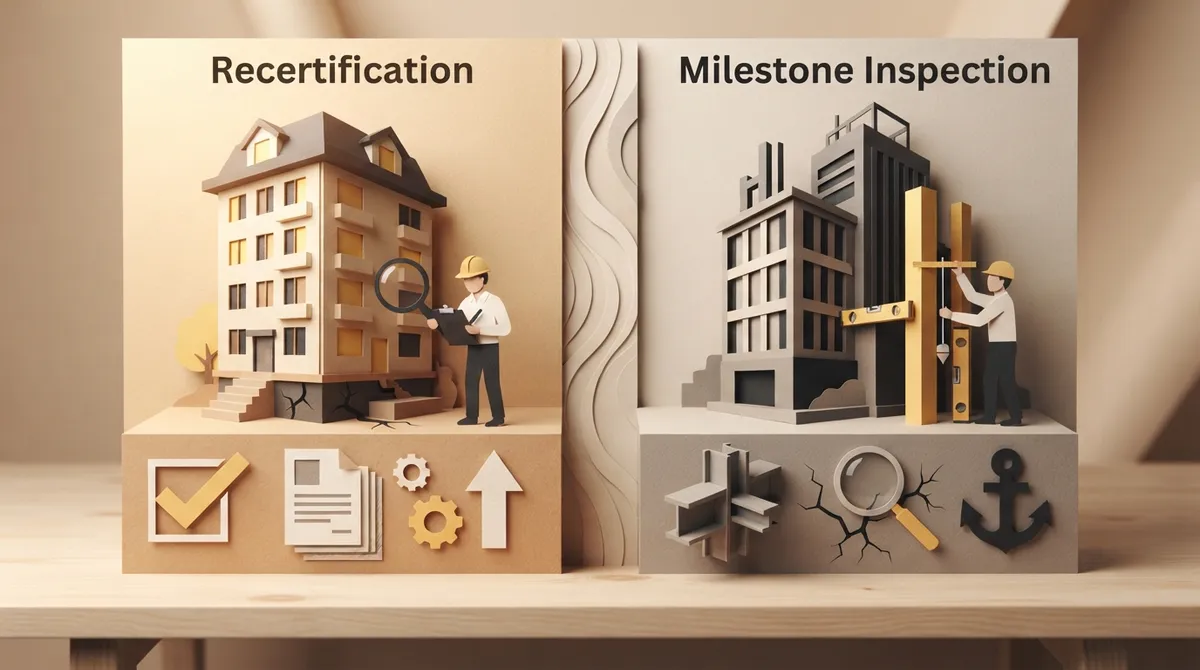
This is where many owners get tripped up. Florida has local recertification programs and a statewide milestone inspection rule. They are related, but they are not the same thing.
Under Florida Statute §553.899, covered condominium and cooperative buildings that are three habitable stories or more generally need a milestone inspection by the year they turn 30. After that, they need one every 10 years. Buildings within 3 miles of the coastline have an earlier first deadline at 25 years.
Local programs add their own rules. Broward County’s Building Safety Inspection Program, for example, calls for repeat inspections every 10 years. Its policy also says the program can count toward the applicable milestone requirements. Local rules can differ on age limits, scope, forms, and deadlines.
So the first step is simple. Check with your local building department to confirm which program covers your building. Our article on SIRS vs. milestone inspection can help you sort out the terms.
Quick Comparison
| Item | Florida Milestone Inspection | Local Recertification Program |
|---|---|---|
| Rule source | Florida Statute §553.899 | County or city rules |
| Who it covers | Condo and co-op buildings, three stories or more | Varies by jurisdiction and building type |
| First deadline | 30 years (25 near the coast) | Set locally |
| Repeat cycle | Every 10 years | Often every 10 years, but varies |
| Who may inspect | Licensed Florida architect or engineer | Set by the local authority |
Who Is Qualified to Perform the Inspection?
Here is the big point: a nearby provider is not automatically approved for your program. For a Florida milestone inspection, the inspector must be an architect licensed under Chapter 481 or an engineer licensed under Chapter 471. They must also be authorized to practice in Florida.
Local programs can add more requirements. Some set extra qualifications for certain threshold buildings or technical areas like electrical work. That is why a general home inspector usually cannot sign off on a recertification. If you are weighing your options, our piece on local engineer vs. home inspector explains the difference in plain terms.
You can also read more about certified vs. general inspectors before you decide.
How Do You Find a Qualified Independent Building Inspector Near You?
Searching for an independent building inspector near me is a good start, but a few steps will keep you safe. Here is a simple process you can follow.
- Confirm your requirements. Call your local building department and ask which program applies to your building and what your deadline is.
- Check licenses. Verify that the architect or engineer holds an active Florida license.
- Confirm local acceptance. Ask whether the authority having jurisdiction accepts the inspector for your specific program.
- Ask about experience. Look for real structural and building-safety experience with buildings like yours.
- Get a written scope. Request the deliverables, schedule, fees, and any follow-up inspection in writing.
- Compare proposals. Look at the full picture, not only the price.
Our guide to choosing licensed building inspectors adds more tips, and you can avoid common slip-ups by reading about mistakes when hiring building inspectors near me.
What Questions Should You Ask Before You Hire?
A friendly chat with a few good questions can tell you a lot. You do not need to be an expert. You just need to be curious.
- Are you licensed in Florida, and can I see your license number?
- Does the local building official accept you for this program?
- What does your written scope include and exclude?
- How long will the inspection and report take?
- What happens if you find structural deterioration?
- Do you offer follow-up inspections after repairs?
Clear, calm answers are a great sign. Vague or rushed answers are a hint to keep looking.
What Happens If the Inspector Finds Problems?
Finding an issue is not the end of the world. In fact, it is the whole point of the inspection. Catching a problem early almost always costs less than fixing it later.
Under the Florida milestone process, phase one is a visual examination of habitable and non-habitable areas and major structural components. If phase one finds substantial structural deterioration, a phase two inspection is required. Phase one generally must be completed within 180 days after the owner receives written notice from the local enforcement agency.
The inspector then submits a sealed report and a separate summary of material findings and recommendations to the association or owner and to the local building official. From there, you plan repairs and schedule any follow-up. You can see the full path in our 8 key steps in the building recertification process.
Who Pays for the Inspection?
Under the cited Florida statute, the association is responsible for arranging and paying for the milestone inspection. For other buildings, the owner usually carries the cost. There is no reliable statewide average price, so ask for written quotes. You can learn how to avoid budget surprises in our article on building inspection cost mistakes.
What Documents Should You Receive?
When the work is done, you should not be left guessing. A quality inspection leaves you with a clear paper trail.
- A signed and sealed inspection report
- A separate summary of material findings and recommendations
- Photos that document the conditions found
- A list of any required repairs and timelines
- Proof of submission to the local building official
Keep these records safe. They help with insurance, refinancing, and future sales. Real estate investment firms in particular find that clean documentation keeps deals moving without delays.
Why Local Knowledge Matters in South Florida
Every county and city has its own habits, forms, and deadlines. An inspector who works in your area every week knows what local officials expect. That saves time and avoids rejected paperwork.
If you want to explore local rules, the Miami-Dade County Recertification page is a helpful official resource. You can also search Miami-Dade building recertification cases to check the status of a building. For Broward owners, our overview of Broward recertification inspections covers what to expect in 2026.
How Does O’Reilly Consultants Help?
If you are looking for an independent building inspector near me in Broward or Miami-Dade, O’Reilly Consultants is built for exactly this work. We are a small, highly specialized engineering team focused on building recertification and safety-focused inspections for the South Florida real estate market.
We handle 10-, 25-, and 40-year recertification inspections for high-rise and multi-family apartments, offices, industrial buildings, and condos. Our team uses drones and 3D imaging for thorough evaluations, fast and accurate estimates, and detailed reports with clear, actionable recommendations.
We also guide you through the whole journey. That includes the county’s notice, hiring a licensed professional, submitting documents, and completing repairs on time. Our work meets and exceeds county requirements, and we offer related services like electrical and illumination safety inspections, SIRS, property condition assessments, and HOA reserve studies.
Our team is led by owner and qualifying architect Sherard O’Reilly, who brings deep experience in ASTM E2018 property condition assessments. Construction Manager and Engineer Catalina Torres adds 27 years of civil engineering and construction management experience. Project Engineer Rafael Ojeda brings 16+ years in environmental due diligence and more than 1,000 Phase I Environmental Site Assessments across South Florida.
Curious how we are doing? You can visit us on Google and read what our O’Reilly Consultants customers say. To learn more about the team, see About O’Reilly Consultants.
Tips for Different Property Types
Different owners face different needs. Here is a quick look at how to approach it.
- Condo boards: Start early, share the notice with all board members, and plan for repair costs in your budget.
- Commercial owners: Expect structural and electrical review, and coordinate access with tenants.
- HOA managers: Track the 90-day window closely and ask about drone and 3D scanning to speed things up.
- Apartment owners: Plan for a full property assessment of structure, electrical systems, and compliance.
- Investment firms: Keep recertification reports current to protect value, insurance, and financing.
For help getting ready, see how to prepare for a building safety inspection in 2026.
Final Thoughts
Finding an independent building inspector near me does not have to feel stressful. Confirm your local rules, check licenses, ask good questions, and choose a team that knows South Florida. Do that, and you will move through recertification with confidence.
Ready to get started? Request a free quote from our friendly team, or call us at (512) 567-1191 to talk through your deadline. We would love to help your building stay safe, compliant, and ready for the future.
FAQs
Q: What does an independent building inspector do for building recertification?
A: An independent inspector is a licensed professional who checks your building’s structural and life-safety condition under your local rules. They document what they find in a sealed report and share it with you and the local building official. Since they do not sell repairs, you get honest, unbiased advice.
Q: Does my building need a recertification or a Florida milestone inspection?
A: It depends on your building type, age, and location, so the best first step is a quick call to your local building department. Florida milestone rules cover condo and co-op buildings three stories or more at 30 years (25 near the coast), while local programs have their own rules. In Broward, the local program can count toward milestone compliance.
Q: Who is qualified to perform a building recertification inspection in Florida?
A: For a Florida milestone inspection, the inspector must be a licensed Florida architect or engineer. Local programs may add extra requirements, so always confirm the inspector is accepted by your local authority. A home inspector usually cannot sign off on a recertification.
Q: How often does a building need recertification?
A: Under the Florida milestone rule, covered buildings need an inspection at 30 years and every 10 years after that. Broward’s local program also calls for repeat inspections every 10 years. Check with your building department for your exact schedule.
Q: What happens if the inspector finds structural deterioration?
A: If the first phase finds substantial structural deterioration, a second, deeper phase is required. The inspector then reports findings and recommendations, and you plan repairs within the required timeline. Catching issues early usually keeps repairs more manageable and affordable.