
Key Takeaways
-
Buildings 25+ years old in Coral Springs must complete mandatory electrical safety inspections under Broward County’s BSIP, with recertification required every 10 years thereafter or face fines and occupancy restrictions.
-
Only Florida-licensed architects or engineers can perform inspections; threshold buildings over 3 stories or 50 feet require special inspectors, and systems ≥400 amperes require infrared thermography to detect heat anomalies.
-
Property owners have 180 days from county notice to complete inspections and submit reports electronically; immediate hazards must be reported within 24 hours and critical findings within 10 days.
-
Common electrical issues found in older buildings include outdated wiring, overloaded panels, missing GFCI protection, corroded connections, and improper grounding that require budgeting for repairs.
-
Comprehensive inspections evaluate service panels, circuit breakers, wiring condition, outlets/switches, grounding, and GFCI/AFCI protection using color photos and standardized BORA reporting forms.
-
Missing BSIP deadlines results in daily fines, code enforcement actions, occupancy restrictions, insurance complications, and liability exposure, making early planning with qualified professionals essential.
If you own or manage a building in Coral Springs, electrical safety inspections are likely already on your radar. They should be — they’re not optional. Under Broward County’s Building Safety Inspection Program (BSIP), buildings that are 25 years old or older must undergo formal structural and electrical evaluations. Miss the deadline, and you could face fines, forced vacancies, or worse. Understanding what these inspections involve, who can perform them, and how to prepare makes the whole process much less stressful. Whether you’re a condo board member, an apartment building owner, or a commercial property manager, this guide walks you through everything you need to know about Coral Springs electrical safety inspections — clearly, step by step.

What Is the Broward County Building Safety Inspection Program?
Coral Springs follows Broward County’s BSIP, which was updated in 2023 and aligns with Florida Statute 553.899 for milestone inspections. The program requires buildings that are 25 years old to undergo their first structural and electrical safety inspection. After that, recertification happens every 10 years. The goal is simple: make sure aging buildings are still safe for the people inside them.
These inspections aren’t just a formality. Electrical systems degrade over time. Wiring insulation cracks, panels corrode, and breakers wear out. A comprehensive inspection catches these issues before they cause fires, outages, or worse. For more context on why recertification matters long-term, check out the importance of 40-year building recertification for property longevity.

Who Needs a Coral Springs Electrical Safety Inspection?
Not every building triggers BSIP requirements. Here’s a quick breakdown of which properties are typically affected:
- Residential condominiums and co-ops aged 25 years or older
- Multi-family apartment buildings with three or more units
- Commercial office buildings, retail plazas, and hotels
- Industrial and mixed-use structures meeting the age threshold
- Any building subject to a 40-year recertification requirement under county rules
If you’re not sure whether your property qualifies, you can search Miami-Dade Building Recertification Cases as a reference, or contact the Broward County Building Division directly. Owners typically receive a written notice from the county, after which they have 180 days to complete the inspection and submit their report.
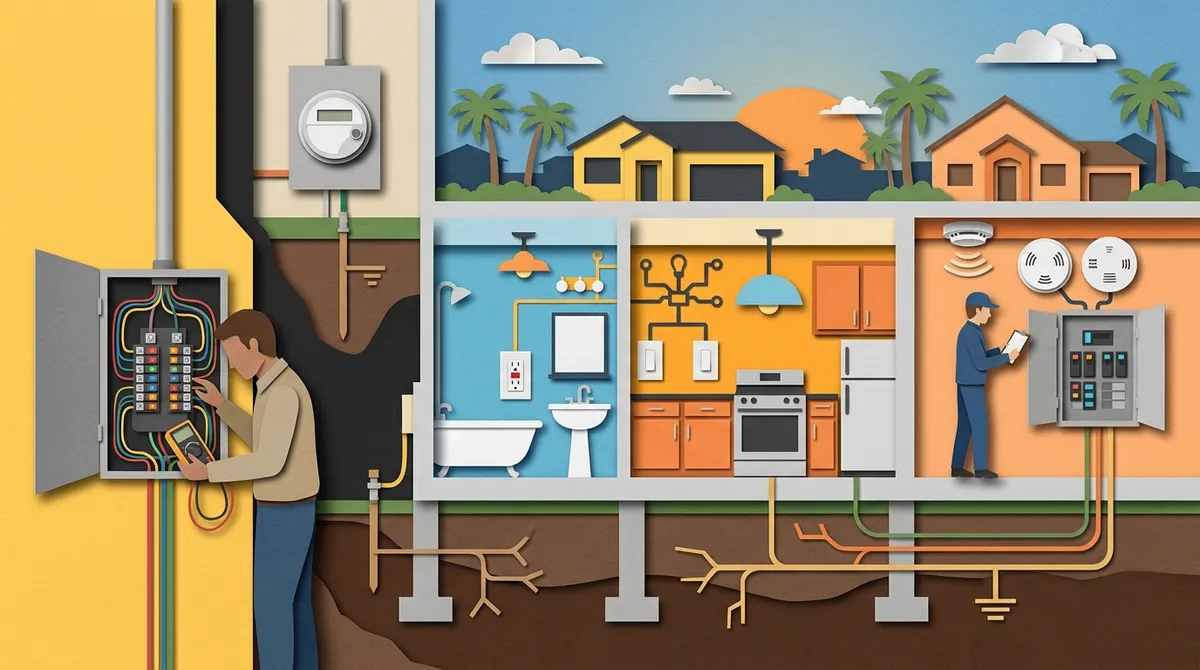
What Does an Electrical Safety Inspection Actually Cover?
This is the part most property owners want to understand clearly. A Coral Springs electrical safety inspection for building recertification is thorough. It goes well beyond flipping a few switches and checking some outlets. Here’s what a licensed inspector will typically evaluate:
Core Electrical System Components
- Service panels and subpanels — checking for corrosion, proper labeling, and capacity
- Circuit breakers and fuses — testing for correct sizing and functionality
- Wiring throughout the building — looking for outdated or deteriorated materials
- Electrical outlets and switches — verifying proper grounding and condition
- GFCI (Ground Fault Circuit Interrupter) protection in wet areas
- AFCI (Arc Fault Circuit Interrupter) protection where required by code
Advanced Assessment: Infrared Thermography
For electrical systems rated at 400 amperes or higher, Broward County’s 2024 Building Safety Inspection Guide requires infrared thermography as part of the assessment. This technology detects heat anomalies that indicate faulty connections, overloaded circuits, or failing equipment — issues that are invisible to the naked eye. It’s one of the smartest tools in a qualified inspector’s kit.
Teams like O’Reilly Consultants use advanced technology, including drones and 3D laser scanning, to conduct thorough evaluations that go beyond the minimum. This kind of precision helps you catch problems early and avoid costly emergency repairs later.

Who Is Qualified to Perform These Inspections?
This is a critical point. Not just anyone can sign off on a building safety inspection in Coral Springs. The county requires inspections to be performed by Florida-licensed architects or engineers. For threshold buildings — those over three stories or 50 feet tall — special inspectors are required.
Here’s a simple overview of the qualification requirements:
| Building Type | Required Inspector | Notes |
|---|---|---|
| Standard residential buildings | Florida-licensed architect or engineer | Must submit BORA standardized forms |
| Threshold commercial buildings | Special inspector required | Buildings over 3 stories or 50 feet tall |
| Electrical systems ≥400 amperes | Licensed engineer with IR thermography | Infrared report must be included |
Hiring a qualified professional isn’t just about compliance — it’s about getting an accurate picture of your building’s real condition. A poorly conducted inspection that misses a hazardous condition doesn’t protect anyone.
Step-by-Step: How to Complete Your Coral Springs Electrical Safety Inspection
Here’s a straightforward process to follow from start to finish:
- Receive your county notice. The City of Coral Springs will notify building owners when their property is due for inspection. You have 180 days from this notice to complete and submit your report.
- Hire a Florida-licensed architect or engineer. Make sure they are experienced with Broward County BSIP requirements and familiar with BORA standardized reporting forms.
- Schedule the inspection. Note that as of 2025, inspections use two-hour appointment windows and no longer allow phone scheduling — all scheduling is done through the Coral Springs online portal.
- Complete the inspection. Your licensed professional will evaluate all electrical systems, document findings with color photos, and determine whether the building is safe.
- Review the report and address hazards. Immediate threats must be reported within 24 hours. Critical findings need to be addressed within 10 days. Non-critical repairs are addressed based on the timeline outlined in the report.
- Submit your report electronically. All reports must be submitted through the Coral Springs building portal. Paper submissions are not accepted.
- Obtain permits for electrical work. Any repairs requiring electrical work need sealed plans, site plans, and proper contractor registration. Jobs over $5,000 require a Notice of Commencement.
Understanding the Reporting Requirements
Once the inspection is complete, your licensed professional prepares a formal report using standardized BORA (Broward County Board of Rules and Appeals) forms. This report isn’t a casual summary. It includes:
- Color photographs documenting observed conditions
- A clear safety status determination (safe, unsafe, or safe with conditions)
- Specific repair recommendations with priority levels
- Documentation of any infrared thermography results
- A signed and sealed certification from the licensed professional
The report is then submitted electronically through the Coral Springs building portal. Timing matters here. If the inspector finds an immediate hazard, they are required to notify the city within 24 hours. Critical findings that aren’t immediate emergencies must be reported within 10 days. Staying on top of these timelines keeps you compliant and your residents safe. For reference on how similar processes work in the neighboring county, visit the Miami-Dade County Recertification page.
What Repairs Are Commonly Found After Electrical Inspections?
After years of use, older buildings almost always have some electrical issues. Here are the most common findings from Coral Springs electrical safety inspections:
- Outdated wiring — Aluminum wiring or cloth-insulated wiring common in older buildings often needs replacement or remediation.
- Overloaded panels — Panels that haven’t been upgraded to handle modern electrical loads are flagged frequently.
- Missing GFCI protection — Bathrooms, kitchens, laundry areas, and outdoor outlets often lack the required GFCI outlets in older buildings.
- Corroded connections — Especially in coastal South Florida, salt air causes corrosion that weakens electrical connections over time.
- Improper grounding — Outdated buildings may not meet current grounding standards required by the National Electrical Code.
Knowing these common issues ahead of time lets you budget for repairs before the inspector arrives. A proactive approach always beats scrambling at the last minute.
The Connection Between Electrical Inspections and Full Building Recertification
It’s important to understand that electrical safety is just one part of a full building recertification. Broward County’s BSIP also requires a structural evaluation. Both components must be completed and submitted together for full compliance. Think of them as two sides of the same coin — your building can’t be certified as safe with only one piece of the puzzle.
For buildings approaching their 40-year mark, the recertification requirements intensify. You can learn more about the full scope of those requirements through the 40-year recertification services offered by O’Reilly Consultants. Their team, led by qualifying architect Sherard O’Reilly and supported by engineer Catalina Torres’s 27 years of civil engineering experience, brings exceptional depth to every inspection. If structural concerns are also on your mind, their insights on understanding foundation cracks and hairline cracks in commercial buildings are worth reading.
Penalties for Missing BSIP Deadlines
Ignoring a BSIP notice is never a good idea. The consequences can include:
- Fines and daily penalty assessments from the City of Coral Springs
- Code enforcement actions that could restrict building occupancy
- Difficulty securing or renewing insurance coverage
- Complications during property sales or refinancing
- Increased liability exposure if an incident occurs in a non-compliant building
The good news? With the right team by your side, meeting these deadlines is very achievable. And while a wellness retreat might sound appealing after a stressful inspection cycle (maybe something relaxing from Mobile Area Massage of Tampa Bay when the project wraps up!), the real peace of mind comes from knowing your building is fully compliant.
Tips for a Smooth Inspection Experience
- Start early. Don’t wait until the last month of your 180-day window. Give yourself time to address any findings before the deadline.
- Gather your records. Have prior inspection reports, electrical permits, and maintenance logs ready for your inspector.
- Clear access to electrical rooms. Make sure panels, junction boxes, and electrical closets are accessible and not blocked by stored items.
- Communicate with tenants. If access to units is needed, notify residents well in advance to avoid delays.
- Work with an experienced recertification firm. A team that knows BORA forms, Broward County requirements, and electronic submission processes will save you significant time and headaches.
Ready to get started? You can request a free quote from O’Reilly Consultants today, or call us at (512) 567-1191 to speak with a recertification specialist directly. You can also visit us on Google to read reviews from property owners and managers across Broward and Miami-Dade Counties who have gone through this process with our team.
Conclusion
Coral Springs electrical safety inspections are a legal requirement, but they’re also a genuine opportunity to protect your building, your tenants, and your investment. The BSIP process is structured, but it doesn’t have to be overwhelming. With a clear understanding of the timeline, a qualified licensed professional, and a proactive mindset, you can move through recertification with confidence.
O’Reilly Consultants brings the expertise, technology, and local knowledge to make your building recertification smooth and stress-free. From the initial inspection through final report submission, you’ll have a dedicated team guiding every step. Don’t wait for a penalty notice to take action — reach out and get your inspection scheduled today.
FAQs
Q: Which buildings in Coral Springs require electrical safety inspections for recertification?
A: Great question! Under Broward County’s Building Safety Inspection Program, any building that is 25 years old or older needs a structural and electrical safety inspection. This includes condos, multi-family apartment buildings, commercial offices, retail plazas, and hotels. After the initial inspection, recertification happens every 10 years.
Q: Who is allowed to perform a Coral Springs building electrical safety inspection?
A: Only Florida-licensed architects or engineers can perform these inspections — it’s a firm requirement, not a suggestion! For threshold buildings (those over three stories or 50 feet tall), special inspectors are required. Making sure your inspector is properly licensed protects you and ensures the county will accept your report.
Q: How long do I have to complete a Coral Springs electrical safety inspection after receiving notice?
A: You have 180 days from the date of your county notice to complete the inspection and submit your report electronically through the Coral Springs building portal. That sounds like a lot of time, but between scheduling, the inspection itself, and any needed repairs, it goes faster than you’d expect — so start early!
Q: What happens if an inspector finds a hazard during an electrical safety inspection in Coral Springs?
A: If an immediate hazard is found, your licensed inspector is required to notify the City of Coral Springs within 24 hours. Critical findings that aren’t immediate emergencies must be reported within 10 days. You’ll need to address these findings promptly to maintain compliance and keep your building occupants safe.
Q: What are the penalties for missing a BSIP deadline in Coral Springs?
A: Missing a BSIP deadline can result in daily fines, code enforcement actions, and even restrictions on building occupancy — none of which are fun to deal with! Beyond the fines, non-compliance can complicate your insurance, property sales, and refinancing. The best move is to start the process early and work with an experienced recertification team to stay on track.