

If you manage or own a condo building in Fort Lauderdale, you’ve probably heard the term “reserve study” thrown around at board meetings. But what exactly does it mean for your building’s future — and your wallet? Fort Lauderdale HOA reserve studies are more than just spreadsheets. They are powerful planning tools that tell you what your building needs, when it needs it, and how much it will cost. Done right, they can save your association from financial surprises and keep your building safe for years to come.
Since Florida tightened its building safety laws after the 2021 Surfside tragedy, reserve studies have taken on even greater importance. They now sit at the center of compliance, budgeting, and long-term building health. Whether you’re a condo board member, an HOA property manager, or a real estate investor, understanding how to use these studies effectively is no longer optional — it’s essential.

What Is a Fort Lauderdale HOA Reserve Study?
A reserve study is a financial planning report. It estimates the remaining useful life of your building’s major components and calculates how much money your association needs to set aside for future repairs and replacements. Think of it like a maintenance budget roadmap that looks 30 years into the future.
Common components covered in a reserve study include:
- Roofing systems and waterproofing
- Elevators and mechanical systems
- Parking lots, paving, and common areas
- Pool decks and recreational facilities
- Exterior painting and facade elements
- Fire protection and plumbing systems
Reserve studies help boards avoid two painful outcomes: deferred maintenance that threatens safety, and sudden special assessments that blindside residents. You can learn more about how building assessments fit into the bigger picture by reading about what a commercial building inspection really covers.
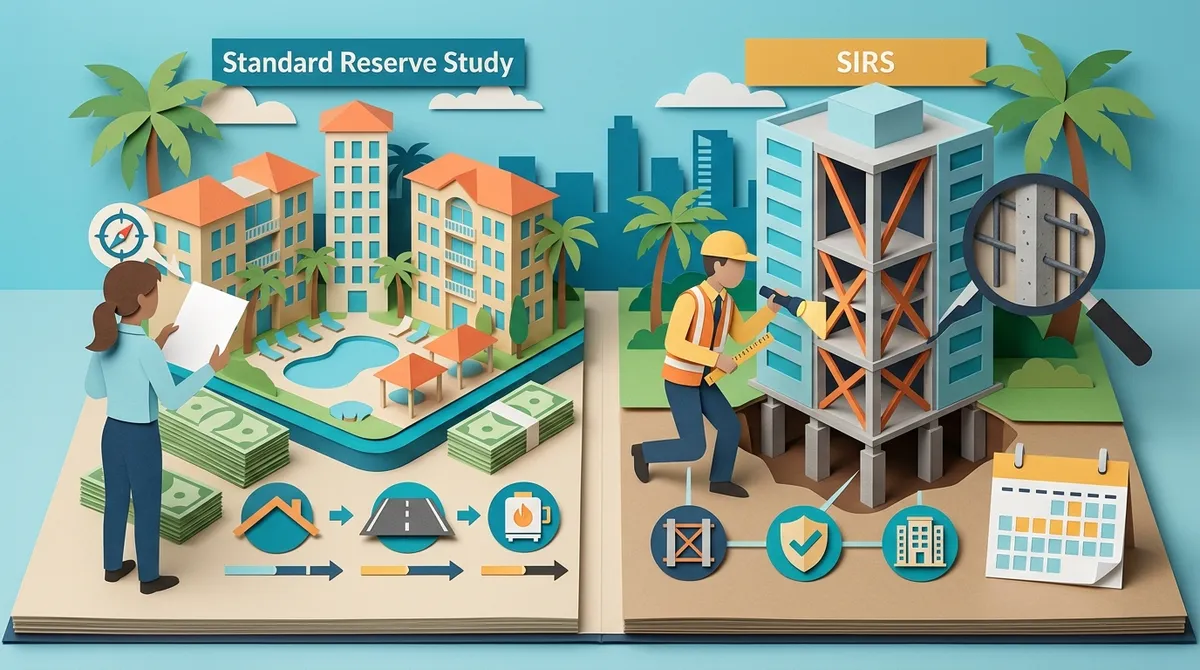
The Difference Between a Standard Reserve Study and a SIRS
Here’s where things get a little more specific — and very important for Fort Lauderdale condo associations. Florida now requires certain buildings to complete a Structural Integrity Reserve Study (SIRS). This is not the same as a standard reserve study.
A standard reserve study covers all major common-area assets. A SIRS focuses specifically on life-safety and structural components. Under Florida’s Chapter 718 legislation — expanded after Surfside — condominium and cooperative buildings that are three habitable stories or higher must complete a SIRS.
SIRS-covered components include:
- Load-bearing walls and foundation
- Roofs and floor systems
- Fireproofing and fire protection systems
- Plumbing and electrical systems
- Exterior windows and waterproofing
For a deeper look at what Fort Lauderdale SIRS requirements involve, check out the 7 key facts about Fort Lauderdale SIRS you must know. You should also review Florida’s own compliance guidance through Miami-Dade County’s official building recertification page to stay current on regulatory deadlines.
Which Fort Lauderdale Buildings Must Complete a SIRS?
Florida law is clear: all condominium associations with buildings three stories or higher must have completed their Structural Integrity Reserve Study by December 31, 2025. If your building hasn’t done this yet, you are already in non-compliance territory — and the clock is ticking.
The 10-year repeat cycle means you’ll need to renew your SIRS every decade. However, many industry professionals recommend updating your broader reserve study every 3 to 5 years to account for changes in construction costs, building conditions, and component aging.
Importantly, Florida law no longer allows reserves for structural-integrity items to be treated as optional line items. You can’t vote to waive them for covered components. This is a significant change that affects how boards plan their annual budgets.
Step-by-Step: How to Use Your Reserve Study Effectively
Getting a reserve study completed is just the first step. Using it well is what truly protects your building and your residents. Here’s how to make the most of it:
- Commission the study from a qualified professional. Make sure your study is conducted by a licensed engineer or reserve specialist with experience in Florida condo law and South Florida’s building environment. For SIRS, a licensed structural engineer must be involved.
- Review the 30-year projection carefully. Look at which components are approaching end of life in the next 5 to 10 years. These are your priority items. Flag them for your board’s capital planning discussions.
- Align your reserve funding with the study’s recommendations. Calculate the annual contributions needed to meet projected replacement costs. Underfunding today means special assessments tomorrow.
- Cross-reference with your building inspection reports. Reserve studies should not exist in isolation. Compare findings with your most recent structural and electrical inspection reports to identify any mismatches between documented conditions and projected timelines.
- Use the study to guide vendor bidding. When it’s time to replace a roof or repave a parking lot, your reserve study gives you a solid cost baseline for evaluating contractor bids.
- Update the study on schedule. Set a calendar reminder for your 3-to-5-year voluntary update and your mandatory 10-year SIRS renewal. Don’t wait for a notice from the county.
How Reserve Studies Connect to Building Recertification
Fort Lauderdale HOA reserve studies don’t live in a vacuum. They are deeply connected to your building’s broader recertification obligations. In Broward County, buildings 40 years and older — and every 10 years after that — must pass a 40-year recertification inspection. This inspection looks at structural and electrical systems, much like a SIRS does from a financial planning perspective.
When lenders, buyers, or insurers review a property, they often look at both the recertification inspection report and the reserve study side by side. A well-funded reserve study alongside a clean recertification report signals a well-managed building. A poorly funded study next to deferred maintenance findings is a red flag that can slow a sale or spike your insurance premium.
To understand what Florida building owners must know about these timelines, read about 40-year building recertification for Florida owners. You can also explore the full 8 key steps in the building recertification process for 2026 to see how reserve planning fits in.
Common Reserve Study Mistakes Fort Lauderdale Boards Make
Even well-intentioned boards can stumble when it comes to reserve studies. Here are the most common mistakes to avoid:
- Using outdated cost estimates. Construction costs in South Florida have risen significantly. Studies that are more than 5 years old may severely underestimate replacement costs.
- Confusing a standard reserve study with a SIRS. These are different documents with different legal requirements. Using one to satisfy the other could leave your association non-compliant.
- Voting to waive SIRS-covered reserves. Florida law prohibits this for applicable buildings. Doing so exposes your board to serious legal and financial liability.
- Failing to act on the study’s recommendations. A reserve study sitting in a drawer is worthless. The findings must drive real budget decisions and capital improvement planning.
- Not pairing the study with an engineering inspection. Numbers on paper need to be verified against actual building conditions. Pair your reserve study with a current structural assessment for accuracy.
If you want to dig deeper into mistakes that affect property assessments in Fort Lauderdale, the article on 4 PCA mistakes Fort Lauderdale building owners must avoid is a great companion read.
What Components Are Inspected in a Florida Reserve Study
Understanding what goes into a reserve study helps you ask better questions and verify the quality of the work. Here’s a quick reference table comparing what a standard reserve study covers versus what a SIRS specifically requires:
| Component | Standard Reserve Study | SIRS (Structural Integrity) |
|---|---|---|
| Roof systems | Yes | Yes (mandatory) |
| Load-bearing walls / Foundation | Sometimes | Yes (mandatory) |
| Waterproofing / Exterior | Yes | Yes (mandatory) |
| Elevators | Yes | Varies |
| Parking / Paving | Yes | No |
| Pool and amenities | Yes | No |
| Fire protection systems | Sometimes | Yes (mandatory) |
| Plumbing / Electrical | Sometimes | Yes (mandatory) |
As you can see, a SIRS has a narrower but more legally critical scope. A thorough reserve study program for Fort Lauderdale associations should ideally include both. For buildings approaching recertification milestones, pairing these documents with a fresh inspection report from a licensed engineer creates a much stronger compliance and financial planning package.
How O’Reilly Consultants Can Help
Navigating Fort Lauderdale HOA reserve studies alongside recertification requirements can feel overwhelming — but it doesn’t have to be. O’Reilly Consultants is a specialized engineering firm serving Broward and Miami-Dade Counties. The team is led by owner and qualifying architect Sherard O’Reilly, supported by Construction Manager and Engineer Catalina Torres with 27 years of experience, and Project Engineer Rafael Ojeda with over 16 years in environmental due diligence.
The firm offers structural and electrical inspections, SIRS, HOA reserve studies, property condition assessments, and full building recertification services — all under one roof. With advanced tools like drones and 3D laser scanning, the team delivers detailed, accurate reports that meet county requirements and hold up to lender and HOA scrutiny. You can visit O’Reilly Consultants on Google to read reviews from South Florida building owners and managers who have worked with the team firsthand.
If you’re managing an older building or approaching a recertification deadline, it’s also worth reviewing the importance of 40-year building recertification for property longevity to understand how reserve planning and structural inspections work together long-term.
You can also search Miami-Dade Building Recertification cases online to verify your building’s current recertification status and see what documentation has already been filed.
When to Schedule Your Reserve Study Update
Timing matters. Here’s a quick framework to help you decide when to act:
- Immediately — if your building is three stories or higher and has not yet completed a SIRS. You are likely already past the Florida compliance deadline.
- Within 12 months — if your existing reserve study is more than 5 years old, especially given recent increases in South Florida construction costs.
- Before a building sale or refinancing — lenders and buyers will request this document. Having a current, well-funded study strengthens your position significantly.
For questions about electrical components within your reserve study scope, the guide on 9 things to know about Fort Lauderdale electrical safety inspections provides helpful context on what inspectors look for and why it matters for your reserves.
Conclusion: Put Your Reserve Study to Work
Fort Lauderdale HOA reserve studies are one of the most valuable tools your association has — but only if you use them well. They protect residents, stabilize finances, keep your building compliant with Florida law, and make your property more attractive to buyers and lenders. With the post-Surfside regulatory landscape still evolving, now is not the time to push reserve planning to the back burner.
Whether you need a fresh SIRS, a standard reserve study update, or a full recertification inspection package, getting the right team behind you makes all the difference. Don’t wait for a county notice or a financial shortfall to take action. Request a free consultation with O’Reilly Consultants today and take the first step toward a safer, better-funded building.
FAQs
Q: What is a Fort Lauderdale HOA reserve study?
A: A Fort Lauderdale HOA reserve study is a financial planning report that estimates the remaining useful life and future replacement costs of your building’s major common-area components. It helps your association set aside the right amount of money each year so you’re never caught off guard by a major repair bill.
Q: How is a reserve study different from a Structural Integrity Reserve Study (SIRS)?
A: A standard reserve study covers all major common elements like pools, parking lots, and elevators. A SIRS is a legally required report under Florida law that focuses specifically on life-safety and structural components — like load-bearing walls, roofs, foundations, and fire protection systems — for buildings three habitable stories or higher.
Q: Which Fort Lauderdale condo buildings are required to complete a SIRS?
A: Any condominium or cooperative building in Fort Lauderdale that is three habitable stories or higher is required to complete a Structural Integrity Reserve Study under Florida law. The initial SIRS deadline was December 31, 2025, with a mandatory renewal cycle every 10 years.
Q: Can a Fort Lauderdale HOA waive reserve funding for SIRS components?
A: No — and this is a big deal! Florida law no longer allows condominium associations to vote to waive or reduce reserve funding for items covered under the SIRS requirements. Doing so could expose your board to significant legal and financial liability, so it’s important to budget accordingly.
Q: How do reserve studies connect to building recertification in Fort Lauderdale?
A: Reserve studies and building recertification go hand in hand in Fort Lauderdale. Lenders, buyers, and insurers often review both documents together — a current reserve study paired with a clean recertification inspection report signals a well-maintained, financially stable building. They’re both key parts of protecting your building’s long-term value and compliance.