

Key Takeaways
-
Missing Miami-Dade recertification deadlines results in monetary fines, unsafe building designations, legal action, insurance complications, and property sale/refinance difficulties—you have 90 days from notice to submit.
-
Coastal condos/co-ops 3+ stories within 3 miles of shore require first milestone inspection at 25 years (vs. 30 years inland), with subsequent inspections every 10 years due to 2022 post-Surfside safety law changes.
-
Only Florida-licensed engineers or architects can conduct recertification inspections and submit reports including written assessments, photographs, and site plans documenting structural, electrical, façade, and unpermitted modification issues.
-
Buildings built 1993+ recertify at 30 years then every 10 years; pre-1982 buildings follow 40-year first schedule then every 10 years; single-family homes, duplexes, and structures under 2,000 sq ft are generally exempt.
-
Inspectors thoroughly examine foundations for cracks/settlement, building façades, electrical systems for code compliance, and unpermitted modifications—flagged issues require repairs with proper permits before occupancy approval.
-
Real estate investors and property owners should prioritize recertification compliance early to maintain property value, secure favorable insurance rates, and ensure smooth refinancing or sales transactions with lenders and buyers.
If you own or manage a building in Miami-Dade County, you’ve probably heard the term “building recertification” thrown around. But what exactly does it mean, and why should you care? Simply put, Miami-Dade building recertification is a mandatory safety program. It requires older buildings to undergo structural and electrical inspections at key milestones. These inspections confirm that a building is still safe to occupy. Missing a deadline can lead to serious fines and legal trouble. The good news? With the right team by your side, the process doesn’t have to be stressful. Let’s walk through everything you need to know, from timelines and exemptions to what inspectors actually look for.

What Is the Miami-Dade Building Recertification Program?
Miami-Dade County has required building recertification since 1975. The program was updated significantly in June 2022, partly in response to the tragic Surfside condo collapse. The goal is simple: make sure aging buildings are still structurally sound and electrically safe. When a building reaches a certain age, the county sends the property owner a formal notice. From there, you have 90 days to submit a report prepared by a Florida-licensed engineer or architect. That report must certify that the building’s structure and electrical systems are safe.
For more details directly from the county, visit the official Miami-Dade County Recertification page. It’s the go-to source for notices, deadlines, and required documentation templates.

Which Buildings Need to Be Recertified?
Not every building in Miami-Dade falls under this program. Here’s a quick breakdown of who needs recertification and when:
- Buildings constructed in 1993 or later must be recertified at 30 years, then every 10 years after that.
- Buildings constructed before 1982 follow the original 40-year schedule, then every 10 years.
- Condos and co-ops that are 3 or more stories within 3 miles of the coast require a milestone inspection at 25 years.
- Condos and co-ops elsewhere must have a milestone inspection at 30 years.
To learn more about the 40 year recertification process and what it involves, O’Reilly Consultants has a helpful breakdown that’s well worth reading.
Who Is Exempt?
Not every building owner in Miami-Dade needs to worry about recertification. The following are generally exempt:
- Single-family homes
- Duplexes
- Structures under 2,000 square feet with 10 or fewer occupants
If you’re unsure whether your property qualifies for an exemption, it’s always best to check directly with the county or consult a licensed professional.

Key Milestones at a Glance
| Building Type | First Recertification | Subsequent Recertifications |
|---|---|---|
| Buildings built 1993 or later | 30 years | Every 10 years |
| Buildings built before 1982 | 40 years | Every 10 years |
| Coastal condos/co-ops (3+ stories, within 3 miles of coast) | 25 years (milestone inspection) | Every 10 years |
| Inland condos/co-ops (3+ stories) | 30 years (milestone inspection) | Every 10 years |
What Does the Inspection Actually Cover?
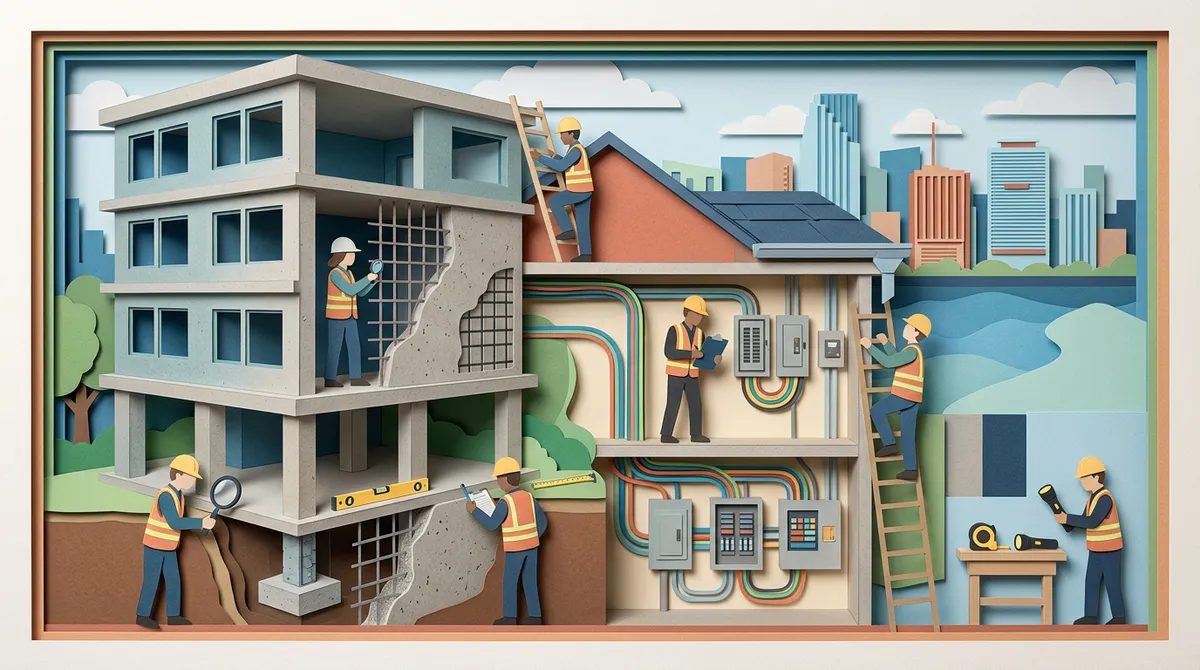
A Miami-Dade building recertification inspection is thorough. Inspectors don’t just take a quick look and sign off. Here’s what they examine:
- Foundation and structural systems – Are there cracks, settlement issues, or signs of deterioration? Understanding foundation cracks and hairline cracks in commercial buildings is a great starting point if you’re concerned about what inspectors might flag.
- Building façade – External walls, balconies, and cladding are checked for damage or deterioration.
- Electrical systems – Wiring, panels, and electrical infrastructure are assessed to make sure they meet current safety standards.
- Unpermitted modifications – Any changes made to the building without proper permits will be flagged and may require corrective action.
If issues are found, repairs must be made with proper permits. In some cases, a “Safe to Occupy” letter may be required before residents can return. This makes it critical to catch problems early and address them quickly.
What Happens If You Miss the Deadline?
Missing your recertification deadline is not something to take lightly. The consequences can be serious and costly. Here’s what property owners face when they don’t comply:
- Monetary fines and violation notices from the county
- An “unsafe” designation placed on the building
- Potential legal action from the county or tenants
- Difficulty securing or renewing property insurance
- Complications when trying to sell or refinance the property
In 2026, the county sent out Notices of Required Building Recertification on January 7, with a submission deadline of April 7. That’s a 90-day window — which sounds like plenty of time, but it can go fast if you’re coordinating repairs, hiring a licensed professional, and gathering documentation. You can Search Miami-Dade Building Recertification Cases online to check the status of any building in the county.
How the Surfside Collapse Changed Everything
The 2021 Surfside condo collapse was a turning point for building safety in South Florida. In response, Florida passed new legislation in 2022 that introduced milestone inspections specifically for condos and co-ops. These inspections apply to multistory residential buildings — particularly those near the coast — at earlier intervals than the general recertification schedule. The first deadlines for certain coastal condos and co-ops were set for December 31, 2024.
These changes underscore why staying ahead of recertification requirements matters so much. For a deeper look at why this process protects your investment, see this helpful resource on the importance of 40 year building recertification for property longevity.
Who Can Perform a Miami-Dade Building Recertification?
Only Florida-licensed engineers or architects can prepare and submit recertification reports. The report must include:
- A written assessment of structural and electrical systems
- Photographs documenting the condition of key building elements
- Site plans and supporting documentation
It’s important to choose a professional who is experienced with Miami-Dade’s specific requirements and familiar with the county’s report templates and submission process. This is where having the right partner makes a big difference.
How O’Reilly Consultants Makes the Process Easier
At O’Reilly Consultants, we know that recertification can feel overwhelming — especially if it’s your first time navigating the process. Our team is led by owner and qualifying architect Sherard O’Reilly, supported by Construction Manager and Engineer Catalina Torres (27 years of civil engineering experience) and Project Engineer Rafael Ojeda (16+ years in environmental due diligence with over 1,000 Phase I Environmental Site Assessments completed in South Florida).
We use advanced tools like drones and 3D laser scanning to conduct thorough inspections. These technologies let us see areas that are difficult to access and produce highly accurate reports. Whether you own a high-rise, a condo complex, a commercial office tower, or a multi-family apartment building, we guide you from the moment you receive your county notice all the way through final submission. We also offer related services like electrical and illumination safety inspections, Structural Integrity Reserve Studies (SIRS), Property Condition Assessments (PCA), and HOA reserve studies.
Want to see what our clients are saying? Visit us on Google to check out our reviews and learn more about our work in the South Florida community.
Steps to Complete Your Miami-Dade Building Recertification
The process doesn’t have to be a mystery. Here’s a simple step-by-step guide to getting your recertification done on time:
- Receive your notice – The county mails a Notice of Required Building Recertification to the property owner. Your 90-day clock starts here.
- Hire a licensed professional – Contact a Florida-registered engineer or architect with recertification experience as soon as possible.
- Schedule the inspection – Your inspector will visit the property, assess structural and electrical systems, and document findings with photos and plans.
- Complete required repairs – If deficiencies are found, coordinate repairs with licensed contractors and pull the necessary permits.
- Submit the report – Your engineer or architect submits the completed recertification report to Miami-Dade County before the 90-day deadline.
Special Considerations for Condo Boards and HOA Managers
If you sit on a condo association board or manage an HOA property, recertification carries added responsibilities. You’re not just dealing with your own timeline — you’re responsible for communicating with residents, coordinating vendor access, and ensuring that the association meets its legal obligations. Missing a deadline can expose board members and management companies to liability.
The 90-day window moves fast when you factor in scheduling, inspections, and any necessary repairs. That’s why working with an experienced firm that understands both county requirements and HOA governance is so valuable. Here are a few things to keep in mind:
- Notify residents early about upcoming inspections and potential disruptions
- Review your HOA reserve study to ensure funds are available for repairs
- Keep copies of all inspection reports and permits for your records
- Work with professionals who provide clear, actionable written recommendations
What Real Estate Investors Should Know
For real estate investment firms and property owners with aging assets in South Florida, recertification isn’t just a compliance checkbox. It’s a key factor in maintaining property value, securing favorable insurance rates, and enabling smooth sales or refinancing transactions. Lenders and buyers want to see clean recertification records. A property with outstanding violations or missed inspections can face significant delays or devaluation during due diligence.
Staying ahead of your recertification schedule — and working with qualified professionals who produce thorough, well-documented reports — protects your investment for the long term.
Ready to Get Your Building Recertified?
Miami-Dade building recertification doesn’t have to be stressful or confusing. With the right team, you can meet every deadline, address any issues head-on, and keep your building safe and compliant for years to come. Whether you’re a condo board member, a commercial property owner, an HOA manager, or a real estate investor, we’re here to make the process as smooth as possible.
Don’t wait until the deadline is days away. Request a free recertification consultation with O’Reilly Consultants today, and let our experienced team guide you through every step of the process with confidence and care.
FAQs
Q: What buildings are exempt from Miami-Dade building recertification?
A: Great news if you own a smaller property! Single-family homes, duplexes, and structures under 2,000 square feet with 10 or fewer occupants are generally exempt from Miami-Dade’s recertification program. If you’re not sure about your specific property, it’s always a good idea to check with the county or a licensed professional.
Q: How long do I have to submit a recertification report after receiving a notice?
A: Once you receive your Notice of Required Building Recertification from Miami-Dade County, you have 90 days to submit your completed report. That window goes by faster than you’d think, so we always recommend reaching out to a licensed engineer or architect as soon as possible after receiving the notice.
Q: What happens if I miss the Miami-Dade building recertification deadline?
A: Missing the deadline can lead to fines, violation notices, and even an “unsafe” designation on your building — none of which are fun to deal with! There can also be complications with insurance, property sales, and refinancing. The best approach is to stay ahead of your timeline and work with an experienced team who can help you meet every requirement.
Q: Who can perform a Miami-Dade building recertification inspection?
A: Only a Florida-licensed engineer or architect is authorized to conduct the inspection and submit the official recertification report to Miami-Dade County. The report must include a written assessment, photographs, and site plans — so it’s important to work with someone who knows the county’s specific documentation requirements inside and out.
Q: How have the milestone inspection rules changed for condos in Miami-Dade?
A: Following the 2021 Surfside collapse, Florida updated its building safety laws in 2022 to introduce milestone inspections for condos and co-ops that are three or more stories. Coastal condos within 3 miles of the shore must have their first milestone inspection at 25 years, while inland condos need one at 30 years. These changes were designed to catch structural issues earlier and keep residents safer.