Key Takeaways
-
Reserve studies consist of two essential parts: physical analysis (inspecting major components like roofs and structural elements) and financial analysis (mapping a 20-30 year funding plan), together providing a clear roadmap for repairs and costs.
-
HOAs should maintain reserve funding between 70-130% of annual budget; associations below 70% face moderate to high risk of special assessments and should prioritize getting an accurate study to understand their financial position.
-
Building recertification inspections at 25 years and every 10 years after are directly tied to reserve planning; underfunded reserves when recertification uncovers major repairs can trigger emergency assessments and insurance complications.
-
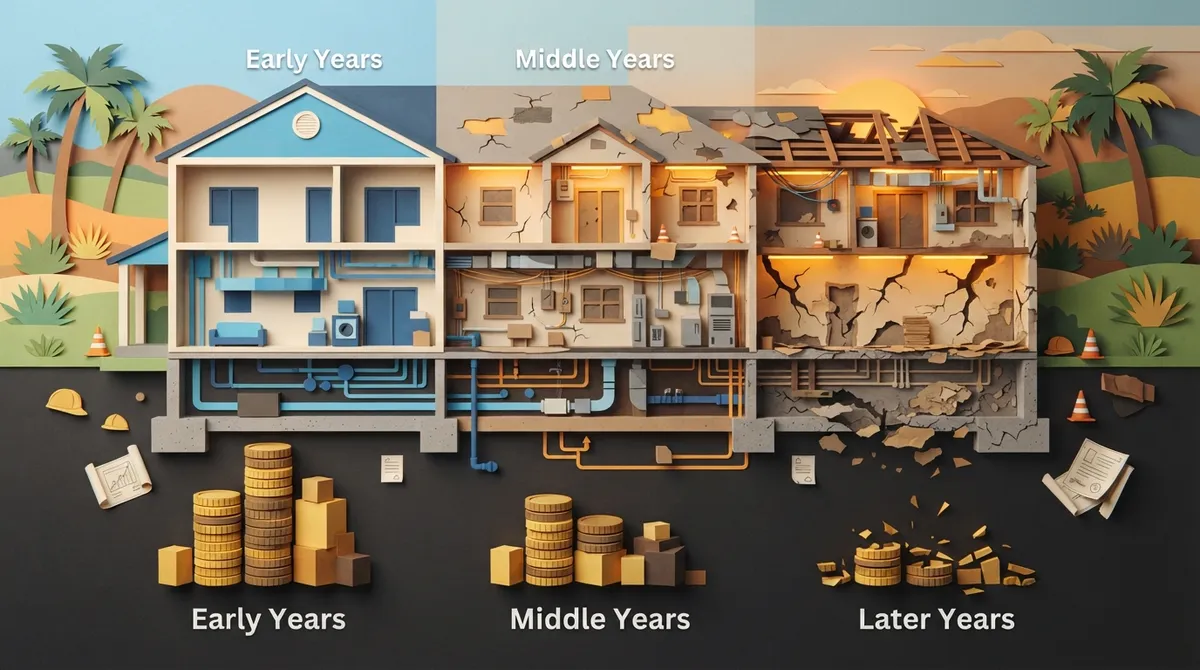
Underfunded reserves create chain reactions including unexpected special assessments, deferred maintenance costs, insurance challenges, reduced property values, and scrambling during recertification; proper planning prevents these cascading problems.
-
Although Florida law doesn’t mandate HOA reserve studies, most HOA governing documents require them every 3-5 years, and Southwest Ranches’ aging properties with upcoming recertifications make studies essential to avoid costly surprises.
-
Reserve studies must cover all major shared components exceeding $10,000 in replacement costs including roofing, pavement, electrical systems, and structural elements; studies should be retained as official records for 15 years.
If you sit on an HOA board in Southwest Ranches, you already know this town is a little different. Big lots, horse properties, and a mix of older and newer homes make our community special. But that charm comes with a responsibility: keeping your association’s buildings safe and your reserve fund healthy enough to pay for it. Southwest Ranches HOA reserve studies are the roadmap that helps your board plan ahead instead of scrambling when a roof or structural issue pops up out of nowhere.
We know reserve studies can sound like dry, technical paperwork. But honestly, they’re one of the most important tools your board has. They help you avoid surprise assessments, keep homeowners happy, and make sure your community sails through building recertification milestones without a hitch. Let’s walk through everything you need to know, in plain, friendly language, so you can feel confident at your next board meeting.
At O’Reilly Consultants, we work with HOA boards and property managers across Broward and Miami-Dade Counties every day. We’ve seen what happens when reserves are underfunded, and we’ve seen how smooth things go when boards plan ahead. Here are six facts every Southwest Ranches HOA board should know.

1. Reserve Studies Are Not Optional, Even Without a Strict State Mandate
Here’s something that surprises a lot of board members: Florida law doesn’t force every HOA to get a formal reserve study. Under Florida Statute 720.303(6), there’s no blanket requirement like there is for condos. But almost every HOA’s governing documents call for one anyway, usually every three to five years.
Why does this matter so much in Southwest Ranches? Many homes and community structures here are getting older. Recertification rules in Broward and Miami-Dade counties typically require the first inspection at 25 years of age, with follow-up recertifications every 10 years after that. Without a solid reserve study, your board has no real way to know if you can afford the repairs those inspections might uncover.
Skipping a reserve study is a bit like ignoring your car’s check engine light. It might run fine for a while. But eventually, something breaks, and it costs way more than if you’d caught it early.

2. Two Parts Make Up Every Solid Reserve Study
A proper reserve study isn’t just a guess or a spreadsheet someone throws together. It has two distinct parts, and both matter.
- Physical analysis: A trained inspector walks the property, examines major components like roofs, pavement, drainage, and structural elements, and estimates their remaining useful life.
- Financial analysis: This part maps out a 20 to 30 year funding plan, showing how much your association should be setting aside each year to cover future repairs and replacements.
Together, these two pieces give your board a clear, honest picture. You’ll know what needs attention, when it’ll likely need replacing, and how much money you need banked to pay for it without a painful special assessment.
3. SIRS Rules Mostly Apply to Condos, But HOAs Should Still Pay Attention
There’s been a lot of buzz about Florida’s Structural Integrity Reserve Study, or SIRS, requirements. Under Florida law (HB 913, part of Chapter 718), condo buildings three stories or higher must complete a SIRS, with the initial deadline extended to December 31, 2025. These studies must be updated every 10 years after that.
Technically, SIRS rules target condominium associations, not typical single-family HOAs. But here’s the thing: many Southwest Ranches communities include a mix of property types, and some HOAs oversee shared structures like clubhouses, gates, or multi-story buildings that could fall under similar scrutiny down the road. Staying informed now puts your board ahead of the curve.
If your community includes any condo-style buildings, it’s smart to check whether SIRS applies. Our team can walk you through the difference and help you figure out exactly what your association needs. Feel free to request a free quote if you want a straight answer fast.
4. Underfunded Reserves Create Real Problems, Not Just Inconvenience
Let’s talk about what happens when reserves fall short. It’s not just an awkward conversation at the annual meeting. Underfunded reserves can trigger a chain reaction that hurts everyone in the community.
- Special assessments get levied on homeowners, sometimes for thousands of dollars, with little warning.
- Deferred maintenance piles up, making repairs more expensive the longer they wait.
- Insurance companies start asking tough questions, and some policies become harder to renew or more costly.
- Property values can dip, since buyers and lenders are increasingly checking reserve health before closing deals.
- Recertification inspections can uncover major structural or electrical issues, and without reserves, boards scramble for emergency funding.
The good news? None of this has to happen. A well-maintained reserve study catches problems early, before they turn into five-figure headaches. If you’ve ever wondered why some communities handle recertification smoothly while others panic, it usually comes down to reserve planning.
5. Funding Levels Matter More Than Most Boards Realize
So how much should your HOA actually be setting aside? Industry data gives us some helpful benchmarks. Typically, HOA reserve funding should represent 15% to 40% of the annual budget. The ideal funding level for an association’s reserves sits between 70% and 130% funded.
Here’s a quick breakdown to help your board understand where you stand:
| Funding Level | What It Means | Risk Level |
|---|---|---|
| Below 30% funded | Reserves are dangerously low | High risk of special assessments |
| 30% to 70% funded | Moderate reserves, some gaps | Moderate risk, needs attention |
| 70% to 130% funded | Healthy, well-planned reserves | Low risk, ideal target range |
If your association is sitting below that 70% mark, don’t panic. Many communities start there and work their way up with smart budgeting. The key is getting an accurate reserve study first, so you know exactly where you stand and what the path forward looks like.
6. Reserve Studies and Building Recertification Go Hand in Hand
This is the connection a lot of boards miss. Your reserve study and your building recertification timeline are deeply linked. Recertification inspections assess structural and electrical systems, and they can uncover repairs costing tens of thousands of dollars. If your board hasn’t planned for that financially, the inspection results can feel like a gut punch.
Think of it this way: the reserve study tells you what’s coming and how to pay for it. The recertification inspection confirms whether your buildings actually meet safety standards. When these two processes work together, your association sails through milestones instead of scrambling for emergency loans or unpopular assessments.
We’ve helped plenty of associations across South Florida connect these dots. Whether you’re dealing with a 40 year recertification or preparing for an upcoming milestone inspection, having your financial house in order makes the whole process smoother. Learn more about why 40 year building recertification matters for property longevity if your community is approaching that mark.
What Components Should a Reserve Study Cover?
A thorough reserve study should look at all major shared components your association is responsible for. This typically includes:
- Roofing systems and structural elements
- Pavement, drainage, and site infrastructure
- Common area buildings, clubhouses, and gates
- Electrical systems serving shared spaces
- Pools, fences, and recreational amenities
- Any structural components identified during past inspections
Under Florida law, items requiring replacement or repair costs exceeding $10,000 that affect structural integrity cannot have their reserves waived by board vote. That rule alone shows how seriously the state takes structural safety, even outside strict SIRS requirements.
Who Should Perform the Inspection?
This is where experience really counts. You want licensed engineers or qualified inspectors handling the physical analysis portion of your reserve study. At O’Reilly Consultants, our team includes professionals like Construction Manager and Engineer Catalina Torres, who brings 27 years of civil engineering and construction management experience to every project. We also use advanced tools like drones and 3D laser scanning to get accurate, detailed assessments without disrupting your community.
Choosing the right inspector isn’t just a box to check. It’s the difference between a reserve study that actually protects your association and one that leaves gaps. If you’re unsure who to trust, check out our guide on how to choose licensed building inspectors for recertification.
How Often Should Southwest Ranches HOAs Update Their Reserve Study
Best practice calls for a full Level I reserve study every three to five years, with annual updates in between to keep the numbers current. Think of the full study as a major checkup and the annual update as a quick follow-up visit to make sure nothing’s changed drastically.
Associations must also keep reserve studies as official records for 15 years. That’s a long paper trail, but it protects your board and gives future members a clear history of how funds were planned and spent.
Steps to Get Started on Your Reserve Study
- Review your governing documents to see what your reserve study requirements actually say.
- Gather records of past inspections, repairs, and recertification notices.
- Hire a qualified engineering firm familiar with South Florida properties and Broward or Miami-Dade requirements.
- Schedule the physical inspection, ideally using modern tools like drones for hard-to-reach areas.
- Review the financial funding plan with your board and treasurer.
- Present findings to homeowners at your annual meeting for transparency.
- Set a calendar reminder for your next full study and annual updates.
Following these steps keeps your board organized and your community informed every step of the way.
Why Southwest Ranches Communities Trust O’Reilly Consultants
We understand Southwest Ranches isn’t like the high-rise condo corridors of Miami or Fort Lauderdale. Our communities here have unique layouts, older infrastructure in some pockets, and a genuine sense of neighborly pride. That’s exactly why cookie-cutter reserve studies don’t cut it. Your association deserves a team that understands the local landscape and building recertification timelines specific to Broward and Miami-Dade Counties.
Our team is led by owner and qualifying architect Sherard O’Reilly, who has deep experience in property condition assessments and detailed building documentation. We also draw on Project Engineer Rafael Ojeda’s 16-plus years in environmental due diligence, including over 1,000 completed Phase I Environmental Site Assessments across South Florida. That kind of depth means your reserve study is backed by real expertise, not guesswork.
Curious what other property owners think? Feel free to visit us on Google — O’Reilly Consultants and see what our clients have to say about working with our team.
Related Services Worth Knowing About
Reserve studies rarely stand alone. Most Southwest Ranches associations also need to think about related inspections and assessments. Here are a few services that often go hand in hand with reserve planning:
- Structural Integrity Reserve Studies for qualifying condo buildings, similar to what’s covered in our guide on SIRS mistakes Southwest Ranches condo boards must avoid
- Property Condition Assessments, detailed in our resource on PCA mistakes Southwest Ranches building owners must avoid
- Electrical safety inspections, which you can learn more about in our piece on key facts about Southwest Ranches electrical safety inspections
- 40-year and 25-year building recertification inspections for aging structures
- Foundation and structural crack assessments, covered in our article on understanding foundation cracks in commercial buildings
Bundling these services together with your reserve study planning gives your board a complete picture of your association’s health, both financially and structurally.
For official guidance on recertification timelines and requirements, Southwest Ranches boards can also reference Miami-Dade County’s recertification program page or search existing Miami-Dade building recertification cases to see how nearby properties have handled the process.
Ready to Protect Your Community’s Future
Southwest Ranches HOA reserve studies aren’t just paperwork. They’re the financial backbone that keeps your community safe, your homeowners happy, and your board prepared for whatever building recertification throws your way. Whether you’re three years out from your next milestone inspection or just starting to think about long-term planning, now is the time to get organized.
Our team at O’Reilly Consultants would love to help your association build a reserve study that actually works, backed by real engineering expertise and modern inspection technology. Ready to get started? Request a free quote today, or if you’d rather talk it through, call us at (512) 567-1191. We’re here to help your Southwest Ranches community feel confident, prepared, and proud of what you’ve built together.
FAQs
Q: Do HOAs in Southwest Ranches need a Structural Integrity Reserve Study (SIRS)?
A: Not usually, since SIRS rules mainly apply to condo buildings three stories or higher. But if your community includes multi-story structures or shared condo-style buildings, it’s worth checking with a qualified inspector to be safe.
Q: When is the first building recertification due for a home in Southwest Ranches?
A: In Broward and Miami-Dade counties, buildings typically need their first recertification inspection at 25 years old, then every 10 years after that. It’s a good idea to mark this on your calendar early so your board has plenty of time to prepare.
Q: How much does a reserve study cost for an HOA in Florida?
A: Costs vary based on property size and complexity, but most full reserve studies run a few thousand dollars, which is a small price compared to the special assessments that come from being caught off guard. Reach out to our team for a personalized quote based on your community’s needs.
Q: What happens if an HOA reserve fund is underfunded for building recertification repairs?
A: Underfunded reserves often lead to surprise special assessments, delayed repairs, and even insurance complications. The good news is that a solid reserve study helps you catch these gaps early, long before they become a crisis.
Q: How often should a Southwest Ranches HOA update its reserve study?
A: Most experts recommend a full reserve study every three to five years, with smaller annual updates in between. This keeps your numbers accurate without requiring a full study every single year.