Key Takeaways
-
Hire a qualified PCA inspector with ASTM E2018-24 credentials and local Florida expertise; unqualified inspectors miss critical deficiencies and produce incomplete reports that fail to protect your investment.
-
Provide all existing maintenance records, permits, and prior inspection reports to the assessor before the site visit; incomplete documentation creates gaps in findings and leads to overlooked building system issues.
-
Address deferred maintenance items promptly rather than delaying repairs; deferred maintenance compounds over time and can escalate small fixes into major, costly expenses that threaten building integrity.
-
Use the PCA report’s 12-year capital reserve projections for realistic budgeting and long-term financial planning; filing the report away wastes a valuable tool that prevents surprise repair costs.
-
Schedule your PCA proactively before recertification deadlines, financing events, or visible problems emerge; waiting until issues are obvious puts you behind on compliance and limits time for repairs.
-
Budget $3,000-$17,000+ for a quality PCA depending on property size; the cheapest option often delivers a thin report with unreliable cost estimates, while a comprehensive report includes specific deficiency descriptions and accurate repair costs.
If you own or manage a building in Southwest Ranches, Florida, a Property Condition Assessment (PCA) might be one of the most important steps you ever take. Whether you’re planning a major purchase, preparing for recertification, or simply trying to stay ahead of costly repairs, a well-executed PCA gives you a clear picture of what your building really looks like — inside and out.
But here’s the thing: many building owners make avoidable mistakes during the PCA process. These errors can lead to incomplete reports, surprise repair costs, compliance issues, and even failed recertification. In this guide, we’re going to walk through the 12 most common PCA mistakes — and more importantly, how to avoid them.
What Is a Southwest Ranches Property Condition Assessment?
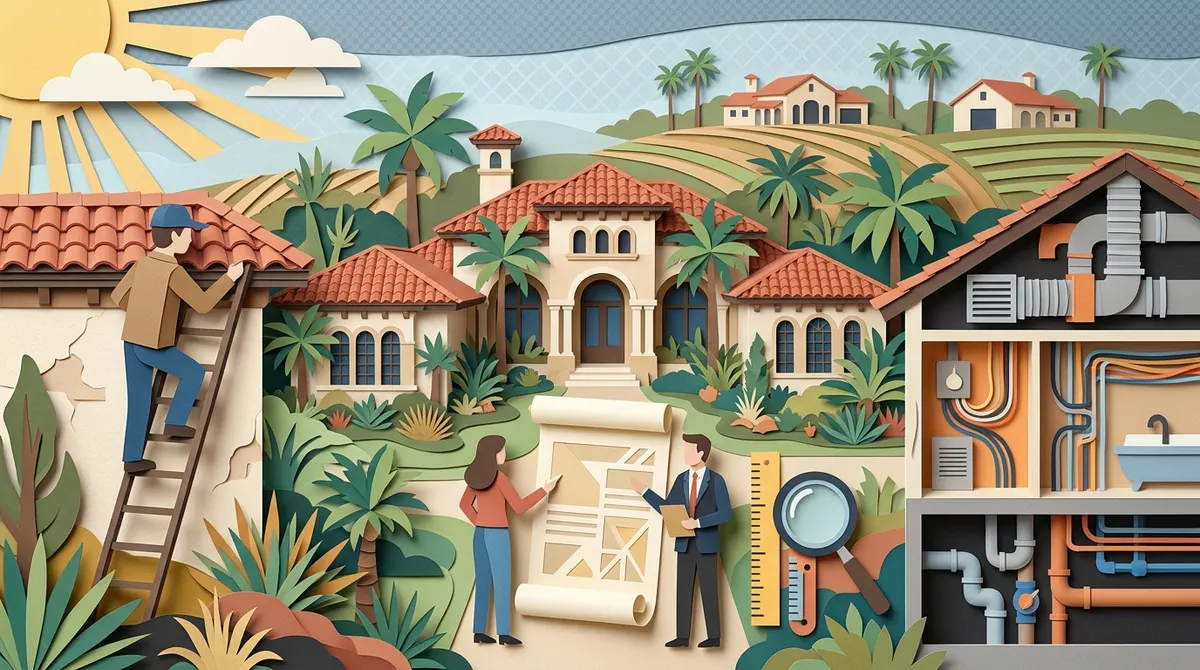
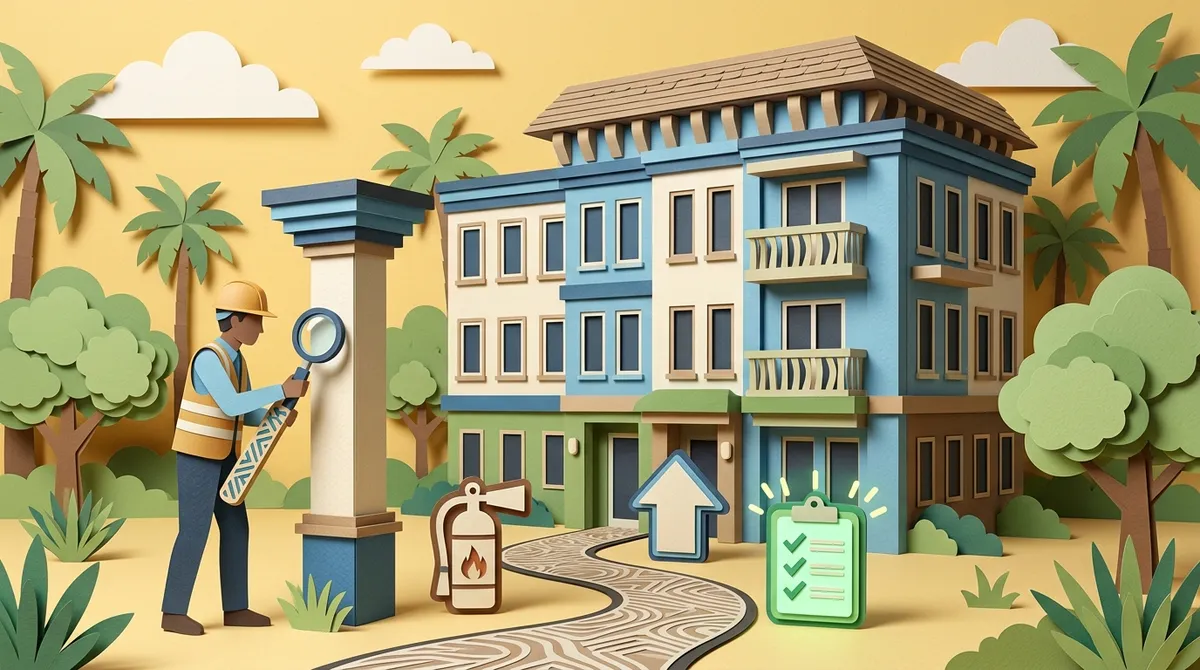
A Southwest Ranches Property Condition Assessment (PCA) is a professional evaluation of a property’s physical condition. It covers major building systems, deferred maintenance needs, and capital planning requirements. The final product is a written Property Condition Report (PCR) that summarizes all findings, cost estimates, and repair recommendations.
PCAs are typically performed in accordance with ASTM E2018-24 standards — the current referenced standard for this type of work. The process includes document review, a physical site inspection, stakeholder interviews, and a detailed written report. If you want to understand more about what this process looks like in practice, check out our guide on what a commercial building inspection really covers.
Why PCAs Matter for Building Recertification
In Broward County, buildings must meet strict recertification timelines. A PCA helps identify visible deficiencies early so you can plan repairs before compliance deadlines arrive. This is especially important for condo associations, apartment owners, and commercial property managers who face 90-day inspection mandates.
A PCA also supports capital reserve planning, insurance renewals, and financing decisions. To learn more about why property assessments matter across the board, read our article on the importance of 40-year building recertification for property longevity. For official county requirements, you can also review the Miami-Dade County Recertification guidelines directly.
The 12 Mistakes to Avoid
Mistake 1: Skipping the PCA Entirely
Some owners assume a standard home inspection is good enough. It isn’t. A PCA is a much more thorough process that looks at structural systems, building envelopes, life-safety systems, HVAC, plumbing, electrical, and more. Skipping it entirely means you’re flying blind on your property’s real condition.
Mistake 2: Hiring an Unqualified Inspector
Not every inspector has the expertise to conduct a proper PCA. You need someone who is familiar with ASTM E2018-24 standards and has real-world experience evaluating commercial and multi-family buildings. Always verify credentials before hiring. Our guide on how to choose licensed building inspectors for recertification can help you ask the right questions.
Mistake 3: Not Providing Existing Documents
A PCA includes a document review phase. If you don’t hand over your existing maintenance records, permits, prior inspection reports, or warranties, the assessor is working with incomplete information. This leads to gaps in the final report. Gather your documents early.
Mistake 4: Rushing the Timeline
Field investigations typically take 1 to 3 days on-site. The full report is usually delivered within 2 to 3 weeks after the site visit. Rushing this process almost always leads to overlooked deficiencies. Give your assessor adequate time to do the job right.
Mistake 5: Ignoring Deferred Maintenance Items
Your PCR will likely flag deferred maintenance — repairs that haven’t been done yet but are overdue. Many building owners see these as minor issues and push them further down the road. That’s a costly mistake. Deferred maintenance compounds over time and can turn a small fix into a major expense.
Mistake 6: Not Using the Report for Capital Planning
A good PCR includes a capital reserve horizon — sometimes as long as 12 years — with projected replacement costs for major systems. If you file the report away and never use it for budgeting, you’ve wasted a valuable planning tool. Use these projections to build a realistic reserve fund.
This connects directly to structural integrity reserve studies, which work hand-in-hand with PCAs for long-term capital planning.
Mistake 7: Assuming All PCA Reports Are the Same
The quality and depth of a PCA report can vary significantly depending on the firm you hire. Some reports are thin summaries with limited cost data. A high-quality report should include specific deficiency descriptions, prioritized repair recommendations, and accurate cost estimates. Always ask to see a sample report before committing.
Mistake 8: Overlooking Building Envelope Issues
The building envelope — your walls, windows, roof, and façade — is one of the most critical systems assessed in a PCA. Envelope failures can lead to water intrusion, mold, and structural damage. This is especially important in South Florida, where hurricane exposure and humidity are constant concerns. Don’t let envelope problems slide.
For buildings with visible cracking or façade concerns, our resource on understanding foundation and hairline cracks in commercial buildings provides useful context on what those findings actually mean.
Mistake 9: Underestimating the Cost of a Quality PCA
PCA pricing varies widely. Most assessments range from $3,000 to $17,000, depending on building size and complexity. Large or complex properties — think 200,000+ square feet, high-rises, or multi-building campuses — can run $10,000 to $15,000 or more. Going with the cheapest option often means a lower-quality report. Budget appropriately.
Mistake 10: Not Connecting the PCA to Recertification Requirements
A PCA is a powerful tool for meeting recertification requirements, but only if you connect the findings to what the county actually needs. Florida-focused PCA reporting should also address code compliance, common elements, and construction conformance. Make sure your assessor understands local Broward County requirements. You can also search Miami-Dade Building Recertification Cases to stay informed on compliance status for properties in that county.
For a deep dive into recertification basics, our article on what building recertification is and why it matters is a great starting point.
Mistake 11: Waiting Until a Problem Is Obvious
PCAs are most valuable when done proactively — before you have a water leak, structural concern, or failed inspection. Waiting until something goes visibly wrong means you’re already behind. Schedule your PCA well ahead of any recertification deadlines or major financing events.
Curious about Southwest Ranches electrical safety inspections? Those often go hand in hand with a PCA and should be scheduled together for efficiency.
Mistake 12: Not Working with a Local Expert
South Florida buildings face unique challenges — hurricane codes, humidity, salt air, and specific county regulations. Hiring an assessor who doesn’t know the local landscape means they may miss region-specific issues that a local expert would catch immediately. Local knowledge is not optional here. It’s essential.
What Building Systems Does a PCA Cover?
A standard Southwest Ranches Property Condition Assessment will evaluate all major building systems. Here’s a quick overview of what’s typically included:
| Building System | What Gets Evaluated | Why It Matters |
|---|---|---|
| Structure & Foundation | Cracks, settlement, load-bearing walls | Core safety and long-term stability |
| Roofing | Age, condition, drainage, membrane integrity | Water intrusion prevention, hurricane protection |
| HVAC Systems | Equipment age, operation, maintenance history | Comfort and energy efficiency |
| Electrical Systems | Panels, wiring, grounding, service capacity | Safety and code compliance |
| Plumbing | Pipe condition, water heaters, drainage | Leak prevention and code compliance |
| Building Envelope | Walls, windows, façade, moisture barriers | Weather resistance and structural protection |
| Life-Safety Systems | Fire suppression, alarms, egress paths | Occupant safety and regulatory compliance |
| Site Improvements | Parking, drainage, landscaping, accessibility | ADA compliance and site functionality |
PCA vs. Standard Building Inspection: Key Differences
Many people confuse a PCA with a regular building inspection. They’re related, but not the same. Here are the key differences:
- Scope: A PCA is broader — it covers all major systems, deferred maintenance, and capital cost projections
- Standards: PCAs follow ASTM E2018-24; standard inspections may follow different local codes
- Output: A PCA produces a formal Property Condition Report (PCR) with cost opinions; a standard inspection produces a findings list
- Purpose: PCAs are used for due diligence, capital planning, and recertification; standard inspections are often for code compliance checks only
- Timeline: PCAs take longer — typically 2 to 3 weeks from site visit to final report delivery
For more context on what a building inspection actually involves, see our article on building inspection services and your guide to recertification.
PCA Pricing Guide for Southwest Ranches Properties
Here’s a simple pricing overview to help you budget for your PCA:
| Property Type / Size | Estimated PCA Cost | Report Delivery Timeline |
|---|---|---|
| Small commercial building (under 20,000 sq ft) | $3,000 – $5,000 | 2 weeks |
| Mid-size apartment or office (20,000 – 100,000 sq ft) | $5,000 – $10,000 | 2 to 3 weeks |
| Large commercial or multi-family (100,000+ sq ft) | $10,000 – $17,000+ | 3+ weeks |
| High-rise, campus, or complex property | $15,000+ | 3 to 4 weeks |
Steps in a Properly Conducted PCA
Knowing the steps involved helps you stay organized and get the most out of the process:
- Pre-Site Document Review: The assessor reviews existing maintenance records, permits, prior reports, and warranty documents before the site visit.
- Site Investigation: A thorough walk-through inspection of all accessible areas, typically lasting 1 to 3 days depending on property size.
- Stakeholder Interviews: The assessor interviews property managers, maintenance staff, or owners to capture institutional knowledge about known issues.
- Findings Analysis: The assessor compiles all observations, photographs, and data into a structured analysis aligned with ASTM E2018-24.
- Property Condition Report (PCR) Delivery: A written report is delivered within 2 to 3 weeks, including deficiency descriptions, repair cost opinions, and a capital replacement schedule.
How O’Reilly Consultants Approaches Southwest Ranches PCAs
O’Reilly Consultants brings a unique level of expertise to Southwest Ranches Property Condition Assessments. Led by qualifying architect Sherard O’Reilly — who has deep experience with ASTM E2018 assessments — the team also includes Construction Manager and Engineer Catalina Torres, who brings 27 years of civil engineering experience, and Project Engineer Rafael Ojeda, who has completed over 1,000 Phase I Environmental Site Assessments across South Florida.
The team uses advanced tools including drones and 3D laser scanning to capture detailed building data that traditional walk-through methods can miss. This means more accurate findings, more reliable cost estimates, and a report that genuinely prepares you for recertification. You can visit O’Reilly Consultants on Google to see what clients across Broward County are saying about their experience.
If you’re managing a condo association, apartment complex, or commercial property in Southwest Ranches and want to get ahead of your next recertification deadline, the O’Reilly team is ready to help. You can also explore related resources like our page on 14 SIRS mistakes Southwest Ranches condo boards must avoid for more local guidance.
Quick Checklist: Are You PCA-Ready?
Use this checklist to see if you’re prepared before scheduling your assessment:
- ✅ Maintenance logs and repair records are organized and accessible
- ✅ Prior inspection reports and structural assessments are on file
- ✅ Active permits, warranties, and equipment manuals are available
- ✅ Key maintenance staff are available for interviews during the site visit
- ✅ All building areas — including roofs, mechanical rooms, and parking structures — are accessible
- ✅ You’ve selected a qualified assessor with ASTM E2018 experience and local Florida knowledge
When to Schedule a PCA in Southwest Ranches
The best time to schedule a PCA is before you need one urgently. Here are the top situations that call for a PCA right away:
- Before a property acquisition: Understand exactly what you’re buying before closing the deal.
- Before a recertification deadline: Identify and address deficiencies before the county inspection.
- Before refinancing or securing a loan: Lenders often require a PCR as part of due diligence.
- After a major weather event: Hurricanes and tropical storms can cause hidden structural damage that only a PCA will catch.
- As part of annual capital planning: Use a PCA to update your reserve projections and maintenance schedule.
Want to learn more about how this fits into the broader recertification process? Our step-by-step guide on 8 key steps in the building recertification process walks through everything from start to finish. Also, for additional best practices on avoiding inspection mistakes in general, check out 7 professional building inspection mistakes you must avoid.
If you’re comparing PCAs across nearby communities, take a look at our guides on Davie Property Condition Assessments and Pembroke Pines Property Condition Assessments for regional context. For ASTM standards guidance, the ASTM E2018-24 standard for property condition assessments is an authoritative reference worth bookmarking.
Conclusion: Don’t Let These Mistakes Cost You
A Southwest Ranches Property Condition Assessment is one of the smartest investments you can make as a building owner or manager. It gives you clear, actionable data on your property’s condition, helps you plan ahead financially, and keeps you on the right side of Broward County’s recertification requirements.
But only if it’s done right. Avoiding the 12 mistakes outlined in this article will help you get maximum value from the process — and maximum protection for your building and your investment.
Ready to get started? Request a free consultation with O’Reilly Consultants today and let our experienced team guide you through a thorough, ASTM-compliant Property Condition Assessment tailored to your Southwest Ranches property.
FAQs
Q: What is included in a Southwest Ranches Property Condition Assessment?
A: A Southwest Ranches PCA covers all major building systems — including structure, roofing, HVAC, electrical, plumbing, the building envelope, life-safety systems, and site improvements. The process follows ASTM E2018-24 standards and results in a formal Property Condition Report with prioritized repair recommendations and cost estimates. Think of it as a full health check for your building!
Q: How long does a PCA take from site visit to final report?
A: The on-site field investigation typically takes 1 to 3 days, depending on the size and complexity of your property. After the visit, the full Property Condition Report is usually delivered within 2 to 3 weeks. It’s worth building this timeline into your planning, especially if you have a recertification deadline coming up.
Q: How much does a Property Condition Assessment cost in Southwest Ranches, Florida?
A: PCA costs generally range from around $3,000 for smaller commercial buildings up to $15,000 or more for large, complex properties like high-rises or multi-building campuses. The average for a mid-size property is around $4,000 to $7,000. Keep in mind that investing in a quality assessment now can save you from much more expensive surprises later!
Q: Is a PCA required for building recertification in Southwest Ranches?
A: While a PCA is not always a mandatory standalone requirement, it is highly valuable as part of the recertification process in Broward County. It helps identify deficiencies before your official inspection and supports capital reserve planning — making your entire recertification experience smoother and less stressful.
Q: What ASTM standard governs Property Condition Assessments?
A: PCAs are conducted in accordance with ASTM E2018, with the current referenced version being ASTM E2018-24. This standard outlines the scope, process, and deliverables for a proper property condition evaluation, ensuring consistency and quality across all assessments. Always confirm your assessor is familiar with this standard before hiring them.