

Key Takeaways
-
Florida law now prohibits HOA associations from waiving reserve funding for structural items through member votes, making Structural Integrity Reserve Studies (SIRS) mandatory for condo buildings three stories or taller to pass milestone and 40-year recertifications.
-
Sea Ranch Lakes waterfront properties face accelerated structural wear from salt air and coastal weather, requiring coastal buildings to complete milestone inspections at 25 years (not 30) and maintain reserves equal to at least 10% of annual budget.
-
Standard reserve studies covering cosmetic items like paint and landscaping do not satisfy Florida’s SIRS requirements, which must specifically assess roofs, foundations, load-bearing walls, electrical systems, plumbing, and waterproofing.
-
SIRS must be updated every 3-5 years with annual financial reviews, as construction costs in South Florida have risen sharply and outdated studies drastically underestimate actual repair costs needed for compliance.
-
Physical on-site inspections using advanced technology like drones and 3D laser scanning are essential; cheaper providers that skip inspections and rely on assumptions produce unreliable reserve projections that fail recertification requirements.
-
Boards must connect recertification deadlines directly to SIRS timelines by commissioning studies before inspection notices arrive, as major funding gaps discovered during deadline crunch leave insufficient time and resources for required structural repairs.
If you sit on an HOA board in Sea Ranch Lakes, you already know the pressure. Florida’s structural safety laws changed the game, and your reserve study is no longer just a nice-to-have financial planning tool. It’s the backbone of your building’s ability to pass milestone and 40-year recertification. Get it wrong, and you could face fines, lawsuits, or a building that simply cannot be certified safe.
The good news? These mistakes are avoidable. We’ve spent years helping boards, property managers, and building owners across Broward County get this right. In this article, we’ll walk through the seven most common reserve study mistakes we see in Sea Ranch Lakes communities, and how to steer clear of every single one of them.
Whether you manage a waterfront condo, a commercial property, or a multi-family building, this guide will help you protect your community, your budget, and your peace of mind. Let’s dive in.

Why Sea Ranch Lakes HOA Reserve Studies Matter More Than Ever
Florida law now requires Structural Integrity Reserve Studies (SIRS) for condo buildings three stories or taller. This isn’t optional anymore. Associations can no longer vote to waive reserve funding for structural components, even if members want to save money short-term.
For Sea Ranch Lakes properties, many of which are waterfront homes and community buildings over 40 years old, this matters a lot. These buildings face constant exposure to salt air, humidity, and coastal weather. That accelerates wear on structural elements like roofs, load-bearing walls, and foundations.
A proper SIRS is now a direct financial prerequisite for completing your 40-year recertification and milestone inspections. Without adequate reserves, you simply cannot afford the structural repairs required to pass. That’s why understanding this process isn’t just smart, it’s mandatory for survival as an association.
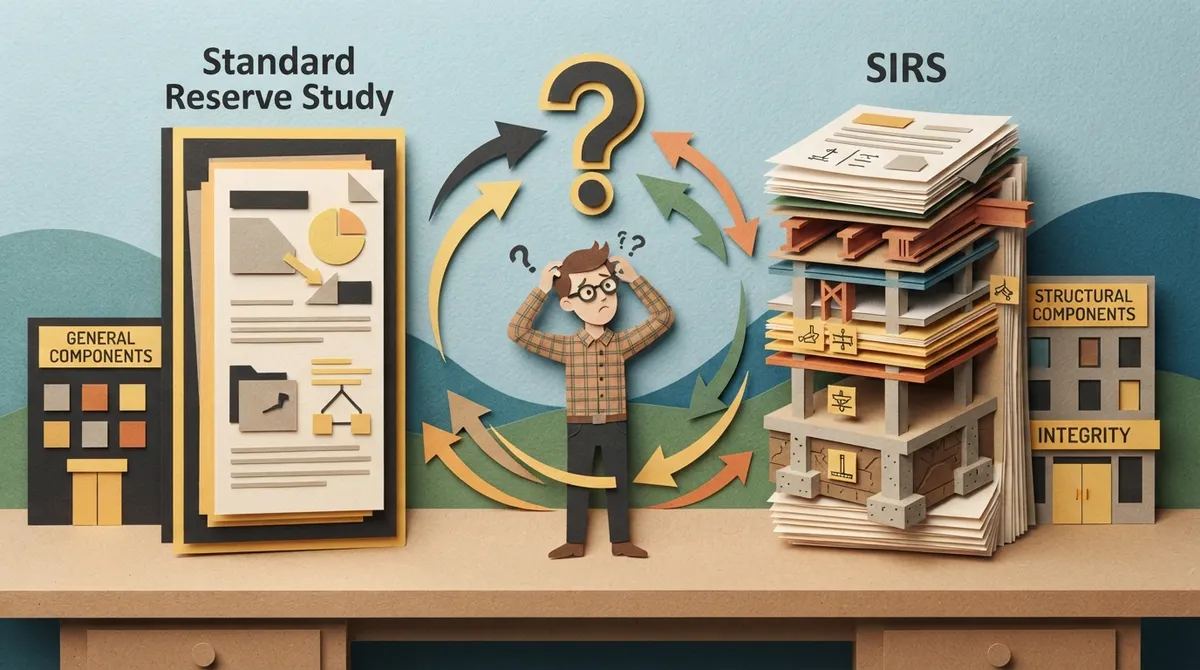
Mistake 1: Confusing a Standard Reserve Study With a SIRS
Many boards assume their old-style reserve study covers everything they need. It doesn’t. A standard reserve study often looks at cosmetic items like paint, landscaping, and pool equipment.
A Structural Integrity Reserve Study is different. It focuses specifically on:
- Roof structures and coverings
- Load-bearing walls and primary structural members
- Floor systems
- Foundations
- Fireproofing and fire protection systems
- Plumbing systems serving more than one unit
- Electrical systems serving common areas
- Waterproofing and exterior painting
- Windows and exterior doors
If your last study didn’t break down these specific structural components, it won’t satisfy Florida’s requirements. This is one area where our Sea Ranch Lakes Structural Integrity Reserves Studies service ensures nothing gets missed.
Mistake 2: Waiting Too Long to Update the Study
Reserve studies aren’t a one-time task. Florida requires SIRS updates every 3 to 5 years, with annual reviews recommended to adjust for inflation and rising material costs.
Boards that wait too long often get blindsided. Construction costs in South Florida have risen sharply, and a study done even three years ago may drastically underestimate what repairs will actually cost today.
Here’s a simple schedule to keep your association on track:
- Complete a full SIRS with on-site inspection every 3 to 5 years
- Conduct annual financial reviews to update cost estimates
- Reassess immediately after any major storm event or structural repair
- Revisit funding levels whenever county recertification deadlines approach
Mistake 3: Assuming Smaller Buildings Are Exempt
This is a big one. Some boards assume that because their building is small or low-density, they’re off the hook. That’s not quite right.
The requirement applies to condominium buildings that are three stories or taller, regardless of unit count. Sea Ranch Lakes has a mix of property types, and many waterfront structures and community buildings fall right into this category.
If you’re unsure whether your building qualifies, it’s worth getting a professional opinion rather than guessing. The consequences of guessing wrong are steep, including failed inspections and potential legal liability for board members.
Mistake 4: Underfunding Reserves to Keep HOA Fees Low
We understand the temptation. Nobody wants to raise HOA fees or issue a special assessment. But underfunding reserves to keep costs artificially low is a mistake that catches up with associations fast.
Florida law now prohibits condo associations from waiving reserve funding for structural items through member votes. Condominiums must also maintain reserves equal to at least 10% of the association’s annual budget on a noncumulative basis for major repairs.
| Reserve Funding Approach | Short-Term Impact | Long-Term Risk |
|---|---|---|
| Fully funded reserves | Higher monthly fees | Low risk of special assessments or failed inspections |
| Partially funded reserves | Moderate fees | Moderate risk of funding gaps during recertification |
| Underfunded or waived reserves | Lower fees short-term | High risk of legal liability, special assessments, failed milestone inspections |
The percent funded metric in your reserve study directly impacts whether your association can pass a milestone inspection. Boards that ignore this number are gambling with their building’s future.
Mistake 5: Skipping the Physical Inspection Component
A reserve study has two halves: the financial analysis and the physical analysis. Some cheaper providers skip or rush the physical inspection, relying instead on outdated records or assumptions.
That’s a serious problem. Without an accurate on-site assessment of your building’s structural condition, your reserve numbers are just guesses. This is exactly why we use advanced technology, including drones and 3D laser scanning, to get precise, reliable data on structural components that are hard to reach or assess visually.
Our team, led by qualifying architect Sherard O’Reilly, has deep experience with ASTM E2018 property condition assessments and thorough building documentation. Learn more about O’Reilly Consultants and how our approach differs from a rushed, checkbox-style inspection.
Mistake 6: Ignoring the Connection Between SIRS and Recertification Deadlines
Your reserve study and your recertification timeline are not separate issues. They’re deeply connected. Milestone inspections are required for buildings three stories or taller at 30 years (or 25 years if coastal), and every 10 years after that.
Sea Ranch Lakes waterfront properties often fall under the 25-year coastal rule, which means less time to prepare. If your SIRS reveals major funding gaps right when your milestone inspection is due, you’re in a tough spot.
Here’s how the process should ideally flow:
- Receive your county inspection notice or approach your milestone deadline
- Commission a SIRS to assess structural condition and funding status
- Use the SIRS data to plan and budget for required repairs
- Hire licensed professionals to complete structural, electrical, and safety inspections
- Submit documentation and complete any mandated repairs within the required timeline
Boards that treat these as separate, disconnected tasks often run out of time or money. For a deeper look at how this process unfolds locally, check out our resource on 40-Year Building Recertification: What Florida Owners Must Know.
Mistake 7: Hiring the Wrong Team for the Job
Not all inspection providers are created equal. Some companies handle general home inspections but lack the specialized engineering background needed for structural reserve studies and recertification work.
Look for these qualities in a provider:
- Licensed engineers and architects on staff, not just general inspectors
- Experience specifically with Florida’s SIRS and milestone inspection requirements
- Use of modern technology like drones and 3D scanning for accurate assessments
- A track record serving Broward and Miami-Dade County properties
- Clear, actionable reporting that boards can actually understand and use
Our team includes Construction Manager and Engineer Catalina Torres, who brings 27 years of civil engineering and construction management experience, along with Project Engineer Rafael Ojeda, who has completed over 1,000 environmental site assessments across South Florida. This kind of depth matters when your building’s safety and compliance are on the line.
If you want to see how we’ve helped other boards navigate this, take a look at Certified vs. General Inspectors: Who Should Recertify Your Building? for more guidance on picking the right partner.
What a Proper SIRS Report Should Include
To make sure you’re getting a complete, compliant study, your report should cover the following elements:
| Component | What It Measures |
|---|---|
| Physical Analysis | On-site condition of structural elements like roofs, walls, and foundations |
| Financial Analysis | Percent funded status and projected costs for future repairs |
| Useful Life Estimates | Expected remaining lifespan of each structural component |
| Replacement Cost Projections | Adjusted for current inflation and material costs |
| Funding Recommendations | Suggested reserve contribution levels to reach full funding |
If your current report is missing any of these pieces, it’s time for an update. Twenty states now require reserve studies in some form, and Florida remains one of the strictest when it comes to structural integrity mandates.
How O’Reilly Consultants Supports Sea Ranch Lakes Communities
We know Broward County inspection deadlines can feel overwhelming, especially with 90-day mandates and strict county requirements layered on top of HOA rules. That’s exactly why our team focuses exclusively on building recertification and safety-focused inspections in this region.
We offer a full range of related services beyond SIRS, including electrical safety inspections, property condition assessments, and comprehensive building inspection services for recertification. This means you can work with one trusted team throughout your entire compliance journey, rather than juggling multiple vendors.
Many of our Sea Ranch Lakes clients also appreciate seeing real feedback from other property owners we’ve worked with. You can visit us on Google to see what our O’Reilly Consultants customers say about their experience working with our team.
Quick Checklist Before Your Next SIRS
Before you commission your next reserve study, run through this checklist with your board:
- Confirm your building’s story count and whether it meets the three-story threshold
- Verify your last SIRS update was completed within the past 3 to 5 years
- Check your current percent funded status against Florida’s minimum requirements
- Review whether your milestone inspection deadline is 30 years or 25 years (coastal)
- Confirm your provider uses on-site physical inspections, not just paperwork
Taking these steps seriously now can save your association from painful surprises later. For additional context on how recertification cases are tracked at the county level, you can review Miami-Dade County Recertification resources, which outline similar structural safety standards applied across South Florida.
Ready to Protect Your Sea Ranch Lakes Property?
Reserve studies aren’t just paperwork. They’re the financial roadmap that keeps your building safe, compliant, and ready for whatever inspection comes next. Avoiding these seven mistakes puts your association miles ahead of boards that wait until it’s too late.
Our team at O’Reilly Consultants has the engineering expertise, local knowledge, and advanced tools to get your Sea Ranch Lakes reserve study done right the first time. Whether you need a full SIRS, a milestone inspection, or guidance on your 40-year recertification, we’re here to help every step of the way.
Don’t wait until a failed inspection forces your hand. Request a free quote today, or call us at (512) 567-1191 to speak with our team about your building’s specific needs.
FAQs
Q: What is the difference between a standard HOA reserve study and a Structural Integrity Reserve Study (SIRS) in Florida?
A: A standard reserve study often covers cosmetic items like landscaping or paint, while a SIRS focuses specifically on structural components like roofs, foundations, and load-bearing walls. Think of a SIRS as the specialized, safety-focused version that Florida now requires for buildings three stories or taller.
Q: How does a reserve study help an HOA in Sea Ranch Lakes comply with the 40-year building recertification law?
A: A reserve study makes sure your association has enough money saved up to pay for structural repairs identified during recertification inspections. Without proper funding in place, boards often can’t afford the fixes needed to pass their milestone or 40-year inspection on time.
Q: Are HOA reserve studies mandatory for all buildings in Sea Ranch Lakes, or only those three stories or taller?
A: The SIRS mandate specifically applies to condo buildings that are three stories or taller. If you’re unsure whether your building qualifies, it’s always best to get a professional assessment rather than assume you’re exempt.
Q: Can Florida condominium associations waive reserve funding for structural repairs if they vote to do so?
A: No, not anymore. Florida law now prohibits associations from voting to waive reserve funding for structural items, making SIRS-based funding mandatory regardless of member preference.
Q: How often must a Structural Integrity Reserve Study be updated in Florida?
A: Florida requires SIRS updates every 3 to 5 years, though we recommend annual reviews to keep pace with rising material and labor costs. Waiting too long between updates can leave your association badly underfunded when repairs come due.