Key Takeaways
-
Buildings in Cooper City must undergo mandatory electrical safety inspections at 41 years old and every 10 years after, as required by Miami-Dade County Code; any deficiencies must be repaired and documented before county submission.
-
Infrared thermal imaging is a non-invasive best practice that detects hidden electrical hazards like overheating connections and failing equipment without interrupting building operations, giving owners time to repair issues before formal inspections.
-
Common electrical issues in aging Cooper City buildings include outdated aluminum wiring, overloaded panels, corroded connections from humidity, missing AFCI protection, and inadequate grounding—most are fixable when caught early.
-
Any electrical repairs identified during recertification require permits from Cooper City’s building department before work begins and inspections after completion, ensuring compliance with Florida Building Code standards.
-
Commercial and multi-family buildings should schedule electrical inspections annually or semi-annually on a routine basis, not just at recertification milestones, to catch small issues early and reduce sudden failure risks.
-
Start your recertification process immediately upon receiving a county notice rather than waiting until the 90-day deadline, as permitting and repair timelines can be lengthy and rushing increases costs and stress.
If you own or manage a building in Cooper City, you already know that keeping it safe and compliant is a full-time job. One of the most important — and often overlooked — pieces of that puzzle is your electrical system. As buildings age, their wiring, panels, and connections can develop serious problems that aren’t always visible to the naked eye. That’s where Cooper City electrical safety inspections come in, especially as part of the 40-year recertification process required under Broward County and Miami-Dade County codes. Whether you’re a condo board member, a commercial property owner, or an HOA manager, understanding what these inspections involve — and why they matter — can save you a lot of headaches down the road.

Why Electrical Inspections Matter for Building Recertification
Florida buildings don’t last forever without some attention, and the law knows it. Under Miami-Dade County Code — which also governs how Broward County communities like Cooper City handle aging structures — non-residential buildings must go through recertification when they reach 41 years old. After that, they’re recertified every 10 years. Miami-Dade County Recertification rules make it clear that electrical safety is just as critical as structural integrity during this process.
Electrical systems that were installed decades ago may not meet today’s safety standards. Loose connections, overloaded panels, and outdated wiring can all become fire hazards over time. An electrical safety inspection during recertification helps catch these issues before they become emergencies. You can also search Miami-Dade Building Recertification Cases to check the status of your own building or properties you’re managing.
Learning more about the importance of 40-year building recertification for property longevity can help you understand just how much is at stake when these inspections are skipped or delayed.
What Happens During an Electrical Safety Inspection
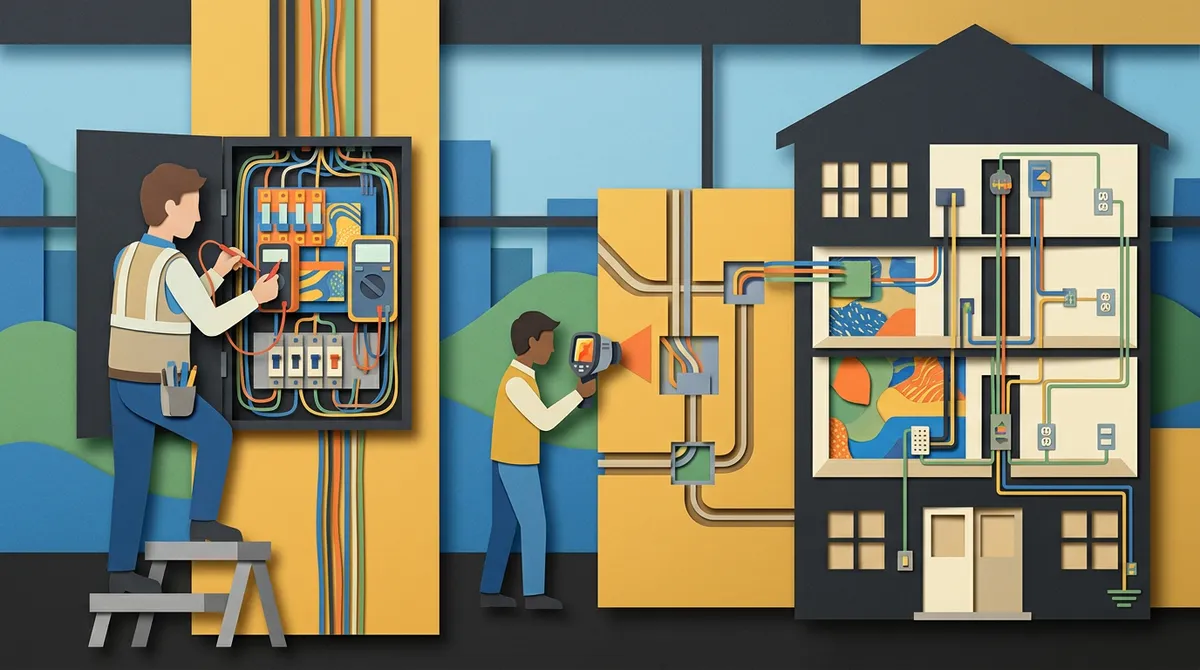
So what exactly goes on during one of these inspections? It’s more thorough than you might expect. Modern electrical safety inspections go well beyond a visual check of your breaker box. Here’s a breakdown of what certified inspectors typically assess:
- Grounding systems and bonding connections
- Surge protection devices
- Arc Fault Circuit Interrupters (AFCIs)
- Panel boards and distribution equipment
- Wiring conditions and insulation integrity
- Load balancing and circuit capacity
- Lighting systems and illumination levels
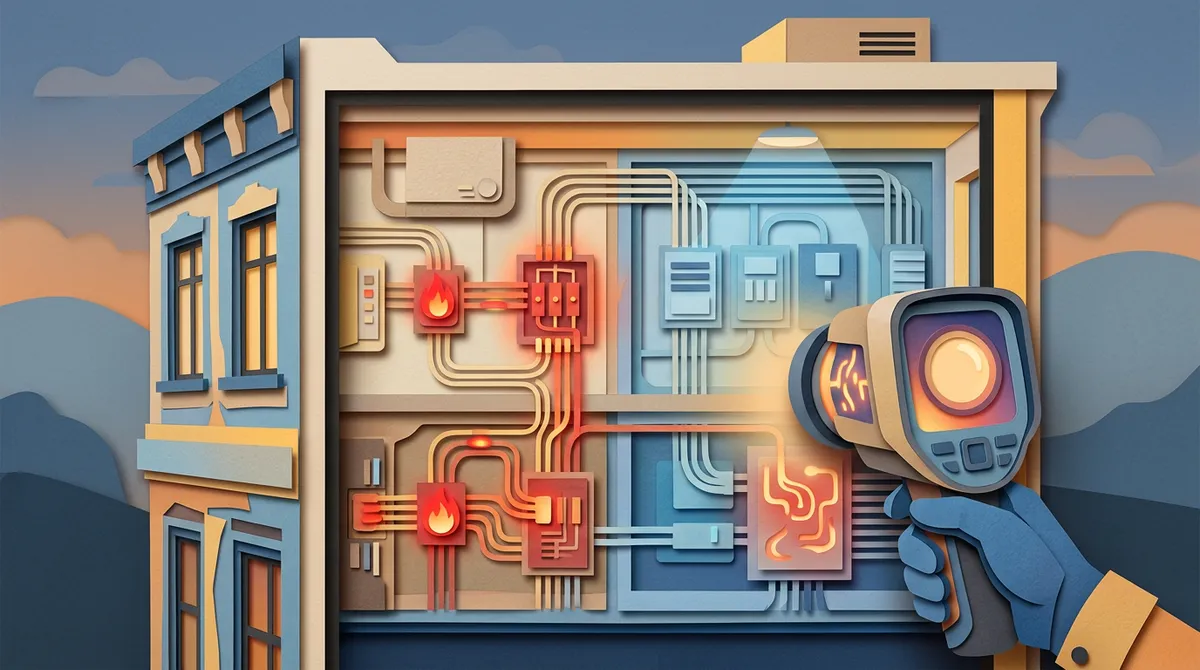
One of the most powerful tools used in these inspections is infrared thermal imaging. This technology detects heat anomalies in electrical components — things like overheating connections, imbalanced loads, and failing equipment — without ever opening a panel or interrupting your operations. It’s non-invasive, fast, and incredibly accurate.
Infrared Thermal Scanning: A Game-Changer
Infrared thermal inspections are now considered a best practice for commercial and multi-family buildings in Broward County. They can spot problems that look perfectly fine to the human eye but are quietly building toward a failure or fire. Inspectors with Infrared Training Center Level I and II certifications are qualified to perform and interpret these scans accurately.
For building owners preparing for recertification, scheduling an infrared scan well before your deadline gives you time to make repairs without scrambling. Think of it as a wellness check for your building’s nervous system.

Cooper City Buildings and the 40-Year Recertification Timeline
Cooper City is a thriving Broward County community, and many of its buildings — both residential and commercial — are now reaching or exceeding 40 years of age. That means a growing number of property owners and association boards are entering the recertification window right now in 2026.
Here’s a simple timeline to help you understand where your building might fall:
| Building Age | Recertification Requirement | Inspection Focus |
|---|---|---|
| Up to 40 years | No mandatory recertification yet | Voluntary preventive maintenance recommended |
| 41 years | Initial recertification required | Full structural and electrical inspection |
| 51 years | Second recertification | Updated structural and electrical review |
| Every 10 years after | Ongoing recertification cycle | Full compliance inspection each cycle |
Even if your building hasn’t hit the 41-year mark yet, annual or semi-annual electrical inspections are strongly recommended for commercial properties in Broward County. Catching small issues early keeps costs manageable and prevents surprise failures during a formal recertification inspection.

Permits and Compliance: What Cooper City Requires
One thing that surprises many property owners is that electrical work tied to recertification often requires permits from the local building department. In Cooper City, any repairs or upgrades to your electrical system that are identified during an inspection will typically need to be permitted before work begins and inspected again after completion.
This is actually a good thing. The permit process ensures that all repair work is done correctly and meets current Florida Building Code standards. It also creates a paper trail that protects you as the property owner and demonstrates compliance to your county, your HOA, and your insurance provider.
Here’s how the recertification and permit process typically flows:
- Receive your county recertification notice in the mail.
- Hire a licensed professional to conduct the required electrical safety inspection.
- Receive a detailed report identifying any deficiencies or hazards.
- Pull permits for any required repairs or upgrades.
- Complete the work with a licensed electrical contractor.
- Pass the final inspection and submit documentation to the county.
Having a knowledgeable partner guide you through each of these steps makes the whole process much smoother. That’s exactly what the team at O’Reilly Consultants is built to do — from the moment you receive that first notice to the day your recertification is complete.
Common Electrical Issues Found in Aging Cooper City Buildings
After years of inspections across South Florida, certain problems show up again and again in buildings that are approaching or past the 40-year mark. Knowing what to watch for can help you take action before it becomes a compliance issue.
- Outdated wiring: Aluminum wiring from the 1960s and 70s is a common fire hazard in older buildings.
- Overloaded panels: Buildings built before modern electrical demand rarely have panels sized for today’s technology loads.
- Corroded connections: South Florida’s humidity accelerates corrosion in junction boxes and panel connections.
- Missing AFCI protection: Arc fault protection is now required in many circuits but wasn’t standard in older builds.
- Inadequate grounding: Grounding systems in older buildings may not meet current code requirements.
- Damaged conduit or insulation: Decades of heat and moisture can degrade protective coverings on wiring.
If any of these issues are identified during your inspection, don’t panic. Most can be remedied with targeted upgrades, and catching them early is always better than discovering them during a county inspection or, worse, after an incident. You can explore more about structural concerns that often accompany electrical issues in this helpful resource on understanding foundation cracks and hairline cracks in commercial buildings.
How Often Should You Schedule Electrical Inspections
The short answer: more often than you probably think. While the county mandates a formal electrical inspection at recertification milestones, the best practice for commercial and multi-family buildings in Broward County is to conduct internal electrical inspections on a routine schedule.
Here’s a recommended inspection frequency guide based on building type:
| Building Type | Recommended Inspection Frequency | Priority Focus |
|---|---|---|
| High-rise residential (condos/apartments) | Annual | Common area panels, elevators, emergency systems |
| Commercial office buildings | Annual or semi-annual | HVAC electrical, data rooms, main distribution |
| Industrial/warehouse | Semi-annual | Heavy equipment circuits, motor controls, lighting |
| Retail/shopping centers | Annual | Tenant spaces, outdoor signage, parking lot lighting |
Staying on a regular inspection schedule not only reduces your risk of sudden failures — it also makes your formal recertification inspection go much more smoothly. When your records show consistent maintenance and care, it builds credibility with county inspectors.
Choosing the Right Team for Your Recertification Inspections
Not every inspector is equipped to handle the full scope of a building recertification in Broward County. You want a team with the right certifications, tools, and local experience to get the job done right the first time.
Here’s what to look for when choosing an inspection team:
- Licensed professionals: Look for teams led by licensed architects or engineers with Florida credentials.
- Advanced technology: Drones, 3D laser scanning, and infrared thermal cameras produce more accurate results than traditional methods.
- Local knowledge: Familiarity with Broward County codes and the Cooper City building department streamlines the process.
- Full-service capability: The best teams handle structural, electrical, and illumination inspections together — so you’re not juggling multiple contractors.
- Clear reporting: You need reports that are detailed, easy to understand, and formatted to meet county submission requirements.
O’Reilly Consultants checks every one of these boxes. Led by owner and qualifying architect Sherard O’Reilly, and supported by Construction Manager and Engineer Catalina Torres — who brings 27 years of civil engineering experience — and Project Engineer Rafael Ojeda with over 1,000 Phase I Environmental Site Assessments under his belt, the team delivers inspections that go beyond what the county requires. Visit us on Google to read what property owners across South Florida are saying about their experience.
And while keeping your building’s electrical systems in top shape is the priority, don’t forget that curb appeal and exterior maintenance matter too — services like All Trusted Lawn Care help keep your property looking well-maintained alongside your compliance efforts.
Steps to Get Started with Cooper City Electrical Safety Inspections
Ready to move forward? Here’s a simple path to get your electrical safety inspection scheduled and your building on the road to recertification compliance:
- Confirm your building’s age and check whether you’re within a recertification window.
- Gather any previous inspection reports, maintenance records, and county notices.
- Contact a licensed inspection team experienced in Broward County recertification requirements.
- Schedule your electrical safety inspection, including an infrared thermal scan.
- Review the findings and create a prioritized repair plan.
- Complete repairs with permitted contractors and schedule follow-up inspections as needed.
- Submit all required documentation to the county before your deadline.
The 90-day window that many counties give after issuing a recertification notice sounds generous — until repairs and permitting get added to the mix. Starting early makes all the difference.
Conclusion: Stay Ahead of Your Building’s Electrical Health
Cooper City electrical safety inspections are not just a regulatory box to check. They’re a genuine investment in the safety of everyone who lives or works in your building. From infrared thermal scans that catch hidden hazards to full-scope recertification reports that satisfy county requirements, a thorough electrical inspection gives you the information and confidence you need to keep your property safe, compliant, and valuable.
Whether you’re managing a condo association, overseeing a commercial property portfolio, or preparing a multi-family apartment building for its 40-year milestone, the right team can make the entire process feel manageable. Don’t wait for a county notice to take action — proactive inspections save time, money, and stress.
Take the first step today and request your free building recertification consultation with O’Reilly Consultants. Our team is ready to guide you through every phase of the process with expertise, care, and the advanced technology your building deserves.
FAQs
Q: What is required for 40-year building recertification in Cooper City, FL?
A: Buildings in Cooper City must undergo both structural and electrical safety inspections when they reach 41 years of age, as required by Miami-Dade County Code — which Broward County also follows. The inspection results must be documented and submitted to the county, and any deficiencies need to be repaired within the mandated timeframe. It’s a thorough process, but with the right team guiding you, it’s very manageable!
Q: How do infrared electrical inspections help with Broward County recertification?
A: Infrared thermal scanning detects hidden heat anomalies in your electrical system — things like overheating panels, loose connections, and imbalanced loads — without any disruption to your building’s operations. This non-invasive approach makes it easier to catch problems early, address them before your formal inspection, and present clean results to county inspectors. Think of it as giving your building a head start!
Q: Do electrical inspections require permits in Cooper City?
A: Yes — any electrical repairs or upgrades identified during a recertification inspection in Cooper City typically require permits from the local building department before work can begin. This ensures all repairs meet current Florida Building Code standards and are properly documented. It’s actually a helpful layer of protection for you as the property owner.
Q: How often should commercial buildings in Cooper City get electrical inspections?
A: Most commercial and multi-family buildings in Broward County benefit from annual electrical inspections, with some high-demand buildings — like industrial or warehouse properties — benefiting from semi-annual checks. Staying on a routine schedule keeps your electrical systems healthy and makes your mandatory recertification inspections go much more smoothly. Consistency really is key here!
Q: What electrical issues are most commonly found in 40-year building recertification inspections?
A: Some of the most common findings include outdated aluminum wiring, overloaded electrical panels, corroded connections caused by South Florida’s humidity, missing arc fault protection (AFCI), and inadequate grounding systems. Most of these issues are very fixable once identified — which is exactly why scheduling your inspection well before your county deadline is such a smart move.