

Key Takeaways
-
Lauderhill condo and apartment buildings with three or more habitable stories must complete a mandatory Structural Integrity Reserve Study (SIRS) by December 31, 2025, then recertify every 10 years to comply with Florida law.
-
SIRS evaluates eight critical structural components (roof, load-bearing structure, fire protection, plumbing, electrical, waterproofing, windows/doors, and components over $25,675) and creates a mandatory 30-year reserve funding plan with no waivers allowed.
-
Unlike standard reserve studies, SIRS requires full mandatory funding of reserve contributions—condo boards cannot vote to waive or reduce the required amounts, ensuring buildings maintain adequate financial reserves for repairs.
-
Buildings must hire a Florida-licensed engineer or architect with reserve specialist credentials to conduct the SIRS, not just any inspector, as unqualified professionals may produce invalid assessments.
-
Non-compliance with SIRS requirements triggers serious consequences including fines, insurance coverage loss, difficulty selling units or refinancing, personal liability for board members, and potential occupancy restrictions.
-
SIRS differs from Milestone Inspections—Milestone focuses on structural condition by building age, while SIRS combines structural assessment with reserve funding planning; both may be required for the same building.
If you own or manage a condo or apartment building in Lauderhill, Florida, you’ve probably heard about Structural Integrity Reserve Studies — or SIRS. And if you’re feeling a little overwhelmed by it all, you’re not alone! These studies are a relatively new requirement, and many building owners and condo boards are still figuring out exactly what they need to do and when. The good news? Once you understand the process, it’s very manageable. This guide will walk you through everything you need to know about Lauderhill Structural Integrity Reserves Studies (SIRS) — from what they cover, to how they work, to how to stay compliant and protect your building for the long haul.
What Is a Structural Integrity Reserve Study?
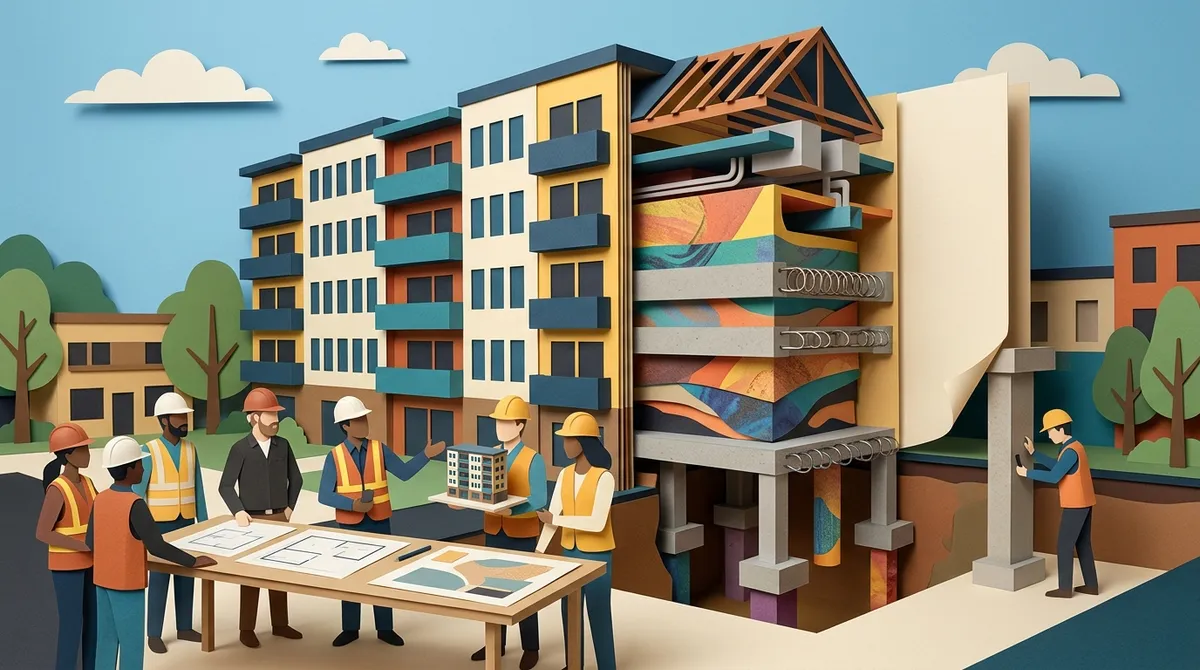
A Structural Integrity Reserve Study (SIRS) is a state-mandated inspection and financial planning tool. It combines a visual assessment of your building’s critical structural components with a 30-year reserve funding plan. Think of it as a health check for your building, plus a savings roadmap to keep it that way.
Florida passed Senate Bill 4-D (SB-4D) in 2022 after the devastating Champlain Towers South collapse. The law was later refined by SB 154 in 2023 and HB 913 in 2024. These laws require condominium and cooperative buildings with three or more habitable stories to complete a SIRS. This requirement applies to buildings across Broward County, including Lauderhill.
To learn more about the broader recertification landscape, check out this helpful guide on what building recertification is and why it matters.

Who Needs a SIRS in Lauderhill?
Not every building in Lauderhill requires a SIRS. Here’s a quick breakdown of who it applies to:
- Condominium buildings with three or more habitable stories
- Cooperative residential buildings of the same height
- Buildings where any single structural component has a replacement cost over $25,675 (the 2026 inflation-adjusted threshold)
- Associations established on or before July 1, 2022
If your building meets these criteria, you’re required to have a SIRS completed. Thanks to HB 913, the extended compliance deadline for initial SIRS completion was December 31, 2025. Going forward, SIRS must be recertified every 10 years.
If you’re unsure whether your building qualifies, it’s worth reviewing the Miami-Dade County Recertification guidelines or reaching out to a licensed inspection professional.
What Does a SIRS Evaluate?
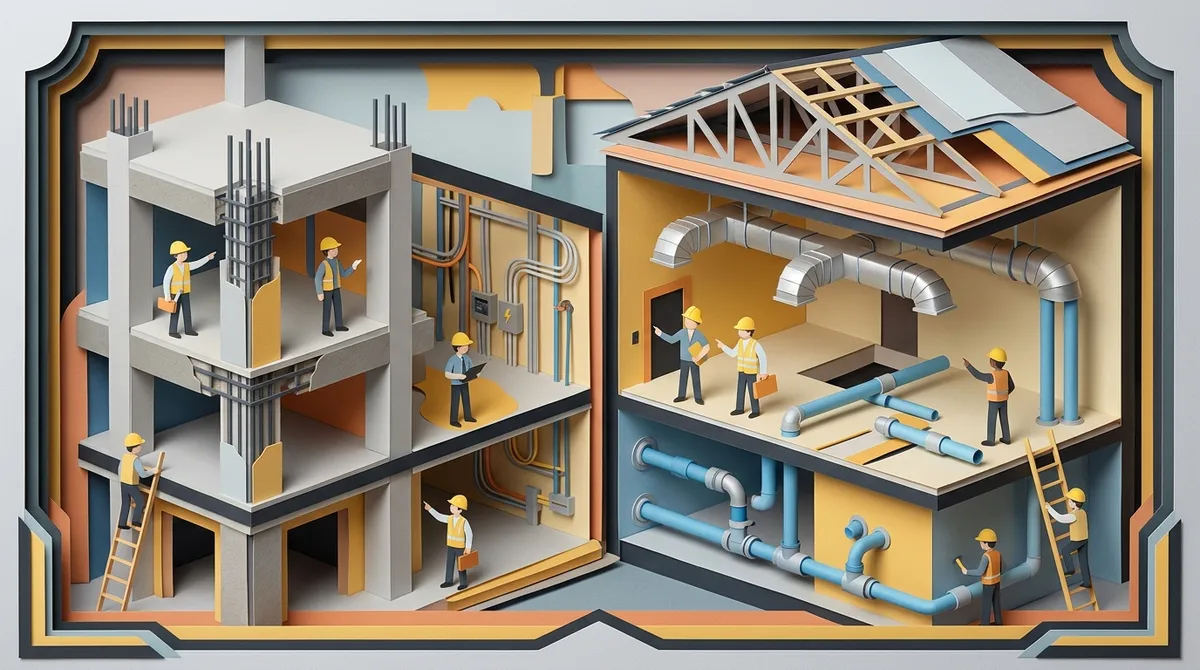
A SIRS covers eight critical structural components. These are the elements most closely linked to building safety and long-term durability. Here’s what gets evaluated:
- Roof — Condition, age, and estimated remaining useful life
- Load-bearing structure — Walls, columns, beams, and foundations
- Fire protection systems — Fireproofing, suppression systems, and related components
- Plumbing — Major pipes and drainage infrastructure
- Electrical systems — Main panels, wiring, and distribution systems
- Waterproofing — Exterior cladding, coatings, and moisture barriers
- Windows and exterior doors — Seals, frames, and glazing
- Any component over $25,675 — Items tied to structural integrity that exceed this replacement cost threshold
Each component gets a condition grade, a remaining useful life estimate, and a recommended reserve contribution. This helps associations plan ahead and avoid sudden, unbudgeted repair bills. For more on what a full building inspection covers, see what a commercial building inspection really covers.

How SIRS Differs from a Standard Reserve Study
You might be wondering: how is a SIRS different from a regular reserve study? Great question! Here’s a side-by-side comparison:
| Feature | Standard Reserve Study | Structural Integrity Reserve Study (SIRS) |
|---|---|---|
| Focus | General maintenance items | Structural and safety-critical components only |
| Funding waiver | Allowed with member vote | No waivers permitted |
| Mandatory by state law | No | Yes (Florida SB-4D) |
| Conducted by | Reserve specialists | Licensed engineer or architect with reserve expertise |
| Planning horizon | Varies | 30 years |
| Renewal frequency | Varies | Every 10 years |
The biggest difference? With a SIRS, full funding is mandatory. Condo boards cannot vote to waive or reduce the required reserve contributions. This is a hard legal requirement designed to prevent the kind of deferred maintenance that led to the Champlain Towers tragedy. For a deeper look at how this plays out in nearby communities, check out SIRS vs. Standard Reserve Studies in Lauderdale Lakes.
Step-by-Step: How to Complete a SIRS in Lauderhill
Ready to get started? Here’s a simple, step-by-step process for completing your Lauderhill Structural Integrity Reserves Studies (SIRS) requirement:
- Confirm your building qualifies — Check your building’s height, story count, and association establishment date.
- Hire a licensed engineer or architect — The study must be conducted by a Florida-licensed professional with reserve specialist credentials. See tips on how to choose licensed building inspectors for recertification.
- Schedule the visual inspection — The inspector will conduct on-site visual assessments, measurements, and photographic documentation of all eight structural components.
- Review the condition report — Your engineer will deliver a written report with condition grades, estimated remaining useful life for each component, and any immediate concerns.
- Receive the 30-year reserve funding plan — This outlines the recommended annual reserve contribution to fund future repairs and replacements.
- Present findings to the association board — Boards must review the SIRS findings and adopt the recommended reserve funding amounts.
- Begin funding reserves as required — Start allocating the mandated reserve amounts. No waivers are allowed.
- Schedule your next SIRS in 10 years — Mark your calendar! Recertification is required every decade.
For a broader look at recertification steps, see the 8 key steps in the building recertification process for 2026.
Common Mistakes Lauderhill Condo Boards Make with SIRS
A little awareness goes a long way! Here are some of the most common missteps to avoid:
- Waiting too long to start — Scheduling a qualified engineer takes time. Don’t leave this until the last minute.
- Hiring an unqualified inspector — SIRS must be conducted by a licensed engineer or architect with reserve specialist expertise, not just any inspector.
- Ignoring the funding requirement — Some boards mistakenly think they can vote to waive reserves. They can’t. Full funding is mandatory.
- Skipping documentation — Photographic evidence, measurements, and written reports are all required parts of a valid SIRS.
- Confusing SIRS with a Milestone Inspection — These are two separate requirements. A Milestone Inspection focuses on structural condition; SIRS adds the reserve funding component. Both may be required for your building.
For more on avoiding costly errors, check out 5 SIRS mistakes Coral Springs condo boards must avoid — many of the same pitfalls apply in Lauderhill.
Penalties for SIRS Non-Compliance
Skipping your SIRS isn’t just risky for your building — it can result in real financial and legal consequences. Here’s what’s at stake:
- Fines and penalties from Florida’s Division of Condominiums
- Potential loss of insurance coverage or significant premium increases
- Difficulty selling units or refinancing the building
- Personal liability for board members who knowingly delay compliance
- Possible building closure or occupancy restrictions in severe cases
Non-compliance puts residents at risk and exposes associations to serious liability. The good news is that getting compliant doesn’t have to be stressful when you have the right team by your side. You can also search Miami-Dade Building Recertification Cases to review compliance records for nearby properties.
How Reserve Amounts Are Calculated in a SIRS
One of the most common questions we hear is: “How does the engineer figure out how much we need to save?” Here’s a simplified explanation:
- Identify all qualifying components — Each component above the $25,675 threshold is listed.
- Estimate replacement cost — The engineer estimates what it would cost to replace or fully repair each component today.
- Determine remaining useful life — Based on condition, age, and materials, the inspector estimates how many years remain before replacement is needed.
- Calculate annual contribution — Using a 30-year funding model, the study calculates how much the association needs to set aside each year so funds are available when needed.
This process ensures your association is never caught off guard by a major repair bill. It’s smart financial planning that protects both the building and its residents.
Why O’Reilly Consultants Is the Right Partner for Your Lauderhill SIRS
O’Reilly Consultants is a highly specialized engineering firm serving Broward and Miami-Dade Counties. The team is led by qualifying architect Sherard O’Reilly, who brings deep experience in ASTM E2018 property condition assessments. He is supported by Construction Manager and Engineer Catalina Torres, with 27 years of civil engineering experience, and Project Engineer Rafael Ojeda, who has completed over 1,000 Phase I Environmental Site Assessments across South Florida.
What makes O’Reilly Consultants stand out is their use of advanced technology — including drones and 3D laser scanning — to deliver thorough, accurate assessments. You get detailed reports with clear, actionable recommendations, not just a stack of confusing paperwork. Their team guides you through the entire process, from the initial notice to final documentation submission.
Whether you manage a high-rise condo, a multi-family apartment, or a commercial property in Lauderhill, Lauderhill building recertification services from O’Reilly are designed to make compliance smooth and stress-free. You can also check out their reviews on Google to see what other South Florida property owners are saying.
SIRS and Milestone Inspections: Understanding the Connection
Many Lauderhill building owners ask how SIRS fits alongside Milestone Inspections. Here’s a simple way to think about it:
- A Milestone Inspection is triggered by building age (typically 30 years, or 25 years in coastal areas) and focuses on structural and life-safety conditions.
- A SIRS is triggered by building type (3+ story condos/co-ops) and adds a required 30-year reserve funding plan to the structural assessment.
- Both may be required for the same building — and in many cases, a qualified engineer can coordinate both during the same site visit.
To understand how recertification timelines work more broadly, see this guide on 40-year building recertification: what Florida owners must know. And if your building is approaching the 40-year mark, explore the importance of 40-year building recertification for property longevity.
Getting Started with Your Lauderhill SIRS Today
The bottom line is this: if you own or manage a qualifying building in Lauderhill, your Structural Integrity Reserve Study isn’t optional — it’s the law. But it’s also a genuinely valuable tool. A well-executed SIRS protects your residents, safeguards your investment, and helps your association plan confidently for the future.
The earlier you get started, the smoother the process will be. Don’t wait for a deadline to creep up on you! Whether you’re completing your first SIRS or planning for your 10-year recertification, having the right licensed professional in your corner makes all the difference. You can also explore how to complete a structural integrity reserve study in nearby Margate for additional context on the process.
Ready to take the next step? Schedule your Lauderhill SIRS with O’Reilly Consultants today and get a free, no-obligation quote from one of South Florida’s most trusted building inspection teams. Your building — and your residents — will thank you for it.
FAQs
Q: What is the difference between a SIRS and a Milestone Inspection in Florida?
A: Great question — these are two separate requirements that often get mixed up! A Milestone Inspection focuses on evaluating the structural and life-safety condition of aging buildings (typically at 30 years). A SIRS goes a step further by adding a mandatory 30-year reserve funding plan for safety-critical components. Many buildings in Lauderhill may need both, and a qualified engineer can often coordinate them together.
Q: Can a condo association in Lauderhill waive or reduce SIRS reserve funding requirements?
A: Unfortunately, no — and this is one of the most important things to understand about SIRS. Unlike traditional reserve studies, Florida law does not allow associations to vote to waive or reduce the required funding amounts identified in a SIRS. Full funding is mandatory, no exceptions. This rule exists to protect residents and prevent the kind of deferred maintenance that leads to structural failures.
Q: How much does a Structural Integrity Reserve Study cost in Lauderhill?
A: The cost of a SIRS can vary depending on your building’s size, age, complexity, and the number of components that need to be evaluated. Smaller buildings with straightforward layouts will generally cost less than large high-rises with complex systems. The best way to get an accurate number is to contact a licensed engineer like O’Reilly Consultants for a free, no-obligation quote tailored to your specific property.
Q: How often does a SIRS need to be completed in Lauderhill?
A: Once your initial SIRS is completed, Florida law requires it to be recertified every 10 years. So if your building completes its first SIRS in 2025, you’ll need to schedule your next one by 2035. Keeping track of this timeline is important, so mark your calendar early and give yourself plenty of lead time to hire a qualified professional.
Q: What happens if a building in Lauderhill fails to complete its SIRS on time?
A: Non-compliance with SIRS requirements can lead to fines from Florida’s Division of Condominiums, difficulties with insurance coverage, and challenges when selling units or refinancing the property. In serious cases, buildings may face occupancy restrictions. The good news is that getting compliant is straightforward with the right licensed engineer — and the sooner you start, the easier the process will be!