Key Takeaways
-
A SIRS is a Florida condo-law reserve planning study, not a pass-or-fail safety inspection, and it does not satisfy Broward County building recertification, which must be completed separately.
-
Florida generally requires a SIRS for condo buildings at least three habitable stories tall, repeated at least every 10 years; confirm exceptions with counsel or the Division of Condominiums.
-
The current statutory text says a study may not be completed after December 31, 2026, so boards that have not finished their first SIRS should treat it as urgent.
-
The SIRS must cover roof structure, fireproofing, plumbing, electrical, waterproofing, windows and doors, and other required components, estimating remaining useful life and replacement or deferred-maintenance costs.
-
Gather original plans, past inspection reports, warranties, permits, invoices, and any county notices before the inspector arrives to make the study more accurate.
-
If Broward recertification finds problems, owners generally have 180 days to permit and complete repairs and resubmit documentation, so track county response dates carefully.
If you serve on a condo board in Lighthouse Point, you have probably heard the letters “SIRS” more times than you can count. And you may be wondering: Is this the same as recertification? Do we need both? What is due, and when? Take a deep breath. You are not alone, and this is very doable.
A Lighthouse Point structural integrity reserve study is a Florida condo-law requirement. It looks at key parts of your building, estimates how long they will last, and shows how much money your association should set aside for repairs. It is not the same thing as Broward County building recertification, which is a separate safety inspection.
In this friendly guide, we will walk you through what a SIRS is, who needs one, and how to complete it step by step. We will also show how it differs from recertification, so you can plan both without stress. For a quick local overview, you can also read our 8 Key Facts About Lighthouse Point SIRS in 2026.
What Is a Lighthouse Point Structural Integrity Reserve Study?
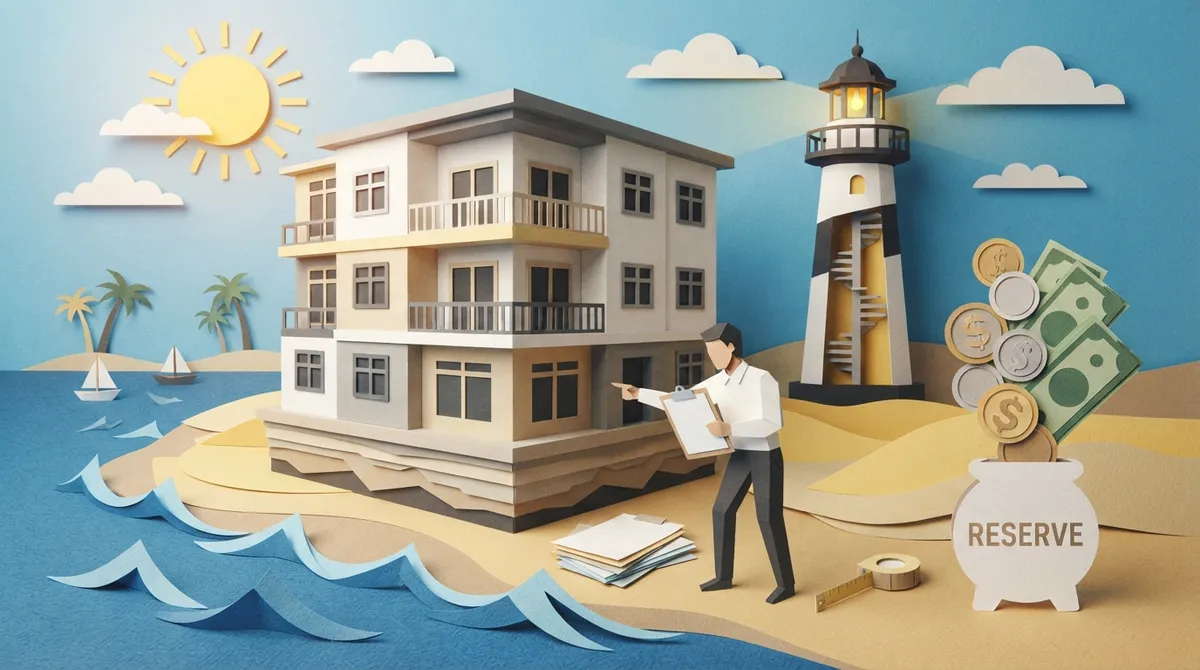
A structural integrity reserve study (SIRS) is a planning report for condo buildings. Think of it like a long-term health plan for your building. It tells you what needs attention, when it may need it, and what it may cost.
Under Florida Statute §718.112(2)(g), a residential condominium association generally must get a SIRS for each condominium building that is at least three habitable stories tall. The study must be repeated at least every 10 years. Because rules and exceptions can change, always confirm your situation with Florida counsel or the Division of Condominiums.
Here is what a SIRS does:
- Reviews the major parts of the building tied to structure and safety
- Estimates the remaining useful life of each part
- Estimates replacement cost or deferred-maintenance expense
- Recommends a reserve funding plan so the money is there when needed
It is a money-and-maintenance roadmap. It is not a pass-or-fail stamp.
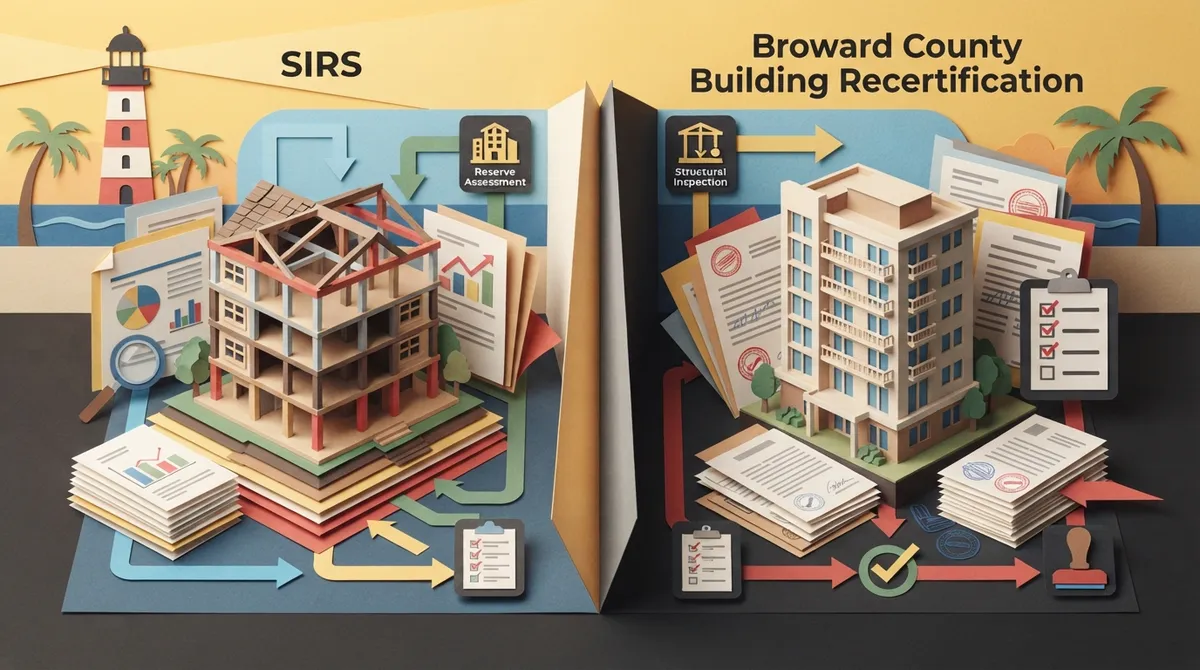
SIRS vs. Broward County Building Recertification
This is the number one point of confusion for Lighthouse Point boards. A condo may need both, and one does not replace the other.
| Feature | SIRS | Broward Building Recertification |
|---|---|---|
| Main purpose | Reserve planning and funding | Building safety inspection |
| Legal source | Florida condominium law | Broward County safety program |
| Result | Study with costs and funding plan | Sealed structural and electrical reports |
| Pass or fail? | No, it is a planning study | Reports note safe condition or needed repairs |
| Who prepares it | Qualified engineer, architect, or reserve specialist | Florida-registered architect or engineer |
| Replaces the other? | No | No |
If you want to dig deeper into the safety-inspection side, see How to Handle Lighthouse Point Building Recertification and SIRS vs. Milestone Inspection: Which Does Your Condo Need?
Step 1: Confirm That Your Building Needs a SIRS
Start with the basics. Not every building is covered, so a quick check saves time and money.
- Check the height. Is your condo building at least three habitable stories?
- Check the type. Is it a residential condominium governed by an association?
- Check your dates. Look at your certificate-of-occupancy date and your association’s turnover history.
- Check for exceptions. Ask your attorney or property manager whether any exception applies.
If you are unsure, do not guess. A short call with your association attorney can prevent costly mistakes later.
Step 2: Know the Deadlines
Deadlines are where many boards feel the most pressure, so let us make them simple. The initial deadline for many existing owner-controlled associations was extended to December 31, 2025. The current statutory text also states that a study may not be completed after December 31, 2026.
That means if your association has not finished its first SIRS, you should treat this as urgent in 2026. Laws change, and the 2026 legislative session brought updates to condo rules, so confirm the latest rules with Florida counsel or the Division of Condominiums.
One more helpful tip: the search results do not show a Lighthouse Point-specific SIRS fee or a city-specific recertification schedule. So rely on state law and county notices, not guesses from neighbors.
Step 3: Learn What the Study Must Cover
A SIRS looks at specific building components. Knowing the list helps you gather the right records before the inspector arrives.
- Roof
- Structure, including load-bearing walls, floors, and foundation
- Fireproofing and fire-protection systems
- Plumbing
- Electrical systems
- Waterproofing and exterior painting
- Windows and exterior doors
- Other qualifying components, as the law requires
For each item, the report estimates remaining useful life and replacement cost or deferred-maintenance expense. Then it ties everything into a reserve funding plan.
Step 4: Hire a Qualified Professional
Florida law requires a visual inspection as part of the study. The study and inspection must be performed or verified by a statutorily qualified professional, such as a Florida-licensed engineer or architect, or a qualifying reserve specialist or analyst.
When you pick a provider, look for:
- Proper Florida licensing and sealed documents
- Real experience with South Florida condo buildings
- Clear, plain-English reports
- A team that can also handle recertification if you need it
O’Reilly Consultants is a small, specialized engineering team serving Broward and Miami-Dade Counties. The team is led by owner and qualifying architect Sherard O’Reilly, with Construction Manager and Engineer Catalina Torres bringing 27 years of civil engineering and construction management experience. We use drones and 3D laser scanning to look at hard-to-reach areas like roofs and facades, which means safer, faster, and more thorough evaluations. Our guide on How to Choose Licensed Building Inspectors for Recertification shares more tips on vetting a provider.
Step 5: Prepare Your Documents
A little prep goes a long way. The more the inspector knows, the more accurate your study will be. Gather these items before the site visit:
- Original building plans and as-built drawings
- Past inspection reports and repair records
- Roof, window, and waterproofing warranties
- Permits and contractor invoices for past work
- Your most recent reserve study, if you have one
- Any county notices or violation letters
Share this packet with your property manager so everyone is on the same page. Residents will also appreciate a heads-up about when inspectors will be on site.
Step 6: Schedule the Site Inspection
On inspection day, the professional walks the property and checks each covered component. Expect them to look at the roof, exterior walls, balconies, parking areas, mechanical and electrical rooms, and common areas.
Drones can speed up roof and facade checks, and 3D laser scanning can capture exact measurements. This can reduce the need for scaffolding or lifts, which keeps costs and disruption lower. Our detailed approach is explained in What Does a Commercial Building Inspection Really Cover?
Step 7: Review the Report and Build Your Funding Plan
Once the inspection is done, you will receive the study. Here is what to look for as you read it:
- Remaining useful life for each covered component
- Cost estimates for replacement or deferred maintenance
- Funding recommendations that show how much to reserve each year
- Priority items that may need attention sooner
Take time to talk it through at a board meeting. Ask your engineer to explain anything unclear. A good report should feel like a roadmap, not a puzzle.
Remember, a SIRS does not certify that a building is safe, and it does not remove the need for repairs, permits, or a required safety inspection. If the study points out problems, plan to address them with licensed contractors and proper permits.
Do Not Forget Broward Recertification
Completing a SIRS does not satisfy recertification. Broward County runs its own building safety inspection program. County materials identify structural and electrical inspection submissions prepared and sealed by a Florida-registered architect or engineer.
Here are the key points to keep in mind:
- If the safety report finds problems, owners generally have 180 days to permit and complete repairs and resubmit documentation.
- The county FAQ lists a $350 submission fee for the specific 40-year building safety report process it describes. Verify the current fee and whether it applies to your building.
- Check any notices you receive from the county or city, and track the response dates carefully.
For the full picture, see our 40-Year Building Recertification: What Florida Owners Must Know and the 8 Key Steps in the Building Recertification Process (2026). If you have neighbors in Miami-Dade, the Miami-Dade County Recertification page and the Search Miami-Dade Building Recertification Cases tool are helpful official resources.
Common Mistakes to Avoid
Many boards run into the same problems. Here is how to stay a step ahead:
- Mixing up SIRS and recertification. They are separate. Plan for both.
- Waiting too long. Inspector calendars fill up quickly near deadlines.
- Skipping records. Missing plans and permits slow everything down.
- Ignoring the funding plan. A study that sits in a drawer does not protect your building.
- Hiring a general inspector. You need a qualified professional. Read Certified vs. General Inspectors: Who Should Recertify Your Building?
Who Benefits From This Process?
A solid SIRS helps more than just condo boards. Apartment owners, commercial property owners, and investment firms with aging South Florida buildings also benefit from clear maintenance and cost plans, especially when dealing with insurance, refinancing, or a sale. HOA managers gain a stronger foundation for budgeting, too. If your community needs a broader plan, our post on 5 Things to Know About Lighthouse Point HOA Reserve Studies is a great next read.
Your Simple SIRS Checklist
- Confirm your building is covered by the law
- Verify current deadlines with counsel
- Hire a qualified Florida professional
- Gather plans, permits, and past reports
- Schedule the visual inspection
- Review the report with your board
- Adopt a funding plan and schedule repairs
- Separately track recertification requirements
Final Thoughts: You Can Do This
A Lighthouse Point structural integrity reserve study may sound heavy, but it is really about protecting your building, your neighbors, and your investment. With the right team, the process feels smooth and even empowering. Want to see what other Lighthouse Point clients say? Visit us on Google and read O’Reilly Consultants reviews.
Ready to get started? Request a free quote or call us at (512) 567-1191. O’Reilly Consultants will guide you from notice to final report, helping you meet deadlines with confidence and peace of mind.
FAQs
Q: Does my Lighthouse Point condominium need a structural integrity reserve study?
A: Most likely, if your condo building is at least three habitable stories tall. Florida law generally requires a SIRS for each covered building, but exceptions can apply. Check with your association attorney or the Division of Condominiums to be sure.
Q: What is the difference between a SIRS and Broward County building recertification?
A: A SIRS is a reserve-planning study under Florida condo law. It estimates component life, costs, and funding needs. Broward recertification is a separate building safety inspection with sealed structural and electrical reports, and completing one does not satisfy the other.
Q: How often must a structural integrity reserve study be updated?
A: Florida law generally requires a SIRS at least once every 10 years for each covered building. Your association should also review the study regularly so the funding plan stays on track. Confirm current requirements with Florida counsel.
Q: Does a SIRS certify that my building is safe or remove the need for repairs?
A: No. A SIRS is a planning and funding tool, not a pass-or-fail safety certification. You will still need to complete repairs, pull permits, and handle any required recertification or milestone inspection separately.
Q: Who can perform a structural integrity reserve study in Florida?
A: The study and visual inspection must be performed or verified by a statutorily qualified professional. This includes a Florida-licensed engineer or architect, or a qualifying reserve specialist or analyst. Choose a team with real South Florida condo experience.