

Key Takeaways
-
A Structural Integrity Reserve Study (SIRS) is a financial planning tool that estimates remaining useful life and replacement costs for key components, but it does not confirm the building is safe today.
-
A milestone inspection or recertification is a safety review performed by a Florida-licensed architect or engineer, and it cannot replace a SIRS.
-
Florida Statute 553.899 generally requires the first milestone inspection by December 31 of the year a qualifying building turns 30, then every 10 years after.
-
Phase two of a milestone inspection is needed only if phase one finds substantial structural deterioration, and phase one is generally due within 180 days of written notice.
-
Many West Park condo buildings may need both a SIRS and a milestone inspection, and the findings of each can inform the other's repair and budget planning.
-
Start early by confirming your certificate of occupancy date, habitable stories, and deadlines with the City of West Park Building Department, since licensed professionals book up quickly near deadlines.
If you own or manage a condo in West Park, you have probably heard three terms tossed around: SIRS, milestone inspection, and recertification. They sound alike, and they often show up in the same board meeting. But they are not the same thing. Mixing them up can lead to missed deadlines, surprise bills, and a lot of stress.
Here is the good news. Once you see how each one works, the whole picture gets much clearer. A West Park structural integrity reserve study is really about money planning for your building’s big parts. A milestone inspection or recertification is about checking whether the building is safe right now.
In this friendly guide, we compare the two side by side. We cover what each one does, who performs it, and how they work together. We also share practical steps for condo boards, property managers, and building owners in Broward County.
What Is a Structural Integrity Reserve Study?
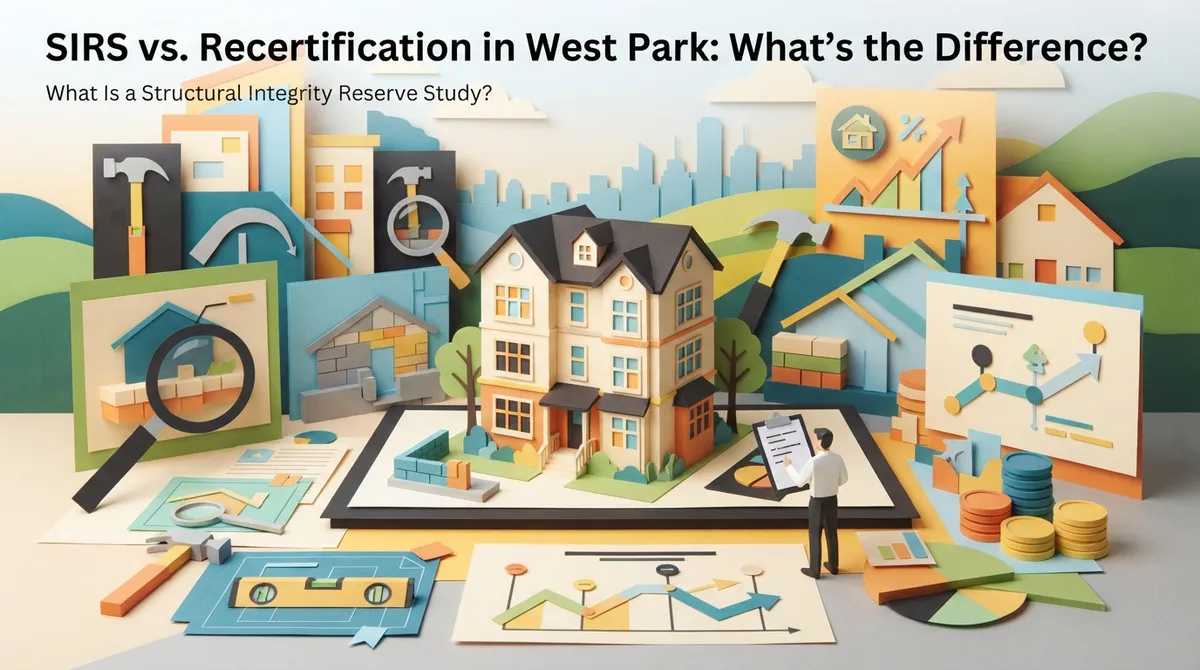
A Structural Integrity Reserve Study, or SIRS, is a financial planning study for Florida condominium and cooperative associations. It estimates the remaining useful life of key building components. It also estimates what it will cost to repair or replace them.
Think of it like a health plan for your building’s budget. It tells the board what big expenses are coming and how much to set aside each year. It does not say the building is safe or unsafe today. That is a different job.
In West Park, a SIRS follows Florida’s condominium reserve rules. There is no special “West Park only” version. The city sits in Broward County, so the same state rules apply as in nearby cities. If you want to see how neighbors handle it, take a look at this guide on SIRS vs. standard reserve studies and what West Park needs.
Why a SIRS Matters for Your Association
- Better budgeting: You see big costs coming years ahead.
- Fewer special assessments: Steady reserve funding reduces surprise bills for owners.
- Stronger resale value: Buyers and lenders like to see healthy reserves.
- Insurance confidence: Well-documented planning helps with underwriting conversations.
What Is Building Recertification and a Milestone Inspection?
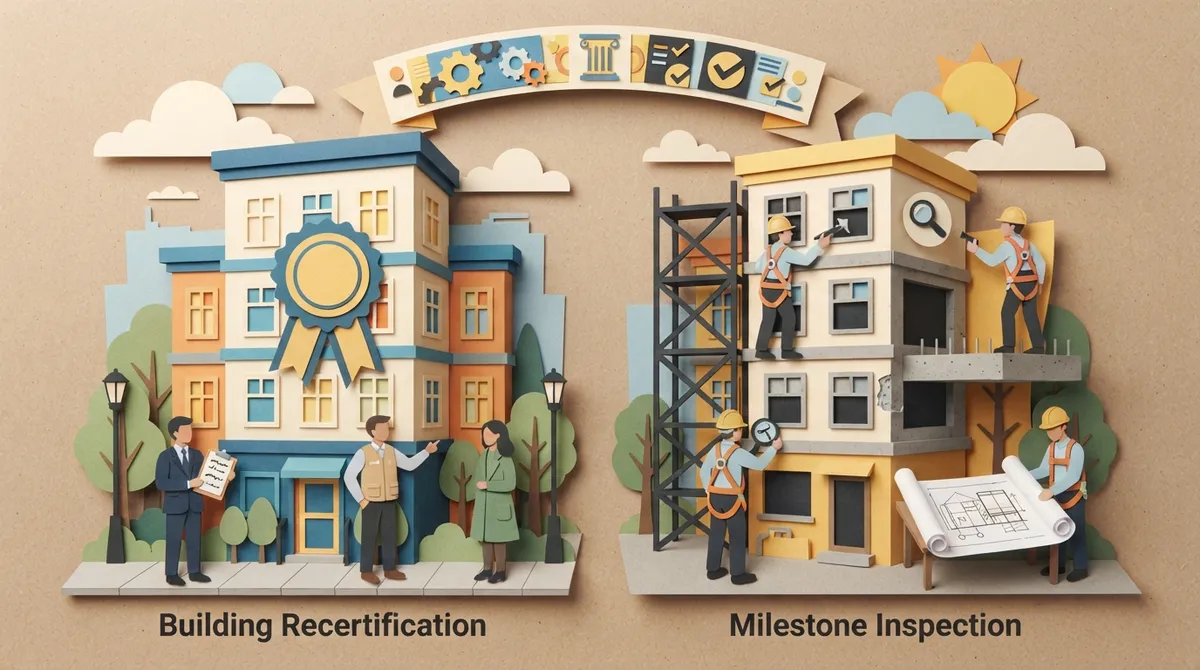
Recertification and milestone inspections are about safety. A licensed professional looks at the building and reports on its condition. This is a hands-on review, not a budget forecast.
Florida Statute 553.899 sets milestone inspection rules for qualifying condominium and cooperative buildings that are three or more habitable stories tall. In general, the first inspection is due by December 31 of the year the building turns 30. After that, it repeats every 10 years. Transition rules and local circumstances can change the exact dates, so always check current law and your local building department.
A milestone inspection must be done by a Florida-licensed architect or engineer. It has two possible phases:
- Phase one: A visual look and qualitative assessment of major structural components.
- Phase two: Required only if phase one finds substantial structural deterioration. It can include deeper testing.
Phase one generally must be completed within 180 days after the owner gets written notice from the local enforcement agency. Want a plain-English walk-through? Our guide to the 8 key steps in the building recertification process breaks it down.
SIRS vs. Recertification: Side-by-Side Comparison
Here is a quick way to see how the two compare. Use this table as a cheat sheet for your next board meeting.
| Feature | Structural Integrity Reserve Study (SIRS) | Milestone Inspection / Recertification |
|---|---|---|
| Main purpose | Plan and fund future repair and replacement costs | Check current structural and safety condition |
| Type of work | Financial planning study | Safety inspection |
| Governing source | Florida Condominium Act reserve requirements | Florida Statute 553.899 and local rules |
| Result | Reserve funding plan and component timeline | Report on safety and needed repairs |
| Says building is safe? | No | Provides a professional safety assessment |
| Who performs it | Qualified professional per state requirements | Florida-licensed architect or engineer |
| Can one replace the other? | No | No |
The big takeaway is simple. Finishing a West Park structural integrity reserve study does not satisfy a required safety inspection. And finishing an inspection does not satisfy reserve planning rules. Many buildings need both.
How the Two Work Together
Here is where it gets interesting. The two processes feed each other. A safety inspection might find cracking, corrosion, or water damage. That finding can change how the board plans repair costs. Likewise, a SIRS can flag aging components that deserve a closer inspection.
For example, imagine a West Park condo with a 28-year-old roof and aging balcony railings. The SIRS says the roof will need replacement within a few years. The inspection later notes spalling concrete near a stairwell. Now the board has both a safety to-do list and a money plan to pay for it. That is a far better spot than guessing.
If cracking is a concern in your building, this article on foundation cracks and hairline cracks in commercial buildings explains what to watch for.
Which Building Components Does a SIRS Cover?
Florida law lists specific components that a SIRS must evaluate. Always confirm the current list in the statute, since lawmakers keep fine-tuning the rules. In general, the study looks at major structural and safety items such as:
- Roof
- Load-bearing walls and primary structural members
- Floors and foundation
- Fireproofing and fire protection systems
- Plumbing
- Electrical systems
- Waterproofing and exterior painting
- Windows and exterior doors
The study estimates remaining useful life and replacement cost for each item. It then helps the association set reserve contributions that make sense. Electrical systems matter here too. If you want to see how local inspections tie in, read how to pass West Park electrical safety inspections with ease.
Who Needs What in West Park?
Every building is different. Age, height, ownership type, and certificate of occupancy date all matter. Here is a simple way to think about it for each reader group.
Condo Association Boards
If you govern a condominium, you will likely face SIRS requirements. You may also face milestone inspection duties depending on your building’s height and age. Start by checking your certificate of occupancy date and number of habitable stories. Then confirm your deadlines with official sources.
Commercial Property Owners and Investment Firms
Commercial buildings follow local recertification rules rather than the condominium SIRS rules. Still, a property condition review helps you plan capital spending. Investors also use recertification and condition reports to protect value, support insurance, and keep sales or refinancing on track.
HOA Property Managers and Apartment Owners
Managers and apartment owners often juggle several documents at once. A reserve study, a condition assessment, and an inspection each answer a different question. Knowing which one applies saves time and money. For related reading, see 9 West Park HOA reserve study mistakes to avoid.
How to Confirm Your West Park Requirements
Rules change, and this is one area where a quick double-check pays off. Follow these steps to stay on track:
- Gather your building facts. Find the certificate of occupancy date, number of habitable stories, and ownership type.
- Contact the City of West Park Building Department. Ask about recertification applicability, forms, and deadlines. Local details should always be verified directly.
- Review the current Florida Statutes. Check Section 553.899 for milestone inspections and the Florida Condominium Act for reserve rules.
- Ask about the submission route. Some Broward County reports go through an online permitting portal, so confirm the correct one for your building.
- Hire qualified licensed professionals early. Good inspectors book up fast, especially near deadlines.
For a broader look at the local picture, check out 7 West Park building recertification facts for 2026 and 7 West Park milestone inspection facts you need now.
If you want to see how a neighboring county frames its rules, Miami-Dade posts clear details on its building recertification program. You can also search Miami-Dade building recertification cases to see how the process looks in practice. Keep in mind that West Park falls under Broward County and City of West Park procedures, so use those as your final word.
Common Mistakes to Avoid
Boards and owners are smart and well-meaning. Still, a few mix-ups come up again and again. Watch out for these:
- Treating a SIRS like a safety inspection. It is a funding plan, not a safety certificate.
- Waiting for the deadline. Repairs can take months, and good professionals get busy.
- Relying on marketing pages as legal advice. Always verify against official state and local sources.
- Skipping reserve updates. Costs change. A stale study can leave your fund short.
- Hiring the wrong inspector. Make sure the person holds the right Florida license for the job.
Picking the right professional makes a big difference. Our guide on how to choose licensed building inspectors for recertification can help you ask the right questions.
How a Trusted Partner Makes It Easier
Navigating all of this can feel like a lot. That is where an experienced local team helps. O’Reilly Consultants is a small, highly specialized engineering team serving Broward and Miami-Dade Counties. The team is led by owner and qualifying architect Sherard O’Reilly. It focuses on building recertification and safety-driven inspections.
What sets the team apart is the toolbox. O’Reilly Consultants uses drones and 3D laser scanning to evaluate buildings thoroughly and quickly. You get clear reports with actionable recommendations, plus guidance from the county notice through repairs and final submission. The firm also offers 10-, 25-, and 40-year recertification inspections, electrical and illumination safety inspections, property condition assessments, and HOA reserve studies.
In other words, you do not have to juggle five different vendors. You get one friendly team that understands the whole picture. If you want to learn what real customers say, read O’Reilly Consultants reviews on Google.
The Bottom Line: Do You Need One or Both?
Here is the quick answer. A SIRS plans the money. A milestone inspection or recertification checks the safety. Many West Park condo buildings will need both over time, and neither one replaces the other.
The smartest move is to start early. Confirm your building’s status, gather your records, and line up licensed professionals before deadlines get tight. Your future self, and your residents, will thank you.
Ready to take the stress out of the process? Request a free quote from O’Reilly Consultants, or call us at (512) 567-1191 to talk through your West Park building’s needs. We would love to help you stay compliant, safe, and confident.
FAQs
Q: What is a Structural Integrity Reserve Study (SIRS) in Florida?
A: A SIRS is a financial planning study for condominium and cooperative associations. It estimates the remaining life and replacement cost of key building components so the board can fund reserves wisely. It is a budget tool, not a safety certificate.
Q: Is a SIRS the same as a milestone inspection or building recertification?
A: No, they are different. A SIRS plans future repair costs, while a milestone inspection or recertification checks the building’s current safety. A building may need both, and one cannot stand in for the other.
Q: Does a West Park condominium need a SIRS?
A: Many Florida condominium associations must complete a SIRS under state reserve rules, but applicability depends on building features and current law. West Park follows the same Florida rules as other Broward County cities. Confirm your situation with official state sources and the City of West Park Building Department.
Q: Who can perform a milestone inspection in Florida?
A: A milestone inspection must be performed by a Florida-licensed architect or engineer. Phase one is a visual review of major structural components. Phase two is only needed if phase one finds substantial structural deterioration.
Q: Where can West Park owners confirm inspection deadlines and submission steps?
A: Start with the City of West Park Building Department, since local details can change. You should also review the current Florida Statutes, including Section 553.899. A licensed professional like O’Reilly Consultants can help guide you through the process.