
Key Takeaways
-
Milestone inspections apply to condo and cooperative buildings three or more stories tall and must be completed by December 31 of the year the building turns 30 years old, then every 10 years after.
-
Milestone inspections and 40-year recertifications are separate programs—never assume one satisfies the other without confirming with local West Park officials.
-
Licensed engineers or architects inspect foundations, load-bearing walls, framing, balconies, façades, and roof systems; modern inspectors use drones and 3D laser scanning for accuracy.
-
Building owners and property managers bear responsibility for scheduling and budgeting inspection costs, not individual unit owners; contact West Park Building Department at 954-989-2688 for deadline confirmation.
-
Structural Integrity Reserve Studies plan future maintenance funding but do not replace structural inspections—you need both to verify safety and plan finances.
-
Common delays occur when boards wait until deadline years to hire inspectors, confuse state law with local requirements, or skip required electrical reviews alongside structural reports.
If you own or manage a condo building in West Park, Florida, you’ve probably heard the term “milestone inspection” floating around your board meetings. Maybe it came up in a nervous email from your property manager, or maybe your insurance agent mentioned it right before your renewal quote doubled. Either way, you’re not alone, and you’re in the right place. Grab a cup of coffee, because we’re going to walk through exactly what a West Park milestone inspection means, who needs one, and how to get through the process without losing your sanity.
West Park sits in Broward County, and that matters more than you might think. Your building’s recertification path depends on your local jurisdiction, your building’s age, height, and ownership type. This article breaks it all down in friendly, plain language so your board, your management team, or your investment group can move forward with confidence. Let’s dig in.
1. What a Milestone Inspection Actually Is
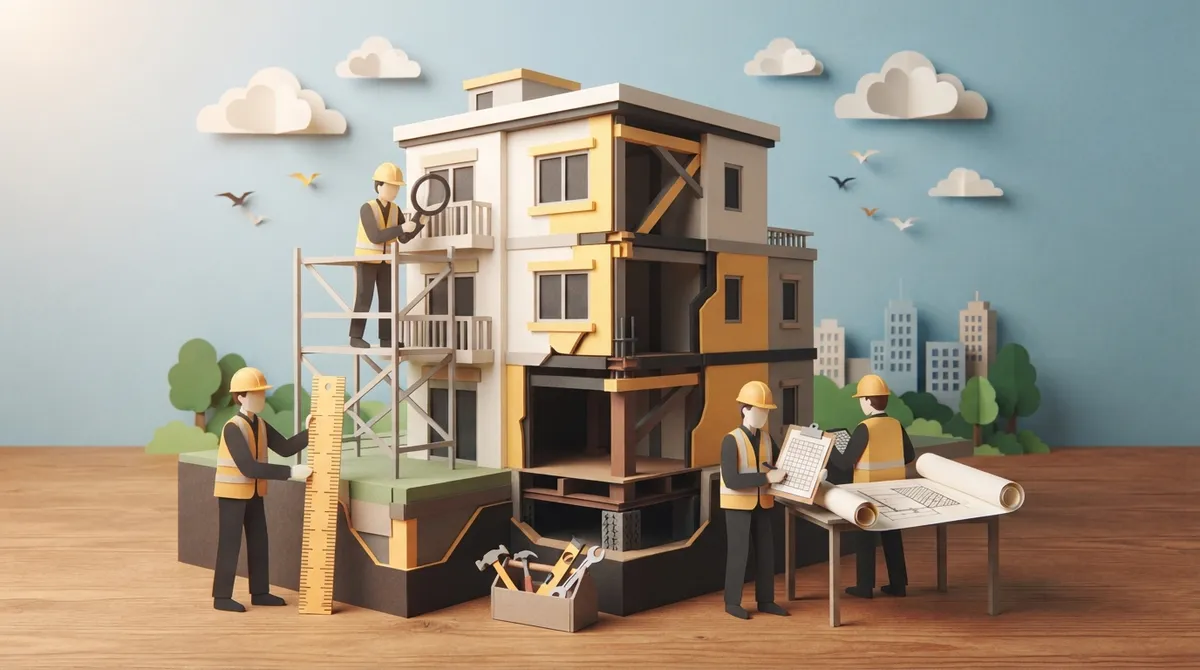
A milestone inspection is a structural safety review required under Florida Statute §553.899. It applies to condominium and cooperative buildings that are three or more habitable stories tall. A Florida-licensed engineer or architect performs the inspection, checking your building’s foundation, load-bearing walls, framing, balconies, façades, and roof systems.
Think of it like a deep physical checkup for your building instead of your body. The goal is simple: catch problems early before they become expensive emergencies or, worse, safety hazards for the people living inside. If the inspector finds substantial signs of trouble, they may recommend a more detailed Phase Two investigation to dig deeper into specific areas of concern.
2. Milestone Inspection vs. 40-Year Recertification: Know the Difference
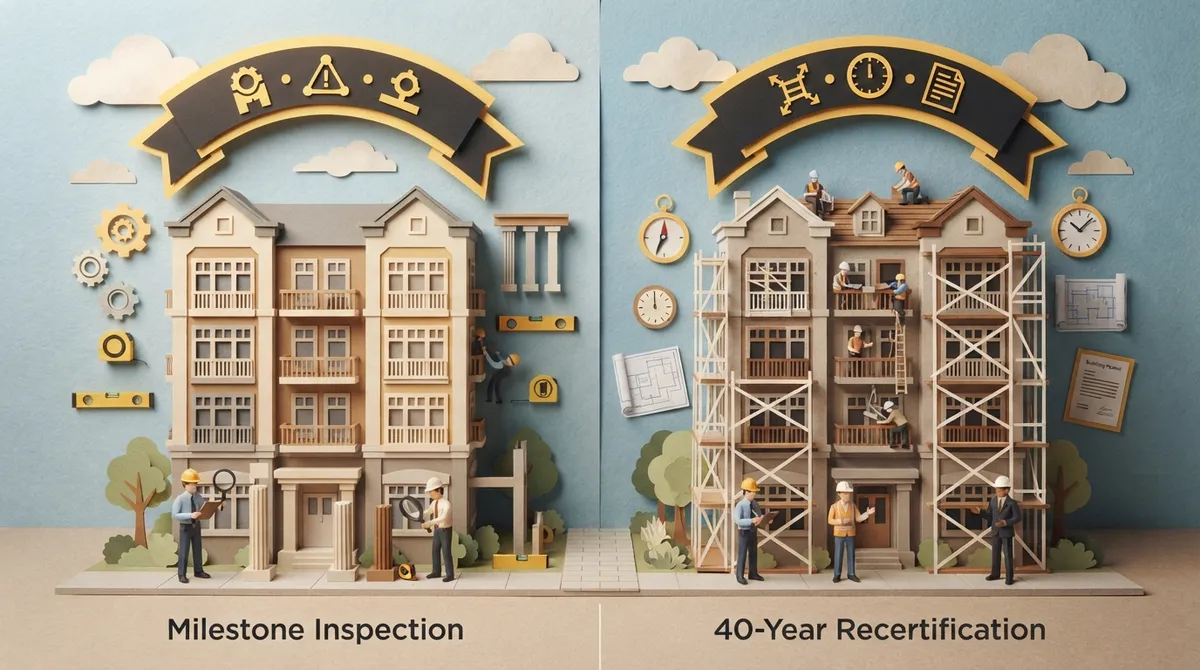
Here’s where a lot of confusion happens, and honestly, it’s totally understandable. The term “milestone inspection” refers specifically to the statewide law under §553.899. Meanwhile, “40-year recertification” is a separate, locally administered program that some Florida jurisdictions use to review older buildings.
These two concepts sometimes overlap, but they are not automatically identical. Your building’s exact requirements depend on its ownership type (condo, cooperative, or otherwise), height, age, and location. Never assume one process satisfies the other without confirming with local officials. For a deeper breakdown of how these programs differ across the region, check out 40 Year Recertification and The Importance Of 40 Year Building Recertification For Property Longevity.
3. Who Actually Needs to Worry About This
Not every building in West Park needs a milestone inspection. The state law generally targets condo and cooperative buildings with three or more habitable stories. Single-family homes and small duplexes are off the hook. But if you’re managing a mid-rise or high-rise condo, this absolutely applies to you.
- Condo association boards overseeing buildings three stories or taller
- Cooperative associations with qualifying structures
- Commercial property owners with threshold buildings over three stories or 50 feet
- Apartment building owners with aging multi-family structures
- Real estate investment firms holding older South Florida properties
If you fall into any of these categories, it’s worth getting ahead of the process now rather than scrambling later. Our team at O’Reilly Consultants regularly helps boards and owners figure out exactly where they stand.
4. When Your Deadline Actually Hits
The standard rule is straightforward once you understand it. Qualifying buildings must complete their first milestone inspection by December 31 of the year they turn 30 years old, based on the certificate of occupancy date. After that first inspection, buildings must repeat the process every 10 years.
There were some transitional deadlines worth noting too. Buildings that hit 30 years old before July 1, 2022 generally had until December 31, 2024. Buildings reaching 30 years between July 1, 2022 and December 31, 2024 generally had until December 31, 2025. If your building missed either window, don’t panic, but do reach out to a licensed professional right away.
Coastal Buildings May Face Earlier Deadlines
Local enforcement agencies can sometimes require an earlier first inspection for qualifying coastal buildings, subject to specific statutory conditions. If your West Park property sits near water, this is a detail you absolutely want to verify with the city rather than guess about.
5. What Happens During the Actual Inspection
So what does the engineer or architect actually look at? Quite a lot, honestly. The inspection is a visual review of your building’s structural components and systems.
- Foundation and load-bearing elements are examined for cracking, shifting, or deterioration
- Framing and structural connections are checked for integrity
- Façades and exterior walls are reviewed for spalling or water intrusion damage
- Balconies and railings are inspected for corrosion or structural weakness
- Roof systems are assessed for leaks, wear, or structural concerns
- Any other structurally relevant areas identified by the inspector are documented
Many inspectors now use drones and 3D laser scanning to get a more complete and accurate picture, especially for hard-to-reach areas like upper façades and roof lines. This technology speeds up the process and often catches details a ground-level walkthrough might miss. If you’re curious about what a broader inspection covers beyond just the structural review, take a look at What Does a Commercial Building Inspection Really Cover?
6. Table: Comparing Milestone Inspections, 40-Year Recertification, and SIRS
These three terms get mixed up constantly, so here’s a simple side-by-side comparison to keep them straight.
| Program | What It Covers | Who Performs It | Typical Trigger |
|---|---|---|---|
| Milestone Inspection | Structural safety review of condo/co-op buildings | Licensed engineer or architect | 30 years old, then every 10 years |
| 40-Year Recertification | Local structural and electrical safety review | Licensed engineer or architect | Building age per local ordinance |
| Structural Integrity Reserve Study (SIRS) | Long-term funding and maintenance planning | Licensed professional or qualified reserve specialist | Tied to milestone inspection cycle |
Notice that a reserve study does not replace a structural inspection. It plans for future repairs and funding, but it doesn’t check your building’s current structural condition. For more on this distinction, see SIRS vs. Standard Reserve Studies: What West Park Needs.
7. How to Actually Get Through the Process Without Stress
Here’s the good news: you don’t have to figure this out alone, and you definitely don’t have to reinvent the wheel. Follow these steps and you’ll be in great shape.
- Pull your building’s certificate of occupancy to confirm its exact age
- Check your ownership type (condo, co-op, or other) and story count
- Contact the City of West Park Building Department to confirm your specific deadline and submission requirements
- Hire a Florida-licensed engineer or architect experienced in milestone inspections
- Schedule the inspection with enough lead time before your deadline
- Review the report carefully and address any Phase Two recommendations promptly
- Submit your completed report to the appropriate local office
The City of West Park Building Department is located at 1965 S State Road 7, West Park, Florida 33023. You can reach them at 954-989-2688 or by email at inspection@cityofwestpark.org. Always confirm current submission procedures directly with the city, since fees, portals, and office hours can change over time.
Who’s Actually Responsible for Scheduling This
Individual unit owners typically don’t need to arrange this themselves. The responsibility usually falls on the building owner, condo association, cooperative association, or property manager. That means your board or management team needs to budget for professional fees, coordinate scheduling, and manage the paperwork trail.
HOA property managers juggling 90-day inspection deadlines often turn to How to Navigate Electrical Inspections for Building Recertification for guidance on pairing structural and electrical review timelines efficiently.
Why Working with Experienced Professionals Matters
We get it. This whole process can feel overwhelming, especially if you’re juggling board responsibilities alongside your day job. That’s exactly why O’Reilly Consultants exists. Our small, specialized engineering team focuses on building recertification and safety inspections throughout Broward and Miami-Dade Counties, so you get expert guidance instead of guesswork.
Owner and qualifying architect Sherard O’Reilly brings deep experience in property condition assessments and detailed building documentation, covering everything from facades to fire systems. Construction Manager and Engineer Catalina Torres adds 27 years of civil engineering and construction management expertise to every project. Project Engineer Rafael Ojeda contributes more than 16 years of environmental due diligence experience, having completed over 1,000 Phase I Environmental Site Assessments across South Florida. Learn more about the people behind the work on our About Oreilly Consultants page.
We use drones and 3D laser scanning to deliver fast, accurate assessments with clear, actionable reports. Whether you’re managing a high-rise condo, an office tower, or a multi-family apartment complex, we help you navigate every step, from receiving your inspection notice to submitting final documentation. Curious what our clients think? You can visit us on Google — O’Reilly Consultants to read real reviews from property owners just like you.
Common Pitfalls Worth Avoiding
We’ve seen boards run into the same avoidable snags again and again. Here’s what to watch for:
- Waiting until the deadline year to start looking for an inspector
- Assuming a reserve study satisfies the structural inspection requirement
- Confusing local recertification rules with the statewide milestone law
- Skipping electrical safety review when it’s required alongside the structural report
- Failing to budget for potential repair costs uncovered during Phase Two
Avoiding these mistakes early saves your association time, money, and a lot of stress. For a broader look at frequent missteps across the industry, check out 7 Professional Building Inspection Mistakes You Must Avoid.
Bringing It All Together
West Park milestone inspections don’t have to be a source of dread. With the right team, a clear timeline, and a bit of proactive planning, your building can sail through the process while staying safe and compliant. Remember to verify every deadline and requirement directly with the Miami-Dade County Recertification office if your portfolio spans both counties, since Broward and Miami-Dade programs differ. You can also search Miami-Dade Building Recertification Cases to see how similar buildings have navigated their own recertification journeys.
For general background on Florida’s statutory framework, the Florida Senate’s official statute page offers helpful reference material worth bookmarking.
Ready to get your West Park building’s milestone inspection scheduled the right way, with a team that genuinely cares about your peace of mind? Request a free quote today, or give us a call directly at Call us at (512) 567-1191 to talk through your building’s specific timeline. We’re here, we’re friendly, and we genuinely want to help you get this done right.
FAQs
Q: What is a milestone inspection in West Park, Florida?
A: It’s a required structural safety review for qualifying condo and cooperative buildings three stories or taller. A Florida-licensed engineer or architect examines your building’s foundation, framing, balconies, and roof systems to check for safety concerns.
Q: Is a West Park milestone inspection the same as a 40-year recertification?
A: Not exactly, and this trips up a lot of boards! The milestone inspection comes from state law, while 40-year recertification is often a separate local program. Always confirm which applies to your specific building with the city.
Q: When is my West Park condominium’s milestone inspection due?
A: Generally, it’s due by December 31 of the year your building turns 30 years old, based on its certificate of occupancy. After that, inspections repeat every 10 years, so mark your calendar early.
Q: Who is qualified to perform a milestone inspection in West Park?
A: Only a Florida-licensed professional engineer or registered architect can perform this inspection. Our team at O’Reilly Consultants brings decades of combined experience to every project we take on.
Q: Does a Structural Integrity Reserve Study replace a milestone inspection?
A: Nope, these are two different things entirely! A reserve study plans for future funding and maintenance, while the milestone inspection checks your building’s current structural safety. You typically need both, not one instead of the other.