Key Takeaways
-
Read your notice immediately and mark the deadline: Miami-Dade recertification reports are generally due within 90 days, and Florida milestone phase one must be completed within 180 days of the local agency's written notice.
-
Confirm which program applies to your building: Miami-Dade local recertification (30 years inland, 25 near coast, repeating every 10 years) and the Florida milestone program (condo/co-op buildings with 3+ habitable stories) can apply separately or together.
-
Hire a Florida-licensed architect or engineer early with recertification experience in your county, rather than waiting until the final weeks of the deadline window.
-
If substantial structural deterioration is found, a phase-two inspection may follow, and under Florida law repairs must be commenced within 365 days after receiving the phase-two report.
-
Condo associations must distribute the inspection summary to unit owners within 45 days, post it conspicuously, and publish it on the association website if one is required.
-
The milestone inspection focuses on structural condition and life safety, not full code compliance, so set owner expectations accordingly and rank repairs by safety risk once the report arrives.
Getting a notice for a building safety inspection can make any owner or board member’s stomach drop. Deadlines are tight. Costs feel unknown. And the rules seem to change depending on which county, city, or statute you read. Take a deep breath. You are not alone, and this is very doable with the right plan.
In South Florida, a building safety inspection is a required check-up for an existing building. It looks at structural and electrical safety so problems get caught early, before they become expensive or dangerous. It is not a routine home inspection, and it is not a promise that every part of your building meets today’s code.
This friendly guide walks you through the whole process in plain language. You will learn which rules apply, how to get ready, who to hire, and what to do if the report finds problems. Whether you run a condo board, manage an HOA, own an apartment building, or hold a commercial property, you will leave with clear next steps for 2026.
What a Building Safety Inspection Means for Recertification
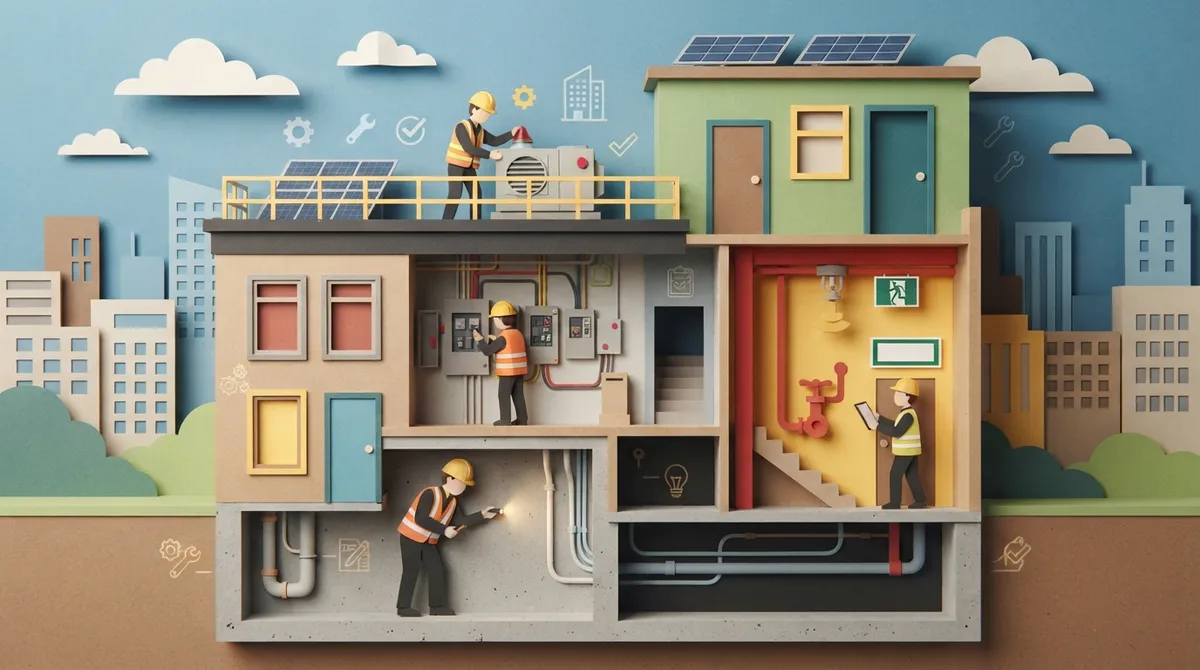
In the building recertification world, a building safety inspection is a periodic, required review of an existing building’s condition. A licensed professional checks key systems and reports what they find to the local authority.
The main goal is life safety. The inspector looks for signs of structural wear, failing electrical systems, and other hazards. The rules, forms, and deadlines depend on your local authority, so always read your notice closely.
Here is what a building safety inspection is not:
- A basic home inspection for a buyer
- A full code compliance audit of every building element
- A one-time event (most buildings repeat it on a schedule)
If you want a deeper background, our guide on what building recertification is and why it matters is a great place to start.

Know Which Rules Apply to Your Building
This is where many owners get tangled up. In Florida, two programs often work side by side. One is your local recertification program. The other is the statewide milestone inspection program.
Local Recertification in Miami-Dade County
In Miami-Dade, recertification generally applies when a building reaches 30 years of age inland, or 25 years near the coast. After that, the inspection repeats every 10 years. The county’s recertification portal states that the required report is due within 90 days. Always confirm the exact deadline on your property-specific notice. You can review the program details on the Miami-Dade County Recertification page.
Florida’s Milestone Inspection Program
Florida Statute 553.899 covers condominium and cooperative buildings that are at least three habitable stories tall. These buildings generally need a structural milestone inspection by the year they reach 30 years of age, and every 10 years after that. A local enforcement agency may move the first inspection up to 25 years, based on local conditions such as nearness to salt water.
Here is a quick side-by-side look:
| Feature | Local Recertification (Miami-Dade) | Florida Milestone Inspection |
|---|---|---|
| Who it covers | Buildings meeting the county’s age rules | Condo and co-op buildings, 3+ habitable stories |
| Starting age | 30 years inland, 25 years near the coast | 30 years (local agency may set 25) |
| Repeat cycle | Every 10 years | Every 10 years |
| Focus | Structural and electrical safety | Structural condition and life safety |
| Deadline note | Report due within 90 days per county portal | Phase one within 180 days of written notice |
Not sure which one you face? Our breakdown of SIRS vs. milestone inspection and the article on milestone vs. electrical inspection can help you sort it out.
Step-by-Step: How to Get Ready for Your Building Safety Inspection
A little prep goes a long way. Follow these steps and you will keep stress low and deadlines safe.
- Read your notice carefully. Note the deadline, the required forms, and the type of inspection. Mark the date on your calendar the same day.
- Confirm which program applies. Check whether your building falls under local recertification, the milestone program, or both. You can also search Miami-Dade building recertification cases to check your property’s status.
- Gather your records. Pull together past inspection reports, repair records, permits, and building plans if you have them.
- Hire a qualified, licensed professional early. Do not wait until week eight of a 90-day window.
- Give access to all areas. The inspector needs to see roofs, garages, electrical rooms, stairwells, and common areas.
- Review the report right away. Ask questions while the inspector is still engaged with your property.
- Plan repairs fast. Get quotes, set a schedule, and file what your local authority requires.
For a clear view of the full path, see our overview of the 8 key steps in the building recertification process.
Who Is Qualified to Perform the Inspection?
Not just anyone can sign off on a building safety inspection. Qualifications matter, and they can change by building height and type.
A Florida milestone inspection must be performed by a Florida-licensed architect or engineer. Miami-Dade recertification also requires specific professional qualifications, and certain taller or threshold buildings have extra requirements. Always check the current county guidance and report templates before you hire.
When you compare professionals, look for:
- An active Florida license as an architect or engineer
- Real experience with recertification in your county
- Clear communication and a written scope of work
- A track record of meeting tight deadlines
Our article on how to choose a certified building inspector in Florida walks through this in more detail.
What Happens During the Inspection?
Knowing what to expect takes the mystery out of inspection day. Here is how it usually goes.
The Structural Review
The professional looks at load-bearing elements and primary structural members. They check for cracks, spalling concrete, corrosion, water damage, and signs of movement. In Florida’s milestone program, this happens in two phases.
- Phase one: A visual examination of habitable and nonhabitable areas and major structural components. It must be completed within 180 days after the owner gets the local agency’s written notice.
- Phase two: Needed only if substantial structural deterioration is found. It can include destructive or nondestructive testing aimed at the problem area.
To learn more about what inspectors look at, read what structural inspections involve for recertification.
The Electrical Review
In Miami-Dade, recertification also includes an electrical safety review. The professional checks panels, wiring, grounding, emergency lighting, and common-area systems. Old or overloaded electrical systems are a common source of findings. Our guide to 14 electrical inspection facts for recertification shares helpful pointers.
Technology Can Make It Faster
Modern tools help inspectors see more with less hassle. Drones can safely scan roofs and tall facades. 3D laser scanning captures exact building measurements and conditions. These tools can speed up the work and make reports clearer, which is a big win for busy boards and managers.
Understanding Your Inspection Report
After the inspection, the professional prepares a sealed report. In the milestone program, there is also a separate summary written for owners. Both go to the local building official and the owner or association.
Associations have clear duties once they receive the summary:
- Distribute the summary to unit owners within 45 days
- Post the summary in a conspicuous place
- Publish the report and summary on the association website, if one is required
A solid report should include:
- A clear description of what was inspected
- Photos and notes on any problem areas
- A statement of structural and electrical condition
- Recommended repairs, ranked by urgency
Remember, the milestone inspection is about structural condition and life safety. By statute, its purpose is not to confirm compliance with the Florida Building Code or fire-safety code. Keeping that in mind helps set the right expectations for your owners.
What If the Inspection Finds Problems?
Finding issues can feel scary, but it is actually the whole point. Catching a problem early almost always costs less than waiting.
If substantial structural deterioration is found, repairs must be scheduled or started within the timeframe your local authority sets. Under Florida law, repairs must be commenced within 365 days after receipt of the phase-two report, subject to local rules. Local agencies may also set their own compliance timelines and penalties.
Here is a simple action plan if your report lists repairs:
- Read the summary with your board or team and rank each item by safety risk.
- Ask your inspector to explain anything unclear.
- Collect repair bids from licensed contractors.
- File the permits and paperwork your local authority requires.
- Keep records of all work for your next inspection cycle.
Tips for Different Property Types
Every property has its own quirks. Here is what tends to matter most for each type of owner.
Condo Association Boards
Communication is your secret weapon. Share the timeline with owners early, post the summary on time, and budget for possible repairs. Boards often pair this work with a reserve study, so see our guide on what building safety inspections cover for recertification.
Commercial Property Owners
Offices, plazas, and hotels often have heavy electrical loads and lots of public traffic. Make sure tenants know about access needs. For more detail, read what a commercial building inspection really covers.
HOA Managers and Apartment Owners
You often juggle many buildings at once. Build a master calendar so no deadline sneaks up on you. Strong documentation also keeps insurers and lenders happy.
Real Estate Investment Firms
Current recertification reports protect market value and smooth out sales, refinancing, and insurance renewals. Order early when you are buying older South Florida property.
Common Mistakes to Avoid
Many owners hit the same bumps. You can skip them with a little foresight.
- Waiting too long to hire. Good professionals book up fast, and 90 days goes by quickly.
- Ignoring the notice details. Dates and forms are specific to your property.
- Mixing up programs. Recertification and milestone inspections are not the same thing.
- Delaying repairs. Small cracks and worn wiring rarely fix themselves.
- Skipping documentation. Good records help every future inspection.
Our article on 7 property inspection mistakes that cost owners in 2026 covers even more pitfalls worth knowing.
Why Owners Trust O’Reilly Consultants
When the clock is ticking, you want a team that knows the local rules cold. O’Reilly Consultants is a small, highly specialized engineering team serving Broward and Miami-Dade Counties. They focus on building recertification and safety-focused inspections, and they handle 10-, 25-, and 40-year recertification needs.
The team uses drones and 3D imaging for thorough evaluations, quick estimates, and detailed reports with clear, actionable recommendations. They guide you from the county notice to hiring a licensed professional to submitting the required paperwork, so repairs can happen within the mandated timelines. They also offer related services such as electrical and illumination safety inspections, SIRS, property condition assessments, and HOA reserve studies.
You can read how past clients feel by checking out O’Reilly Consultants reviews on Google. If you want a quick overview of the team, visit the About O’Reilly Consultants page.
Your Next Step
A building safety inspection does not have to be a headache. Read your notice, confirm your rules, hire early, and act fast on repairs. Do those four things and you will be ahead of most owners in South Florida.
Ready to get started? Request a free quote from O’Reilly Consultants, or call us at (512) 567-1191 to talk through your deadline. We would love to help you finish your recertification smoothly and keep your building safe for years to come.
FAQs
Q: What is a building safety inspection for building recertification?
A: It is a periodic, required check of an existing building’s condition, mainly its structural and electrical safety. A licensed professional reviews the building and reports to the local authority. It is not a basic home inspection, and it does not guarantee full compliance with current building codes.
Q: At what age does a building need recertification in Miami-Dade County?
A: In Miami-Dade, recertification generally applies at 30 years of age for inland buildings and 25 years for buildings near the coast. After that, the inspection repeats every 10 years. Always check your property notice and the current county rules to confirm your exact timeline.
Q: What is the difference between recertification and a Florida milestone inspection?
A: Local recertification, like Miami-Dade’s program, covers structural and electrical safety under county rules. A Florida milestone inspection is a separate statewide program for condo and co-op buildings at least three habitable stories tall, focused on structural condition and life safety. Some buildings may need to follow both, so confirm with your local authority.
Q: What happens if the inspection finds structural deterioration?
A: If substantial structural deterioration is found, a phase-two inspection may be needed, which can include targeted testing. Repairs must be scheduled or started within your local timeframe, and commenced within 365 days after the phase-two report under Florida law. Acting quickly keeps your building safe and helps you avoid penalties.