

Key Takeaways
-
Pompano Beach coastal properties require PCAs to catch salt air, humidity, and moisture damage early on roofing, building envelopes, and structural components that deteriorate faster than inland buildings.
-
Florida buildings 30 years or older (25 years if within 3 miles of coast) must undergo recertification; a PCA complements this by providing detailed capital planning and broader system evaluation beyond structural/electrical safety.
-
A complete PCA report includes executive summary, photographic documentation, immediate repairs table with costs, short-term/long-term repair schedules, and replacement reserve projections for informed capital planning.
-
PCAs follow ASTM E2018 standards and cover eight major component categories including roofing, building envelope, HVAC, plumbing, electrical, structural elements, site conditions, and accessibility compliance.
-
Most mid-size commercial or multifamily PCAs require 1-2 days on-site with completed reports delivered within 1-2 weeks; starting early before lender deadlines or recertification notices provides maximum flexibility.
-
Condo boards, apartment owners, commercial property managers, and lenders should order PCAs every 3-5 years to maintain current capital planning, especially for older coastal properties vulnerable to accelerated deterioration.
If you own or manage a building in Pompano Beach, you’ve probably heard the term “Property Condition Assessment” (PCA) tossed around. Maybe your lender asked for one. Maybe your condo board is planning a major renovation. Or maybe you just want to know what shape your building is really in before problems become expensive surprises. Whatever the reason, a Pompano Beach Property Condition Assessment is one of the smartest moves you can make as a property owner or manager in South Florida.
In this guide, we’ll walk you through exactly what a PCA is, what it covers, why it matters for coastal South Florida buildings, and how to get one done the right way. Let’s dive in!
What Is a Property Condition Assessment (PCA)?
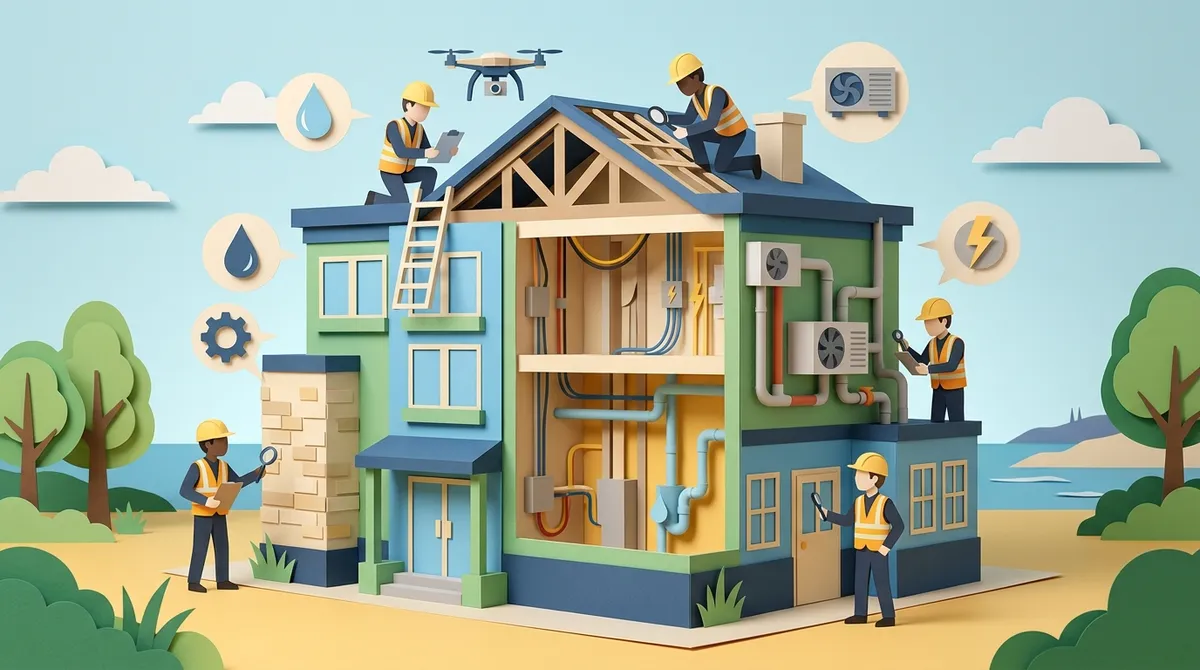
A Property Condition Assessment is a detailed, mostly visual evaluation of a building’s physical condition at a specific point in time. Think of it as a health checkup for your building. A licensed professional inspects the major systems and components, documents what they find, and delivers a report that tells you exactly where you stand.
PCAs are widely used in real estate transactions, building recertification planning, loan origination, and long-term capital planning. Buyers, sellers, lenders, condo boards, and investors all use them to understand the true financial risk tied to a property’s physical condition. You can learn more about what these assessments involve by reading what a commercial building inspection really covers.
The most widely referenced standard for PCAs is ASTM E2018, which sets the baseline practice for property condition assessments. Lenders — especially those financing multifamily properties — typically expect PCA reports to align with this standard.

Why Pompano Beach Buildings Need a PCA
Pompano Beach is a beautiful coastal city, but that coastal location comes with real challenges for buildings. Salt air, humidity, storm exposure, and constant moisture create conditions that accelerate wear on roofing, building envelopes, and structural components. These are exactly the kinds of issues a PCA is designed to catch early.
Beyond the climate, Florida’s building recertification laws add another layer of urgency. Buildings 30 years or older (25 years if within 3 miles of the coast) must go through recertification inspections to confirm they remain structurally and electrically sound. A PCA works hand-in-hand with recertification by providing a detailed snapshot of where your building stands today and what repairs or capital investments lie ahead.
You can check the status of recertification cases in the region through the Miami-Dade Building Recertification Case Search, which helps building owners stay current on compliance timelines. For a deeper look at how recertification works in this region, explore the Miami-Dade County Recertification page for official guidance.
Understanding how PCAs fit into the broader recertification picture is especially useful for condo boards and HOA managers. Check out why Pompano Beach condos need a SIRS report for related context on capital planning requirements.
What Does a Pompano Beach PCA Include?
A standard PCA covers eight or more major building component categories. Here’s what you can expect a thorough assessment to evaluate:
- Site conditions — Drainage, paving, landscaping, and site utilities
- Structural elements — Foundation, framing, slabs, and load-bearing components
- Roofing systems — Membrane condition, flashing, drainage, and storm damage
- Building envelope — Exterior walls, windows, doors, sealants, and cladding
- HVAC systems — Heating, ventilation, and air conditioning equipment
- Plumbing systems — Supply, waste, and fixtures
- Electrical systems — Panels, wiring, distribution, and life-safety systems
- Interior common areas — Lobbies, corridors, stairwells, and shared spaces
- Accessibility (ADA) review — Compliance with accessibility standards
- Elevators and conveyances — Where applicable
For coastal properties in Pompano Beach, the roofing and building envelope sections are especially critical. Moisture intrusion, corrosion, and storm-related wear tend to show up here first — and catching these issues early can save you significant money down the road.
To see how this compares to a standard building inspection, read PCA vs. Building Inspection: Which Does Deerfield Beach Need? — the same comparison applies directly to Pompano Beach properties.
What Does a PCA Report Look Like?
A well-prepared PCA report is more than just a list of problems. It’s a strategic document you can act on. Here’s what a complete PCA report typically contains:
- Executive summary — A high-level overview of the property’s condition and key findings
- Photographic documentation — Visual evidence of current conditions and deficiencies
- Immediate repairs table — Items needing attention right now, with estimated costs
- Short-term repair schedule — Issues to address within 1–2 years
- Replacement reserve projections — Capital expenditure estimates over the loan term or planning horizon
- Component-by-component findings — Detailed notes on each system evaluated
For multifamily buildings, Fannie Mae’s PCA framework adds a three-phase structure: preliminary due diligence, the site visit, and the final PCA report. This format is especially important when you’re seeking financing for an apartment building or condominium property.
The PCA report gives condo boards, property managers, and investors a clear picture of both immediate needs and long-range capital planning requirements. Many providers recommend repeating condition assessments every 3–5 years to keep your capital planning current — especially for larger or more complex properties.
How a PCA Differs from a Home Inspection
This is a question we hear all the time, so let’s clear it up. A home inspection and a PCA serve different purposes and different audiences.
| Feature | Home Inspection | Property Condition Assessment (PCA) |
|---|---|---|
| Primary audience | Residential home buyers | Commercial buyers, lenders, investors, boards |
| Standard used | State licensing standards | ASTM E2018 |
| Scope | Single-family home systems | Multi-component commercial/multifamily buildings |
| Output | Defect list for negotiation | Capital planning report with cost projections |
| Used for | Home purchase decisions | Financing, recertification, due diligence |
The bottom line: if you own or manage a commercial, multifamily, or condominium building in Pompano Beach, a PCA is the right tool. A home inspection simply isn’t designed to handle the complexity of these properties.
How to Get a Pompano Beach Property Condition Assessment Done Right
Ready to move forward? Here’s a simple step-by-step process to get your Pompano Beach Property Condition Assessment completed efficiently and correctly.
- Identify your purpose. Are you pursuing financing? Planning capital repairs? Preparing for recertification? Knowing your goal helps you tailor the scope of the PCA to your needs.
- Choose a qualified assessor. Look for a licensed professional with experience in ASTM E2018 assessments and a track record with South Florida coastal properties. Experience matters enormously here.
- Gather your building records. Collect previous inspection reports, repair histories, permit records, and any prior PCA reports. The more context your assessor has, the better the report will be.
- Schedule the site visit. A thorough PCA site visit for a mid-size commercial or multifamily building typically takes a full day. Make sure key systems and spaces are accessible.
- Review the draft report. Ask questions. Make sure you understand the immediate repairs table and the capital expenditure projections before signing off.
- Act on the findings. Use the report to prioritize repairs, update your reserve fund, negotiate purchase terms, or satisfy lender requirements.
If your building is approaching its recertification milestone, the PCA findings can also feed directly into that process. Read about the 8 key steps in the building recertification process to see how these two workflows connect.
How PCAs Connect to Building Recertification in Pompano Beach
Here’s where things get really interesting for Pompano Beach building owners. Florida’s building recertification requirements — particularly the 40-year (and now 30-year for coastal buildings) milestone inspections — focus primarily on structural and electrical safety. A PCA goes broader and deeper.
A PCA captures the full picture: roofing, plumbing, HVAC, envelope, ADA compliance, and more. When you pair a PCA with your formal recertification inspection, you get a comprehensive view of your building’s health that satisfies both lender requirements and county compliance needs.
For buildings approaching the 40-year mark, read what the 40-year recertification process involves and why the 40-year building recertification matters for property longevity. These resources are directly relevant to Pompano Beach condo associations and apartment building owners navigating both PCA and recertification requirements simultaneously.
It’s also worth understanding the Pompano Beach electrical safety inspection requirements, since electrical systems are evaluated in both a PCA and the recertification process.
Who Should Order a PCA in Pompano Beach?
Property Condition Assessments are useful for a wide range of stakeholders. Here’s a quick look at who benefits most:
- Condo association boards — Use PCAs for capital reserve planning and to support recertification compliance
- Apartment building owners — Use PCAs before refinancing, during acquisitions, or when planning major renovations
- Commercial property owners — Office buildings, retail plazas, and hotels benefit from PCAs during ownership transitions and loan renewals
- HOA property managers — Use PCAs to stay ahead of deferred maintenance and satisfy HOA reserve study requirements
- Real estate investment firms — Use PCAs as core due diligence tools when acquiring or disposing of aging South Florida properties
- Lenders and mortgage servicers — Require PCAs to assess financial risk before funding commercial real estate loans
If you manage a homeowners association, check out the building inspection services guide for recertification to understand how PCAs, SIRS, and recertification inspections can work together for your property portfolio.
Why Choose O’Reilly Consultants for Your Pompano Beach PCA
Not all property condition assessment providers are created equal — especially in a coastal market like Pompano Beach. O’Reilly Consultants is a specialized engineering firm serving Broward and Miami-Dade Counties with a deep focus on building recertification and safety-focused assessments.
The team is led by owner and qualifying architect Sherard O’Reilly, who brings extensive experience in ASTM E2018 property condition assessments and meticulous building documentation. The firm also includes Construction Manager and Engineer Catalina Torres, with 27 years of civil engineering and construction management experience, and Project Engineer Rafael Ojeda, who has completed over 1,000 Phase I Environmental Site Assessments across South Florida.
The team uses advanced tools including drones and 3D laser scanning to capture building conditions that traditional visual inspections can miss. You get fast, accurate estimates and detailed reports with clear, actionable recommendations. Visit O’Reilly Consultants on Google to read reviews from building owners and managers across Broward County who have trusted us with their most important assessments.
Pompano Beach PCA Costs and Timelines
One of the most common questions we hear is: “How much does a PCA cost, and how long does it take?” The honest answer is that it depends on a few key factors:
- Building size — Larger buildings with more units or square footage require more time on-site
- Building age and complexity — Older buildings with more deferred maintenance typically require more thorough documentation
- Number of systems evaluated — A full ASTM E2018-aligned PCA covers more ground than a limited-scope assessment
- Report turnaround requirements — Expedited reports for loan closings or regulatory deadlines may carry a premium
For most mid-size multifamily or commercial properties in Pompano Beach, the site visit takes one to two days, and the completed report is typically delivered within one to two weeks. Starting the process early — before a lender deadline or recertification notice — gives you the most flexibility.
Take the Next Step for Your Pompano Beach Property
A Pompano Beach Property Condition Assessment is one of the most valuable investments you can make in your building’s future. Whether you’re navigating a loan, planning capital repairs, preparing for recertification, or simply want to know what you’re working with, a thorough PCA gives you the clarity and confidence to move forward.
Don’t wait for a surprise repair bill or a missed compliance deadline to prompt action. The best time to get a PCA done is before you need one urgently. Explore how O’Reilly Consultants can help you by reading about what building recertification means and why it matters for South Florida property owners.
Ready to get started? Request your free property condition assessment quote today and get a clear picture of your building’s condition from a team that truly knows Pompano Beach and the South Florida coastal market. You can also call us directly at (512) 567-1191 to speak with a member of our team right away.
FAQs
Q: What is a Property Condition Assessment (PCA) in Pompano Beach?
A: A PCA is a detailed, mostly visual evaluation of a building’s physical condition at a specific point in time. It covers major systems like roofing, structure, HVAC, electrical, plumbing, and the building envelope, and delivers a report with repair recommendations and capital expenditure projections. For Pompano Beach buildings, the coastal climate makes envelope and roofing evaluations especially important.
Q: How does a PCA relate to building recertification in Florida?
A: A PCA and a building recertification inspection complement each other beautifully! Recertification focuses on structural and electrical safety compliance, while a PCA gives you the broader picture — including roofing, HVAC, plumbing, and ADA compliance. Together, they give building owners and condo boards a complete health checkup for their property and help satisfy both county and lender requirements.
Q: Who typically orders a Property Condition Assessment?
A: PCAs are commonly ordered by lenders before approving commercial real estate loans, buyers and sellers during due diligence, condo association boards for capital reserve planning, and real estate investors assessing acquisition targets. In Pompano Beach, building owners also use PCAs to prepare for recertification milestones and to stay ahead of deferred maintenance costs.
Q: How often should a Pompano Beach building get a PCA?
A: Most PCA providers recommend repeating condition assessments every 3–5 years to keep capital planning current, especially for larger or more complex properties. In coastal South Florida, where salt air, humidity, and storm exposure accelerate wear, staying on a regular assessment schedule is particularly smart and can save you from costly surprise repairs.
Q: What standard is used for Property Condition Assessment reports?
A: The most widely referenced standard is ASTM E2018, which sets the baseline practice for property condition assessments. Lenders financing commercial and multifamily properties typically expect PCA reports to align with this standard. Fannie Mae also has its own multifamily PCA framework that follows a three-phase process: preliminary due diligence, the site visit, and the final PCA report.