

Key Takeaways
-
Coral Springs condos trigger milestone inspections at 25 years (Broward County standard) or 30 years (statewide default) from certificate of occupancy, with required follow-ups every 10 years thereafter.
-
Only Florida-licensed architects or engineers can perform milestone inspections; Phase 1 is visual assessment, with Phase 2 (invasive testing) only triggered if serious deterioration is detected.
-
Missing your deadline risks fines, building occupancy restrictions, and undetected structural deterioration; confirm your exact deadline with Broward County or Coral Springs building officials immediately.
-
Common South Florida issues include cracking concrete, corroded rebar from moisture, water intrusion, and foundation settlement—most are manageable when caught early through inspection.
-
Milestone inspections differ from local 40-year building recertification; boards must understand both requirements may apply separately to their property.
-
Prepare early by gathering your certificate of occupancy, prior inspection reports, permits, and repair records to streamline the inspection process and avoid rushed decision-making.
If you own or manage a condo in Coral Springs, you have probably heard the words “milestone inspection” tossed around at board meetings. Maybe it made your stomach drop a little. That is totally normal! Florida’s rules around building safety changed a lot in recent years, and it can feel confusing to keep track of what your building actually needs. The good news? Once you understand the basics, this whole process becomes a lot less scary.
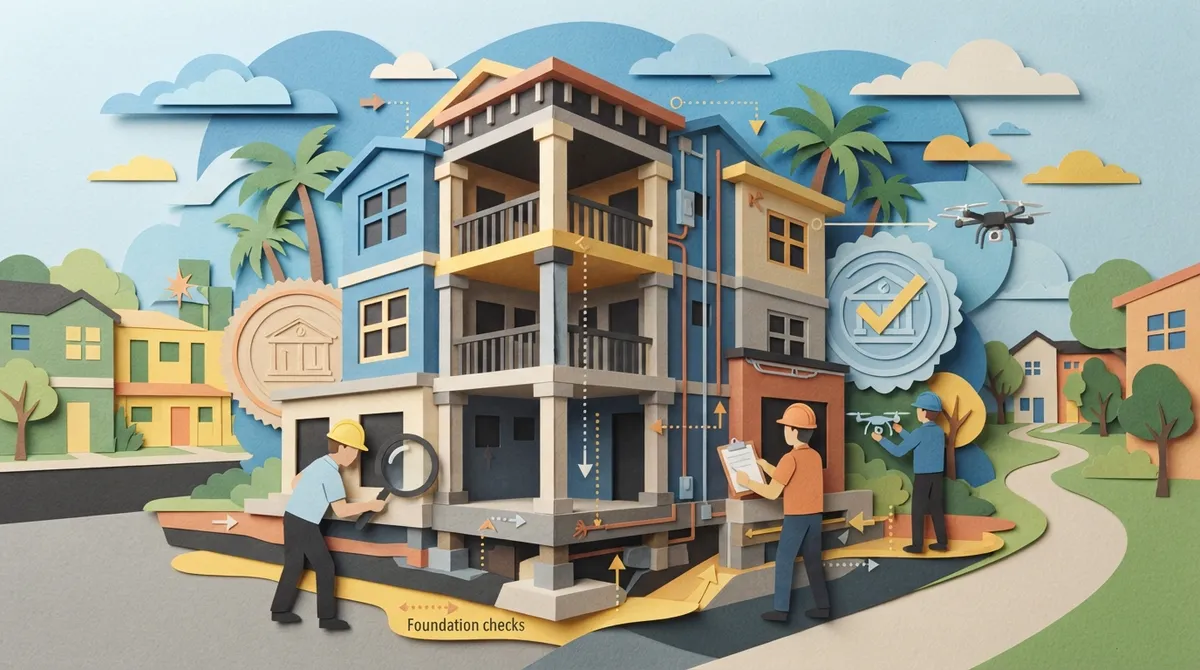
A Coral Springs milestone inspection is simply a structural safety checkup required by Florida law for many older condo and co-op buildings. Think of it like a big physical exam for your building, done by a licensed architect or engineer. It checks whether the bones of your building, the beams, columns, and load-bearing walls, are still strong and safe. In this article, we will walk through exactly what triggers this requirement, who needs one, what happens during the inspection, and how to prepare your association so nothing catches you off guard.
What Is a Milestone Inspection, Really?
A milestone inspection is a statewide structural-safety requirement created under Florida Statute §553.899. It applies mainly to condominium and cooperative buildings that are three stories or taller. The goal is simple: catch structural problems early, before they become dangerous or expensive.
Here is something important to understand right away. A milestone inspection is not the same thing as your local building recertification. They often overlap, but they are technically separate requirements. Your Coral Springs association may need both, so it helps to work with a team that understands 40 year recertification requirements alongside the newer milestone-inspection rules.
Why This Law Exists
Florida lawmakers created this requirement after the tragic Surfside condo collapse in 2021. The goal was to make sure aging buildings get checked regularly, so small problems get fixed before they turn into big ones. It is a good reminder that these inspections are not just paperwork. They genuinely protect the people living in and around these buildings.

3 Key Facts Every Coral Springs Condo Board Should Know
Let us break this down into three simple, digestible facts. These are the things that matter most if you are trying to figure out your building’s timeline and next steps.
- Your deadline depends on your building’s age and location. The statewide default is 30 years from the certificate-of-occupancy date, with a follow-up every 10 years after that. But because Coral Springs sits within Broward County, local officials commonly apply an earlier 25-year trigger for qualifying buildings. Always confirm your exact deadline with the Coral Springs or Broward building official rather than guessing.
- Only licensed professionals can perform the inspection. A Florida-licensed architect or engineer must complete the evaluation. This is not a job for a general contractor or a handyman, no matter how experienced they are. The inspector is specifically checking load-bearing elements and life-safety systems.
- There are two phases, and most buildings only need Phase 1. Phase 1 is a visual inspection of accessible structural areas. If the inspector spots signs of serious deterioration, they will recommend a Phase 2 inspection, which involves more invasive testing like material sampling or probes.
Understanding these three facts puts you ahead of most condo boards. It also helps you plan your budget and timeline with much more confidence.
Who Actually Needs a Milestone Inspection?
Not every building in Coral Springs falls under this rule. Here is a quick rundown of what qualifies:
- Condominium and cooperative buildings that are three or more habitable stories tall
- Buildings evaluated based on their original certificate-of-occupancy date, not when units were sold
- Buildings reaching 30 years of age under the statewide default schedule
- Buildings that Broward County officials flag for an earlier 25-year inspection due to local conditions
- Buildings with a history of environmental exposure, like proximity to canals or coastal moisture
Single-family homes and smaller townhome-style buildings typically do not fall under this law. If you are unsure whether your property qualifies, it is always smart to check with your local building department or request a free quote from a team that handles these evaluations daily.
What Happens During the Inspection Process
Let us walk through the typical sequence, step by step, so you know what to expect.
- Notice from the local enforcement agency. Your association receives official written notice that a milestone inspection is required.
- Association notifies unit owners. Florida law generally requires boards to notify owners within 14 days, including the expected completion date.
- Document gathering begins. The association collects the certificate of occupancy, past inspection reports, permits, and repair history.
- Licensed professional is hired. A Florida-licensed architect or engineer is brought on to perform the visual Phase 1 review.
- Phase 1 inspection is conducted. The inspector examines structural components, life-safety systems, and signs of wear.
- Phase 2 is triggered if needed. If substantial deterioration is found, more detailed testing follows.
- Report is submitted. The final report goes to the local building official and the association board.
- Cracking or spalling concrete on balconies and exterior walls
- Corroded rebar caused by long-term moisture exposure
- Water intrusion around windows, doors, and rooftop seams
- Foundation settlement or shifting soil beneath the structure
- Deteriorating waterproofing membranes on parking garages
- Signs of stress around load-bearing columns and beams
- Total square footage and number of stories
- Ease of access to structural components
- Whether drone or 3D scanning technology is used for efficiency
- Whether a Phase 2 investigation becomes necessary
- Travel distance and scheduling complexity
- Locate your building’s original certificate of occupancy
- Gather any prior milestone inspection or recertification reports
- Collect permit records and past repair documentation
- Confirm your building’s exact story count and construction type
- Contact the Coral Springs or Broward building official to confirm your deadline
- Reach out to a licensed inspection firm early, rather than waiting until the deadline is close
- Communicate clearly and promptly with unit owners throughout the process
Having your paperwork ready before the inspector arrives can seriously speed things up. It also helps the engineer spot patterns, like recurring water intrusion or repeated repair spots, that might otherwise get missed.
Milestone Inspection vs. Local Recertification: What’s the Difference?
This trips up a lot of boards, so let us clear it up with a simple comparison.
| Feature | Milestone Inspection | Local Building Recertification |
|---|---|---|
| Legal Basis | Florida Statute §553.899 | County or city ordinance |
| Who Requires It | State of Florida | Broward County or Coral Springs building department |
| Typical Trigger | 25 or 30 years, then every 10 years | Varies by local ordinance, often 40 years |
| Scope | Structural and life-safety systems | Structural and electrical systems |
| Performed By | Licensed architect or engineer | Licensed architect or engineer |
As you can see, these two requirements often overlap but are not identical twins. Completing a milestone inspection does not automatically check every box for local recertification. That is why it helps to work with a firm that understands what building recertification really involves from start to finish.
What Structural Problems Show Up Most Often?
Every building is different, but inspectors commonly flag a handful of recurring issues in South Florida properties. Here are the usual suspects:
If any of these sound familiar, do not panic. Many of these problems are manageable when caught early. This is exactly why milestone inspections exist in the first place. For a deeper look at one of the most common culprits, check out this guide on understanding foundation cracks and hairline cracks in commercial buildings.
How Much Does a Milestone Inspection Cost?
Costs vary quite a bit depending on your building’s size, age, and complexity. Smaller condo buildings with straightforward access might pay less, while larger properties with parking garages or multiple wings will naturally cost more. Factors that influence pricing include:
Using advanced tools like drones and 3D laser scanning can actually reduce costs over time. These technologies speed up data collection and reduce the need for scaffolding or lift equipment. It is one reason why associations increasingly prefer firms equipped with modern inspection tools rather than relying on old-school methods alone.
Preparing Your Association: A Simple Checklist
Getting organized ahead of time makes the whole process smoother for everyone involved. Here is a straightforward checklist to work through with your board:
Boards that stay organized tend to avoid the stress and rushed decision-making that comes with waiting too long. It also helps your community trust that the board is handling things responsibly.
What Happens If You Miss the Deadline?
Missing a milestone inspection deadline is not something you want to experience. Local enforcement agencies can issue fines, and in some cases, buildings may face additional scrutiny or even occupancy restrictions until compliance is achieved. Beyond the legal risk, there is a real safety concern too. Skipping these checkups means small structural issues could go unnoticed until they become serious and costly.
The smartest move is to treat your milestone inspection as a proactive tool, not a last-minute scramble. Pairing it with a Structural Integrity Reserve Study can also help your board plan financially for future repairs, rather than getting blindsided by surprise costs.
Why Choose O’Reilly Consultants for Your Coral Springs Milestone Inspection
This is where our team comes in. O’Reilly Consultants specializes in building recertification inspections across Broward and Miami-Dade Counties, and we know the Coral Springs area inside and out. We use drones and 3D laser scanning to speed up assessments without sacrificing accuracy, which means faster turnaround and clearer reports for your board.
Our team is led by owner and qualifying architect Sherard O’Reilly, who brings deep expertise in property condition assessments and detailed building documentation. We also have Construction Manager and Engineer Catalina Torres, who brings 27 years of civil engineering experience, and Project Engineer Rafael Ojeda, who has completed over 1,000 environmental site assessments across South Florida. Learn more about O’Reilly Consultants and how our team supports condo boards through every step of the process.
We also offer related services that pair naturally with milestone inspections, including electrical safety inspections, property condition assessments, and HOA reserve studies. If your building needs a broader look at its overall health, our guide on what a commercial building inspection really covers is a great place to start. You can also see what our clients say by visiting our O’Reilly Consultants location on Google.
A Note on Miami-Dade Requirements
While this article focuses on Coral Springs and Broward County, many associations own properties across county lines. If you also manage buildings in Miami-Dade, it is worth reviewing the official Miami-Dade County Recertification guidelines, since requirements can differ from Broward’s approach. You can also search Miami-Dade building recertification cases to see how the process plays out for other properties in that county.
Final Thoughts: Stay Ahead, Not Behind
A Coral Springs milestone inspection does not have to feel overwhelming. Once you understand your building’s timeline, gather your documents early, and hire a licensed professional you trust, the process becomes manageable. Think of it as an investment in your community’s safety and long-term property value, not just another item on your compliance checklist.
If your board is unsure where to start, or you simply want a team that handles the entire process from notice to final report, we would love to help. Request a free quote today, or call us at (512) 567-1191 to talk through your building’s specific timeline. Your peace of mind is worth it.
FAQs
Q: What is a milestone inspection in Coral Springs, Florida?
A: It is a required structural safety check for qualifying condo and co-op buildings, done by a licensed architect or engineer. It looks at load-bearing parts of your building to make sure everything is still solid and safe. Think of it as a wellness check for your building’s bones!
Q: Does my Coral Springs condominium need a 25-year or 30-year milestone inspection?
A: It depends on local rules, since Broward County commonly applies an earlier 25-year trigger for qualifying buildings. The statewide default is 30 years, but your local building official has the final say. It is always worth a quick call to confirm your exact deadline before assuming either timeline applies.
Q: Is a milestone inspection the same as Broward County 40-year building recertification?
A: Nope, they are related but not identical! A milestone inspection is a state requirement focused on structural safety, while local recertification is its own separate process. Many buildings need both, so it helps to work with a team that understands how they overlap.
Q: Who can perform a milestone inspection in Coral Springs?
A: Only a Florida-licensed architect or engineer can legally perform this inspection. This is not a job for a general contractor, no matter how skilled they are. Choosing an experienced, licensed professional protects your building and your association from compliance headaches down the road.
Q: What happens if a Coral Springs condominium misses its milestone inspection deadline?
A: Missing the deadline can lead to fines and added scrutiny from local officials, which nobody wants. It can also mean small structural issues go unnoticed longer than they should. The best approach is staying proactive, gathering documents early, and scheduling your inspection well before your deadline arrives.