Key Takeaways
-
Buildings in Wilton Manors reaching their 30-year or 40-year milestone must undergo mandatory electrical inspections as part of the formal recertification process, with a strict 90-day deadline from county notice to complete the assessment.
-
Proactive inspection preparation—including gathering 20 years of electrical permits, organizing repair records, and ensuring inspector access to all electrical rooms—significantly speeds up the recertification timeline and reduces correction violations.
-
Common recertification failures in older Wilton Manors buildings include outdated aluminum wiring, insufficient grounding, missing GFCI protection in wet areas, and non-compliant panel labeling—most of which are affordable fixes if addressed before formal inspection.
-
Budget separately for inspection fees ($500–$2,500 for mid-size buildings) and potential repairs ($5,000–$25,000+), and build buffer time into your schedule because specialty parts, permits, and licensed contractor availability can extend correction timelines.
-
Failed electrical inspections require prompt corrective action prioritized by safety risk first (non-functional detectors, exposed wiring), followed by repair complexity and permit requirements, then schedule re-inspection through Wilton Manors’ online system.
-
Work with licensed Florida electrical contractors experienced in Broward County recertification standards and coordinate directly with your recertification engineering team to ensure all findings are properly documented and submitted together.
When your Wilton Manors building hits its 30-year mark, that electrical panel you’ve ignored for decades suddenly becomes the gatekeeper to your recertification approval. It’s a moment many property managers and condo board members don’t see coming — and it can be stressful. But here’s the good news: Wilton Manors electrical safety inspections don’t have to be a source of dread. When approached proactively, they become a powerful opportunity to uncover cost-saving upgrades, extend your building’s lifespan, and prevent costly recertification delays before they happen.
Think of your electrical system as the circulatory system of your building. When it’s healthy, everything flows smoothly. When there’s a blockage or a worn-out component, the whole system feels it. Getting ahead of your electrical inspection means you’re in the driver’s seat — not scrambling to fix violations under deadline pressure. Whether you manage a condo association, an apartment complex, or a commercial property in Broward County, this guide walks you through everything you need to know, step by step, in plain language.
Understanding Wilton Manors Electrical Inspection Requirements
Wilton Manors operates under the Florida Building Code, which sets the baseline for all electrical standards during the recertification process. The city’s Construction Services Division administers this code, issues permits, and conducts job-site inspections — including electrical — through a convenient online permitting system. This means you can request inspections and manage permit applications digitally, which saves time for busy property managers.
For buildings reaching their 30-year or 40-year milestone, electrical inspections are not optional. They are a mandatory component of the 40-year recertification process and must align with Broward County’s 90-day inspection mandates. That 90-day window starts ticking the moment you receive your county notice, so timeline integration is everything.
It’s important to understand the difference between routine maintenance inspections and recertification inspections. Routine maintenance checks are done on your own schedule to keep systems running well. Recertification inspections are formal assessments required by law, with specific documentation that must be submitted to Broward County. These reports need to be prepared and signed by a licensed professional, not just your in-house maintenance team.
Documentation requirements for Broward County submission include:
- A signed electrical inspection report from a licensed engineer or electrician
- Permit history for prior electrical work
- Records of any panel upgrades or rewiring projects
- Correction documentation if violations were found and repaired
Getting these documents in order early prevents scrambling at the last minute. For a deeper look at why this process matters so much, check out the importance of 40-year building recertification for property longevity.
What Electrical Inspectors Check During Recertification
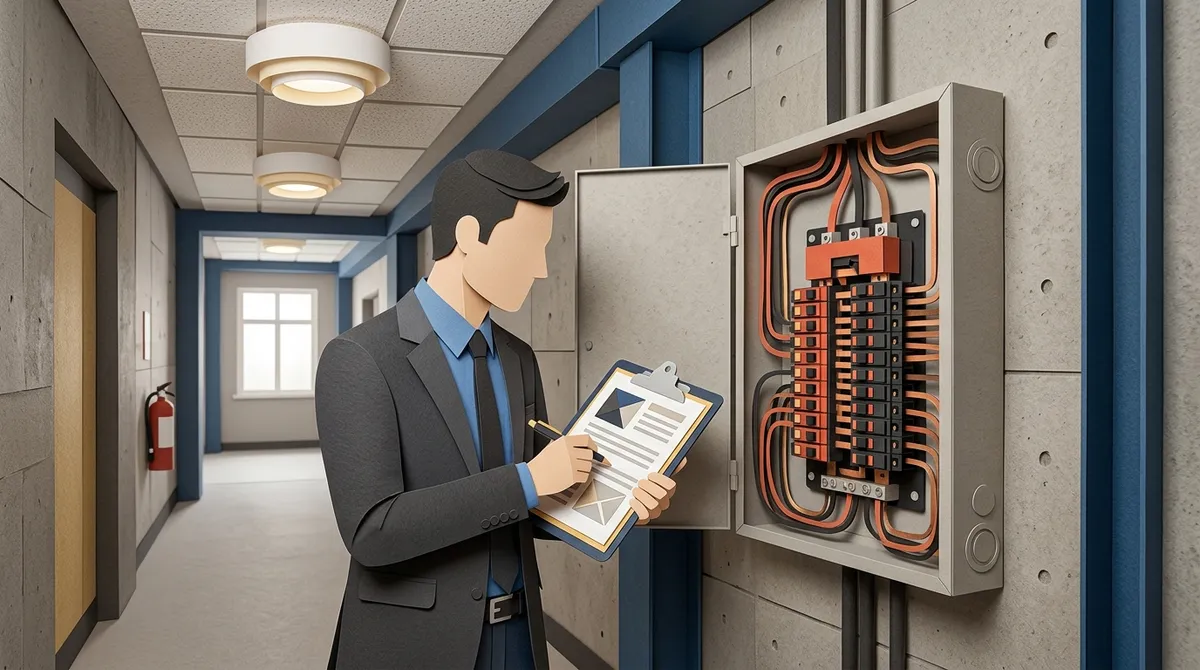
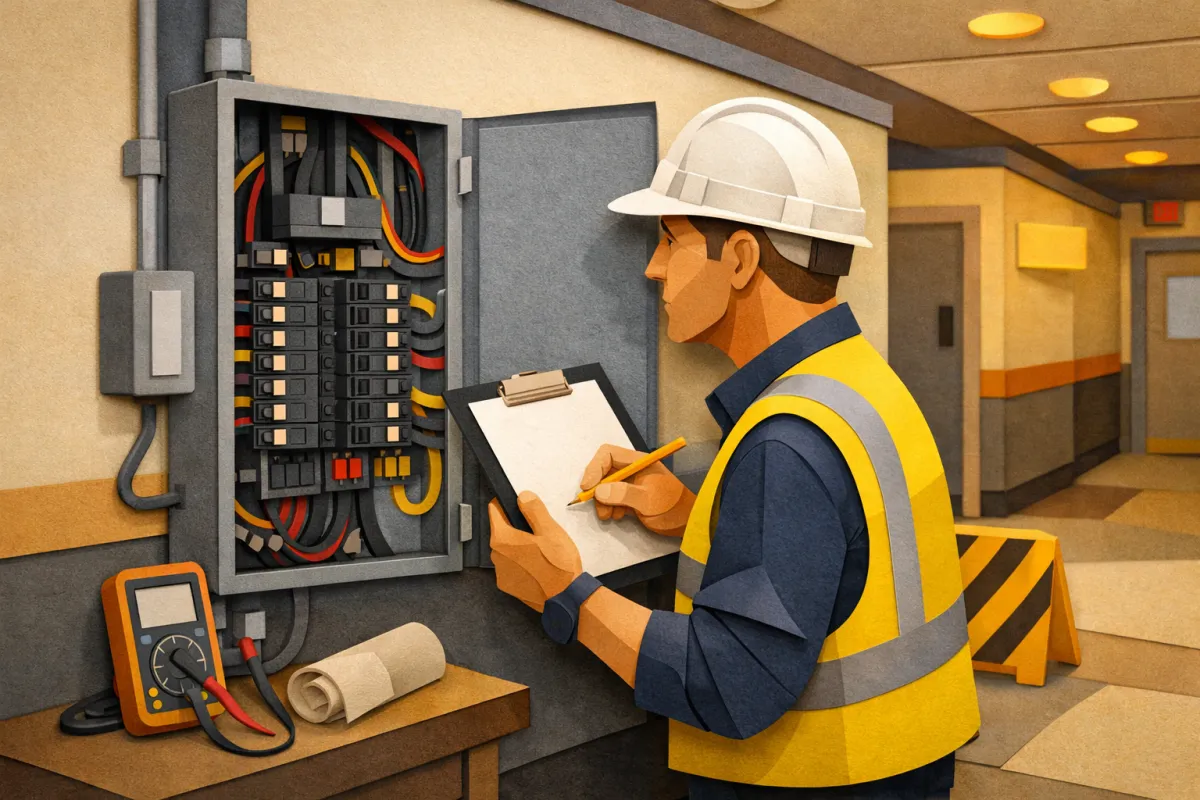
So what exactly does an inspector look at when they walk through your building? It’s more comprehensive than most people expect. Wilton Manors electrical safety inspections during recertification cover the full scope of a building’s electrical systems, from the main panel all the way to individual outlets in common areas.
Main Electrical Panel and Breaker Assessments
The main panel is the first stop. Inspectors check for overloaded circuits, outdated breaker technology, double-tapped breakers, and signs of overheating or corrosion. If your panel is from the 1980s or earlier, it may not meet current Florida Building Code standards and could require replacement.
Common Area Lighting and Emergency Systems
Inspectors evaluate all common area lighting — hallways, stairwells, lobbies, parking areas — and verify that emergency lighting and exit signs function correctly. These systems are critical for life safety, especially in multi-story buildings.
Grounding Verification and AFCI Protection
Proper grounding protects against electrical shock and equipment damage. Inspectors verify that grounding systems meet current code. They also check for Arc Fault Circuit Interrupter (AFCI) protection in required locations. AFCI breakers detect dangerous arc faults that standard breakers miss, making them a key safety upgrade in older buildings.
Surge Protection and Energy Efficiency Components
Modern recertification inspections also consider surge protection systems and energy efficiency components. Whole-building surge protection helps prevent damage from lightning strikes and utility fluctuations — both common concerns in South Florida. Inspectors may note outdated fixtures or wiring configurations that waste energy and recommend upgrades.
Smoke and Carbon Monoxide Detector Compliance
Smoke detectors and carbon monoxide detectors must meet current Florida Building Code placement and functionality requirements. Inspectors test these devices and confirm that interconnected alarm systems work as required. Missing or non-functional detectors are a quick fail — and a serious safety risk.
Here’s a handy summary of what inspectors assess:
| Inspection Area | What’s Evaluated | Common Issues Found |
|---|---|---|
| Main Panel | Breakers, labeling, capacity | Double-tapping, corrosion, outdated tech |
| Wiring Systems | Wire type, condition, routing | Aluminum wiring, damaged insulation |
| Grounding | Ground connections, bonding | Insufficient grounding in older builds |
| AFCI/GFCI Protection | Required circuit locations | Missing protection in wet areas |
| Emergency Systems | Exit signs, emergency lighting | Non-functional units, missing coverage |
| Safety Detectors | Smoke, CO placement and function | Missing units, dead batteries, wrong placement |
Preparing Your Building for Electrical Assessment
Preparation is where proactive property managers really shine. Walking into an electrical inspection without preparation is like taking a test you haven’t studied for. A little advance work goes a long way toward a smooth inspection — and a faster recertification timeline.
Step-by-Step Pre-Inspection Documentation Gathering
- Pull all electrical permits from the past 20 years from Broward County records.
- Gather any invoices or reports from licensed electricians who worked on the building.
- Locate the original electrical drawings or as-built plans if available.
- Create a log of known issues, past repairs, and recent upgrades.
- Confirm the age and brand of the main electrical panels.
Access Coordination for All Electrical Rooms
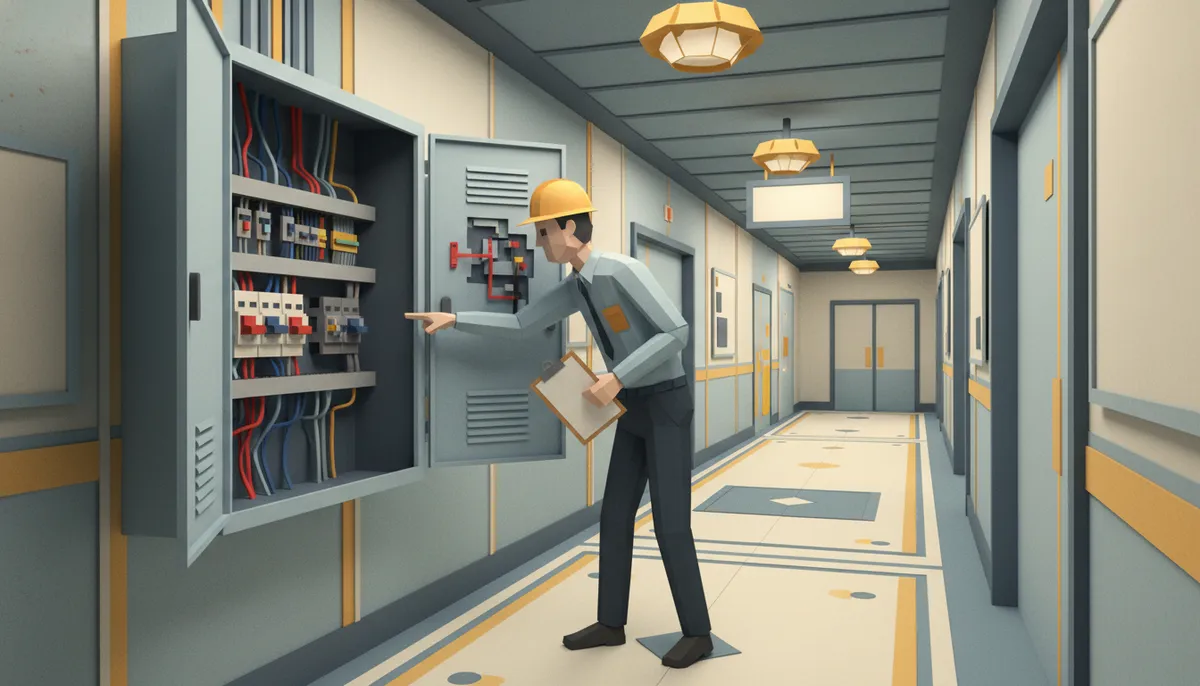
Inspectors need access to every electrical room, mechanical space, and common area panel. Before inspection day, confirm that all rooms are unlocked, well-lit, and free of obstructions. Blocked access to electrical rooms is a common — and avoidable — delay.
Historical Repair Records and Upgrade Tracking
Organized repair records show inspectors that the building has been responsibly maintained. Keep a binder or digital file with dates, contractor names, and scope of work for every electrical job. This transparency builds trust and can actually speed up the inspection process.
Tenant Notification Procedures and Timing
Give tenants advance notice — typically at least 24 to 48 hours — before inspectors need access to common areas. If inspectors need access to individual units for detector testing or outlet checks, Florida law requires proper written notice. Keep communication friendly, clear, and timely to avoid disruptions.
Common Electrical Issues That Fail Recertification
Knowing what commonly fails helps you get ahead of problems. Many of these issues are found in buildings constructed before 1990, which is a large portion of the Wilton Manors building stock. Here are the most frequent culprits.
Outdated Aluminum Wiring in Older Buildings
Aluminum wiring was common in residential and commercial construction during the 1960s and 1970s. It expands and contracts more than copper wiring, which loosens connections over time and creates fire hazards. Inspectors flag aluminum wiring as a significant concern, and remediation or replacement is typically required for recertification approval.
Insufficient Grounding in Pre-1990s Construction
Older grounding systems often don’t meet today’s Florida Building Code standards. Missing or improper grounding creates shock and equipment damage risks. This is especially common in buildings that haven’t had major electrical work since original construction.
Non-Compliant Panel Labeling and Circuit Identification
Every circuit in every panel must be clearly and accurately labeled. Inspectors check this carefully. Blank breaker slots, mislabeled circuits, or illegible handwriting on old panels all result in correction notices. It seems minor, but it’s a quick and affordable fix if caught early.
Missing GFCI Protection in Required Areas
Ground Fault Circuit Interrupter (GFCI) outlets are required in all wet areas — bathrooms, kitchens, laundry rooms, pool areas, and exterior outlets. Many older buildings lack GFCI protection in all required locations. Adding GFCI outlets is relatively inexpensive, but failing to do so before inspection will generate a violation.
Common violations that trigger re-inspection include:
- Double-tapped breakers in the main panel
- Open junction boxes without covers
- Non-functional emergency lighting in stairwells
- Missing smoke detectors in required locations
- Exposed or damaged wiring in utility areas
Working with Licensed Electrical Contractors
Choosing the right electrical contractor for your Wilton Manors building recertification is a decision that deserves careful thought. Not every licensed electrician has experience with the specific documentation and reporting standards required for formal recertification in Broward County.
Verification of Florida Licensing and Insurance
Always verify that your contractor holds a current Florida electrical contractor license and carries both general liability and workers’ compensation insurance. You can verify Florida licenses through the Department of Business and Professional Regulation. Never skip this step — unlicensed work can invalidate your inspection results.
Coordination with Recertification Engineers
For the best outcomes, your electrical contractor should work directly with your recertification engineering team. At O’Reilly Consultants, our team coordinates the full recertification process — including electrical inspections — so that all findings are properly documented and submitted together. This integrated approach saves time and reduces the chance of missed items.
Cost Factors for Inspection Versus Repairs
It’s important to budget separately for the inspection itself and any repairs found during the process. Inspection fees are generally predictable. Repair costs vary widely depending on what’s found. Getting a pre-inspection walkthrough from an experienced contractor can give you a realistic repair estimate before the formal inspection takes place.
Timeline Management for Correction Work
Plan for repair timelines when scheduling your inspection. Ordering specialty parts, scheduling licensed subcontractors, and pulling permits for electrical work all take time. Build buffer into your schedule — especially given the 90-day recertification deadline.
Managing Failed Electrical Inspections
A failed electrical inspection is not the end of the world. It’s actually quite common, especially in older buildings. What matters most is how quickly and systematically you respond. Here’s how to handle it with confidence.
Understanding Correction Notice Requirements
- Read the correction notice carefully and note every specific violation listed.
- Request clarification from the inspector if any item is unclear.
- Confirm the deadline for completing corrections and scheduling re-inspection.
- Share the notice promptly with your licensed electrical contractor.
Correction notices from Wilton Manors’ Construction Services Division are specific and actionable. Each item will reference the applicable Florida Building Code section, which helps your contractor understand exactly what fix is required.
Priority Ranking for Multiple Violations
If your correction notice lists multiple violations, work with your contractor to rank them by:
- Safety risk — address life-safety issues first (non-functional smoke detectors, exposed wiring)
- Repair complexity — longer jobs should start immediately
- Permit requirements — some repairs require permits that add lead time
- Cost — plan cash flow for larger repairs
Re-Inspection Scheduling and Fees
Once corrections are complete, you’ll need to schedule a re-inspection through Wilton Manors’ online system. Re-inspection fees apply, so factor this into your overall recertification budget. Inspections in Wilton Manors are scheduled Monday through Saturday from 8 a.m. to 7 p.m. and Sunday from 10 a.m. to 7 p.m. for approved permits, giving you scheduling flexibility.
Communication Strategies with Boards and Owners
Transparent communication with condo boards, HOA managers, and building owners is essential when violations are found. Provide a written summary of the violations, the repair plan, the estimated cost, and the revised timeline. Keeping stakeholders informed reduces anxiety and prevents misunderstandings. You can also connect with a recertification specialist who can help you present findings clearly and professionally.
You can also search Miami-Dade Building Recertification Cases to understand how similar buildings have navigated correction processes in South Florida.
Cost Planning for Electrical Compliance
Let’s talk numbers. Cost planning for Wilton Manors electrical safety inspections — and any resulting repairs — is an area where being informed pays off literally. Understanding typical costs helps you budget accurately and avoid sticker shock.
Typical Inspection Fee Ranges in Wilton Manors
Electrical inspection fees for recertification purposes vary based on building size and system complexity. For mid-size multi-family buildings, expect inspection fees in the range of $500 to $2,500 depending on scope. Larger commercial buildings with complex electrical systems will be on the higher end of that scale or beyond.
| Building Type | Typical Inspection Fee Range | Common Repair Cost Range |
|---|---|---|
| Small Condo (under 20 units) | $500 – $900 | $1,000 – $5,000 |
| Mid-Size Apartment Building | $900 – $1,800 | $5,000 – $25,000 |
| Large Commercial Building | $1,800 – $2,500+ | $15,000 – $75,000+ |
Budget Allocation for Common Repairs
Common repair costs to budget for include:
- Panel replacement or upgrade: $3,000 – $15,000 depending on size
- GFCI outlet installation throughout building: $500 – $3,000
- Emergency lighting system upgrade: $2,000 – $8,000
- Aluminum wiring remediation: $5,000 – $30,000+ depending on scope
- Smoke and CO detector replacement: $500 – $2,500
Reserve Fund Implications for Associations
Condo and HOA boards should proactively include electrical upgrade reserves in their annual reserve studies. Electrical systems in aging buildings often require significant investment at recertification time. Planning ahead prevents special assessment surprises for residents. For a comprehensive look at Miami-Dade County Recertification requirements, reviewing county resources is a great first step.
Insurance Considerations for Electrical Upgrades
Upgrading electrical systems during recertification can positively impact your building’s insurance premiums. Many carriers offer better rates for buildings with modern panels, AFCI protection, and updated wiring. Always notify your insurance broker when significant electrical upgrades are completed — you may be leaving savings on the table otherwise.
Your Next Step Toward a Smooth Recertification
Wilton Manors electrical safety inspections are much more manageable when you approach them with a clear plan, organized documentation, and the right team by your side. Proactive preparation, understanding what inspectors look for, and having a licensed contractor ready to address corrections quickly are the keys to passing your recertification without undue stress.
O’Reilly Consultants brings deep expertise in building recertification inspections across Broward and Miami-Dade Counties, using advanced tools like drones and 3D laser scanning to deliver thorough, accurate assessments. Our team — led by architect Sherard O’Reilly and supported by experienced engineers — guides you from your first county notice all the way to final submission. We’ve helped condo boards, apartment building owners, HOA managers, and commercial property owners complete their recertifications on time and with confidence. Visit us on Google to see what our clients are saying about the experience.
You can also read more about understanding structural issues in commercial buildings to get a fuller picture of what comprehensive recertification assessments cover beyond electrical systems.
Ready to get started? Request your free recertification consultation today and let our team help you navigate every step of the process — including your electrical inspection — with clarity and confidence.
FAQs
Q: Can we use our regular maintenance electrician for recertification inspections?
A: It depends on their licensing level — Florida recertification inspections require documentation from a licensed electrical contractor or engineer, not just a maintenance technician. Your regular electrician may be great for day-to-day upkeep, but make sure they hold the proper Florida license and understand the specific reporting requirements for Broward County recertification submissions. When in doubt, ask your recertification engineer — they can point you toward qualified professionals who know exactly what’s needed.
Q: How long do electrical repairs typically take after a failed inspection?
A: It really depends on what was found — some corrections like adding GFCI outlets or replacing detector batteries can be done in a day or two, while larger projects like panel replacements or aluminum wiring remediation can take several weeks. Factor in permit pull times if the repair requires one, since that adds lead time to the process. The smartest move is to get your contractor on-site quickly after receiving the correction notice so you can build a realistic repair schedule and still meet your 90-day recertification deadline.
Q: What happens if electrical issues are found after recertification approval?
A: If new electrical issues surface after your recertification is approved, they need to be addressed promptly through normal permitting and repair channels — they won’t necessarily trigger an immediate recertification repeat, but they could become a problem if left unresolved. Keeping detailed records of all repairs and maintenance after recertification helps protect you if questions arise down the road. Think of post-recertification maintenance as protecting the investment you just made in getting your building certified.
Q: Do all units need individual electrical inspections during recertification?
A: Generally, recertification electrical inspections focus on common areas, main panels, and building-wide systems rather than individual unit interiors — but this can vary based on building type and what the inspector finds during the common area review. If a systemic issue like faulty smoke detectors or outdated wiring is suspected building-wide, inspectors may request access to representative units. Talk to your recertification engineer early so you can give tenants appropriate notice and plan for any unit access that may be needed.
Q: Can electrical inspection reports from other municipalities be used in Wilton Manors?
A: In most cases, no — Wilton Manors requires inspections conducted under its own Construction Services Division and the Florida Building Code as administered locally, so reports from other cities or counties generally won’t satisfy the recertification requirements. Each jurisdiction has its own process, and Broward County submission standards are specific about the source and format of inspection documentation. Your best path is to work with a licensed professional who is familiar with Wilton Manors’ permitting and recertification process from the start.