
Key Takeaways
-
Coconut Creek electrical safety inspections are part of Broward's broader Building Safety Inspection Program and assess whether the electrical system is safe for continued occupancy, not just routine permit compliance.
-
The inspection age threshold has changed: older Broward rules used 40 years, while newer municipal guidance describes a 25-year initial inspection, so verify the schedule on your City notice before budgeting.
-
The electrical report must be completed by a qualified, Florida-licensed electrical design professional, and repairs usually need permits even though the report alone does not authorize work.
-
Repair deadlines can extend up to 180 days in applicable cases, so read your notice the day it arrives, note every deadline, and start hiring a professional early.
If you own or manage an older building in Coconut Creek, you have probably heard the words “recertification” and “electrical inspection” more than once. Maybe a notice just landed in your mailbox. Maybe your board is buzzing about it at the next meeting. Either way, take a deep breath. You are not alone, and this is totally manageable.
Coconut Creek electrical safety inspections are one important piece of Broward County’s Building Safety Inspection Program. They check whether your building’s electrical system is safe and fit for continued occupancy. The rules have changed in recent years, so old advice about “the 40-year rule” may not match your situation anymore.
In this friendly guide, we walk through eight things every Coconut Creek owner, condo board, and property manager should know in 2026. We keep it simple, practical, and free of confusing jargon. Let’s dive in!

1. Electrical Safety Inspections Are Part of a Bigger Safety Review
Here is the first surprise for many owners. A Coconut Creek electrical safety inspection is not the same as a routine electrical permit inspection. It is one part of a full building safety inspection under Broward’s program.
The goal is simple. The inspector looks for electrical problems that could threaten life safety or signal that a critical part is about to fail. Then the report says whether the building is safe to keep using.
Locally, the City’s Building Department handles the process. The Broward County Board of Rules and Appeals (BORA) sets the program rules and forms. If you want a deeper look at how the whole process fits together, our guide on what building recertification is and why it matters is a great place to start.
2. The Age Threshold Has Changed (Check Your Notice!)
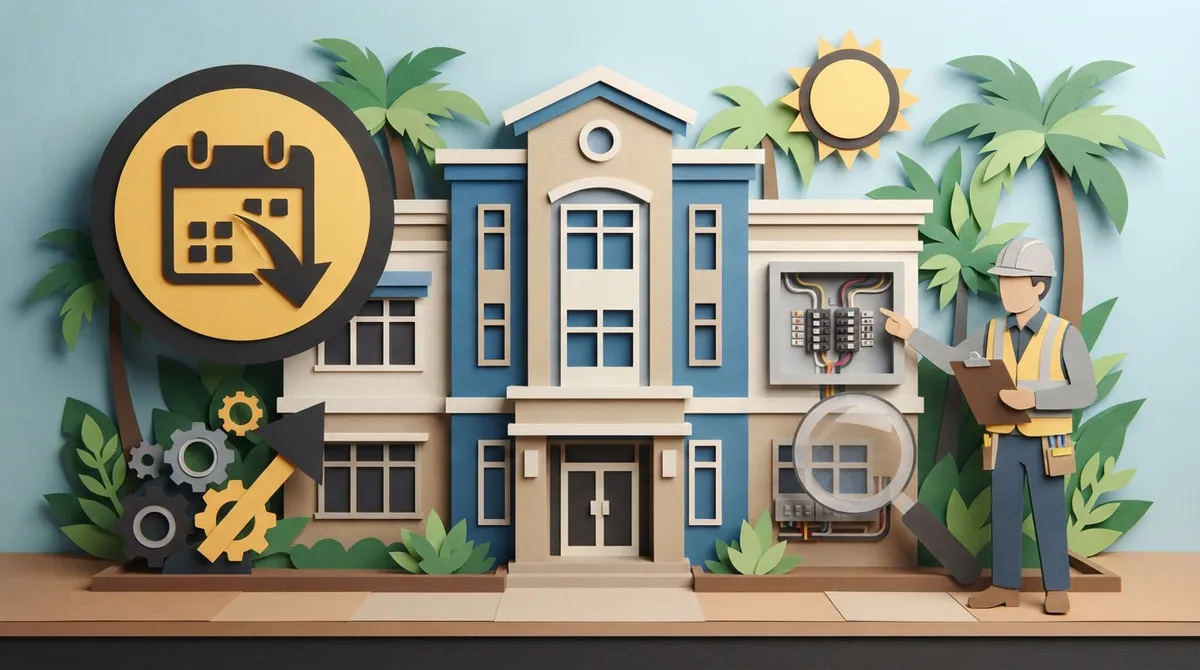
For years, Broward buildings followed a familiar pattern: inspect at 40 years, then every 10 years after that. That is the “40-year recertification” most people know.
More recent Broward municipal guidance describes a revised program. It points to an initial inspection at 25 years for covered buildings, followed by repeat inspections every 10 years. Because the rules have shifted, you should not rely on older descriptions.
Here is the friendly tip: trust the notice the City sends for your property, and confirm the current schedule with Coconut Creek and BORA. If you are curious how this works across the county, read our breakdown of 40-year recertification in Broward and our overview of Broward’s BSIP.
| Program Era | Initial Inspection | Repeat Inspections |
|---|---|---|
| Earlier Broward program | 40 years | Every 10 years |
| Revised program (per recent municipal guidance) | 25 years | Every 10 years |
Always verify which column applies to your building before you plan your budget.
3. Who Needs to Worry About This?
Coconut Creek electrical safety inspections matter to many kinds of owners. If any of these sound like you, keep reading:
- Condo association boards managing aging communities and wanting to avoid fines
- Commercial property owners with offices, plazas, or hotels that fall under the program
- HOA property managers juggling deadlines and board expectations
- Apartment building owners responsible for resident safety
- Real estate investment firms that need clean reports for insurance, sales, or refinancing
Not every building is covered in the same way, so ask the City which rules apply to your property. If you want to understand why the city runs this program, see why Coconut Creek needs building recertification.
4. Only Qualified Florida Professionals Can Do the Work
You cannot hand this job to just anyone. Broward materials separate the electrical report from the structural report. The electrical report is to be completed by a qualified, Florida-licensed professional who specializes in electrical design.
Before you sign a contract, double-check the exact qualifications and forms with the City and BORA. A wrong choice can cost you time, and time is something you do not have when a deadline is ticking.
Not sure how to pick the right person? Our article on how to choose licensed building inspectors for recertification walks you through it. You might also like certified vs. general inspectors.
5. What the Inspector Actually Looks At
So what happens during the electrical review? The inspector documents the basic characteristics of your electrical service and checks the overall condition of the system. Common items include:
- Amperage of the electrical service
- Single-phase or three-phase service type
- Fuse or breaker protection and its condition
- Grounding condition
- Panels, wiring, and visible equipment in common areas
Here is an important point. This is a safety review under BORA’s procedural guidelines. It is not necessarily a full code audit of every hidden wire or every tenant device. Knowing that helps set the right expectations for your board or tenants.
For a look at how electrical checks fit into the bigger inspection picture, see how to navigate electrical inspections for building recertification.
6. Repairs Usually Need Permits
Let’s say the report finds a problem. What now? Repairs or changes may need permits, and the work must follow the Florida Building Code and the National Electrical Code.
Coconut Creek’s Building Department says permits are required for construction, alterations, replacements, and removals that involve electrical work and other building trades. And here is a point that surprises many people: the recertification report does not itself give you permission to start electrical repairs. You still need to confirm permit and closeout steps with the City.
Skipping permits might feel faster, but it can create bigger headaches later. A little planning now saves a lot of stress down the road.
7. Know Your Timeline for Repairs
Time matters in this process. Broward program materials describe a repair period that can extend up to 180 days in applicable cases. Extensions or different timelines can happen, but they depend on the notice, the Building Official’s direction, and program rules.
So please do not assume 180 days applies the same way to every building. Read your notice carefully and ask the City if anything is unclear. Here is a simple way to stay on track:
- Read the City’s notice the day it arrives and note every deadline.
- Hire a qualified licensed professional early, not at the last minute.
- Schedule the inspection and gather past electrical records.
- Review the report with your board or ownership team.
- Pull permits for any needed repairs.
- Complete the work and request City closeout.
- Submit final paperwork and keep copies for your records.
For a fuller walkthrough, check out our 8 key steps in the building recertification process.
8. Preparation Makes Everything Easier
The best Coconut Creek electrical safety inspections are the ones where owners show up prepared. A little homework before inspection day goes a long way. Try these tips:
- Gather old electrical plans, permits, and past inspection reports
- Make sure electrical rooms and panels are clear and easy to reach
- Walk the property and note any flickering lights, warm panels, or rusty equipment
- Ask your maintenance team about past electrical problems
- Confirm the forms, photos, and documents the City wants submitted
Preparation also helps your building stay in good shape between inspections. If you want a broader view, our commercial building inspection guide shows what else inspectors may look at.
How O’Reilly Consultants Can Help
Working through a recertification can feel like a lot. That is where having the right partner makes all the difference. O’Reilly Consultants is a small, specialized engineering team serving Broward and Miami-Dade Counties, and building recertification is what we do every day.
We guide you from the moment the City’s notice arrives, to hiring the right licensed professional, to submitting your documents and finishing repairs on time. We use advanced tools like drones and 3D laser scanning to give you thorough, accurate, and easy-to-follow reports. And our assessments are built to meet and often exceed county requirements.
Our team includes owner and qualifying architect Sherard O’Reilly, Construction Manager and Engineer Catalina Torres, and Project Engineer Rafael Ojeda. Together they bring decades of experience in inspections, construction, and due diligence across South Florida. You can learn more about O’Reilly Consultants on our website, or visit us on Google and see what our O’Reilly Consultants customers say.
We also offer related services you may need, including Coconut Creek property condition assessments, structural integrity reserve studies, and HOA reserve studies. Many boards also find it helpful to review the SIRS requirements Coconut Creek condos face in 2026, and to check when your Coconut Creek milestone inspection is due.
A Quick Look Beyond Broward
If you own property in more than one county, it helps to know the rules differ. Miami-Dade runs its own program with its own steps. You can read the county’s official details on the Miami-Dade County recertification page, or look up a property using the Miami-Dade building recertification case search. For a friendly explainer, see what Miami-Dade building recertification is and why it matters.
Final Thoughts: You’ve Got This
Coconut Creek electrical safety inspections do not have to be scary. When you know the rules, start early, and work with a qualified team, the whole process gets a lot smoother. Remember to check your City notice, confirm the current age threshold, hire a properly licensed professional, and pull permits for any repairs.
Your building, your residents, and your investment all benefit when the electrical system is safe and compliant. Ready to take the next step? Request a free quote from O’Reilly Consultants, or call us at (512) 567-1191. We would love to help you finish your recertification with confidence and peace of mind.
FAQs
Q: Which Coconut Creek buildings need an electrical safety inspection?
A: Covered existing buildings under Broward’s Building Safety Inspection Program need one, but the exact rules depend on your property. The best move is to follow the notice the City sends you and confirm details with the Coconut Creek Building Department.
Q: Is the first inspection at 25 years or 40 years in Coconut Creek?
A: Broward’s older program used 40 years, while newer municipal guidance describes a 25-year initial inspection. Because the rules have changed, always verify the current threshold for your building with Coconut Creek and BORA before you plan.
Q: Who is allowed to do the electrical inspection?
A: The electrical report is to be completed by a qualified Florida-licensed professional who specializes in electrical design. Check the exact qualifications and forms with the City and BORA before you hire anyone.
Q: Do electrical repairs from the report need a permit?
A: Yes, repairs may need permits. Coconut Creek’s Building Department requires permits for electrical alterations, replacements, and removals, and the recertification report alone does not authorize the work.
Q: How long do owners have to finish required repairs?
A: Broward program materials describe a repair period that can extend up to 180 days in applicable cases. Your timeline depends on your notice, the Building Official’s direction, and any approved extension, so read your paperwork closely.