
Key Takeaways
-
PCAs follow ASTM E2018 standards and provide 10-year capital cost projections, making them essential for buyers, lenders, and owners planning refinancing or reserve fund budgeting.
-
Tamarac buildings 40+ years old or 3+ stories require mandatory recertification inspections by law, which is separate from and cannot replace a voluntary PCA for due diligence.
-
PCAs are non-invasive visual assessments covering all major systems (structural, roofing, HVAC, electrical, plumbing, life safety, ADA compliance, and site conditions) without disrupting tenant operations.
-
Many commercial lenders require PCAs during underwriting, especially for older or high-value properties, making them critical documentation for acquisition and refinancing transactions.
-
Running both a PCA and mandatory building inspection simultaneously is often more cost-efficient and provides comprehensive documentation for compliance, capital planning, and lender requirements.
-
Condo boards and HOA managers should pair PCAs with SIRS (Structural Integrity Reserve Study) reports to ensure complete coverage of all building systems beyond structural reserves.
If you own or manage a building in Tamarac, Florida, you’ve probably heard both terms thrown around: Property Condition Assessment (PCA) and building inspection. They sound similar, but they serve very different purposes. Choosing the wrong one can cost you time, money, and compliance headaches you really don’t need. Whether you’re buying a commercial property, refinancing, planning capital repairs, or preparing for recertification, understanding the difference puts you in control. This guide breaks down both options in plain language so you can make a smart, confident decision for your Tamarac property.

What Is a Tamarac Property Condition Assessment (PCA)?
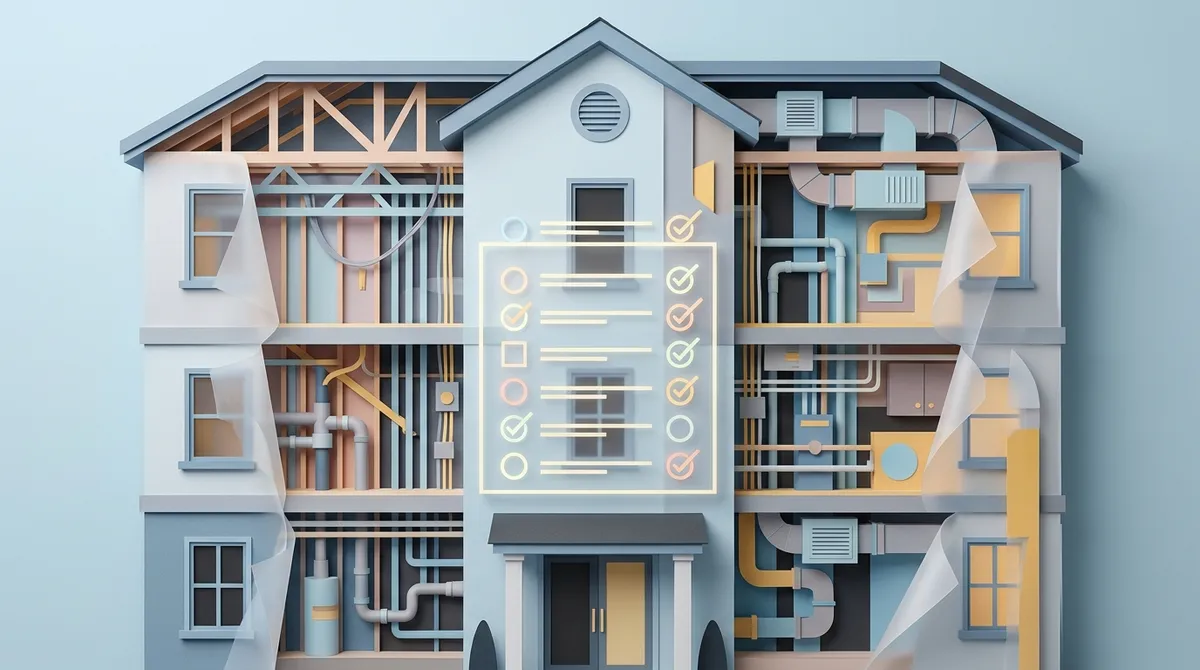
A Tamarac Property Condition Assessment is a structured, walk-through evaluation of a commercial property’s physical condition. Think of it as a detailed health report for your building. It covers all major systems and components, giving you a clear picture of what’s working, what needs attention, and what repairs are coming down the road.
PCAs are typically performed under ASTM E2018, the industry-standard framework that sets the baseline process and documentation requirements for property condition assessments. This standard ensures consistency, credibility, and thoroughness across every report. You can learn more about how thorough building assessments protect your investment by reading about what a commercial building inspection really covers.
A PCA is not a destructive or invasive inspection. Assessors don’t tear open walls or dismantle systems. Instead, they conduct a careful visual assessment of all accessible components. This makes the process efficient and non-disruptive to tenants and daily operations.
What a PCA Covers in Tamarac
A thorough Tamarac Property Condition Assessment evaluates a broad range of building systems and components. Here’s what’s typically included:
- Structural systems — foundations, framing, load-bearing walls
- Roofing — membrane condition, drainage, flashing, and penetrations
- Building envelope — exterior walls, windows, doors, and sealants
- Mechanical systems — HVAC equipment and ductwork
- Electrical systems — panels, wiring, service entrance, and distribution
- Plumbing — supply, drain, and fixture conditions
- Life safety systems — fire suppression, alarms, and egress
- ADA and accessibility — ramps, parking, restrooms, and signage
- Site conditions — paving, landscaping, drainage, and utilities
At the end of the process, you receive a detailed PCA report that identifies immediate repair items, deferred maintenance, and estimated capital expenditures — typically projected over a 10-year planning horizon. This kind of forward-looking data is invaluable for budgeting and strategic decision-making.
What Is a Building Inspection in Tamarac?
A building inspection in Tamarac is a compliance-focused evaluation required by Broward County or local municipal codes. It confirms that a structure meets current safety and code standards at a specific point in time. While it overlaps with some areas a PCA covers, its primary purpose is regulatory — not financial due diligence or long-term capital planning.
Tamarac buildings that are three stories or taller — or that reach 40 years of age — are subject to mandatory recertification inspections under Florida law. These inspections assess structural integrity and electrical safety. You can dig into the details of this process by reviewing the 8 key steps in the building recertification process.
For Tamarac condo boards and HOA property managers, Miami-Dade County Recertification guidelines provide useful context, even when operating primarily under Broward County rules. Florida-wide trends in recertification law affect all South Florida municipalities, including Tamarac.
When Is a Building Inspection Required?
Here are the most common triggers for a mandatory building inspection in Tamarac:
- 40-year recertification — required when a building reaches 40 years old
- 10-year subsequent inspections — required every 10 years after initial recertification
- Post-storm or post-damage assessments — required after significant weather events
- Change of use or major renovation — triggered when building occupancy changes
- Condo association compliance — required under Florida’s Structural Integrity Reserve Study (SIRS) rules
Missing these deadlines creates serious legal and financial exposure. Learn what Tamarac condo boards specifically need to know about SIRS at What Do Tamarac Condo Boards Need to Know About SIRS?
PCA vs. Building Inspection: Side-by-Side Comparison
Here’s a clear comparison to help you see which option fits your situation:
| Feature | Property Condition Assessment (PCA) | Building Inspection |
|---|---|---|
| Primary Purpose | Due diligence, capital planning, risk analysis | Regulatory compliance and code verification |
| Standard Used | ASTM E2018 | Local building code, Florida Statute |
| Who Orders It | Buyers, lenders, owners, asset managers | County or municipality (mandated) |
| Output | Condition report with 10-year cost projections | Pass/fail compliance certificate |
| Invasive? | No — visual walk-through only | May include probing or testing |
| Typical Use Case | Acquisition, refinancing, reserve planning | 40-year recertification, SIRS compliance |
| Paired With | Phase I Environmental Site Assessment | Structural and electrical safety reports |
Who Needs a PCA in Tamarac?
Not every property owner needs a PCA, but many do — and often at very important moments. Here are the groups who benefit most from Tamarac Property Condition Assessments:
- Real estate investment firms — PCAs provide the risk documentation needed before closing on an acquisition or refinancing an aging asset in South Florida’s competitive market
- Commercial property owners — office buildings, retail plazas, and hotels use PCAs to plan capital reserves and negotiate repair credits during transactions
- Condo association boards — PCAs complement SIRS studies by providing broader condition data across all building systems
- Apartment building owners — multi-family properties benefit from 10-year cost projections to support lender underwriting and reserve fund planning
- HOA property managers — PCAs help managers demonstrate fiduciary responsibility and building safety to residents and boards alike
PCAs are often paired with Phase I Environmental Site Assessments in commercial transactions. Together, they give lenders and buyers a complete risk picture before any money changes hands. For context on how these inspections stack up in the broader due diligence process, the building inspection services guide to recertification offers helpful insight.
When Does Tamarac Need Both a PCA and a Building Inspection?
Great question — and the answer is: more often than you might think. There are situations where a single report simply isn’t enough. You may need both a Tamarac Property Condition Assessment and a formal building inspection simultaneously when:
- Buying an older property nearing recertification age — a PCA gives you the full condition picture, while the recertification inspection ensures you stay compliant after closing
- Refinancing a property with deferred maintenance — lenders often require PCA documentation alongside proof of code compliance
- Managing a condo or apartment building subject to SIRS — Florida law requires specific structural reserve studies, but smart boards also order PCAs to cover systems beyond SIRS scope
Running both assessments together is often more cost-efficient than ordering them separately at different times. A qualified firm can coordinate the scheduling and documentation so nothing falls through the cracks. If you’re wondering how to avoid common pitfalls, check out 5 Tamarac electrical safety inspection mistakes to avoid — a great companion read for Tamarac property owners.
How O’Reilly Consultants Handles Tamarac PCAs
O’Reilly Consultants brings a highly specialized team to every Tamarac Property Condition Assessment. Owner and qualifying architect Sherard O’Reilly has deep experience in ASTM E2018 PCAs and meticulous building documentation — covering facades, fire systems, utilities, and site characteristics. The team also includes Construction Manager and Engineer Catalina Torres with 27 years of civil engineering experience, and Project Engineer Rafael Ojeda with over 1,000 Phase I Environmental Site Assessments completed across South Florida.
The firm uses advanced tools like drones and 3D laser scanning to assess hard-to-reach areas with precision. This technology improves accuracy, speeds up turnaround, and produces detailed reports with clear, actionable recommendations. You can visit O’Reilly Consultants on Google to read reviews from property owners and managers across Broward and Miami-Dade Counties.
The team guides you through every step — from the initial walkthrough to the final report and beyond — so you always know where you stand. If you’d like to explore their inspection approach further, the 40-year recertification page is a great starting point.
How to Read Your PCA Report
Once your Tamarac Property Condition Assessment is complete, you’ll receive a structured report. Here’s how to make the most of it:
- Review immediate repair items first — these are flagged as urgent and typically need action before or shortly after closing or refinancing
- Check deferred maintenance items — these are issues that aren’t urgent today but will require attention within a defined timeframe
- Study the 10-year capital cost projections — use these figures to build or update your reserve fund and annual budget
- Compare findings to your SIRS study — if you have a SIRS report, cross-reference it with PCA findings to ensure nothing is missed in your reserve planning
A well-prepared PCA report is a powerful negotiation tool. Buyers use it to request seller credits or price adjustments. Owners use it to prioritize repair spending and defend reserve fund allocations. Lenders use it to underwrite loans with confidence. For additional guidance on navigating inspections, explore how to choose licensed building inspectors for recertification.
Common Questions Tamarac Property Owners Ask About PCAs
If you’re still weighing your options, here are a few practical points that often come up when Tamarac owners are considering a Property Condition Assessment:
- How long does a PCA take? — Most commercial PCAs are completed within 1 to 3 days on-site, with the written report delivered within 1 to 2 weeks after the visit
- Does a PCA replace a building inspection? — No. A PCA is for due diligence and planning. A mandatory building inspection for recertification is a separate legal requirement
- Is a PCA required by lenders? — Many commercial lenders require a PCA as part of their underwriting process, especially for properties over a certain age or value
- Can a PCA be used for insurance purposes? — Yes, condition documentation from a PCA can support insurance applications, renewals, and claims by demonstrating the maintained state of your building
- What if my building is already under recertification review? — A PCA can still run concurrently and actually strengthens your documentation package. You can search Miami-Dade Building Recertification Cases to check the status of any active reviews
For a broader look at the compliance landscape across the region, the what is building recertification and why does it matter article is a helpful resource. You can also explore Coconut Creek Property Condition Assessments and Davie Property Condition Assessments for comparison across neighboring Broward County cities.
The Right Choice for Your Tamarac Property
So, which does Tamarac need — a PCA or a building inspection? The honest answer is that it depends on your situation. If you’re buying, selling, refinancing, or planning capital spending, a Tamarac Property Condition Assessment is exactly what you need. If your building is approaching its 40-year milestone or you’ve received a notice from the county, a formal building recertification inspection is your priority.
In many cases, the smartest move is to do both — and work with a team that’s experienced in delivering each with accuracy and efficiency. O’Reilly Consultants serves property owners and managers across Tamarac and all of Broward County, offering Tamarac Property Condition Assessments, recertification inspections, SIRS studies, and electrical safety evaluations under one roof.
Ready to get started? Request a free consultation with O’Reilly Consultants and find out exactly which assessment your Tamarac property needs — delivered on time, with clear documentation and no surprises.
FAQs
Q: What is a Property Condition Assessment (PCA) in Tamarac?
A: A Tamarac Property Condition Assessment is a structured, visual walk-through of a commercial property that evaluates all major building systems — from roofing and structure to HVAC, electrical, and plumbing. It’s performed under ASTM E2018 standards and produces a detailed report with immediate repair items, deferred maintenance, and 10-year capital cost projections. Think of it as your building’s full health checkup, not a pass/fail code test!
Q: How is a PCA different from a mandatory building inspection in Tamarac?
A: A PCA is a voluntary, due-diligence tool used for buying, selling, refinancing, or capital planning — it gives you a full condition picture and cost projections. A mandatory building inspection is a legally required compliance check, like Tamarac’s 40-year recertification inspection, that results in a pass/fail determination based on local codes. Both are important, but they serve very different purposes.
Q: Do Tamarac lenders require a Property Condition Assessment?
A: Yes, many commercial lenders require a PCA as part of their underwriting process, especially for older or higher-value properties. The PCA report gives lenders confidence that they understand the property’s physical condition and upcoming capital needs before approving financing. It’s one of those documents that can make or break a deal — so having one ready is always a smart move!
Q: How long does a Tamarac PCA take to complete?
A: Most commercial Property Condition Assessments involve 1 to 3 days of on-site fieldwork, depending on the building’s size and complexity. After the site visit, the written report is typically delivered within 1 to 2 weeks. Working with an experienced team like O’Reilly Consultants helps keep the process efficient and the timeline predictable.
Q: Can a PCA and a building recertification inspection be done at the same time in Tamarac?
A: Absolutely — and it’s often the most efficient approach! Running both assessments concurrently saves time, reduces scheduling disruptions for tenants, and gives you a comprehensive documentation package. O’Reilly Consultants is experienced in coordinating both types of assessments for Tamarac property owners, making the entire process smooth and stress-free.