

Key Takeaways
-
Florida law requires condos three stories or taller to complete a Structural Integrity Reserve Study (SIRS) every 10 years to plan financially for major repairs and avoid sudden special assessments.
-
SIRS is a financial planning document distinct from building recertification and milestone inspections—associations must complete all three separate requirements to remain compliant.
-
December 31, 2025 was the deadline for most existing Cooper City associations to complete their first SIRS; confirm your exact deadline with a professional to avoid enforcement action and fines.
-
Only Florida-licensed engineers, architects, or certified reserve specialists can perform a SIRS; choosing an unqualified professional risks incomplete assessments that leave associations underfunded.
-
A recent milestone inspection (within 5 years) can serve as the visual inspection portion of your SIRS, saving time and costs while still requiring a separate financial funding analysis component.
-
Broward County’s local recertification requirement at 40 years (then every 10 years) remains independent of SIRS completion and continues to apply to all Cooper City associations.
If you sit on a condo board in Cooper City, you’ve probably heard the term “structural integrity reserve study” tossed around at board meetings. Maybe it made your head spin a little. You’re not alone! Florida’s condo laws have changed a lot in the past few years, and keeping up with every rule can feel like a full-time job. The good news? Once you understand the basics, this whole process becomes a lot less scary.
A Cooper City structural integrity reserve study, often shortened to SIRS, is one of the most important financial planning tools your association will ever complete. It works alongside building recertification and milestone inspections to keep your property safe and your residents happy. Whether you manage a condo board, own a commercial building, or oversee an HOA, this guide breaks everything down into simple, friendly pieces. Let’s walk through the 15 things you really need to know, together.
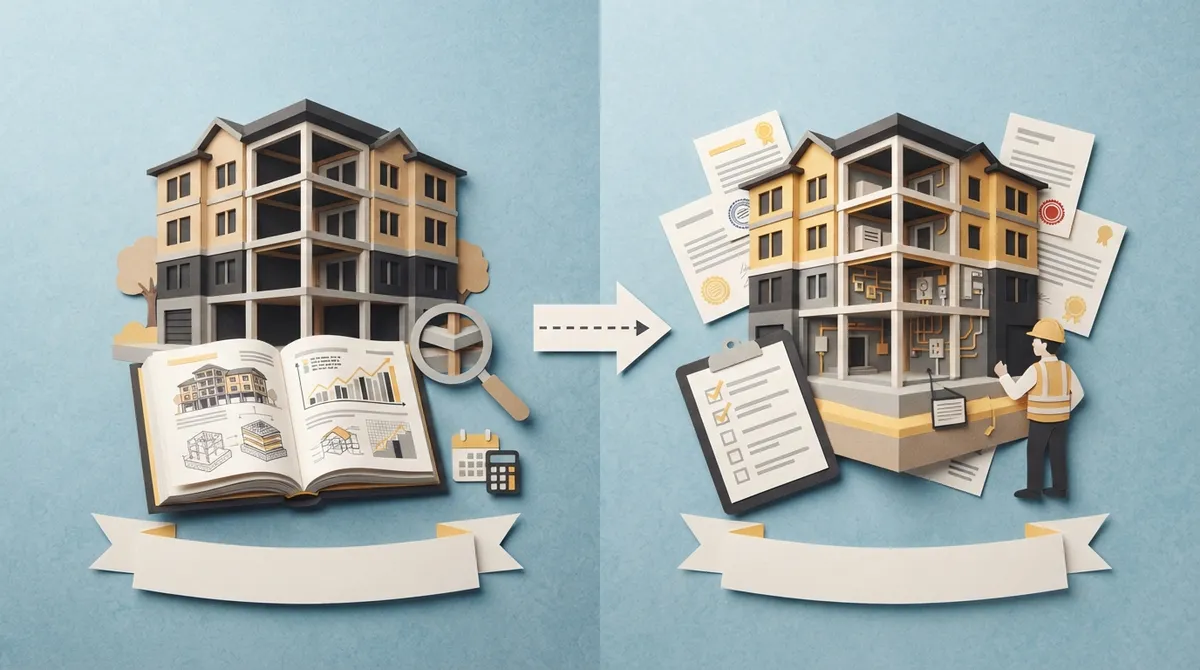
1. A SIRS Is Not the Same as Building Recertification
This is the biggest point of confusion we see, so let’s clear it up right away. A structural integrity reserve study is a financial planning document. It looks at your building’s major components and figures out how much money you need to save for future repairs.
Building recertification, on the other hand, is a safety compliance process. It checks whether your structure is currently sound and safe for people to live or work in. You can learn more about how these two processes fit together in our guide on why Cooper City condos need structural integrity reserve studies. Both matter, but they are not interchangeable.

2. Who Actually Needs a SIRS in Cooper City?
Florida law generally requires a SIRS for residential condominium buildings that are three habitable stories or taller. This applies whether your building is brand new or decades old. Cooperative buildings fall under similar rules too.
If your Cooper City association manages a smaller building, under three stories, you may be exempt from the state SIRS requirement. However, it’s always smart to double check with a licensed professional. Rules can shift, and being cautious protects your board from surprises down the road.
3. The 10-Year Update Rule
Once your building completes its first SIRS, that’s not the end of the story. Florida law requires associations to update their study at least every 10 years. Think of it like a health checkup for your building’s finances and structure.
This regular cadence helps your board stay ahead of expensive surprises. It also keeps your reserve fund realistic instead of guessing at future costs.
4. Eight Key Components Every SIRS Must Cover
Florida statutes are specific about what a structural integrity reserve study must include. Here’s the breakdown your board should know:
- Roof condition and remaining lifespan
- Structural systems, including load-bearing walls and foundations
- Fireproofing and fire protection systems
- Plumbing systems throughout common areas
- Electrical systems and wiring infrastructure
- Waterproofing and exterior painting
- Windows and exterior doors
- Any other component with a deferred maintenance cost exceeding the statutory threshold
Each of these gets a careful visual review, plus a cost estimate for repair or replacement. Our team also handles related Cooper City electrical safety inspections that dovetail nicely with the electrical component of your SIRS.
5. Who Is Qualified to Perform the Study?
Not just anyone can sign off on a SIRS. Florida law requires the study to be performed or verified by one of these professionals:
- A Florida-licensed engineer
- A Florida-licensed architect
- A reserve specialist certified by the Community Associations Institute
- A professional reserve analyst certified by the Association of Professional Reserve Analysts
Choosing the right professional matters a lot here. A rushed or incomplete study can leave your association underfunded and unprepared. If you’re unsure who to trust, our article on how to choose licensed building inspectors for recertification offers helpful guidance.
6. The December 31, 2025 Deadline Matters
Florida DBPR guidance set December 31, 2025 as the general deadline for many existing associations to complete their first SIRS. If your Cooper City association was established on or before July 1, 2022, and is controlled by unit owners, this deadline likely applied to you.
Some associations with a milestone inspection due by December 31, 2026 were given a bit more breathing room. They could coordinate the SIRS with their milestone inspection, but the absolute cutoff remains December 31, 2026. Don’t assume you’re covered without confirming your exact situation with a professional.
7. Milestone Inspections Are a Separate Requirement
Florida’s milestone inspection law applies to residential buildings three stories or taller. Generally, the first inspection happens the year your building turns 30 years old, counting from its certificate of occupancy. After that, it repeats every 10 years.
In certain coastal areas, a 25-year trigger may apply instead. This makes timing tricky, so it’s worth reviewing our breakdown of Cooper City milestone inspection facts for 2026 to see where your building stands.
8. Local Recertification Rules Still Apply
Broward County has its own building safety inspection program, generally requiring recertification once a building reaches 40 years old, then every 10 years after that. Cooper City participates in this county-wide framework.
A completed SIRS does not replace this local recertification obligation. Your association still needs to track deadlines with the Cooper City Building Division separately. For a full overview, check out our guide on Cooper City building recertification and what owners should know.
9. How a SIRS and Milestone Inspection Can Work Together
Here’s a bit of good news for busy boards. Florida law allows a qualifying milestone inspection, completed within the past five years, to serve as the visual inspection portion of your SIRS. This can save time and reduce duplicate costs.
That said, the milestone inspection alone doesn’t cover the financial funding analysis. Your SIRS still needs that separate budgeting component to be complete and compliant.
10. What Happens If Your Association Skips the Study?
Ignoring SIRS requirements isn’t a good strategy. Associations that fail to complete a required study can face state enforcement action, fines, and even legal liability if a structural failure occurs later.
Beyond legal risk, skipping the study can also hurt your building’s insurance standing and market value. Buyers and lenders increasingly ask for recent recertification and reserve study documentation before closing deals.
11. The Cost of Waiting Adds Up
Many boards worry about the upfront cost of a SIRS. But waiting often costs more in the long run. Deferred maintenance tends to snowball, turning a $10,000 fix into a $100,000 emergency repair.
A properly funded reserve, based on accurate SIRS data, spreads costs out predictably. This protects owners from sudden special assessments that can catch everyone off guard.
12. Technology Makes Inspections Faster and More Accurate
Gone are the days of clipboard-only inspections. Modern building assessments now use drones for roof and facade inspections, plus 3D laser scanning for precise structural measurements. These tools speed up the process and reduce the need for scaffolding or dangerous manual access.
At O’Reilly Consultants, we use this advanced technology across Broward and Miami-Dade Counties to deliver faster, more accurate SIRS and recertification reports. It’s one reason associations trust us with these critical assessments.
13. Comparing SIRS, Milestone Inspections, and Recertification
With so many overlapping terms, a simple comparison table can help clear things up for your board members.
| Requirement | Purpose | Typical Frequency | Who Performs It |
|---|---|---|---|
| Structural Integrity Reserve Study (SIRS) | Financial planning for future repairs | Every 10 years | Engineer, architect, or certified reserve specialist |
| Milestone Inspection | Structural safety evaluation | At 30 years, then every 10 years (25 years in some coastal areas) | Licensed engineer or architect |
| Local Building Recertification | County/city safety compliance | Typically at 40 years, then every 10 years | Licensed engineer or architect |
Notice how each requirement serves a distinct purpose. Missing one doesn’t fulfill the others, so your board needs to track all three separately.
14. Steps to Get Your Cooper City SIRS Done Right
Feeling ready to tackle this project? Here’s a simple, step-by-step approach that works well for most associations:
- Confirm whether your building meets the three-story SIRS threshold
- Review any existing milestone inspection reports that might qualify for reuse
- Hire a licensed engineer, architect, or certified reserve specialist
- Schedule the visual inspection of all required components
- Review the draft report for accuracy and completeness
- Present the funding plan to your board and owners
- Adjust your reserve budget based on the study’s recommendations
- Mark your calendar for the 10-year update
Following these steps keeps your association organized and reduces last-minute stress. It also builds trust with owners who want transparency about where their fees are going.
15. Why Partnering with Local Experts Makes a Difference
Cooper City associations benefit enormously from working with a team that understands both state law and Broward County’s specific processes. Generic national firms often miss local nuances that can delay approvals or create compliance gaps.
O’Reilly Consultants brings a specialized, small-team approach to this work. Owner and qualifying architect Sherard O’Reilly has deep experience in property condition assessments and detailed building documentation. Construction Manager and Engineer Catalina Torres contributes 27 years of civil engineering expertise, while Project Engineer Rafael Ojeda has completed over 1,000 environmental site assessments across South Florida. This combined experience means your Cooper City property gets a thorough, accurate assessment every time. You can read more about our team on our about page.
We also offer related services that many Cooper City boards find useful, including Cooper City property condition assessments and Cooper City HOA reserve studies. Bundling these services often saves time and money compared to hiring separate firms for each report.
Verifying Your Deadlines and Requirements
Every Cooper City association’s situation is a little different. Building age, height, and history all affect which deadlines apply to you. We always recommend confirming your specific obligations with the Florida Department of Business and Professional Regulation’s Condominium Information & Resources page, and reaching out to the Cooper City Building Division directly.
If your property sits near the Miami-Dade County line, or you manage buildings in both counties, the Miami-Dade County Recertification program has its own separate rules worth reviewing. You can also search Miami-Dade building recertification cases to see how similar buildings have handled their compliance timelines.
Curious what other South Florida boards are saying about working with our team? Feel free to visit us on Google — O’Reilly Consultants to see real reviews from associations just like yours.
Bringing It All Together
We know this is a lot of information to absorb in one sitting. But here’s the encouraging part: you don’t have to figure it all out alone. A Cooper City structural integrity reserve study, paired with proper milestone inspections and recertification, protects your building, your budget, and your neighbors for decades to come.
Think of your reserve study as a roadmap. It shows exactly where your building is headed and helps your board make smart, confident decisions along the way. That kind of clarity is priceless when you’re managing millions of dollars in shared property.
Ready to get your Cooper City SIRS, milestone inspection, or building recertification handled by a team that genuinely cares about getting it right? Request a free quote today, or call us at (512) 567-1191 to speak with our friendly team. We’re here to make this process as smooth and stress-free as possible for your association.
FAQs
Q: What is a Structural Integrity Reserve Study (SIRS) for a Cooper City condominium?
A: A SIRS is a required financial planning study that looks at major building components like the roof, structure, and plumbing. It estimates repair costs and remaining lifespan so your association can budget properly. It’s a bit like a financial checkup that keeps your reserve fund realistic and your building well maintained!
Q: Does a SIRS replace Broward County or Cooper City building recertification?
A: Nope, these are two completely separate requirements! A SIRS focuses on funding and financial planning, while recertification checks the actual safety and structural condition of your building. Your Cooper City association needs to satisfy both to stay fully compliant.
Q: What is the difference between a Florida milestone inspection and a SIRS?
A: A milestone inspection evaluates structural safety and looks for deficiencies, usually starting around the 30-year mark. A SIRS, on the other hand, is all about planning and saving money for future repairs. They work hand in hand, and sometimes a recent milestone inspection can even help satisfy part of your SIRS visual review!
Q: Who is qualified to perform a SIRS or structural recertification inspection in Florida?
A: Only a Florida-licensed engineer, architect, or a certified reserve specialist can perform these studies. It’s so important to choose someone with the right credentials, because a rushed or incomplete study can leave your association underfunded. Our team at O’Reilly Consultants brings decades of combined experience to every project we take on.
Q: How can a condominium association verify its Cooper City building recertification deadline?
A: The best first step is reaching out directly to the Cooper City Building Division, since they track building-specific timelines. You can also check Florida DBPR’s condominium resources page for state-level guidance. Honestly, working with an experienced local team takes a lot of the guesswork out of this process for you!