Key Takeaways
-
Building recertification and fire inspections are separate tracks: recertification covers structural and electrical safety, while fire inspections and system testing are handled by fire officials and licensed fire contractors.
-
Florida Statute 633.312 requires fire hydrants and fire-protection systems to be inspected on quarterly, annual, three-year, and five-year cycles, though your local fire authority sets the final schedule.
-
Only properly licensed fire-system contractors can test alarms, sprinklers, and similar equipment; always ask to see the license and keep a copy in your files.
-
Building owners are responsible for correcting fire deficiencies found during inspections, so budget for repairs early and document every fix to avoid penalties.
Let’s be honest: when you hear “building recertification,” fire inspections probably pop into your head right away. That’s a very common mix-up, and it’s one we love to clear up! Here in Broward and Miami-Dade Counties, owners and boards often juggle several compliance tasks at once. Structural reviews, electrical checks, and fire-system testing all land on the same to-do list.
Here’s the friendly truth. Recertification and fire inspections are related, but they are not the same thing. Recertification mostly looks at structural and electrical safety. Fire inspections and system testing follow a separate track, run by fire officials and licensed fire contractors. Knowing the difference can save you stress, money, and missed deadlines.
In 2026, with Miami-Dade County recertification rules and 90-day deadlines in play, it pays to be ready. Below are 12 simple facts about fire inspections that every condo board, property manager, and building owner should know. Let’s dive in together!
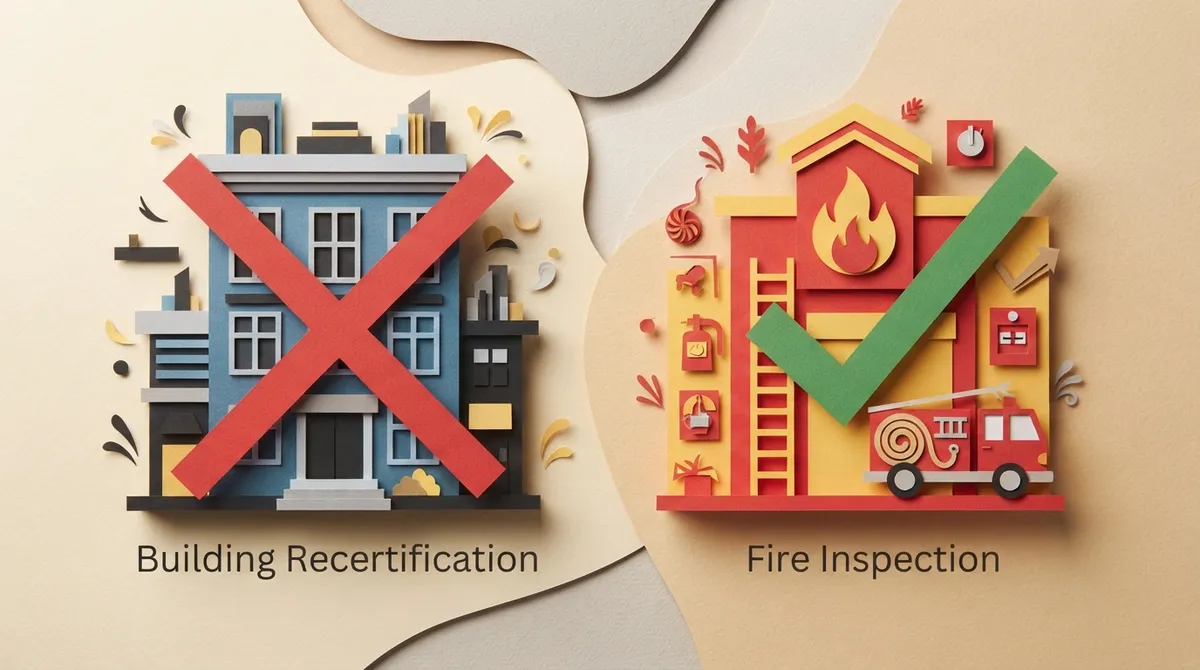
1. Recertification Is Not a Fire Inspection
This is the biggest fact on the list, so we put it first. A building recertification focuses on structural and electrical safety. It is not a stand-in for your fire-code inspection or your fire-system testing.
Think of it like going to the dentist and the eye doctor. Both care about your health, but each one checks something different. You need both visits. If you want a refresher on the basics, our guide on what building recertification is and why it matters explains the core purpose of the program.

2. The Fire Authority Has the Final Say
Every building falls under an authority having jurisdiction, often called the AHJ. For fire matters, that is usually your local fire marshal or fire official. They oversee fire-code compliance and make sure your testing stays on schedule.
Rules can vary from city to city. So the first smart step is simple: call your building department and your fire authority. Ask what they require for your property type. A quick phone call now beats a surprise notice later.
3. Florida Law Sets the Inspection Schedule
Florida Statute 633.312 requires fire hydrants and fire-protection systems to be inspected at most public and private properties. One- and two-family homes are the exception. The law points to NFPA 24 and NFPA 25 procedures and calls for quarterly, annual, three-year, and five-year inspections.
You can read the law yourself in the 2026 Florida Statutes. The exact schedule depends on your system type, your contract, and local rules.
4. Know Your Inspection Intervals
Different parts of a fire system need checking at different times. Here is a simple snapshot to help you plan. Remember, these are general examples, and your local AHJ has the final word.
| Inspection Interval | What It Typically Covers | Who Performs It |
|---|---|---|
| Quarterly | Sprinkler system checks, certain valves and gauges | Licensed fire contractor |
| Annual | Fire alarm testing, hydrant flow checks, sprinkler inspections | Licensed fire contractor |
| Three-year | Select sprinkler and standpipe components | Licensed fire contractor |
| Five-year | Internal pipe and component reviews | Licensed fire contractor |
One local guide in Deltona, Florida, for example, lists annual alarm testing, four sprinkler inspections per year, and a five-year internal visual check. Your city may differ, so always confirm.
5. Hydrants Need a Yearly Workout
Here is a fun fact. Florida law says each fire hydrant must be fully opened at least once a year. It also must be flowed for at least one minute, until any foreign material clears out.
Why does this matter? A hydrant that sits unused can clog or stick. When firefighters need it, there is no time for surprises. This small yearly step keeps your site ready for the unexpected.
6. Only Qualified Contractors Can Test Fire Systems
Alarms, sprinklers, and similar equipment need testing by properly licensed fire-system contractors. A general handyman or a general inspector cannot sign off on this work. The same goes for a recertification inspector, who is looking at different things.
When you hire for fire work, always ask to see the license. Then keep a copy in your files. It is a tiny habit that pays off big during audits.
7. Recertification Does Include a Visual Life-Safety Look
Here is where it gets a little tricky, so stay with us. A recertification inspection may include a quick visual review of life-safety conditions. For example, an inspector might note whether exit signs and emergency lighting work. They might also notice if an existing fire alarm looks functional.
But a visual review is not specialist testing. It never replaces the required alarm, sprinkler, or hydrant testing. Think of it as a helpful heads-up, not a pass for your fire systems. Our article on what a commercial building inspection really covers walks through what to expect.
8. Milestone Inspections Are Not Fire Certifications
Florida’s milestone-inspection law focuses on structural components and life safety. Generally, it sets a 30-year first inspection and a 10-year repeat cycle. It applies to condominium and cooperative buildings that are three or more habitable stories tall.
Miami-Dade’s 2025 guidance describes its program as combining Phase 1 and Phase 2 into one inspection. Still, none of this turns into a full fire-system certification. Keep your fire testing on its own calendar. For deeper reading, see what Miami-Dade building recertification is and why it matters.
9. Inspection Reports Must Reach the Right People
After a fire inspection, the contractor gives a summary to both the owner and the local AHJ. A solid report records several key details:
- The location of the system
- The inspector’s name and license information
- The date of the inspection
- The status of the system
- Any deficiencies found
- Any impairment information
Keep every report in one organized place. A tidy digital folder makes recertification time so much easier.
10. Owners Are Responsible for Fixing Deficiencies
This one is simple but important. The contractor finds and reports problems. The owner is responsible for maintenance and for correcting deficiencies. That includes broken devices, blocked valves, and overdue repairs.
Condo boards and HOA managers should build repair costs into their planning. If you are weighing long-term costs, our guides to structural integrity reserve studies can help you budget wisely.
11. Smart Preparation Makes Recertification Smoother
You do not have to feel overwhelmed. A few steps, done in order, make the whole process calm and manageable. Here is a simple plan you can follow:
- Identify your AHJ. Confirm who oversees fire compliance for your building.
- Gather current reports. Collect your alarm, sprinkler, and hydrant testing records.
- Check deficiency closeouts. Make sure every past issue has a documented fix.
- Schedule overdue work. Book qualified contractors for anything behind schedule.
- Organize your documents. Keep everything ready for your recertification inspector.
Never assume that passing structural and electrical recertification means your fire systems are compliant. They live on separate tracks, and both need attention.
12. The Right Partner Keeps Everything on Track
Juggling inspections, deadlines, and paperwork is a lot. That is where a trusted partner makes life easier. O’Reilly Consultants is a small, highly specialized engineering team serving Broward and Miami-Dade Counties. They focus on 10-, 25-, and 40-year recertification inspections and safety-focused assessments.
Led by owner and qualifying architect Sherard O’Reilly, the team uses drones and 3D imaging for thorough, accurate evaluations. They guide you from the county notice, to hiring a licensed professional, to submitting your documents. They also help you spot fire-system records and open deficiencies during their documentation review, so nothing catches you off guard. Want to know how to pick the right expert? Read our tips on choosing licensed building inspectors for recertification.
Who Benefits Most From This Knowledge?
Different owners face different pressures, but the core lesson stays the same. Here is how it plays out for common property types:
- Condo boards: Protect residents and avoid fines by tracking both recertification and fire testing dates.
- Commercial owners: Keep offices, plazas, and hotels compliant with clear, separate records.
- HOA managers: Stay ahead of 90-day deadlines with organized documents.
- Apartment owners: Prevent hazards and legal trouble in multi-family buildings.
- Investment firms: Keep reports current to protect value, insurance, and sale timelines.
You can also check the county’s Miami-Dade building recertification case search to see where a property stands.
Final Thoughts and Your Next Step
Fire inspections and building recertification work best as a team, even though they run on separate tracks. Recertification confirms structural and electrical safety. Fire inspections and testing keep alarms, sprinklers, and hydrants ready to protect people. When you understand both, you stay compliant, safe, and stress-free.
Ready for a smooth, timely recertification? Our team would love to help. Request a free quote today, or call us at (512) 567-1191 to talk through your building’s needs. You can also see what neighbors are saying when you visit O’Reilly Consultants on Google. We are here to make compliance feel easy.
FAQs
Q: Does building recertification include a fire inspection?
A: Not quite! Recertification mainly covers structural and electrical safety, though an inspector may note visible life-safety items like exit signs. Fire alarms, sprinklers, and hydrants still need their own testing by licensed fire contractors.
Q: Who is qualified to inspect fire alarms and sprinkler systems?
A: Only properly licensed fire-system contractors should test and inspect these systems. Your local fire official oversees compliance, so always ask to see a contractor’s license before you hire.
Q: How often do commercial fire sprinklers and alarms need inspection?
A: Florida Statute 633.312 points to quarterly, annual, three-year, and five-year inspections depending on the system and standards. Exact timing varies by your local fire authority, so confirm the schedule for your building.
Q: What fire inspection records should I prepare for recertification?
A: Gather your current alarm, sprinkler, and hydrant testing reports, plus proof that past deficiencies were fixed. Keeping these organized makes your recertification review quicker and less stressful.
Q: Who is responsible for correcting fire inspection deficiencies?
A: The building owner is responsible for maintenance and for fixing any problems the inspecting contractor finds. Planning repairs early helps you avoid penalties and keeps your residents safe.