
Key Takeaways
-
Check your certificate-of-occupancy date and confirm your exact recertification deadline with the local building official, since coastal buildings may face a 25-year trigger instead of 30.
-
In Miami-Dade, reports are generally due within 90 days of the county's notice, so start hiring a licensed professional the day the notice arrives.
-
Verify that the inspector is a Florida-registered engineer or architect with recertification experience, as the written report must come from a qualified professional.
-
A recertification report only identifies problems; you still must plan repairs, pull permits, and meet the timelines set by your local building office.
-
Do not overlook electrical systems, including service equipment, wiring, conduits, emergency lighting, and exit signs, which are a core part of the inspection.
-
Walk your property regularly to catch early warning signs like cracks, stains, and rust, since addressing issues sooner usually means simpler and cheaper fixes.
Let’s be honest: nobody wakes up excited to schedule a property inspection. But if you own or manage a building in South Florida, a good inspection is one of the best gifts you can give yourself, your residents, and your bank account. A bad one, or a late one, can lead to fines, stress, and expensive surprises.
In building recertification, property inspections are professional reviews of a building’s structure and electrical systems. They help local officials decide whether a building is safe to keep using. The rules change from place to place, so a plan that works in one city may not work in the next one.
The good news? Most problems are easy to avoid once you know what to watch for. In this friendly guide, we will walk through seven common mistakes, explain how the rules work in Florida, and share simple steps to keep your building on track in 2026.
What Property Inspections Mean for Building Recertification
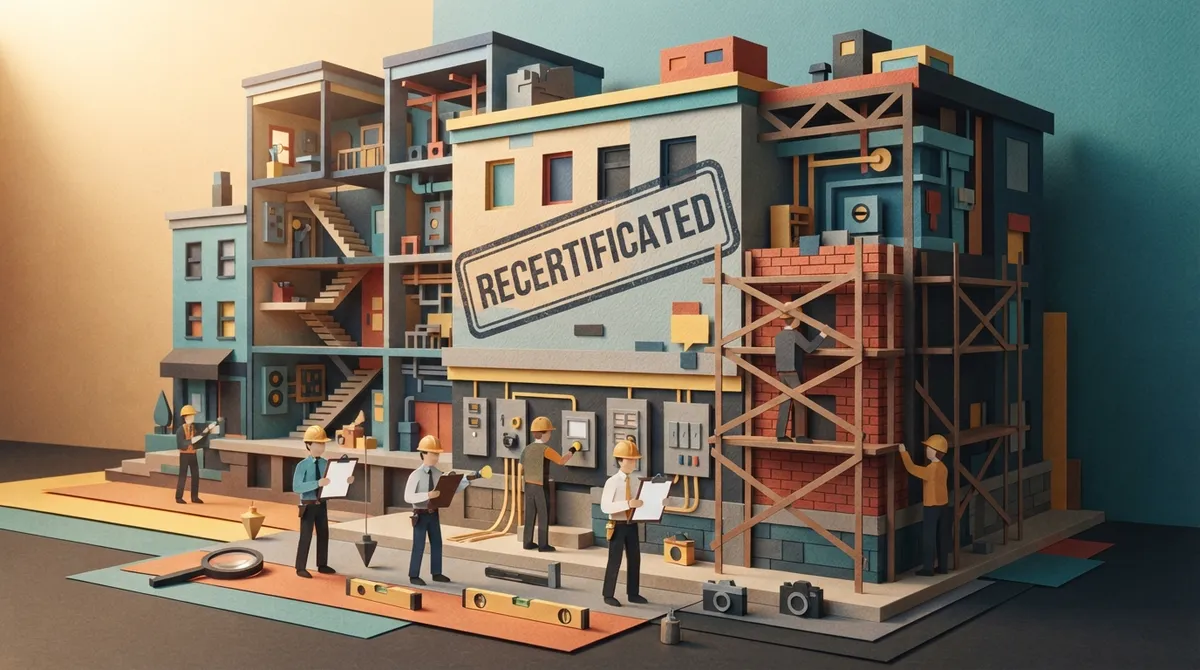
When we talk about property inspections in this industry, we do not mean a quick look before buying a house. We mean a formal, documented review by a licensed Florida architect or engineer. The goal is to confirm that a building is structurally sound and that its electrical systems are safe.
A typical recertification report covers:
- The general structural condition of the building
- Electrical service equipment, wiring, and conduits
- Emergency lighting and exit signs
- Fire-alarm systems, where they apply
- Any problem areas and the repairs recommended to fix them
Reports also record the construction type, available drawings, building history, and the methods used during the inspection. If you want a deeper primer, our guide on what building recertification is and why it matters is a great place to start.

Know Which Rules Apply: State vs. County
One of the biggest sources of confusion is that two different programs exist. Florida has a statewide milestone-inspection law, and Miami-Dade County runs its own local recertification program. They overlap in spirit, but they are not identical.
| Feature | Florida Milestone Inspection | Miami-Dade Recertification |
|---|---|---|
| Who it covers | Condominium and cooperative buildings at least three habitable stories tall | Broader local program with its own scope |
| Initial timing | Generally by December 31 of the year the building reaches 30 years | Generally 30 years inland |
| Coastal buildings | 25 years for qualifying buildings within three miles of the coast | 25 years for qualifying coastal buildings |
| Repeat cycle | Every 10 years after the first inspection | Every 10 years after the first inspection |
| Process | Phase One, then Phase Two if needed | Combined into one inspection process |
| Report timing | Set by statute and local enforcement | Generally within 90 days of the county’s notice |
Always confirm your exact deadline and scope with your local enforcement agency. Miami-Dade notes that municipalities administer recertification within their own limits, so the right office depends on where your building sits. You can review the county’s official guidance on the Miami-Dade County Recertification page.
The 7 Property Inspection Mistakes to Avoid
1. Assuming One Deadline Fits Every Building
It is tempting to hear a number like 30 or 40 years and assume that is your date. But the real deadline depends on your building’s certificate-of-occupancy date, its location, and which program applies. A coastal building may face a 25-year trigger, and the state law includes transition deadlines for buildings that were already close to the threshold.
The fix is simple. Check your certificate of occupancy, then confirm the date with your local building official. Our article on what Florida owners must know about 40-year recertification can help you sort through the history.
2. Waiting Too Long After the Notice Arrives
In Miami-Dade, reports are generally due within 90 days of the county’s notice. That sounds like plenty of time, but it goes fast. You need time to hire a professional, schedule access, complete the review, and finish any needed repairs.
Many owners lose weeks just finding the right inspector. Start the conversation the day your notice lands. If you are not sure what to do first, our walkthrough of the 8 key steps in the building recertification process lays it all out.
3. Hiring Someone Without the Right Credentials
Not every inspector can sign off on a recertification report. Miami-Dade requires written reports prepared by a Florida-registered professional engineer or architect, with qualifications that match the technical scope. Larger threshold buildings may need separate, qualified structural and electrical engineers.
Before you hire, ask to see licenses and past recertification experience. We break this down in how to choose licensed building inspectors for recertification and in our comparison of certified vs. general inspectors.
4. Treating the Report as the Finish Line
Here is a mistake that surprises many first-timers. A report is not a substitute for permits or for finishing the repairs the building official requires. The report tells you what is wrong. It does not fix anything.
If the inspection finds issues, you will need to plan repairs, pull the right permits, and meet the timelines set by your local office. Think of the report as a roadmap, not a certificate you can simply frame and forget.
5. Overlooking the Electrical Side
Boards and owners often focus on concrete, cracks, and balconies. Electrical systems get less attention, yet they are a core part of recertification. Service equipment, wiring, conduits, emergency lighting, and exit signs all matter.
Aging panels and tired wiring are common trouble spots. If you want to know what to expect, read our overview of how to navigate electrical inspections for building recertification.
6. Skipping Early Warning Signs
Small cracks, stains, and rust can look harmless. But they are often the first clues that something bigger is going on. Walking your property regularly and noting changes can save you from a rough surprise on inspection day.
Not every crack is a crisis, though. Learning the difference helps you stay calm and act wisely. Our guide to foundation cracks and hairline cracks in commercial buildings explains the causes, risks, and solutions in plain language.
7. Relying on Slow, Outdated Methods
Old-school inspections can mean long days, scaffolding, and limited views of tall facades and roofs. That can slow everything down and leave blind spots. Modern tools make the process faster and more thorough.
At O’Reilly Consultants, we use drones and 3D laser scanning to capture detailed views of hard-to-reach areas. That means fewer surprises, faster estimates, and clearer reports for boards and managers who are watching the clock.
A Simple Step-by-Step Plan for Your Next Inspection
Feeling a bit overwhelmed? Take a breath. Here is an easy plan you can follow.
- Find your deadline. Confirm your building’s certificate-of-occupancy date and check with your local building official.
- Read your notice carefully. Note the due date, the scope, and any forms the county or city requires.
- Hire a qualified professional. Choose a licensed Florida engineer or architect with real recertification experience.
- Gather your documents. Pull drawings, past reports, repair records, and permits so the inspector can work efficiently.
- Schedule access early. Plan for roofs, electrical rooms, parking areas, and common spaces.
- Review the findings. Ask questions until you understand every recommendation.
- Plan repairs and permits. Set a budget and timeline, then submit what your local office requires.
Who Benefits Most From a Smooth Process
Different owners care about different things, but everyone wants less stress.
- Condo boards want to protect residents and avoid fines.
- Commercial owners of offices, plazas, and hotels need clean records for tenants and insurers.
- HOA managers juggle tight deadlines and many moving parts.
- Apartment owners want to catch hazards before they become legal headaches.
- Investment firms need solid reports to support sales, refinancing, and insurance.
For commercial owners, it also helps to know what a review includes. Take a look at what a commercial building inspection really covers.
Understanding Phase One and Phase Two
Under Florida’s milestone law, an inspection generally has two possible phases. Phase One is a visual examination by a Florida-licensed architect or engineer. If that review finds substantial structural deterioration, Phase Two follows with a more detailed evaluation. That can include destructive or nondestructive testing.
Miami-Dade’s program combines these phases into one inspection process and may go beyond the state minimum. This is another reason to confirm exactly which rules apply to your property.
Here is a quick look at what recent state data shows:
- 8,736 Phase One inspections were completed in the 2024 to 2025 local-government data.
- 1,575 Phase Two inspections were completed in the same period.
- 903 permit applications were filed for repairs found through Phase Two inspections.
- Inspections flagged 30 buildings as unsafe or uninhabitable in 2024 and 24 in 2025.
Those numbers come from a state review of local-government data, and they show how widely these inspections are being used. They also remind us that early action matters. Catching issues sooner usually means simpler fixes and lower costs.
Tips to Make Inspection Day Easier
A little preparation goes a long way. Here are a few friendly pointers.
- Keep a binder or digital folder with drawings, past reports, and repair records.
- Tell residents about the inspection dates and any access needs.
- Make sure electrical rooms, roof hatches, and garages are easy to reach.
- Ask your inspector what to expect, so there are no surprises.
- Keep notes on any past leaks, repairs, or complaints.
You can also search public records for your property using the Miami-Dade building recertification case search, which is handy for checking status and history.
Why Local Experience Matters
Recertification is not one-size-fits-all. Broward and Miami-Dade have their own habits, forms, and timelines. A team that works here every day knows how to keep things moving and how to avoid common snags.
That is where O’Reilly Consultants shines. We are a small, specialized engineering team focused on building recertification in Broward and Miami-Dade Counties. We guide you from the county’s notice, to hiring a licensed professional, to submitting your documents, so you can finish repairs within your timeline. We handle 10-, 25-, and 40-year recertifications for high-rise and multi-family apartments, offices, industrial buildings, and condos. We also offer electrical and illumination safety inspections, SIRS, PCA, and HOA reserve studies.
Curious how others feel about working with us? You can read what our customers say when you visit O’Reilly Consultants on Google.
Final Thoughts
Property inspections do not have to be scary. With the right deadline, the right professional, and a little early planning, you can turn a stressful mandate into a smooth project. Avoid these seven mistakes, and you will be well ahead of most owners.
Ready to take the stress out of your next inspection? Request a free quote today, or call us at (512) 567-1191. We are happy to help you stay compliant now and prepared for the future.
FAQs
Q: What is a property inspection for building recertification?
A: It is a professional review of a building’s general structural condition and electrical systems, done by a licensed Florida architect or engineer. The goal is to confirm the building is safe for continued use and to list any repairs that are needed.
Q: When is my building’s recertification inspection due?
A: It depends on your certificate-of-occupancy date, your location, and which program applies. Florida’s milestone law generally sets 30 years for covered buildings, or 25 years for qualifying coastal buildings, with repeat inspections every 10 years. Check with your local building official to confirm your exact date.
Q: What is the difference between Phase One and Phase Two?
A: Phase One is a visual examination of the building by a licensed architect or engineer. If substantial structural deterioration is found, Phase Two adds a more detailed evaluation, which may include testing. Miami-Dade combines both phases into one inspection process.
Q: Who can perform a building recertification inspection?
A: A Florida-registered professional engineer or architect must prepare the written report in Miami-Dade, with qualifications that fit the technical scope. Some threshold buildings may need separate, qualified structural and electrical engineers.
Q: What happens if an inspection finds unsafe conditions?
A: The report will list the problems and recommend repairs, and you will need to work with your local building official on permits and timelines. Acting quickly usually keeps repairs simpler and helps you avoid penalties.