
Key Takeaways
-
Commercial building recertification is a required safety inspection and professional report confirming an existing building is safe for continued use, not a voluntary green rating like LEED.
-
In Miami-Dade County, owners get 90 days from the notice date to submit the required report, so hire a licensed professional and schedule the inspection immediately.
-
Inland buildings typically enter recertification at 30 years and coastal buildings at 25 years, then repeat every 10 years; confirm exact timing with your local building department.
-
Only a Florida-registered architect or professional engineer can sign the report, and buildings four stories or taller may need separate structural and electrical professionals.
-
The inspection focuses on structural elements like foundations, walls, roofs, and balconies, plus electrical systems including panels, wiring, grounding, and emergency lighting.
-
Finding deficiencies doesn't mean failure: obtain permits, complete repairs, pass final inspections, and resubmit documentation, prioritizing safety-critical items first.
-
Some buildings are exempt, such as single-family homes and duplexes, but milestone inspections for condos are a separate process and do not replace local recertification.
If you own a commercial building in South Florida, you have probably heard the word “recertification” tossed around at board meetings or in letters from the county. And if you are scratching your head, you are in good company! Many owners and managers first meet commercial building certification when a notice lands in the mailbox with a deadline attached.
Here is the good news. Once you understand how it works, the process is very manageable. In the building recertification world, commercial building certification usually means a required inspection and professional report. That report shows your existing building is safe for continued use. It is not the same as a voluntary green label like LEED.
In this friendly guide, we walk through seven key things every owner should know in 2026. You will learn the timelines, the exemptions, who can sign the report, and what happens if repairs are needed. Grab a coffee, and let’s make this simple together.

1. What Commercial Building Certification Really Means
Let’s clear up the biggest mix-up first. When people search for commercial building certification, they might mean two different things. One is a voluntary sustainability rating. The other is a required safety inspection for older buildings. This article is about the second one.
In Miami-Dade County, this is called building recertification. A licensed professional inspects specific building systems and writes a report. The report says whether the building is safe for its specified use. Structural and electrical systems are the main focus.
It is also different from a certificate of occupancy. A certificate of occupancy says a building was safe to use when it was first completed. Recertification checks that it is still safe years later. Think of it as a regular health checkup for your building. If you want a deeper primer, read What Is Building Recertification and Why Does It Matter?
2. When Your Building Needs Its First Inspection
Timing is where many owners get nervous, so let’s keep it simple. Under Miami-Dade County’s general program, buildings enter recertification at a set age. Inland buildings generally enter at 30 years. Coastal buildings may enter at 25 years. After that, the cycle repeats every 10 years.
The county says owners are notified when a property becomes subject to the process. Rules are run by each city within its own jurisdiction, so always confirm details with your local building department. Broward County cities have their own local rules too. Our guide Building Inspection Schedule: Recertification Deadlines 2026 can help you map out your timeline.
| Building Location | First Recertification | Repeat Cycle |
|---|---|---|
| Inland (Miami-Dade general program) | 30 years | Every 10 years |
| Coastal (Miami-Dade general program) | 25 years | Every 10 years |
Always double-check the schedule for your exact address. A quick call to the building department can save you a lot of stress later.
3. The 90-Day Clock Is Real
Here is the part that surprises people. Once you get the official notice, Miami-Dade County gives you 90 days to submit the required report. That sounds like plenty of time. But it goes fast once you factor in hiring, scheduling, inspecting, and any repairs.
Here is a simple way to stay on track:
- Read your notice carefully and note the date it was issued.
- Confirm the rules with your city or county building department.
- Hire the right licensed professionals right away.
- Schedule the inspection while there is still plenty of time.
- Review the findings and plan any needed repairs.
- Submit the final report before your deadline.
Starting early is the single best habit you can build. Waiting until week eight is where owners get into trouble. For a full walkthrough, see 8 Key Steps in the Building Recertification Process (2026).
4. Who Is Allowed to Sign the Report
Not just anyone can perform this inspection. In Miami-Dade County, the report must be prepared by a Florida-registered architect or professional engineer. That person certifies structural and electrical safety for the building’s specified use.
Building size can change the rules. The county says buildings four stories or taller, and certain threshold buildings, need separate qualified professionals for the structural and electrical portions. Local definitions can change, so confirm current requirements before you hire.
This is where choosing the right partner really matters. Here are a few things to look for:
- Active Florida license as an architect or professional engineer
- Experience with your building type, such as offices, plazas, hotels, or apartments
- Clear communication about timelines and deliverables
- A team that can cover both structural and electrical needs when required
Our guide How to Choose Licensed Building Inspectors for Recertification breaks this down even more.
5. What the Inspection Actually Covers
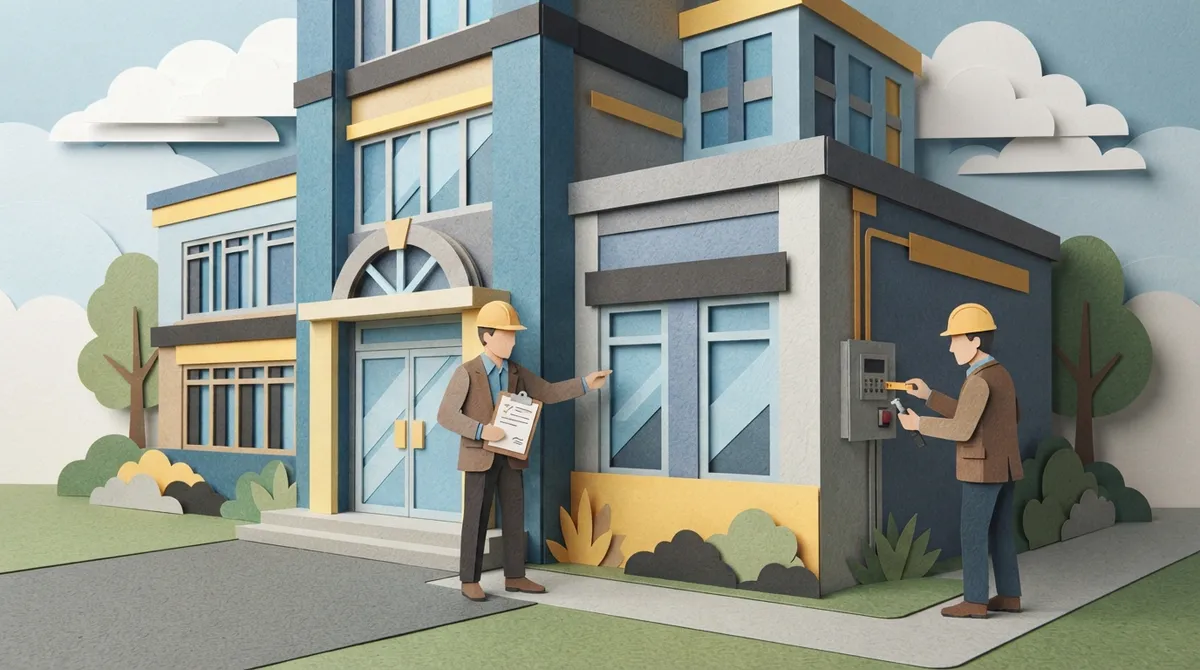
So what happens when the inspector arrives? Do not worry. It is a thorough process, but it is not scary. The inspection commonly looks at structural and electrical conditions. The professional documents any deficiencies they find.
Here is what you can usually expect:
- Structural review: Foundations, load-bearing elements, walls, roofs, balconies, and visible cracks or spalling.
- Electrical review: Service equipment, panels, wiring, grounding, and emergency lighting.
- Documentation: Photos, notes, and a written report of what was found.
- Recommendations: Clear next steps for any repairs.
Cracks are one of the most common worries for owners. If you want to understand what is normal and what is not, read Understanding Foundation Cracks and Hairline Cracks in Commercial Buildings. For a broader view of scope, see What Does a Commercial Building Inspection Really Cover?
How Technology Makes It Easier
Modern tools have changed the game. At O’Reilly Consultants, our team uses drones and 3D laser scanning to evaluate hard-to-reach areas. Rooftops, facades, and tall exteriors can be reviewed quickly and safely. That means faster estimates and more detailed reports with clear, actionable recommendations.
6. What Happens If Problems Are Found
Finding a deficiency does not mean your building fails forever. It simply means some work needs to happen. Most buildings have at least a few items to address, especially older ones.
If repairs need permits, the general path looks like this. You obtain the permits, complete the work, and pass final inspections. Then you submit updated documentation so the building can be approved. Keeping good records at every step helps a lot.
Here are some smart habits when repairs come up:
- Prioritize safety-critical items first.
- Get repair quotes early so you can plan your budget.
- Ask your inspector to explain each finding in plain language.
- Keep copies of permits, receipts, and final sign-offs.
Preparation also helps your inspection go smoothly. Take a look at How to Prepare for Commercial Building Inspections in 2026 for a handy checklist. Electrical items trip up many owners, so 14 Electrical Inspections Facts for Recertification (2026) is worth a read too.
7. Exemptions, Milestone Inspections, and Other Look-Alikes
Last but not least, let’s talk about what does not apply. Some buildings are exempt from recertification. In Miami-Dade County, exemptions include single-family homes, duplexes, and non-residential farm buildings. The county also lists certain small buildings with an occupant load of 10 or fewer and an area of 2,000 square feet or less. Exemptions are specific to each jurisdiction, so verify yours.
You may also hear about Florida’s milestone inspections for certain condominium and cooperative buildings. This is a related but separate process. Do not assume a milestone inspection replaces a local building recertification. Also, do not assume every commercial property falls under the same rules.
Here is a quick comparison to keep things straight:
| Item | Main Purpose | Who It Often Applies To |
|---|---|---|
| Building recertification | Confirms structural and electrical safety for continued use | Buildings reaching the local age trigger |
| Milestone inspection | State-required review for certain condo and co-op buildings | Qualifying condo and cooperative buildings |
| Certificate of occupancy | Approves a building for use at completion | New construction or major changes of use |
Still unsure which one you need? Milestone vs. Recertification: North Lauderdale Rules? explains the differences clearly. You can also check your property’s status using the Search Miami-Dade Building Recertification Cases tool.
Why Owners Choose O’Reilly Consultants
Every owner wants a smooth, low-stress experience. That is exactly why so many property owners across Broward and Miami-Dade Counties turn to O’Reilly Consultants. We are a small, specialized engineering team focused on building recertification and safety-focused inspections. Our assessments are designed to meet and exceed county requirements.
We guide you through every step. That starts with the county notice, then hiring a licensed professional, and finally submitting your documentation. We serve condo boards, HOA managers, apartment owners, commercial owners, and real estate investment firms. Our services include 10-, 25-, and 40-year recertification, electrical and illumination safety inspections, SIRS, PCA, and HOA reserve studies.
Our team is led by owner and qualifying architect Sherard O’Reilly. He brings deep experience in ASTM E2018 property condition assessments and meticulous building documentation. Construction Manager and Engineer Catalina Torres adds 27 years of civil engineering and construction management experience. Project Engineer Rafael Ojeda brings more than 16 years in environmental due diligence. He has completed over 1,000 Phase I Environmental Site Assessments, mostly across South Florida.
Curious what others say? See what our O’Reilly Consultants customers say on Google. For Miami-Dade rules straight from the source, visit the Miami-Dade County Recertification page.
Final Thoughts
Commercial building certification does not have to be stressful. Know your timeline, respect the 90-day deadline, hire qualified professionals, and plan repairs early. Do those four things, and you will be in great shape. Remember that every city has its own rules, so always confirm details with your local building department.
Ready to get started? Request a free quote today, or call us at (512) 567-1191 to talk with a friendly expert. We would love to help you protect your building, your people, and your peace of mind.
FAQs
Q: What is commercial building certification in the recertification world?
A: It is a required inspection and professional report showing an existing building is safe for continued use. It usually focuses on structural and electrical systems. It is different from voluntary green ratings like LEED.
Q: How long do I have to submit my report after getting a notice?
A: In Miami-Dade County, owners get 90 days from the date of notice to submit the required report. That clock moves fast, so it helps to hire a licensed professional right away. Always confirm your exact deadline with your local building department.
Q: Who can perform a building recertification inspection?
A: In Miami-Dade County, a Florida-registered architect or professional engineer must prepare the report. Buildings four stories or taller, and certain threshold buildings, may need separate structural and electrical professionals. Check local rules before you hire.
Q: Are any commercial buildings exempt from recertification?
A: Yes, some are. Miami-Dade County lists exemptions such as single-family homes, duplexes, and non-residential farm buildings. Certain small buildings with 10 or fewer occupants and 2,000 square feet or less may also qualify, but exemptions vary by jurisdiction.
Q: What happens if the inspection finds problems?
A: Do not panic! The report will list the deficiencies, and you will plan repairs. If permits are needed, you complete the work, pass final inspections, and submit updated documentation for approval.