

Key Takeaways
-
North Lauderdale buildings that are 3+ stories tall must complete a milestone inspection by age 30 (or 25 if coastal), triggered by certificate of occupancy date, with first deadlines between 2024-2025 depending on when the building reached 30 years.
-
Milestone inspections are state-required structural evaluations under Florida Statutes 553.899, distinct from local building recertification; your building may need to satisfy both processes simultaneously.
-
Inspections occur in two phases: phase one is visual examination of structural components, and phase two involves detailed testing only if substantial deterioration is found during phase one.
-
Associations must notify all unit owners within 14 days of receiving official notice from local enforcement, hire a licensed Florida architect or engineer, and submit final documentation to local building authorities.
-
Delaying milestone inspection scheduling risks missing available inspectors near deadlines, potential legal action, and inability to plan for special assessments if repairs are needed.
-
Building association covers inspection costs for common areas per governing documents; costs vary by building size and complexity, so obtaining detailed upfront quotes helps boards budget accurately.
If you own or manage a condo building in North Lauderdale, you’ve probably heard two big scary phrases lately: “milestone inspection” and “building recertification.” Maybe you’re wondering if they’re the same thing. Maybe you’re hoping one of them just goes away. We get it, and we’re here to make this simple, friendly, and stress-free. Grab a coffee, and let’s walk through this together.
At O’Reilly Consultants, we spend our days helping condo boards, HOA managers, and property owners across Broward and Miami-Dade Counties sort out exactly what their buildings need. A North Lauderdale milestone inspection is a big deal, but it doesn’t have to be a headache. This guide breaks down what it is, how it compares to local recertification, and what steps you need to take next.

What Exactly Is a North Lauderdale Milestone Inspection?
A milestone inspection is a statewide requirement created after the tragic Surfside building collapse. It applies to condominium and cooperative buildings that are three or more habitable stories tall. This rule comes straight from Florida Statutes section 553.899, and it’s designed to catch structural problems before they become dangerous.
During a milestone inspection, a Florida-licensed architect or engineer looks closely at your building’s load-bearing elements, primary structural members, and overall structural systems. They’re also checking on life safety concerns and figuring out if anything needs maintenance, repair, or replacement. Think of it as a deep structural check-up for your building, performed by someone with the training to spot trouble early.
Milestone Inspection vs. Building Recertification: What’s the Difference?
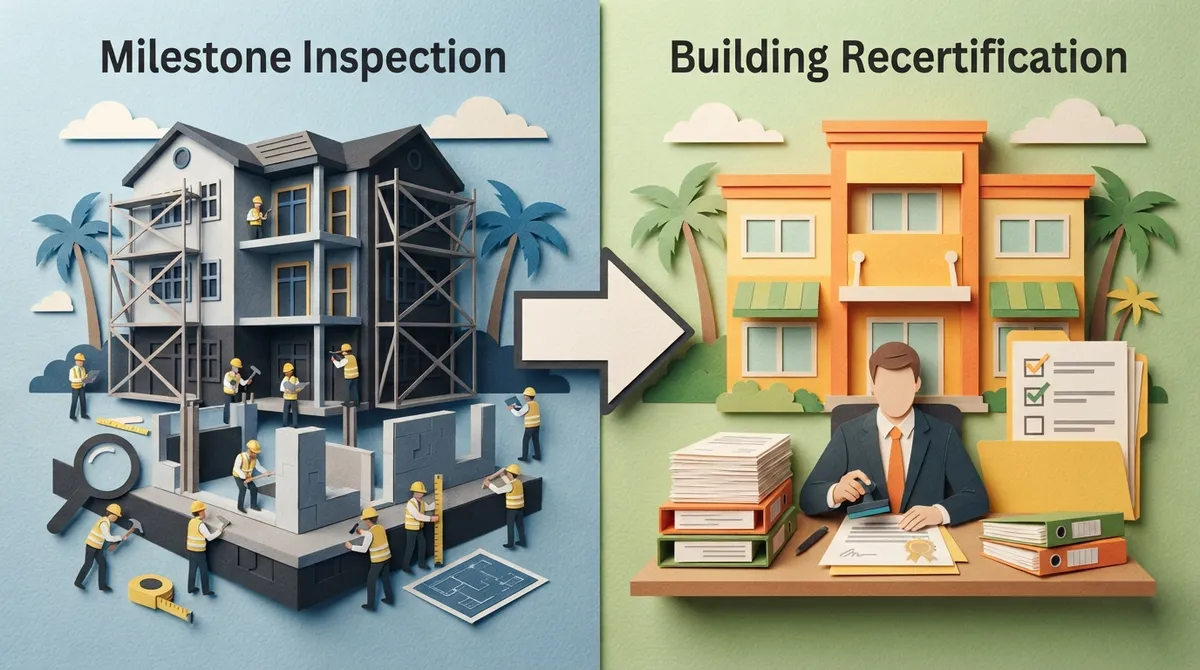
Here’s where things get a little confusing, but stick with us. A milestone inspection is a state law that applies specifically to qualifying condos and co-ops. Building recertification, on the other hand, is often a broader local process handled by county or city building departments, like Broward County or Miami-Dade County.
Your North Lauderdale building might need to satisfy both. That means you could be juggling a state milestone inspection alongside a separate local recertification requirement. It sounds like double the paperwork, but a good inspection partner can help you tackle both at once, saving you time and money.
| Feature | Milestone Inspection | Building Recertification |
|---|---|---|
| Governing Law | Florida Statutes 553.899 | County or city ordinances |
| Who It Applies To | Condos and co-ops, 3+ stories | Varies by jurisdiction and building type |
| Trigger Age | 30 years (or 25 in some coastal zones) | Often 40 years, then every 10 years |
| Who Performs It | Licensed Florida architect or engineer | Licensed Florida architect or engineer |
| Reporting | Report to association and local enforcement agency | Filed with county or city building department |
When Is a Milestone Inspection Due in North Lauderdale?
For most qualifying buildings, the first milestone inspection is due by December 31 of the year the building turns 30 years old. That age is measured from the date on the certificate of occupancy. After that first inspection, it repeats every 10 years.
But here’s an important twist. Local enforcement agencies can require an earlier 25-year inspection if local conditions justify it, including buildings near salt water. Given North Lauderdale’s proximity to South Florida’s coastal environment, it’s smart to check with local building officials to confirm which timeline applies to your property.
- Buildings that reached 30 years before July 1, 2022, had an initial deadline of December 31, 2024.
- Buildings reaching 30 years between July 1, 2022, and December 31, 2024, had an initial deadline of December 31, 2025.
- Coastal or salt-exposed buildings may face a 25-year trigger instead of 30.
- Always confirm your specific deadline with Broward County and City of North Lauderdale officials.
The Two Phases of a Milestone Inspection
Milestone inspections happen in stages, and understanding them helps you plan ahead financially and logistically.
Phase One: The Visual Check
Phase one is a visual examination of habitable and uninhabitable areas, plus major structural components. The inspector walks through your building, checking everything from parking garages to rooftop areas. If nothing concerning shows up, you may be done after phase one.
Phase Two: The Deeper Dive
If phase one uncovers substantial structural deterioration, phase two kicks in. This can involve testing, destructive investigation, or other detailed evaluation methods. It sounds intense, but it’s really just a more thorough way of confirming what repairs are needed and how urgent they are.
Our team at O’Reilly Consultants uses advanced tools like drones and 3D laser scanning to speed up both phases without sacrificing accuracy. This means less disruption for residents and faster, more detailed reports for your board.
Step-by-Step: What Your Association Needs to Do
- Confirm your building’s certificate-of-occupancy date and height to determine if you qualify.
- Wait for or request written notice from the local enforcement agency about your inspection deadline.
- Notify all unit owners within 14 days of receiving that official notice.
- Hire a Florida-licensed architect or engineer to perform the inspection.
- Complete phase one, and phase two if required.
- Document all findings and any completed repairs.
- Distribute the inspection report or summary to unit owners as required by law.
- Submit final documentation to the appropriate local building authority.
This process can feel overwhelming, especially for volunteer board members juggling full-time jobs. That’s exactly why so many North Lauderdale associations lean on experienced partners for guidance. Learn more about how to handle North Lauderdale building recertification the right way.
Who Pays for a Milestone Inspection?
The condominium or cooperative association is responsible for arranging the inspection and covering the costs tied to areas the association must maintain. This is usually spelled out in your governing documents, so it’s worth reviewing those before the process begins.
Costs vary depending on building size, age, and complexity. A small three-story building will cost less to inspect than a sprawling high-rise with multiple wings. Getting a detailed, transparent quote upfront helps your board budget properly and avoid surprises.
Why North Lauderdale Buildings Shouldn’t Wait
Waiting until the last minute is one of the biggest mistakes we see. Buildings that delay scheduling their milestone inspection often struggle to find available licensed engineers as deadlines approach. Worse, if phase two testing is needed, that adds extra time you may not have.
Here are a few reasons to get ahead of the process now:
- Avoid late fees and potential legal action from local enforcement agencies.
- Give your board time to plan for special assessments if repairs are needed.
- Keep unit owners informed early, reducing panic and confusion later.
- Protect your building’s resale value and insurability.
- Show potential buyers and lenders that your building is compliant and well-managed.
Real estate investment firms and property managers especially benefit from staying ahead of these deadlines. A completed, on-time recertification report can make or break a sale or refinance timeline. Our team has helped countless buildings avoid last-minute scrambles, and you can request a free quote today to get your timeline mapped out.
What Happens If Substantial Deterioration Is Found?
If your building’s phase one inspection reveals substantial structural deterioration, don’t panic. This simply means phase two testing is required to get a clearer picture. Your licensed architect or engineer will outline what repairs are needed and how urgent they are.
Depending on severity, your association may need to make immediate repairs, restrict access to certain areas, or develop a longer-term repair plan. Working with an experienced engineering team ensures you get clear, actionable next steps instead of vague warnings. This is where having a trusted partner like O’Reilly Consultants really pays off, since our reports include specific recommendations your board can act on right away.
Related Inspections Your Building May Also Need
Milestone inspections rarely exist in a vacuum. Many North Lauderdale buildings also need supporting assessments to fully satisfy state and local requirements. These include:
- Structural Integrity Reserve Studies (SIRS), which help associations plan long-term funding for major repairs.
- Electrical safety inspections, covering wiring, panels, and life-safety systems throughout the building.
- Property Condition Assessments (PCA), useful for buyers, sellers, and lenders evaluating overall building health.
- HOA reserve studies, which help homeowners associations plan and budget for future capital expenses.
If your building is also facing SIRS requirements, check out our detailed breakdown of 14 key facts about North Lauderdale SIRS in 2026. And if electrical systems are on your radar too, our North Lauderdale electrical safety inspections guide walks you through what to expect.
Why Choose O’Reilly Consultants for Your Milestone Inspection
We’re a small, specialized engineering team, and that’s actually our biggest strength. We know Broward and Miami-Dade Counties inside and out, and we focus exclusively on building recertification and safety-focused inspections. This means you’re not just another number on someone’s massive client list.
Our team is led by owner and qualifying architect Sherard O’Reilly, who brings deep hands-on experience in property condition assessments and meticulous building documentation. We also have Construction Manager and Engineer Catalina Torres, who brings 27 years of civil engineering and construction management experience to every project. Rounding out the team is Project Engineer Rafael Ojeda, who has completed over 1,000 environmental site assessments across South Florida.
We use drones and 3D laser scanning to give your building a thorough, accurate evaluation without unnecessary delays or disruptions. Our reports are clear, detailed, and packed with actionable recommendations your board can actually use. Want to see what other North Lauderdale property owners think of working with us? You can visit us on Google — O’Reilly Consultants to read real reviews from real clients.
For a broader look at how the entire recertification process works across the region, check out our guide on 8 key steps in the building recertification process. And if you’re comparing inspector qualifications, our article on certified vs. general inspectors can help you make the right hiring decision.
Confirming Requirements With Local Officials
Because milestone inspections and local recertification rules can overlap, it’s always smart to double-check requirements directly with your local building department. Miami-Dade County, for example, offers helpful public resources through its Miami-Dade County Recertification page, along with a searchable database at Search Miami-Dade Building Recertification Cases. While North Lauderdale falls under Broward County, these resources are still useful for understanding how neighboring jurisdictions handle similar requirements.
Florida’s official statutes are also a great resource if you want to read the actual legal language yourself. You can review the full text of milestone inspection requirements through the 2026 Florida Statutes on Online Sunshine.
Bringing It All Together
Milestone inspections and building recertification aren’t identical twins, but they’re definitely related cousins. Both exist to keep your building safe, your residents protected, and your property value intact. The key is understanding which requirements apply to your specific building and tackling them proactively instead of reactively.
If you’re feeling overwhelmed by deadlines, paperwork, or simply figuring out where to start, you’re not alone. Countless condo boards and property managers across North Lauderdale have felt exactly the same way before finding the right team to guide them through it.
Ready to get your milestone inspection scheduled and check this off your to-do list? Reach out today to request a free quote, or simply call us at (512) 567-1191 to speak with our friendly team. We’re here to make this process as smooth and stress-free as possible, one building at a time.
FAQs
Q: Does a condominium in North Lauderdale need a milestone inspection?
A: Yes, if your building is a condo or co-op that’s three or more habitable stories tall, you likely need one under Florida law. The best first step is confirming your building’s certificate-of-occupancy date so we can figure out exactly which deadline applies to you.
Q: What age must a North Lauderdale building be before a milestone inspection is required?
A: Most buildings need their first milestone inspection by the time they turn 30 years old, based on the certificate of occupancy date. That said, some coastal or salt-exposed buildings may face an earlier 25-year trigger, so it’s always worth checking with local officials.
Q: What is the difference between a Florida milestone inspection and Broward County building recertification?
A: Milestone inspections are a statewide requirement for qualifying condos and co-ops under Florida law, while building recertification is often a separate local process managed by county or city officials. Your North Lauderdale building might actually need to satisfy both, which is exactly why working with an experienced team makes life so much easier.
Q: Who is qualified to perform a milestone inspection in North Lauderdale?
A: Only a Florida-licensed architect or engineer can legally perform a milestone inspection. Our team at O’Reilly Consultants includes licensed professionals with decades of combined experience, so you’re always in qualified, capable hands.
Q: What happens if a building fails a milestone inspection or has substantial structural deterioration?
A: If substantial deterioration is found during phase one, your building moves into phase two for more detailed testing and evaluation. It sounds scary, but it simply means getting a clearer, more accurate picture so repairs can be planned and completed properly, and we’re right here to guide you through every step.