
Key Takeaways
-
Fort Lauderdale has two separate recertification systems with different portals, fees, and requirements: the city’s LauderBuild program ($375 fee) and Broward County’s 40 Year Report ($350 fee), and some properties may need to satisfy both.
-
Buildings three stories or higher that are 25-40 years old, including condos, commercial properties, and HOA-managed complexes, must undergo recertification every 10 years after initial approval.
-
Missing recertification deadlines can result in fines, safety risks, and for real estate investors, delayed transactions and reduced property value, making proactive planning essential.
-
Condo boards and HOAs typically have only 90 days from notification to complete inspections, making it critical to hire licensed professionals early and use advanced technologies like drones or 3D laser scanning to meet tight deadlines.
-
Required documents include digitally signed and sealed structural and electrical inspection reports, proof of completed repairs, and building classification records; missing even one document will bounce your application back.
-
If your building fails inspection, you’ll receive a detailed repair list with a completion timeline, followed by follow-up inspections before resubmission—plan extra time and budget accordingly for these contingencies.
If you own or manage a building in Fort Lauderdale, you’ve probably heard the term “recertification” tossed around like it’s no big deal. But here’s the truth: it’s a very big deal. Missing a deadline can mean fines, safety risks, and a whole lot of stress you don’t need. The good news? Once you understand how Fort Lauderdale building recertification actually works, the process feels a lot less scary and a lot more manageable.
Here’s where things get interesting. Fort Lauderdale has its own city-run inspection program, but Broward County also runs a separate 40 Year Building Safety Report process. These two systems sound similar, but they have different fees, different portals, and slightly different rules. Whether you’re a condo board member, a commercial property owner, or an HOA manager juggling deadlines, knowing the difference between these two paths can save you time, money, and a few gray hairs.
In this article, we’ll break down exactly how Fort Lauderdale’s program compares to Broward County’s countywide process. We’ll walk through costs, deadlines, required documents, and what happens if your building doesn’t pass. By the end, you’ll know exactly which process applies to your property and what steps come next. And if you’d rather skip the research and just get it handled, request a free quote from our team anytime.

What Is Fort Lauderdale Building Recertification, Exactly?
Fort Lauderdale building recertification is a safety inspection process for older buildings within city limits. It confirms that a structure is still safe for people to live and work in. The city manages this through its Building Safety Inspection Program, which requires digitally signed and sealed reports submitted through the LauderBuild portal.
This isn’t just red tape. Buildings age, materials wear down, and electrical systems can become outdated or unsafe over time. Recertification catches problems before they become dangerous. Think of it as a wellness checkup for your building, except instead of a stethoscope, inspectors use structural assessments and electrical testing.
For a deeper look at how this fits into the bigger picture, check out What Is Building Recertification and Why Does It Matter? It’s a great starting point if you’re new to all this.
Fort Lauderdale City Program vs. Broward County Program: The Key Differences
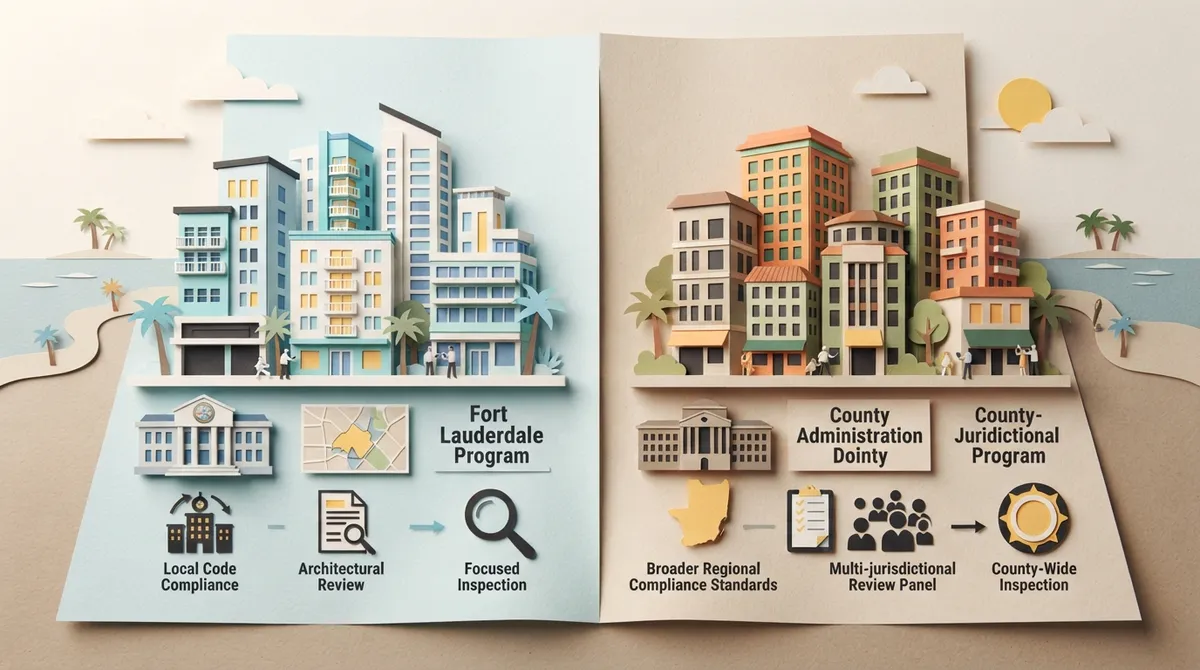
This is where a lot of building owners get confused, and honestly, we don’t blame them. Let’s clear things up with a side-by-side comparison.
| Feature | Fort Lauderdale City Program | Broward County 40 Year Program |
|---|---|---|
| Submission Portal | LauderBuild | County building division |
| Review Fee | $375 at submittal | $350 at submittal |
| Report Type | Digitally signed and sealed | Original signatures required |
| Inspection Focus | Structural and electrical | Structural and electrical packets |
| Recurring Cycle | Every 10 years after initial recert | Every 10 years after initial recert |
| Who Prepares It | Licensed Florida professional | Florida-registered architect or engineer |
Notice how similar these two programs are, but also how the details matter. A missed detail, like submitting to the wrong portal or missing a signature requirement, can delay your approval. That’s why working with a team that understands both systems, like O’Reilly Consultants, makes such a difference.
Why Two Separate Processes Exist
Fort Lauderdale created its own program to add an extra layer of local oversight on top of the county’s rules. Some buildings fall under city jurisdiction, others under county jurisdiction, and some technically fall under both. It really depends on your building’s location, age, and classification.
If you’re unsure which category your property falls into, it’s worth double-checking before you start the paperwork. A quick call can save you from filing the wrong forms entirely.
Which Buildings Actually Need Recertification?
Not every building in Fort Lauderdale needs to go through this process. Generally speaking, recertification applies to:
- Buildings that are three stories or higher
- Structures that have reached a specific age threshold, often 25, 30, or 40 years old depending on the jurisdiction
- Commercial properties like office towers, hotels, and shopping plazas
- Condominiums and multi-family residential buildings
- Certain HOA-managed complexes with qualifying structures
If your property fits any of these categories, it’s time to start planning. Waiting until the last minute rarely ends well, especially with licensed inspectors often booked out weeks in advance.
Step-by-Step: How the Recertification Process Works
Whether you’re dealing with the city or the county, the general process follows a similar pattern. Here’s what to expect:
- Receive your notice. The city or county will notify you that your building is due for recertification.
- Hire a licensed professional. You’ll need a Florida-registered architect or engineer to perform the inspection.
- Schedule the inspection. This includes both structural and electrical assessments of your property.
- Review the findings. Your inspector will document any deficiencies that need repair.
- Complete required repairs. If issues are found, they must be fixed before final approval.
- Submit your report. Reports go through LauderBuild for city submissions or directly to the county for the 40 Year program.
- Pay the review fee. Expect $375 for city submissions or $350 for county submissions.
- Receive final approval. Once approved, your building is compliant until the next cycle.
For a more detailed breakdown of each stage, our article on 8 Key Steps in the Building Recertification Process (2026) walks through everything in plain language.
Documents You’ll Need to Gather
Paperwork can feel overwhelming, but having everything ready ahead of time speeds things up tremendously. Here’s a quick checklist:
- Structural inspection report signed by a licensed engineer or architect
- Electrical safety inspection report
- Digitally signed and sealed documents for LauderBuild submissions
- Original signatures for Broward County’s 40 Year Report
- Proof of any completed repairs, if applicable
- Building age and classification records
Missing even one of these can bounce your application back, which means starting the clock over. That’s frustrating for everyone involved, especially condo boards trying to keep residents informed.
What Happens If Your Building Doesn’t Pass?
Let’s talk about the part nobody wants to think about: failing recertification. If your inspection uncovers structural or electrical deficiencies, don’t panic. It happens more often than you’d think, especially with older buildings.
Here’s what typically happens next:
- You’ll receive a detailed list of required repairs
- A timeline will be set for completing the work
- Follow-up inspections confirm repairs were done correctly
- Your report gets resubmitted once everything checks out
It’s not the end of the world, but it does mean extra time and cost. This is exactly why many property owners choose experienced inspectors from the start. Catching issues early during a proactive assessment, like a commercial building inspection, can prevent surprises down the road.
Why Commercial Property Owners Should Pay Extra Attention
If you own a shopping plaza, office tower, or hotel over three stories, you’re likely on the radar for both city and county recertification requirements. These buildings often have more complex electrical systems and larger structural footprints, which means inspections take longer and repairs can be pricier.
Planning ahead is your best friend here. Building in extra time for inspections, repairs, and resubmissions keeps your tenants happy and your insurance company off your back. Learn more about what these deeper inspections actually cover before your next deadline sneaks up on you.
Condo Boards and HOAs: Staying Ahead of the 90-Day Clock
If you’re on a condo board or managing an HOA, you already know the pressure of tight deadlines. Many associations face a 90-day window to complete inspections once notified. That’s not a lot of time, especially if repairs are needed.
Using advanced tools like drones and 3D laser scanning can speed things up significantly. These technologies let inspectors capture detailed structural data quickly, without needing scaffolding or lengthy site visits. It’s a smarter, faster way to meet tight deadlines without cutting corners on accuracy.
For associations juggling multiple compliance requirements at once, it also helps to understand related processes like structural integrity reserve studies and HOA reserve planning. These all work together to keep your building safe and your budget on track.
Real Estate Investors: Protecting Property Value
If you own or manage aging properties across South Florida, recertification isn’t just a legal box to check. It directly affects your property’s market value, insurability, and ability to close a sale or refinance smoothly. Buyers and lenders want to see clean recertification records before they commit.
Delayed or incomplete reports can hold up transactions for months. That’s money left on the table. Staying ahead of your recertification schedule protects your investment and keeps deals moving without unnecessary delays.
How O’Reilly Consultants Makes This Process Easier
At O’Reilly Consultants, we’ve built our reputation on making building recertification feel less like a burden and more like a straightforward checklist. Our team serves Broward and Miami-Dade Counties, and we specialize in navigating both city and county requirements without the guesswork.
We’re led by owner and qualifying architect Sherard O’Reilly, whose background in ASTM E2018 property condition assessments brings a sharp, detail-oriented approach to every project. Construction Manager and Engineer Catalina Torres brings 27 years of civil engineering experience to the table, while Project Engineer Rafael Ojeda has completed over 1,000 environmental site assessments across South Florida.
Together, our team handles everything from structural and electrical inspections to 40 year recertification reports, property condition assessments, and HOA reserve studies. We use drones and 3D laser scanning to speed up inspections while keeping accuracy high. Curious what our clients think? You can visit us on Google — O’Reilly Consultants to read real reviews from property owners just like you.
Services That Go Beyond Basic Recertification
Building safety isn’t just one inspection and done. Depending on your property type, you might also need:
- Electrical safety inspections for aging wiring systems
- Structural Integrity Reserve Studies (SIRS) for condo associations
- Property Condition Assessments (PCA) for commercial transactions
- HOA reserve studies to plan future repairs and budgeting
Bundling these services with your recertification inspection often saves time and money compared to scheduling them separately. It also gives you a clearer, more complete picture of your building’s overall health.
Broward County vs. Fort Lauderdale: Which One Applies to You?
Here’s a simple way to think about it. If your building sits within Fort Lauderdale city limits, you’ll likely go through the LauderBuild submission process. If your building falls under Broward County’s jurisdiction but outside city-specific rules, the 40 Year Building Safety Report applies instead.
Some properties may actually need to satisfy both sets of requirements, depending on their classification and location. This is exactly why so many owners choose to work with professionals who understand both systems inside and out. You can learn more about Miami-Dade’s parallel process through the Miami-Dade County Recertification program, or search existing cases using the Miami-Dade Building Recertification Case Search tool.
Final Thoughts: Don’t Wait Until the Deadline Sneaks Up
Fort Lauderdale building recertification doesn’t have to be stressful. Once you understand the difference between city and county requirements, gather your documents, and hire the right licensed professional, the process becomes much more manageable. Whether you’re managing a condo, running a commercial property, or overseeing an HOA, staying proactive is always easier than scrambling at the last minute.
Our team at O’Reilly Consultants is here to make this process as smooth as possible, from your first inspection notice all the way through final approval. We combine local expertise with advanced technology to keep your building safe, compliant, and ready for whatever comes next. Ready to get started? Request a free quote today, or call us at (512) 567-1191 to speak with our team directly. We’re happy to answer your questions and help you figure out exactly what your building needs.
FAQs
Q: What buildings in Fort Lauderdale need recertification?
A: Generally, buildings three stories or higher that have reached a certain age, often 25, 30, or 40 years, need recertification. This includes condos, commercial buildings, and some HOA-managed properties. If you’re not sure whether your building qualifies, our team can help you check!
Q: How often is building recertification required in Fort Lauderdale?
A: After your building’s initial recertification, both the city and county require a repeat inspection every 10 years. It sounds like a lot to keep track of, but with a good reminder system (or a helpful inspection team), it’s totally manageable.
Q: What is the difference between Fort Lauderdale and Broward County recertification requirements?
A: Fort Lauderdale’s program uses the LauderBuild portal and requires digitally signed reports, while Broward County’s 40 Year program requires original signatures and a slightly different fee structure. Depending on where your building sits, you might need to follow one or both processes.
Q: How much does Fort Lauderdale building recertification cost?
A: The city charges a $375 review fee at submittal, while Broward County’s 40 Year Report requires a $350 fee. Keep in mind these are just the review fees; actual inspection and repair costs will vary based on your building’s condition.
Q: Who can perform a Fort Lauderdale building safety inspection?
A: Only a licensed Florida architect or engineer can complete these inspections and sign off on the reports. Choosing an experienced team, like ours at O’Reilly Consultants, makes the whole process feel a lot less overwhelming.