
Key Takeaways
-
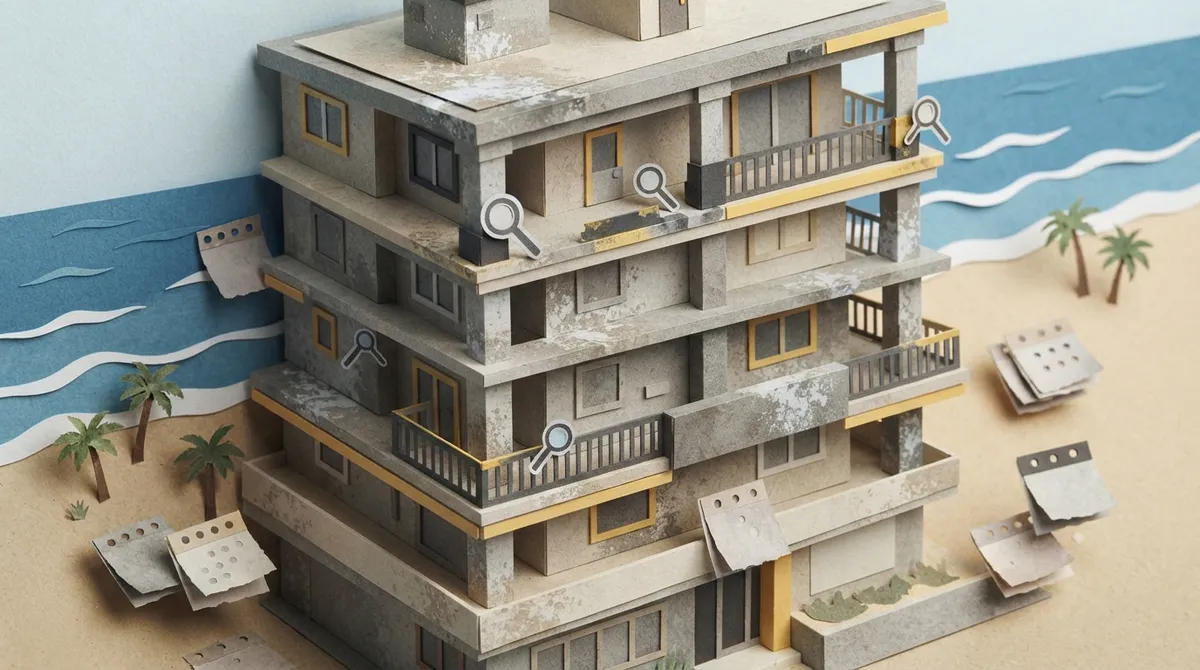
Buildings in Deerfield Beach must undergo recertification at 25 years old, then every 10 years after, with 90 days to submit reports once notice is received from the building department.
-
Only licensed Florida professional engineers or architects can legally perform and sign recertification reports, ensuring accountability and proper expertise for structural and electrical safety assessments.
-
Buildings 3,500+ sq ft and 3+ stories tall, including condos, apartments, and commercial properties, require recertification; single-family homes and duplexes are exempt from this requirement.
-
Skipping recertification deadlines can result in increasing fines, property liens, insurance difficulties, refinancing issues, and reduced resale value or delayed closings.
-
Coastal locations like Deerfield Beach require inspectors familiar with salt air, humidity, and storm exposure damage patterns that generic inspectors might overlook.
-
Gathering permit history, maintenance records, and scheduling inspections early helps avoid last-minute stress and allows time to budget for necessary repairs flagged during inspection.
If you own or manage a building in Deerfield Beach, you’ve probably heard whispers about recertification deadlines. Maybe a neighbor mentioned it. Maybe your property manager sent a worried email. Either way, you’re here because you want answers, and we’re happy to give them to you in plain, friendly language.
Deerfield Beach building recertification is the process that confirms an older building is still safe for people to live and work in. Think of it like a wellness checkup, but for your building’s bones and wiring instead of your blood pressure. It’s required by local rules, and it’s honestly a good thing for everyone involved, including you as the owner.
In this guide, we’ll walk through exactly what triggers recertification, who needs it, what happens during an inspection, and how to stay ahead of deadlines without losing sleep. Whether you’re on a condo board, managing an HOA, running a commercial property, or overseeing an apartment complex, this article was written with you in mind. Let’s get into it together.

What Is Deerfield Beach Building Recertification, Really?
At its core, building recertification is a safety check required for certain aging buildings. A licensed Florida engineer or architect inspects the property and certifies it’s still structurally and electrically sound for continued use.
This isn’t a random rule someone made up. It came from real concerns about aging infrastructure across South Florida. Buildings settle, wiring wears down, and materials degrade over time, especially in our humid, salty coastal air. Recertification catches problems before they become emergencies.
The process typically looks at:
- Original building plans and permit history
- Past repairs and maintenance records
- Visible structural conditions like cracks, corrosion, or water damage
- Electrical panels, wiring, and safety systems
- Overall building stability and code compliance
If you want a deeper breakdown of what these reports actually cover, our article on what a commercial building inspection really covers is a great next read.
Which Buildings Need Recertification in Deerfield Beach?
Not every property needs to go through this process, which is a relief for a lot of homeowners. Here’s a quick rundown of who’s affected and who gets a pass.
Buildings That Typically Require Recertification
- Buildings that are 3,500 square feet or larger
- Buildings that are 3 stories or more in height
- Condominiums and multifamily residential buildings meeting these thresholds
- Commercial properties like offices, retail plazas, and hotels
- Older buildings approaching or past the 25-year mark
Buildings That Are Typically Exempt
- Single-family homes
- Duplexes
- Fee-simple townhouses
- Government buildings
- School buildings under county control
- Structures under 3,500 square feet
If your building falls into that first category, it’s also likely subject to a structural integrity reserve study, or SIRS. We break this down further in our piece on Deerfield Beach Structural Integrity Reserve Studies (SIRS), which pairs nicely with recertification planning.
When Does the Clock Start Ticking?
Timing is where things get a little confusing, so let’s clear it up. In Deerfield Beach and much of Broward County, the first recertification inspection is commonly required once a building reaches 25 years of age. After that first inspection, follow-up inspections are typically required every 10 years.
It’s worth noting that Miami-Dade County, which sits right next door and often gets mentioned in the same breath, uses slightly different numbers. Miami-Dade requires recertification at 30 years for inland buildings and 25 years for coastal buildings, then every 10 years after that. If your properties span both counties, it pays to know which rule applies where. You can review the official details directly through Miami-Dade County Recertification guidance.
Here’s a simple comparison to keep things straight:
| Requirement | Deerfield Beach / Broward Area | Miami-Dade County |
|---|---|---|
| Initial Inspection Age | 25 years | 25 years (coastal) / 30 years (inland) |
| Follow-Up Interval | Every 10 years | Every 10 years |
| Submission Window After Notice | Typically 90 days | 90 days |
| Minimum Building Size | 3,500 sq ft, 3+ stories | Varies by municipality |
The 90-Day Deadline: What You Need to Know
Once your building department sends official notice that recertification is due, the countdown begins. Owners generally have 90 days from that notice to submit the completed report. That might sound like plenty of time, but between scheduling inspections, gathering paperwork, and coordinating with a licensed professional, those days disappear fast.
This is exactly why HOA property managers and condo boards often reach out to us well before the notice even arrives. Getting ahead of the process means:
- Avoiding late fees and potential fines
- Reducing stress on your board or management team
- Giving yourself time to plan for any necessary repairs
- Keeping residents informed and confident in building safety
Missing this window can create real headaches, including code violations and strained relationships with residents or tenants. If you’re navigating this timeline right now, our team at O’Reilly Consultants can help you map out a schedule that keeps you comfortably ahead of deadlines.
Who Can Actually Perform a Recertification Inspection?
This isn’t a job for just anyone with a clipboard. Florida law requires that recertification reports be prepared and signed by a licensed professional engineer or architect. This protects you as the property owner, because it means the person certifying your building’s safety has real training and legal accountability behind their signature.
When choosing who to work with, look for:
- Active Florida licensure as an engineer or architect
- Direct experience with recertification reports specifically
- Familiarity with Broward and Miami-Dade County requirements
- Modern inspection tools like drones and 3D laser scanning
- A track record of clear, well-documented reports
We talk more about this decision in our guide on how to choose licensed building inspectors for recertification, which is worth a read before you sign any contracts.
How O’Reilly Consultants Makes Recertification Easier
We’ll be honest with you: recertification can feel overwhelming, especially if this is your first time going through it. That’s where we come in. Our small but highly specialized engineering team focuses exclusively on building recertification and safety inspections across Broward and Miami-Dade Counties.
Led by owner and qualifying architect Sherard O’Reilly, our team brings serious expertise to every project. Sherard’s background in ASTM E2018 property condition assessments means he knows how to document everything from facades and fire systems to utilities and site conditions with precision.
We’re also proud to work alongside Construction Manager and Engineer Catalina Torres, who brings 27 years of civil engineering and construction management experience to every inspection. And our Project Engineer, Rafael Ojeda, has completed over 1,000 Phase I Environmental Site Assessments throughout South Florida, giving us deep environmental due diligence expertise most firms simply don’t have.
Here’s what sets our approach apart:
- Advanced drone technology for hard-to-reach structural areas
- 3D laser scanning for precise, detailed measurements
- Fast turnaround on estimates and reports
- Clear, actionable recommendations you can actually understand
- Guidance through the entire process, from notice to submission
We serve a wide range of property types, including high-rise buildings, apartment complexes, offices, industrial sites, and condominiums. We also offer related services like electrical inspections for building recertification, property condition assessments, and HOA reserve studies, so you get one trusted partner for all your compliance needs.
What Happens If You Skip or Delay Recertification?
We won’t sugarcoat this part. Ignoring a recertification notice can lead to serious consequences, and none of them are fun.
Common Risks of Delaying Recertification
- Fines that increase the longer the building remains non-compliant
- Potential liens placed on the property
- Difficulty securing insurance or refinancing
- Lower resale value or delayed closings
- Increased liability if a structural or electrical issue causes harm
For real estate investment firms and commercial property owners, this last point is especially important. Buyers and lenders increasingly ask for recertification documentation upfront. Having your reports in order can be the difference between a smooth sale and a stalled deal. Our article on 40-year building recertification and what Florida owners must know covers this in more depth.
Recertification vs. Milestone Inspection: What’s the Difference?
People often mix these two terms up, so let’s clear the air. A milestone inspection is a related but distinct process, often tied specifically to condominium structural requirements following statewide safety reforms. Building recertification is the broader, longer-standing local requirement covering structural and electrical safety for qualifying buildings.
Both processes share similar goals: confirming your building is safe and catching problems early. Depending on your property type and location, you may need one, the other, or both. This is another area where working with an experienced team really pays off, since navigating overlapping requirements alone can get confusing fast.
Steps to Prepare for Your Building’s Recertification
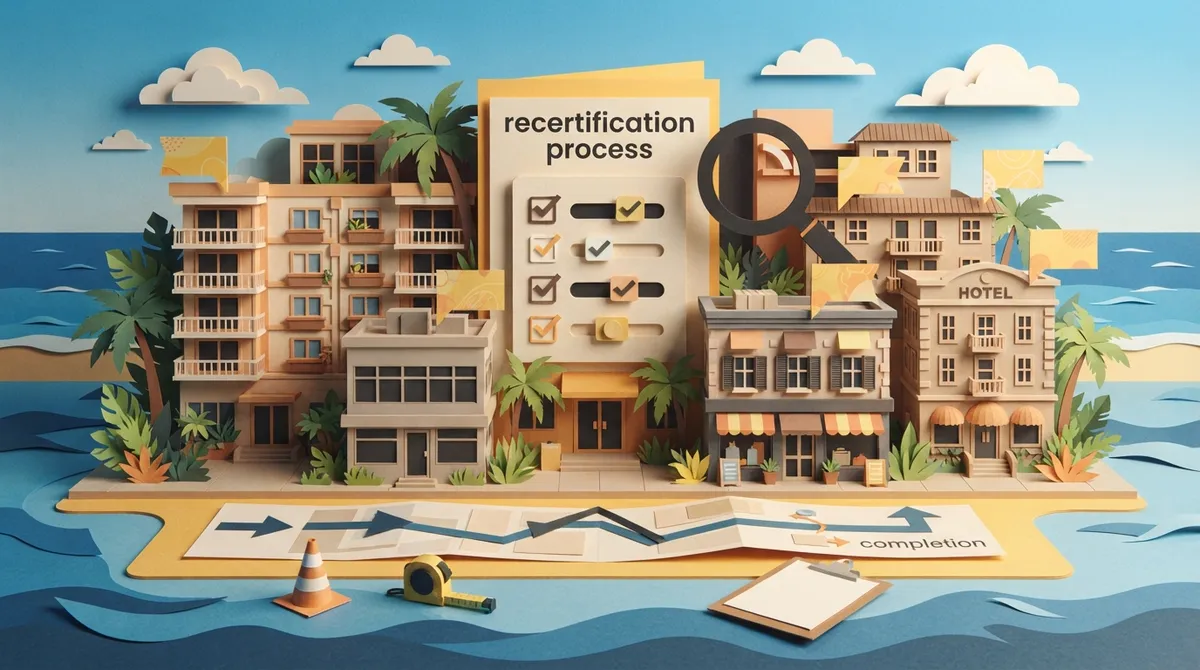
Feeling ready to tackle this? Here’s a simple roadmap to follow.
- Confirm your building’s age and check if it meets the size and height thresholds
- Review any official notice from the county or city building department
- Gather existing permit history, past inspection reports, and maintenance records
- Hire a licensed Florida engineer or architect experienced in recertification
- Schedule the structural and electrical inspection promptly
- Review the draft report and address any flagged repair needs
- Submit the completed report within the 90-day window
- Plan ahead for the next 10-year inspection cycle
Following these steps in order helps you avoid last-minute scrambling. It also gives your board or ownership group time to budget for any repairs the inspection uncovers.
Why Local Expertise Matters
Deerfield Beach sits close to the coast, which means buildings here face unique challenges from salt air, humidity, and storm exposure. A team that understands these local conditions can spot issues that a generic inspector might miss.
That’s part of why so many condo boards, HOA managers, and commercial owners in our area trust O’Reilly Consultants for their recertification needs. We know this coastline, we know these buildings, and we know exactly what county officials expect to see in a compliant report. You can also search official case records directly through the Miami-Dade Building Recertification case search if your property falls under that county’s jurisdiction.
We genuinely enjoy hearing from happy clients, and you can see what our O’Reilly Consultants customers say on Google by checking out our profile. It’s one more way we build trust with the community we serve every single day.
Bringing It All Together
Deerfield Beach building recertification doesn’t have to feel like a scary countdown clock. With the right team by your side, it becomes a manageable, even reassuring, part of responsible property ownership. You’re not just checking a box, you’re protecting the people who live in, work in, and visit your building every day.
Whether you’re a condo board racing toward a 90-day deadline, an HOA manager juggling multiple properties, or a commercial owner planning ahead for next year, we’re here to make this process feel simple and stress-free. Our team combines decades of engineering experience with modern tools like drones and 3D scanning to deliver fast, accurate, and thorough results every time.
Ready to get started or just want to ask a few questions? Request a free quote today, or give us a call directly at (512) 567-1191. We’re looking forward to helping keep your Deerfield Beach building safe, compliant, and ready for whatever comes next.
FAQs
Q: What buildings in Deerfield Beach need recertification?
A: Generally, buildings that are 3,500 square feet or larger and at least 3 stories tall fall under this requirement. This usually includes condos, apartments, offices, and commercial properties, while single-family homes and duplexes are typically exempt.
Q: When is a building in Deerfield Beach required to be recertified?
A: Most buildings need their first recertification inspection around the 25-year mark. After that, follow-up inspections are generally required every 10 years, so it’s worth marking your calendar early.
Q: Who can perform a building recertification inspection?
A: Only a licensed Florida professional engineer or architect can prepare and sign a recertification report. This ensures the person certifying your building’s safety has proper training and accountability behind their work.
Q: How long do owners have to submit reports after receiving notice?
A: Owners typically have 90 days from the date of official notice to submit a completed recertification report. That window fills up fast once you factor in scheduling and paperwork, so early planning really helps.
Q: Are single-family homes exempt from building recertification?
A: Yes, single-family homes and duplexes are generally exempt from this process. The requirement mainly targets larger multifamily, commercial, and mixed-use buildings that meet specific size and height thresholds.