

Key Takeaways
-
PCAs follow ASTM E2018-24 standards and project repair/replacement costs over 10 years, enabling accurate capital planning and reserve budgeting for condo boards and property owners.
-
Hallandale Beach's coastal environment causes accelerated building deterioration including moisture intrusion, concrete spalling, rebar corrosion, and balcony failures—making thorough PCAs critical for South Florida properties.
-
A PCA is a proactive planning tool triggered by loans, acquisitions, or capital planning, while building inspections are mandatory age-based compliance requirements; most buildings need both at different times.
-
PCAs should be conducted before recertification deadlines to identify deficiencies early, allowing owners time to make repairs proactively rather than scrambling under regulatory pressure.
-
Choose PCA providers with ASTM E2018 expertise, licensed engineers/architects, South Florida coastal experience, and advanced technology like drones and 3D imaging for accurate high-rise and large property assessments.
-
Common owner mistakes include waiting until problems are visible, hiring generalist inspectors instead of ASTM-certified firms, and ignoring the 10-year capital projection in favor of immediate repair lists.
If you own or manage a building in Hallandale Beach, you’ve probably heard both terms thrown around: Property Condition Assessment (PCA) and building inspection. They sound similar, right? But they serve very different purposes — and choosing the wrong one at the wrong time can cost you serious time and money. Whether you’re a condo board member, a commercial property owner, or a real estate investment firm, understanding the difference is genuinely useful. Let’s break it all down in a way that actually makes sense, so you can move forward with confidence and keep your building safe, compliant, and well-planned for the future.
What Is a Hallandale Beach Property Condition Assessment (PCA)?
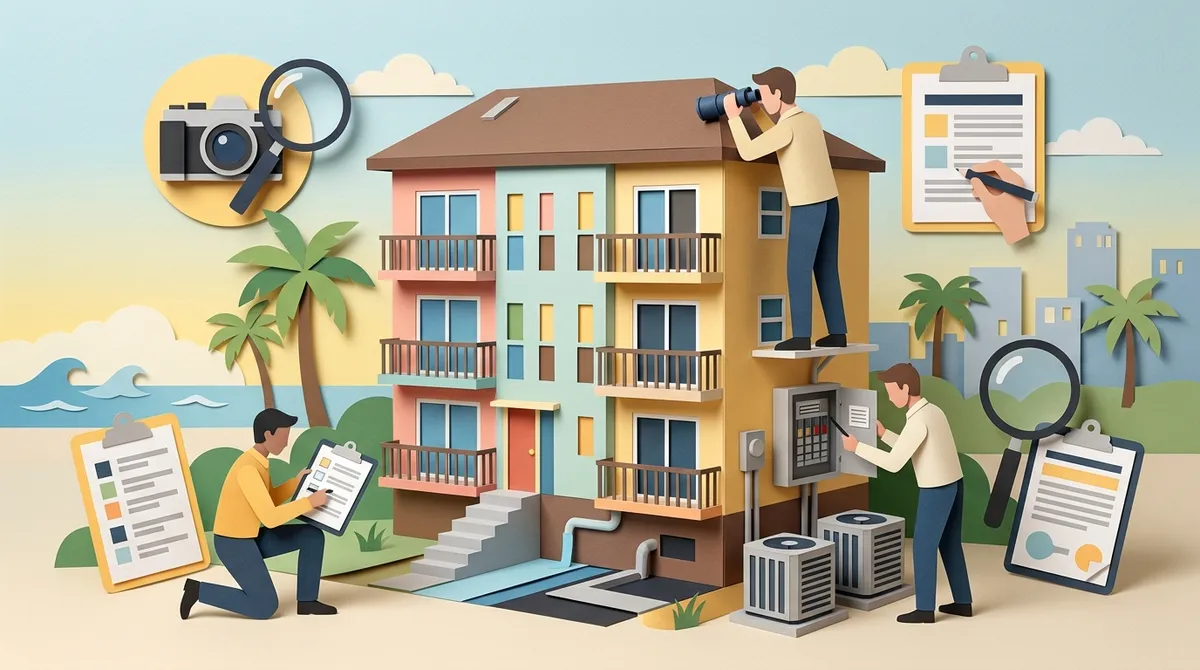
A Hallandale Beach Property Condition Assessment (PCA) is a detailed evaluation of a building’s physical condition. Think of it as a full health checkup for your property. It covers everything from the structure and roof to HVAC, plumbing, electrical systems, site features, life safety systems, and accessibility items.
PCAs are typically prepared following ASTM E2018, the industry-recognized standard for baseline property condition assessments. The current version, ASTM E2018-24, is widely referenced by engineering firms and lenders alike. The process includes a walk-through inspection, document review, interviews with building staff, and a written report with observed deficiencies and repair cost estimates.
One of the most valuable features of a PCA is its 10-year capital planning horizon. This means the report doesn’t just tell you what’s broken today — it projects future repair and replacement costs over the next decade. For condo boards and apartment owners, that kind of forward-looking information is priceless for budgeting and reserve planning. You can learn more about related planning tools like the Hallandale Beach Structural Integrity Reserve Study (SIRS) to see how these assessments work together.

What Is a Building Inspection in Hallandale Beach?
A building inspection is a targeted evaluation of a building’s systems and structure, typically required for regulatory or recertification compliance. In Broward County, buildings that reach certain age thresholds are required to undergo recertification inspections — often called 40-year recertifications or periodic structural and electrical safety reviews.
These inspections are mandated by local authorities to confirm that a building meets current structural, electrical, and safety codes. They are not optional — missing a deadline can result in fines, legal exposure, or even building closure orders. If you want to understand exactly what these inspections cover, check out what a commercial building inspection really covers.
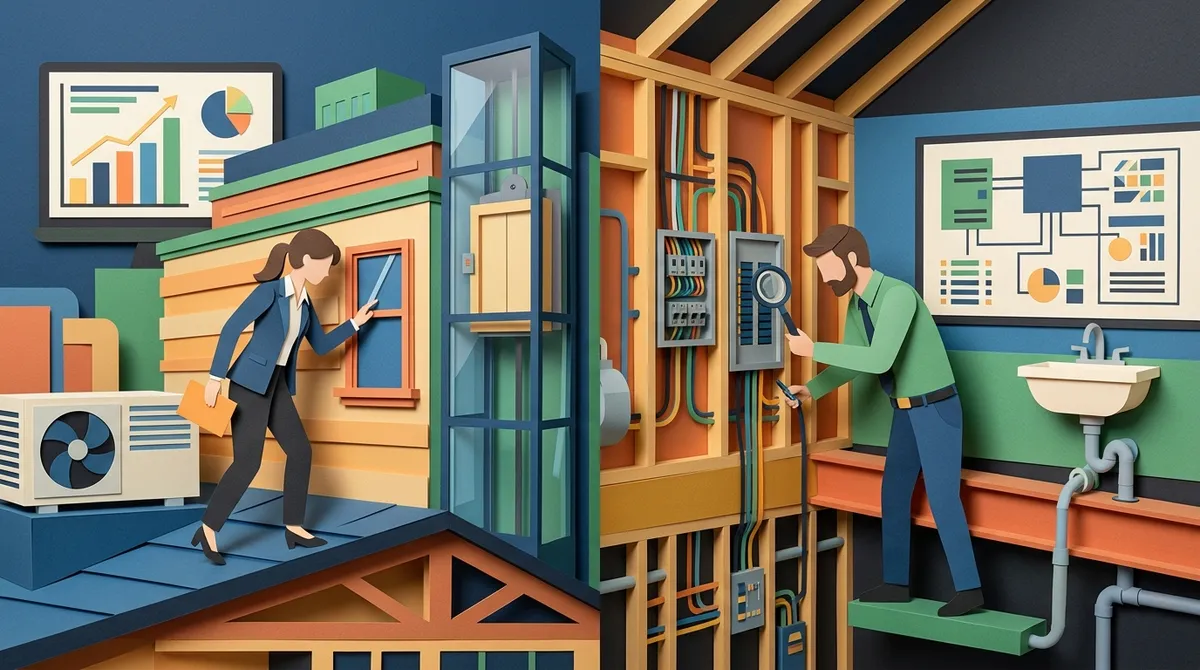
The scope of a building inspection is generally narrower than a PCA. It focuses on code compliance and safety rather than capital planning or investment due diligence. It’s the exam your building must pass — the PCA is more like the study guide that helps you prepare and plan ahead.
PCA vs. Building Inspection: Side-by-Side Comparison
Here’s a clear comparison so you can see the key differences at a glance:
| Feature | Property Condition Assessment (PCA) | Building Inspection (Recertification) |
|---|---|---|
| Primary Purpose | Capital planning, due diligence, asset evaluation | Code compliance and safety verification |
| Governing Standard | ASTM E2018-24 | Local building codes, county mandates |
| Triggered By | Loan transactions, acquisitions, ownership planning | Building age milestones (e.g., 40-year recertification) |
| Planning Horizon | 10-year capital forecast | Current compliance snapshot |
| Report Includes | Deficiencies, repair cost estimates, system life expectancy | Structural and electrical safety findings |
| Required by Law? | Not always — often lender or investor-driven | Yes — mandated by Broward or Miami-Dade County |
| Coastal Focus | Moisture, corrosion, balcony, concrete deterioration | Structural integrity and electrical safety |

Why Hallandale Beach Buildings Face Unique Challenges
Hallandale Beach is a coastal South Florida city. That location brings beautiful weather — and real building challenges. The ocean environment accelerates wear on buildings in ways that inland properties simply don’t experience at the same rate.
Here are the most common issues found in Hallandale Beach PCAs:
- Moisture intrusion through roofs, windows, and façades
- Concrete spalling and deterioration from salt air exposure
- Corrosion of rebar, balcony railings, and metal components
- Balcony and waterproofing failures common in aging high-rise buildings
- Roof membrane degradation from UV exposure and tropical storms
- Foundation and slab issues from ground movement and moisture
These coastal-specific risks make a thorough PCA even more critical in Hallandale Beach than in drier, inland markets. Understanding foundation cracks and hairline cracks in commercial buildings can help you recognize early warning signs before they become expensive problems.
When Does a Hallandale Beach Property Need a PCA?
Not every building needs a PCA at every moment. But there are specific situations where getting one is a very smart move. Here are the most common triggers:
- Before purchasing a commercial or multifamily building — Lenders and investors need to know what they’re buying into. A PCA reveals hidden deficiencies and repair costs before closing.
- When applying for a Fannie Mae or other institutional loan — Fannie Mae’s Multifamily Guide requires PCAs for covered multifamily loan transactions and mandates mitigation of conditions affecting resident safety, marketability, or value.
- During capital planning and reserve funding preparation — Condo associations and HOAs can use a PCA alongside a Structural Integrity Reserve Study to build accurate, defensible reserve fund projections.
- When preparing for recertification — A PCA can identify deficiencies before a mandatory building inspection, giving owners time to make repairs proactively rather than scrambling under deadline pressure.
- When a building is being repositioned or sold — Real estate investment firms benefit from PCAs when managing aging assets, securing insurance, or facilitating sales without delays.
What a PCA Report Actually Includes
So what’s actually inside a PCA report? It’s more detailed than most people expect. Here’s what a well-prepared Hallandale Beach PCA typically covers:
- Structure and foundation — Visible signs of settlement, cracking, or deterioration
- Roof systems — Membrane condition, drainage, and expected remaining useful life
- Exterior walls and façade — Cladding, sealants, and moisture management
- Plumbing systems — Pipe condition, water heaters, drainage
- HVAC systems — Equipment age, condition, and efficiency
- Electrical systems — Panel condition, wiring, life safety systems
- Site features — Parking, drainage, landscaping, and accessibility
- ADA and life safety — Fire protection, egress, and code-related items
The report also includes a repair cost estimate that highlights significant deficiencies — typically items costing more than routine maintenance to correct. Some industry guidelines use a practical threshold (like $3,000 or more) to flag items as significant deficiencies worth calling out. The 10-year capital planning projection gives building owners a realistic view of near-term and long-term investment needs.
How PCA Findings Support Recertification Readiness
Here’s where the PCA and building inspection really work well together. A PCA is not a code enforcement inspection on its own — but it absolutely can reveal issues that affect code compliance, safety, insurance, and recertification readiness.
Think of it this way: if your building’s recertification inspection is coming up, a PCA performed beforehand gives you a head start. You can identify problem areas, address repairs on your timeline, and walk into the official inspection with confidence. That’s a much better position than discovering issues for the first time during a mandated review.
For a deeper look at how the recertification process works step by step, the 8 key steps in the building recertification process is a great resource to review. You can also learn about 40-year building recertification requirements for Florida owners to understand what’s at stake.
In Broward and Miami-Dade Counties, recertification requirements are taken seriously. You can check current recertification cases and deadlines through the Miami-Dade Building Recertification Case Search tool, and review program details on the Miami-Dade County Recertification page.
Who Should Conduct a PCA in Hallandale Beach?
Not just anyone can perform a credible PCA. You want a firm with real expertise in ASTM E2018 standards and direct experience with coastal South Florida buildings. The qualifications matter — a lot.
Here’s what to look for when choosing a PCA provider:
- ASTM E2018 experience — Your provider should be familiar with the current ASTM E2018-24 standard and how it applies to South Florida building types.
- Licensed engineers and architects — A qualified team should include licensed professionals who can assess structural, mechanical, and electrical systems accurately.
- Coastal and South Florida market knowledge — Experience with Hallandale Beach and similar coastal markets is essential for interpreting moisture, corrosion, and concrete deterioration findings correctly.
- Advanced inspection technology — Firms using drones and 3D laser scanning can identify issues that are impossible to spot with the naked eye, especially on high-rise buildings and large commercial properties.
O’Reilly Consultants brings exactly this kind of specialized expertise to Hallandale Beach property owners. Led by owner and qualifying architect Sherard O’Reilly — who has deep experience in ASTM E2018 property condition assessments — the team includes Construction Manager & Engineer Catalina Torres (27 years of civil engineering experience) and Project Engineer Rafael Ojeda (16+ years in environmental due diligence with over 1,000 Phase I Environmental Site Assessments completed across South Florida). The firm uses advanced tools like drones and 3D imaging to deliver thorough, accurate assessments. See what clients are saying about O’Reilly Consultants on Google — the reviews speak for themselves.
If you want to understand what separates certified inspectors from general ones, the guide on certified vs. general inspectors for building recertification is well worth reading before you hire anyone.
PCA vs. SIRS: Understanding the Difference
Many Hallandale Beach condo boards ask whether they need a PCA, a Structural Integrity Reserve Study (SIRS), or both. These are related but distinct tools.
- A SIRS is mandated by Florida law for certain condominium buildings and focuses specifically on structural components and reserve funding obligations.
- A PCA is broader, covering all major building systems, and is often driven by lender requirements, acquisitions, or voluntary capital planning.
- Both generate repair cost estimates and help with financial planning — but they serve different audiences and requirements.
- In many cases, having both gives a condo board or investor the most complete picture of a building’s condition and future obligations.
For Hallandale Beach condos navigating Florida’s SIRS requirements, the complete guide to Hallandale Beach Structural Integrity Reserve Studies is a helpful starting point. You can also explore the broader question of SIRS vs. standard reserve studies for additional context on how these tools compare in coastal South Florida markets.
Common PCA Mistakes Hallandale Beach Building Owners Make
- Waiting until a problem is visible — By the time concrete is spalling or a roof is leaking, costs have multiplied. A proactive PCA catches issues early.
- Using a generalist inspector instead of an experienced PCA firm — ASTM E2018 assessments require specific expertise that general home inspectors typically don’t have.
- Skipping the 10-year capital projection — The repair cost estimate is only part of the value. The long-term capital forecast is where real financial planning begins.
- Not sharing findings with the HOA board or stakeholders — A PCA is most useful when the findings are communicated clearly and acted upon. Don’t file it away and forget it.
To explore related resources for Hallandale Beach buildings, the guide on electrical safety inspections for Hallandale Beach building recertification provides useful context on keeping your building’s systems compliant alongside structural assessments. You may also find the ASTM E2018-24 standard overview from ASTM International helpful for understanding the technical framework behind PCA work.
Conclusion: Which Does Your Hallandale Beach Building Actually Need?
Here’s the short answer: most buildings need both at some point — just for different reasons and at different times. A building inspection (recertification) is a legal requirement tied to your building’s age and local mandates. A Hallandale Beach Property Condition Assessment is a proactive, strategic tool that helps you plan, budget, and stay ahead of repairs before they become emergencies.
If you’re approaching a recertification deadline, preparing to buy or sell a property, applying for financing, or simply trying to be a responsible building owner in a challenging coastal environment, a PCA gives you a clear, credible picture of where your building stands — and what it needs over the next decade.
The team at O’Reilly Consultants is ready to help you get that picture. With expertise in ASTM E2018 assessments, building recertification, SIRS, and advanced inspection technology, they serve Hallandale Beach and the greater Broward and Miami-Dade area with the kind of detail-oriented professionalism that building owners genuinely appreciate. Request your free consultation today and take the first step toward a safer, better-planned building.
FAQs
Q: What is a Property Condition Assessment (PCA) in building recertification?
A: A PCA is a detailed evaluation of a building’s physical condition, covering structure, roof, HVAC, plumbing, electrical, and site features. In the recertification context, it helps building owners identify deficiencies, plan repairs proactively, and prepare for mandatory compliance inspections before deadlines arrive.
Q: Do Hallandale Beach buildings need a PCA for recertification?
A: A PCA is not the same as a mandatory recertification inspection, but the two work great together! Getting a PCA before your recertification deadline gives you time to identify and fix issues early, so you’re not caught off guard when the county comes knocking with its compliance requirements.
Q: What deficiencies are most common in Hallandale Beach PCAs?
A: Coastal conditions make Hallandale Beach buildings especially vulnerable to moisture intrusion, concrete spalling, balcony waterproofing failures, corrosion of metal components, roof membrane degradation, and salt-air-related wear. These issues are flagged and cost-estimated in a thorough PCA report.
Q: How is a PCA different from a building inspection or structural recertification report?
A: A building inspection (or recertification report) is a legally mandated review focused on code compliance and safety. A PCA is a broader assessment that evaluates all major building systems and provides a 10-year capital planning projection — making it a valuable tool for budgeting, financing, and long-term asset management.
Q: Can a PCA help with reserve studies and capital planning for a Hallandale Beach condo?
A: Absolutely! A PCA complements a Structural Integrity Reserve Study (SIRS) beautifully. While SIRS focuses on structural components required by Florida law, a PCA covers all major systems and produces repair cost projections — giving condo boards and HOAs a much more complete financial planning picture.