
Key Takeaways
-
Davie buildings trigger recertification at 25 years old (based on certificate of occupancy), then every 10 years thereafter—not 40 years as some believe. Understanding this timeline is critical to avoid fines, liens, and legal complications.
-
You have 180 days from the Town’s certified notice to submit signed and sealed structural and electrical reports from a Florida-licensed Professional Engineer or Registered Architect. Missing this deadline carries escalating penalties.
-
Electronic submission is mandatory; paper documents are not accepted. Your recertification package must include the case number from your Town notice, structural and electrical reports, and your selected compliance type (25-year or 10-year).
-
Condos, commercial buildings, multi-family apartments, and HOA properties typically require recertification, but exemptions exist for government buildings, schools, and structures under 3,500 square feet. Confirm your building’s status with the Town.
-
Hiring experienced inspectors early prevents scheduling backlogs during peak seasons and reduces costs. Modern technology like drones and 3D laser scanning improves accuracy and speeds up report completion.
-
Common mistakes include waiting until the last 180 days, submitting paper documents, selecting the wrong compliance type, and hiring unlicensed inspectors. Avoiding these errors protects your timeline and budget.
If you own or manage a building in Davie, Florida, you’ve probably heard people mix up their inspection deadlines. Some say 40 years. Others swear it’s 25. And now there’s a 10-year cycle too? We get it. It’s confusing, and honestly, a little stressful when your building’s safety (and your bank account) is on the line.
Here’s the good news: Davie building recertification doesn’t have to feel like a maze. Once you understand the two main paths, 25-year and 10-year, everything else falls into place. This guide breaks down exactly what each one means, who needs to comply, and how to avoid the headaches that come with missed deadlines. Whether you’re on a condo board, managing an HOA, or overseeing a commercial property, you’ll walk away knowing exactly what to do next.

What Is Davie Building Recertification, Really?
Davie building recertification is the town’s way of checking that older buildings are still safe to live and work in. It falls under Broward County’s Building Safety Inspection Program, often called BSIP. The goal is simple: make sure aging structures don’t become hazards.
This isn’t just paperwork for the sake of paperwork. Florida has seen what happens when buildings age without proper oversight. Recertification catches problems early, before they become expensive emergencies or, worse, safety risks for residents and tenants.
For property owners, this process means hiring a licensed engineer or architect to inspect your building’s structure and electrical systems. They then file detailed reports with the Town of Davie. It sounds like a lot, but with the right team, it’s a manageable, even predictable, part of owning property in South Florida.
25-Year vs. 10-Year: Breaking Down the Two Tracks
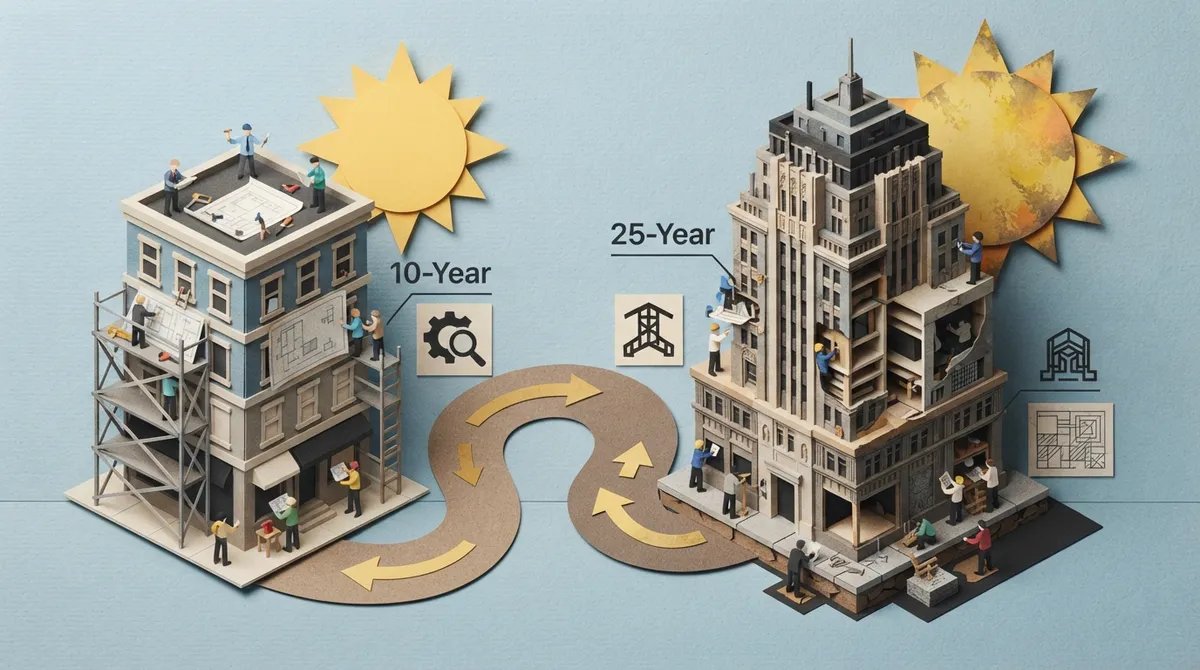
Here’s where most confusion starts. Davie’s current guidance uses two different compliance timelines, and knowing which one applies to your building matters a lot.
The 25-Year Initial Trigger
Qualifying buildings in Davie enter the recertification program once they hit 25 years old, based on the certificate of occupancy date. This is your building’s first required checkpoint. If your building was built in 2001, for example, it likely became due for inspection around 2026.
The 10-Year Follow-Up Cycle
After that first inspection, things simplify a bit. Buildings then need to recertify every 10 years going forward. So if you passed your 25-year inspection, mark your calendar for a decade later. No more guessing games.
| Compliance Type | When It Applies | What’s Required |
|---|---|---|
| 25-Year Recertification | First inspection cycle for qualifying buildings | Structural and electrical reports, signed and sealed |
| 10-Year Recertification | Every follow-up cycle after the initial 25-year inspection | Same structural and electrical documentation requirements |
Both paths require the same level of scrutiny. There’s no shortcut version. Your building still needs a thorough structural and electrical review, completed by a Florida-licensed Professional Engineer or Registered Architect.
Who Actually Needs to Comply?
Not every structure in Davie falls under this mandate. Here’s a quick rundown of who’s typically required to participate:
- Condominium buildings managed by association boards
- Commercial office buildings and retail plazas
- Multi-family apartment complexes
- Hotels and mixed-use properties
- HOA-managed residential communities meeting size thresholds
Meanwhile, certain properties are exempt. According to local guidance, these commonly include:
- Certain government buildings
- School board buildings
- Fee simple townhouses
- Minor structures under 3,500 square feet
If you’re not sure whether your property qualifies, it’s worth reaching out to a team experienced in Broward County recertification work. O’Reilly Consultants has helped countless property owners figure out exactly where they stand.
Step-by-Step: How the Davie Recertification Process Works
Understanding the sequence of events makes this whole process feel a lot less overwhelming. Here’s what typically happens:
- You receive a notice. The Town of Davie sends notices by certified mail between June 1 and August 31 for properties due that calendar year.
- The clock starts ticking. Owners generally have 180 days from the notice date to submit signed and sealed reports.
- You hire a licensed professional. A Florida-licensed engineer or architect conducts structural and electrical inspections.
- Reports get compiled. Both structural and electrical findings are documented, signed, and sealed.
- You select your compliance type. On the application, you’ll mark either 25-year or 10-year recertification.
- Documents go in electronically. Davie requires digital submission; paper copies aren’t accepted for the recertification package.
- You address any repairs. If issues are found, repairs must be completed within the required timeframe.
- Final approval is issued. Once everything checks out, your building is cleared until the next cycle.
This might sound like a lot of steps, but a good inspection partner handles most of the heavy lifting. That’s exactly why teams like O’Reilly Consultants exist, to make this process feel less like a burden and more like a routine part of property ownership.
What Documents Do You Actually Need?
Paperwork can feel intimidating, but here’s what typically goes into a complete Davie recertification package:
- Structural inspection report, signed and sealed
- Electrical inspection report, signed and sealed
- Completed recertification application with your case number
- Selection of compliance type (25-year or 10-year)
- Supporting photos or documentation as requested
Your case number comes directly from the Town’s notice, so don’t lose that letter. Applications also require you to indicate which recertification cycle applies, so double-check this before submitting anything.
Why Timing Matters So Much
Missing a deadline in Davie isn’t just an inconvenience. It can lead to fines, liens, and even legal complications for condo boards and HOAs. Buildings that fall out of compliance can face escalating penalties the longer they wait.
Here’s a simple truth: the earlier you start, the smoother everything goes. Licensed engineers get booked up fast during peak recertification seasons. Waiting until the last minute puts you at the mercy of scheduling backlogs.
This is especially true for 40-year recertification projects too, since many of the same scheduling pressures apply across Broward and Miami-Dade Counties. Getting ahead of the process protects your timeline and your budget.
Structural vs. Electrical Inspections: What’s the Difference?
Both inspections are required, but they look at very different things.
Structural Inspections
These focus on the bones of your building. Inspectors look for foundation cracks and hairline cracks in commercial buildings, signs of concrete spalling, roof integrity, and overall load-bearing conditions. This is where drones and 3D laser scanning really shine, capturing hard-to-reach areas without putting inspectors at risk.
Electrical Inspections
These check your building’s wiring, panels, and overall electrical safety. Older buildings often have outdated systems that no longer meet current code, which can pose fire risks if left unaddressed.
Together, these two reports paint a full picture of your building’s health. Skipping either one isn’t an option, both must be signed and sealed by qualified professionals.
How Technology Makes Recertification Faster and More Accurate
Gone are the days of clipboard inspections and guesswork. Modern recertification teams use tools that dramatically improve accuracy and speed:
- Drones for capturing high-resolution roof and facade imagery
- 3D laser scanning for precise structural measurements
- Digital reporting systems that integrate directly with county submission portals
- Thermal imaging to detect hidden moisture or electrical issues
This technology means fewer surprises during your inspection and a much faster turnaround on your final report. For condo boards juggling tight budgets, this efficiency translates directly into savings.
Comparing Davie to Other South Florida Recertification Programs
Davie’s approach shares similarities with neighboring cities, but there are subtle differences worth knowing.
| Jurisdiction | Initial Trigger | Follow-Up Cycle |
|---|---|---|
| Davie | 25 years | 10 years |
| Miami-Dade County (general) | 40 years (some areas 25 years near coast) | 10 years |
| Broward County (general) | Varies by municipality | Typically 10 years after initial |
If your portfolio includes properties across multiple counties, understanding these differences is critical. You can review official guidance through the Miami-Dade County Recertification program page, or check specific case statuses using the Miami-Dade Building Recertification case search tool.
Common Mistakes Property Owners Make
Even well-intentioned owners stumble during this process. Here are the most frequent missteps we see:
- Waiting until the 180-day window is almost up before hiring an inspector
- Submitting paper documents when only electronic filing is accepted
- Choosing the wrong compliance type on the application form
- Forgetting to include the case number from the Town’s notice
- Assuming their building is exempt without confirming with the Town
- Hiring unlicensed or inexperienced inspectors to cut costs
Each of these mistakes can cost you time, money, or both. Learning from others’ missteps is a lot cheaper than learning from your own.
Who Should You Hire for Your Recertification?
This decision matters more than people realize. You want a team that understands both the technical requirements and the local submission process specific to Davie and Broward County.
Here’s what to look for:
- Florida-licensed Professional Engineers or Registered Architects on staff
- Experience specifically with Broward and Miami-Dade recertification programs
- Access to modern inspection technology like drones and 3D scanning
- A track record of timely, accurate report submissions
- Clear communication throughout the entire process
At O’Reilly Consultants, this is exactly what clients get. Led by qualifying architect Sherard O’Reilly, the team brings deep expertise in property condition assessments, structural documentation, and safety-focused inspections. Construction Manager and Engineer Catalina Torres adds 27 years of civil engineering experience, while Project Engineer Rafael Ojeda brings over 1,000 completed environmental assessments across South Florida. If you want to see how other property owners felt about working with the team, you can visit us on Google — O’Reilly Consultants and read their experiences firsthand.
Beyond Recertification: Related Services Worth Knowing
Building recertification often overlaps with other property compliance needs. Depending on your property type, you might also need:
- Electrical safety inspections for aging wiring systems
- Structural Integrity Reserve Studies (SIRS) for condo associations
- Property Condition Assessments (PCA) for real estate transactions
- HOA reserve studies for long-term budget planning
Bundling these services with your recertification inspection can save time and reduce the number of vendors you’re coordinating with. It’s one less headache during an already busy process.
Final Thoughts on Navigating Davie Building Recertification
Recertification doesn’t have to feel like a burden hanging over your property. With the right knowledge and the right team, it becomes just another part of responsible building ownership. Whether you’re facing your first 25-year inspection or your third 10-year cycle, staying organized and proactive makes all the difference.
Ready to get started or just have questions about your building’s specific timeline? Request a free quote today and let our experienced team guide you through every step of the process. You can also call us at (512) 567-1191 to speak with someone who understands exactly what Davie property owners need. Your building’s safety, and your peace of mind, are worth it.
FAQs
Q: What buildings in Davie need recertification?
A: Qualifying buildings typically include condos, commercial properties, and multi-family complexes that reach 25 years of age based on their certificate of occupancy date. Some exemptions exist, like government buildings and structures under 3,500 square feet, so it’s always worth double-checking your building’s specific status with the Town.
Q: Is Davie building recertification 25 years or 40 years?
A: Great question, and one we hear often! Davie’s current guidance uses a 25-year initial trigger, followed by 10-year recertification cycles after that first inspection.
Q: How often is building recertification required in Davie?
A: After your initial 25-year inspection, you’ll need to recertify every 10 years going forward. Think of it as a recurring checkup to keep your building safe and compliant.
Q: Can Davie recertification reports be submitted online?
A: Yes, and honestly, it’s the only way to go! Davie requires electronic submission for the recertification package, and paper copies aren’t accepted.
Q: Who can sign a building recertification report in Davie?
A: Reports must be signed and sealed by a Florida-licensed Professional Engineer or Registered Architect. This ensures your building’s inspection meets the professional standards required by the Town.