
Key Takeaways
-
Milestone inspections under Florida Statute 553.899 are structural assessments and are not meant to check electrical code compliance, so a clean milestone report does not confirm electrical safety.
-
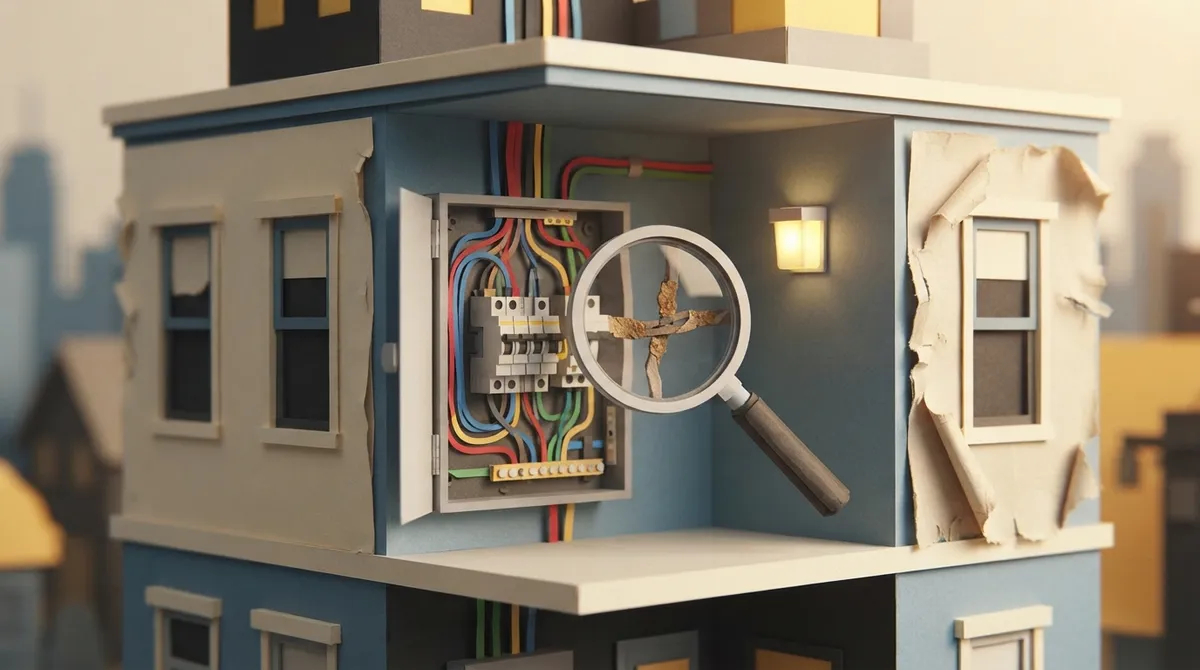
Electrical inspection services review panels, wiring, grounding, emergency lighting, and signs of corrosion or overheating, and the exact scope depends on your local recertification ordinance.
-
The first milestone inspection is generally due by December 31 of the year a building turns 30 years old, or 25 years in some areas near salt water, and repeats every 10 years.
-
Condo associations must distribute the inspector-prepared milestone summary to unit owners within 45 days and post it conspicuously on the property.
-
Before hiring an electrical inspector, confirm their authorization under local rules, the exact equipment covered, whether testing is visual or instrument-based, and how deficiencies will be documented.
-
Coastal South Florida buildings face faster electrical corrosion from salt air, so many boards should plan for both a milestone inspection and a local electrical evaluation rather than choosing one.
If you manage a condo, an apartment complex, or an older commercial building in South Florida, you have probably heard a lot of inspection terms lately. Milestone inspection. Recertification. Electrical safety inspection. It is easy to mix them up, and that is a normal thing to do! Many owners and board members ask the same question: does one inspection cover everything?
The short answer is no. Electrical inspection services and the statutory milestone inspection are two different tools. They work best together, and each one answers a different safety question about your building.
In this guide, we will walk through how the two compare. You will learn what each one covers, who is qualified to do the work, and how to plan your timeline in 2026. Whether you serve on a condo board, manage an HOA, or own a commercial property in Broward or Miami-Dade, you will leave with a clear plan and less stress.

Quick Answer: Are They the Same Thing?
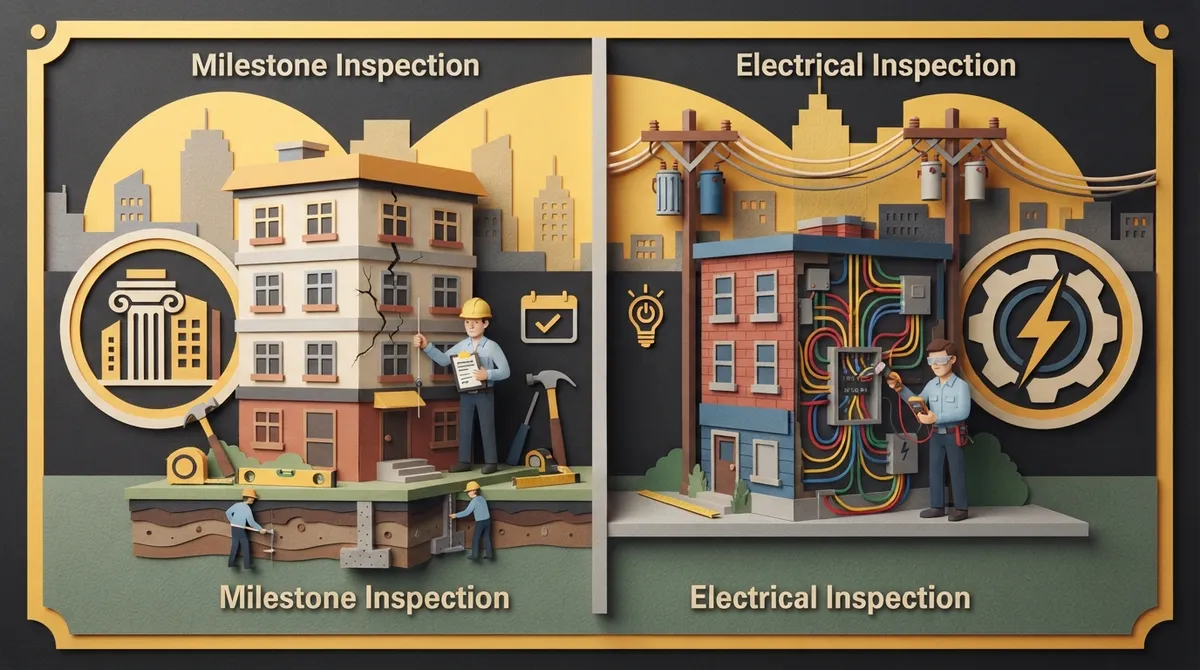
No, they are not the same. Under Florida Statute 553.899, a milestone inspection is a structural assessment. It looks at load-bearing elements and primary structural members and systems. The law is clear that it is not meant to check compliance with the Florida Building Code or the fire-safety code.
Electrical inspection services, on the other hand, focus on the condition and safety of your electrical systems. Think panels, wiring, grounding, emergency lighting, and more. Depending on your city or county, your building recertification program may require a separate electrical evaluation.
So the best way to think about it is this: the milestone inspection checks the bones of your building, and the electrical inspection checks the nervous system.
Milestone Inspection vs. Electrical Inspection Services: Side-by-Side
Let us put the two next to each other so the differences are easy to see.
| Feature | Milestone Inspection | Electrical Inspection Services |
|---|---|---|
| Main focus | Structural integrity | Electrical system condition and safety |
| Legal basis | Florida Statute 553.899 | Local recertification rules and adopted codes |
| Who performs it | Florida-licensed architect or engineer | Qualified professional as defined by local requirements |
| Typical trigger | 30 years from certificate of occupancy (25 in some areas) | Depends on local ordinance and recertification program |
| Repeat cycle | Every 10 years | Set by local program |
| Covers code compliance? | No, by statute | Often reviews against adopted electrical codes |
Notice the last row. This is the part that surprises many owners. A clean milestone report does not mean your electrical system has been reviewed for safety. That is why smart boards plan for both.
What a Milestone Inspection Actually Covers
Let us start with the milestone inspection, since most owners know that name best. Florida generally applies the requirement to condominium and cooperative buildings that are at least three habitable stories tall.
The first inspection is due by December 31 of the year the building turns 30 years old, counted from its certificate of occupancy. After that, it repeats every 10 years. A local enforcement agency may move the first inspection up to 25 years, based on local conditions such as being close to salt water. That matters a lot along our coastline.
Phase One and Phase Two
A milestone inspection happens in two possible phases:
- Phase One: A visual examination of habitable and nonhabitable areas and major structural components. It must be completed within 180 days after the owner receives the local agency’s written notice.
- Phase Two: Required only if Phase One finds substantial structural deterioration. It may include destructive or nondestructive testing. The architect or engineer must submit a progress report and completion timeline within 180 days after the Phase One report.
Neither phase is, by definition, a full electrical-system inspection. For a deeper look at how milestone rules work in the region, check out Milestone vs. Recertification: North Lauderdale Rules?
What Electrical Inspection Services Typically Cover
Electrical inspection services look at the safety and condition of the electrical systems that keep your residents, tenants, and guests safe. The exact scope depends on your local recertification ordinance, your adopted codes, and your engagement agreement. There is no one universal checklist in the state statute.
That said, a thorough electrical review in a recertification project commonly looks at items like these:
- Main service equipment and electrical panels
- Visible wiring, conduit, and connections
- Grounding and bonding
- Emergency and exit lighting
- Illumination in parking areas and common spaces
- Signs of corrosion, overheating, or water damage
- Unsafe or outdated components that need repair or referral
In coastal South Florida, salt air is tough on electrical gear. Corrosion shows up faster here than in many other places. A trained eye can catch small problems before they turn into costly failures.
If you want to see how this plays out locally, our guide on 14 Electrical Inspections Facts for Recertification (2026) is a helpful next read.
Who Is Qualified to Do the Work?
This is where the two inspections differ in an important way.
A milestone report must be signed and sealed by the responsible Florida-licensed architect or engineer. A multidisciplinary team may help, with the architect or engineer in responsible charge. Qualified team members sign and seal their own work as appropriate.
For electrical inspection services, you should confirm who is authorized under your local program. Before you hire anyone, ask these questions:
- Is this person qualified and authorized under my city or county rules?
- What exact areas and equipment will they inspect?
- Will the review be visual only, or will it include instrument-based testing?
- How will deficiencies be documented in the report?
- Will any repairs need separate permits or follow-up inspections?
Getting these answers in writing up front saves headaches later. For help choosing the right professional, see How to Choose a Certified Building Inspector in Florida.
Which One Does Your Building Need?
Here is the friendly truth: many buildings need both, or at least need to plan for both. Let us look at it by property type.
Condo Associations
If your building is three or more stories, the milestone inspection is a must. The association is responsible for arranging it and making sure it is completed. After you get the report, you must distribute the inspector-prepared summary to unit owners within 45 days. You must also post it conspicuously on the property. If your association has to keep a website, publish the report and summary there too.
Then ask your local building department whether an electrical evaluation is required in your recertification program. Many Broward and Miami-Dade municipalities have their own rules.
Commercial and Apartment Owners
Office towers, plazas, hotels, and multi-family apartment buildings often fall under local recertification programs. These can include structural and electrical assessments. Miami-Dade County publishes details on its program, which you can review at the Miami-Dade County Recertification page. You can also use the county’s search tool for building recertification cases to check on a property.
HOA Managers and Investment Firms
If you manage multiple properties, a coordinated approach saves time. A single team that can handle structural, electrical, and illumination reviews helps you keep every building on schedule. It also helps you keep insurance, sales, and refinancing on track, since lenders and insurers often ask for current reports.
Comparing Your Options: A Practical Planning Table
| Your Situation | Start With | Then Add |
|---|---|---|
| Condo, 3+ stories, near 30 years old | Milestone inspection | Local electrical evaluation if required |
| Coastal condo, near 25 years | Confirm local 25-year rule | Electrical review for salt-air wear |
| Older commercial building | Local recertification notice | Structural plus electrical scope |
| Apartment complex with aging panels | Electrical safety inspection | Property condition assessment |
What Happens If a Hazard Is Found?
Nobody likes surprises, but finding a problem is better than missing one. If an inspector finds an unsafe condition, the report should clearly describe it. Florida milestone reports must state whether unsafe or dangerous conditions were observed. They must also identify items that need further inspection and recommend repairs.
For electrical issues, the next steps usually look like this:
- Review the written findings with your inspector.
- Rank repairs by safety risk and urgency.
- Hire a properly licensed contractor for corrective work.
- Confirm whether permits are required for the repairs.
- Schedule any required follow-up inspections.
- Keep records for your board, your insurer, and the county.
Acting quickly is the key. Deadlines in this space are firm, and missed ones can lead to fines.
How Technology Makes Inspections Easier
Modern tools can make a big difference. At O’Reilly Consultants, our team uses drones and 3D laser scanning to evaluate hard-to-reach areas safely and in detail. That means less time on ladders and lifts, faster turnaround, and cleaner documentation for your report.
Our small, specialized engineering team serves Broward and Miami-Dade Counties and is led by owner and qualifying architect Sherard O’Reilly. Construction Manager and Engineer Catalina Torres brings 27 years of civil engineering and construction management experience, and Project Engineer Rafael Ojeda adds 16+ years in environmental due diligence. We guide you from the county notice all the way through repairs and final submission. You can read more about our approach in 8 Key Steps in the Building Recertification Process (2026).
Many of our clients also ask about local electrical rules. If you are in Broward, these city guides may help: How to Navigate Coral Springs Electrical Safety Inspections and How to Pass Oakland Park Electrical Safety Inspections.
Smart Planning Tips for 2026
A little planning goes a long way. Here are a few simple habits that boards and owners find helpful:
- Check your certificate of occupancy date now, not later.
- Ask your city whether the 25-year or 30-year rule applies.
- Request a written scope before any inspection begins.
- Budget for repairs, since inspections often lead to fixes.
- Keep your electrical records, permits, and past reports in one place.
- Bundle services when you can to save time and coordination effort.
You can also learn more about the bigger picture in What Is Building Recertification and Why Does It Matter?
Why Choose O’Reilly Consultants?
When you are juggling deadlines, boards, residents, and budgets, you deserve a partner who makes things simpler. O’Reilly Consultants focuses on building recertification in Broward and Miami-Dade Counties. We offer structural, electrical, and illumination inspections, plus SIRS, property condition assessments, and HOA reserve studies. That means one trusted team for the full picture.
Our reports are detailed, clear, and built around actionable recommendations. We want you to know exactly what to fix, in what order, and by when. Curious what other owners think? Read O’Reilly Consultants reviews on Google to see how we show up for our clients.
Conclusion: Plan for Both and Sleep Better
So, milestone inspection or electrical inspection services? For most South Florida buildings, the best answer is to plan for both. The milestone inspection protects your structure, and a proper electrical review protects your people and your property from fire and failure risks. Confirm your local rules, define your scope in writing, and start early so you never feel rushed.
Ready to get started? Request a free quote from our friendly team today, or call us at (512) 567-1191 to talk through your timeline. We would love to help you reach a smooth, low-stress recertification.
FAQs
Q: Does a Florida milestone inspection include an electrical inspection?
A: Not by itself. Under Florida Statute 553.899, a milestone inspection is a structural assessment, and it is not meant to check code compliance. Your local recertification program may still require a separate electrical evaluation, so it is always smart to ask your building department.
Q: What electrical systems are checked during building recertification?
A: It depends on your local rules, but reviews often look at panels, visible wiring, grounding, emergency lighting, and signs of corrosion or damage. Your engagement agreement should spell out the exact scope. That way, there are no surprises on inspection day.
Q: How often do Florida condominium buildings need milestone inspections?
A: The first inspection is generally due by December 31 of the year a building reaches 30 years from its certificate of occupancy. After that, it repeats every 10 years. Some local agencies set the first inspection at 25 years, especially for buildings close to salt water.
Q: What happens if an inspector finds an electrical safety hazard?
A: The hazard should be documented in your report along with recommended repairs. You will then hire a licensed contractor, confirm whether permits are needed, and schedule any follow-up inspection. Acting fast helps you stay on schedule and avoid penalties.
Q: Who is qualified to perform an electrical inspection for a recertification project?
A: Qualifications are set by your local recertification program and adopted codes, so confirm them before you hire. Ask what areas will be covered and whether testing is visual or instrument-based. A specialized team like O’Reilly Consultants can walk you through the requirements for Broward and Miami-Dade.