

Key Takeaways
-
A PCA is essential for Parkland buildings approaching 40-year recertification deadlines; it flags issues early, avoiding costly county-mandated repairs and potential fines or building closures.
-
PCAs follow the ASTM E2018-24 standard and evaluate all major building systems (structural, roof, mechanical, electrical, plumbing, site improvements) with 12-month and 10-year cost projections for capital planning.
-
Refresh your PCA every 3-5 years or when ownership changes, refinancing occurs, major renovations are completed, or recertification deadlines approach—keeping documentation current prevents compliance surprises.
-
A PCA differs significantly from home inspections; it’s performed by licensed engineers/architects and provides deep analysis of commercial/multifamily buildings’ physical condition and long-term repair budgeting.
-
Condo boards and HOA managers benefit most from PCAs as documented proof of due diligence, protecting against legal liability while streamlining the county recertification process.
-
Choose a PCA provider with Florida credentials, ASTM E2018-24 expertise, Broward/Miami-Dade county experience, and advanced tools like drones and 3D laser scanning for thorough evaluations.
If you own or manage a building in Parkland, Florida, you’ve probably heard the term Property Condition Assessment (PCA) come up more and more lately. And honestly? That’s a good thing. A PCA is one of the smartest tools available for building owners, condo boards, HOA managers, and real estate investors who want to stay ahead of costly surprises. Whether you’re planning for a 40-year recertification, refinancing a property, or simply keeping your building in great shape, a Parkland Property Condition Assessment gives you a clear, honest picture of where things stand. Think of it as your building’s annual checkup — except it covers everything from the roof down to the foundation, and from the electrical panels to the parking lot. Let’s walk through what a PCA is, what it covers, and why it matters so much for buildings in Parkland and across Broward County.

What Is a Parkland Property Condition Assessment?
A Parkland Property Condition Assessment (PCA) is a structured, mostly visual engineering evaluation of a commercial or multifamily building’s physical condition. Licensed engineers or registered architects perform the assessment following the ASTM E2018 standard — the industry baseline for property condition reports. The most current edition is ASTM E2018-24, updated in 2024.
It’s important to know that a PCA is not the same as a residential home inspection. A PCA goes much deeper. It looks at major building systems and components across the entire property. The result is a detailed written report that helps owners understand what needs attention now, what can wait, and how to budget for future repairs. You can learn more about what a commercial building inspection really covers to see how these evaluations differ from standard inspections.
What Does a PCA Inspection Include?
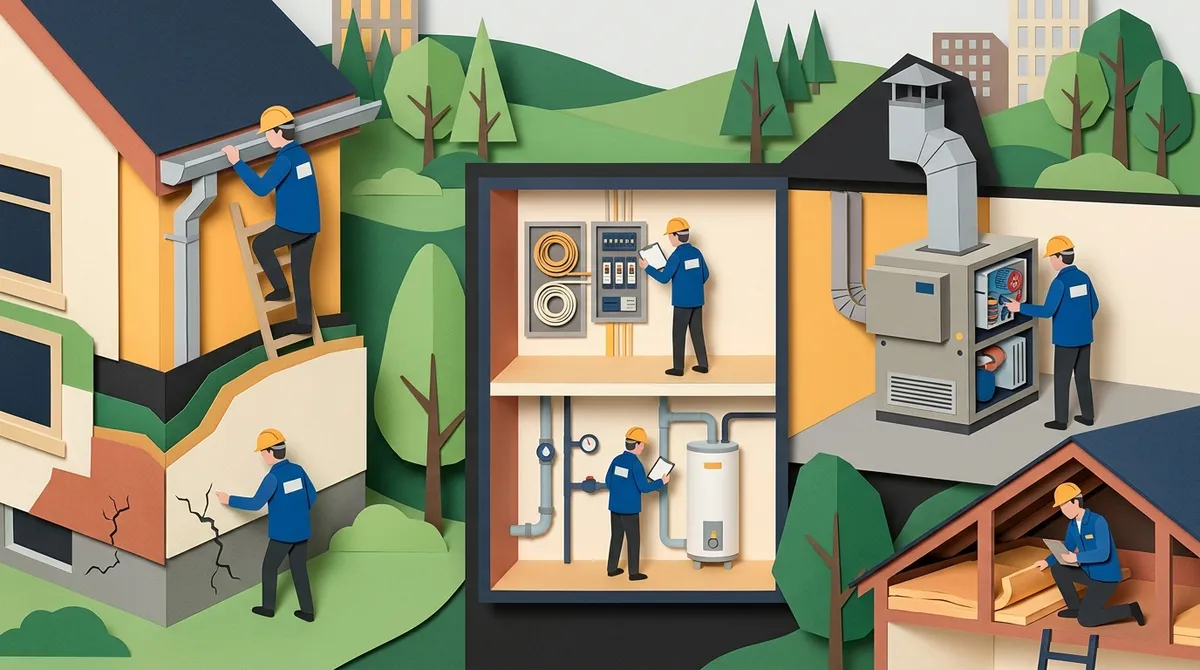
A thorough PCA covers a wide range of building systems and site features. Here’s what you can typically expect to be evaluated during a Parkland Property Condition Assessment:
- Structural systems — foundation, framing, load-bearing walls, and slabs
- Roof systems — covering materials, drainage, flashing, and visible deterioration
- Building envelope — exterior walls, windows, doors, and waterproofing
- Mechanical systems — HVAC, ventilation, and equipment condition
- Electrical systems — panels, wiring, service entry, and safety components
- Plumbing systems — supply, drainage, and fixture conditions
- Interior and common areas — hallways, lobbies, stairwells, and finishes
- Site improvements — parking areas, walkways, landscaping, and drainage
The inspector documents visible deficiencies, estimates remaining useful life of major components, and projects capital expenditures over a planning horizon. Most PCAs use a 12-month short-term and 10-year long-term planning window for cost projections. If you’re curious about the full process, check out these 8 key steps in the building recertification process.
How a PCA Supports Parkland Building Recertification
Florida’s building safety laws have tightened significantly in recent years. Miami-Dade and Broward Counties both enforce recertification requirements for older buildings. Buildings that reach certain age thresholds must pass structural and electrical safety inspections — and missing deadlines can result in fines or even building closures. Understanding the importance of 40-year building recertification for property longevity helps building owners see the big picture.
A Parkland Property Condition Assessment is a powerful tool for recertification planning. Here’s why:
- Early identification of issues: A PCA flags structural cracks, electrical concerns, and deferred maintenance before a county inspector finds them first. This gives you time to make repairs proactively.
- Documented building history: PCA reports create a paper trail of your building’s condition over time, which is valuable for county submissions and insurance claims.
- Budget planning: Knowing what repairs are coming in the next 1–10 years helps boards and owners avoid financial surprises. You can learn more by reading what building recertification is and why it matters.
- Smoother recertification process: Buildings with a current PCA on file often move through the recertification process faster because the documentation is already organized.
- Reduced liability: For condo boards and HOA managers, a documented assessment demonstrates due diligence and protects against potential legal exposure.
You can also review Miami-Dade County’s official recertification requirements to understand the formal inspection process and timelines your property may be subject to.
PCA vs. 40-Year Recertification: Understanding the Difference
These two terms often come up together, but they serve different purposes. Here’s a quick comparison to help clarify things:
| Feature | Property Condition Assessment (PCA) | 40-Year Recertification |
|---|---|---|
| Purpose | Capital planning, due diligence, recertification prep | Mandatory safety compliance inspection |
| Required by law? | Not always (often lender or owner-driven) | Yes — county mandate in Broward and Miami-Dade |
| Who performs it? | Licensed engineer or registered architect | Licensed engineer or architect (county-approved) |
| Standard followed | ASTM E2018-24 | Local building code and county requirements |
| Planning horizon | 12 months and 10 years | Based on inspection date and repair deadlines |
| Frequency | Every 3–7 years (recommended) | At 40 years, then every 10 years after |
As you can see, they complement each other well. A PCA helps you prepare for a recertification inspection. If you want to dive deeper into the differences and requirements, read about 40-year building recertification — what Florida owners must know.
Who Needs a Parkland Property Condition Assessment?
PCAs are useful for a wide range of property owners and stakeholders in Parkland. Here are the groups that benefit most:
- Condo association boards managing aging residential buildings approaching recertification deadlines
- Commercial property owners with office buildings, retail plazas, or mixed-use properties over three stories
- HOA property managers who need documentation for county inspections and HOA reserve planning
- Apartment building owners wanting to verify structural and electrical system integrity
- Real estate investment firms acquiring, selling, or refinancing properties in South Florida
If you’re a condo board member or HOA manager in Parkland, understanding your obligations under Florida’s building safety laws is critical. The 7 key facts about Parkland Structural Integrity Reserve Studies is a great companion resource that explains how SIRS and PCAs work together.
How Often Should You Update a PCA?
There’s no single universal rule, but the industry widely recommends refreshing your PCA every 3 to 5 years for most properties. Higher-risk buildings or those going through major events may need updates more frequently. Here are the most common triggers for a new or updated PCA:
- Ownership change — A new owner almost always wants a current PCA before closing on a purchase.
- Refinancing — Lenders commonly require a PCA as part of the loan underwriting process.
- Major renovation — After significant capital improvements, a fresh PCA documents the updated condition.
- Post-disaster review — After a hurricane, flooding, or structural event, a new assessment is essential.
- Approaching recertification deadline — Getting a PCA 12–18 months before your recertification inspection gives you time to address deficiencies.
For Parkland buildings nearing their 30- or 40-year recertification milestone, scheduling a PCA in advance is one of the best decisions you can make. You can also search Miami-Dade building recertification cases to check where your property stands in the process.
Foundation Concerns and Why Early Detection Matters
One of the most critical areas a PCA evaluates is the foundation and structural system. In South Florida’s climate, foundation movement, concrete deterioration, and moisture intrusion are common concerns. Catching these early makes a huge difference in repair costs and safety outcomes. If you want to understand what to watch for, our article on understanding foundation cracks and hairline cracks in commercial buildings is a must-read.
A PCA gives you documented evidence of any foundation issues, which is incredibly useful when dealing with county recertification requirements or insurance claims. For Parkland buildings, this level of documentation can be the difference between a smooth recertification and a stressful one.
What to Look for in a PCA Provider
Not all PCA providers are created equal. Here’s what to look for when choosing who performs your Parkland Property Condition Assessment:
- Licensed engineer or registered architect with Florida credentials
- Experience with ASTM E2018-24 standards and building recertification requirements
- Familiarity with Broward County and Miami-Dade County inspection processes
- Use of advanced tools like drones and 3D laser scanning for thorough evaluations
- Clear, actionable reports with repair cost estimates and timelines
- Experience with multiple property types — condos, apartments, commercial, and mixed-use
It also helps to work with a team that guides you through the entire process — from the first county notice all the way through report submission and repair follow-up. For tips on finding the right professional, read how to choose licensed building inspectors for recertification.
Why O’Reilly Consultants Is the Right Choice for Parkland PCAs
O’Reilly Consultants is a specialized engineering firm serving Broward and Miami-Dade Counties, with deep expertise in building recertification, property condition assessments, and safety-focused inspections. Owner and qualifying architect Sherard O’Reilly brings extensive experience with ASTM E2018 property condition assessments, covering everything from facades and fire systems to utilities and site characteristics.
The team also includes Construction Manager & Engineer Catalina Torres, with 27 years of civil engineering experience, and Project Engineer Rafael Ojeda, who has completed over 1,000 Phase I Environmental Site Assessments across South Florida. Together, they deliver detailed, accurate reports using advanced tools including drones and 3D laser scanning — so nothing gets missed. Visit O’Reilly Consultants on Google to read reviews from property owners and managers who have trusted the team with their recertification and PCA needs.
Whether you need a PCA for recertification prep, a real estate transaction, or proactive capital planning, O’Reilly Consultants delivers thorough evaluations with clear, actionable recommendations. You can also explore related services including Parkland electrical safety inspections to understand how electrical assessments fit into your overall building compliance strategy.
Conclusion
A Parkland Property Condition Assessment is more than just a report — it’s a roadmap for keeping your building safe, compliant, and financially sound. Whether you’re a condo board preparing for a recertification deadline, an investor acquiring a new asset, or a property manager staying ahead of deferred maintenance, a PCA gives you the information you need to make smart decisions. Don’t wait until a county notice forces your hand. Being proactive is always the better path, and it usually saves money in the long run.
Ready to schedule your Parkland Property Condition Assessment? Request a free quote from O’Reilly Consultants today and take the first step toward a safer, more compliant building. You can also call our team directly at (512) 567-1191 to speak with a licensed professional about your specific property needs.
FAQs
Q: What is a Property Condition Assessment (PCA) in building recertification?
A: A PCA is a structured, mostly visual engineering evaluation of a building’s physical condition, major systems, and capital repair needs. In building recertification, it helps owners identify deficiencies early so they can address issues before mandatory county safety inspections — reducing stress and avoiding costly last-minute repairs.
Q: How is a PCA different from a home inspection?
A: A PCA is performed by a licensed engineer or architect following the ASTM E2018 standard and covers commercial or multifamily buildings in much greater depth than a residential home inspection. It evaluates structural systems, mechanical, electrical, plumbing, roofing, site improvements, and projects capital costs over a 10-year horizon — something a standard home inspection simply doesn’t do.
Q: Is a PCA required for Parkland buildings undergoing recertification?
A: A PCA is not always a legal requirement on its own, but it’s a highly recommended tool to prepare for Florida’s building recertification process. Lenders may require one for refinancing, and having a current PCA on file can significantly speed up the recertification submission process while demonstrating proactive building management.
Q: How often should a Parkland building owner update their PCA?
A: Most industry professionals recommend refreshing your PCA every 3 to 5 years, or sooner if you’ve had a major renovation, ownership change, hurricane, or are approaching a recertification deadline. Keeping your PCA current ensures your capital planning stays accurate and your building remains documentation-ready for any compliance requirement.
Q: What’s the difference between a PCA and a Structural Integrity Reserve Study (SIRS)?
A: A PCA evaluates the overall physical condition of a property across all major systems and projects capital repair costs. A SIRS is a Florida-specific requirement focused specifically on the structural components of condominium buildings and the reserves needed to fund their repair. For Parkland condo boards, both tools work together to deliver a complete picture of your building’s health and financial needs.