Key Takeaways
-
Pompano Beach milestone inspections follow a 25-year initial inspection timeline (from certificate of occupancy), then every 10 years after—always confirm exact deadlines with your official city notice to avoid penalties.
-
Two separate licensed professionals are required: a Florida-licensed structural engineer/architect AND a licensed electrical professional; both reports must be submitted together within 180 days of receiving the city notice.
-
Pompano Beach's local program (Broward County BSIP) is distinct from Florida's statewide condo law; buildings may fall under one, both, or neither requirement depending on type and age—review both sets of rules early.
-
Inspections cover structural framing, roofs, balconies, concrete deterioration, parking garages, fire systems, and electrical equipment; modern teams use drones and 3D laser scanning to catch hidden issues before costly repairs.
-
A failed inspection doesn't mean building shutdown—most deficiencies simply require documentation and repair, then resubmission; only serious hazards trigger immediate enforcement action.
-
Start preparing before receiving your notice by locating your certificate of occupancy, documenting visible damage, arranging professional access, and budgeting for engineering fees and potential repairs.
If you own or manage a building in Pompano Beach, you’ve probably heard the term “milestone inspection” tossed around lately. Maybe a neighbor mentioned it. Maybe your city sent a notice. Either way, it’s completely normal to feel a little unsure about what it all means. The good news? You’re in the right place, and this doesn’t have to be stressful.
A Pompano Beach milestone inspection is part of Broward County’s Building Safety Inspection Program (BSIP). It’s how the city makes sure older buildings stay safe for the people who live and work inside them. Whether you’re on a condo board, managing an HOA, or own a commercial property, understanding this process helps you plan ahead instead of scrambling later. Let’s walk through the seven things you really need to know, in plain, friendly language.

1. It’s a Local Program, Not Just a State Law
First things first: the Pompano Beach milestone inspection isn’t the same thing as Florida’s statewide condominium milestone-inspection law. That state law, found under Florida Statute 553.899, applies specifically to condos and co-ops with certain criteria. Pompano Beach’s program is administered locally by the City of Pompano Beach Building Department, working under Broward County’s BSIP framework.
Here’s why this matters: your building might fall under one requirement, both, or neither, depending on its type and age. A condo association, for example, may need to check boxes for both the state milestone law and the local recertification program. This is exactly the kind of overlap that trips people up, so it’s smart to review both sets of rules early. Our team explains more about how Pompano Beach condos handle SIRS reporting alongside these local mandates.

2. The 25-Year and 10-Year Timeline Is Key
Under the current Broward County framework, qualifying buildings generally need their first safety inspection at around 25 years old, counted from the original certificate of occupancy. After that first inspection, buildings typically go through the process again every 10 years.
That said, the exact age threshold and due date always come down to the official notice from the city. Don’t rely on rumors or guesswork. If you haven’t received a notice yet but know your building is approaching that 25-year mark, it’s worth getting ahead of things now rather than waiting.
- Buildings around 25 years old: first inspection generally required
- Every 10 years after that: recurring inspections required
- Exact age and deadline: always confirmed by the official city notice
For a deeper dive into how these timelines compare across nearby cities, take a look at how 25 vs. 30-year rules differ in Hillsboro Beach, which shows just how much these details can vary by municipality.
3. Two Inspections Are Required: Structural and Electrical
A Pompano Beach milestone inspection isn’t a single walkthrough. It actually involves two separate components:
- Structural inspection: Performed by a Florida-licensed professional engineer or architect. This looks at the building’s bones, foundations, framing, roof systems, and more.
- Electrical safety inspection: Completed by a properly qualified and licensed electrical professional, reviewing service equipment, distribution systems, and other safety-critical components.
Both reports need to be prepared by qualified professionals and submitted together. Trying to piece this together with unlicensed help, or skipping one component, can create major headaches down the road. If you want to understand more about electrical requirements specifically, check out our guide on Pompano Beach electrical safety inspections.
4. What the Inspection Actually Covers
So what exactly do these inspectors look at? The scope depends on your specific building and what’s outlined in your official notice, but generally includes:
- Structural framing and foundations
- Roof systems and exterior walls
- Balconies and railings
- Concrete deterioration or spalling
- Parking garages
- Life-safety components like fire systems
- Electrical service and distribution equipment
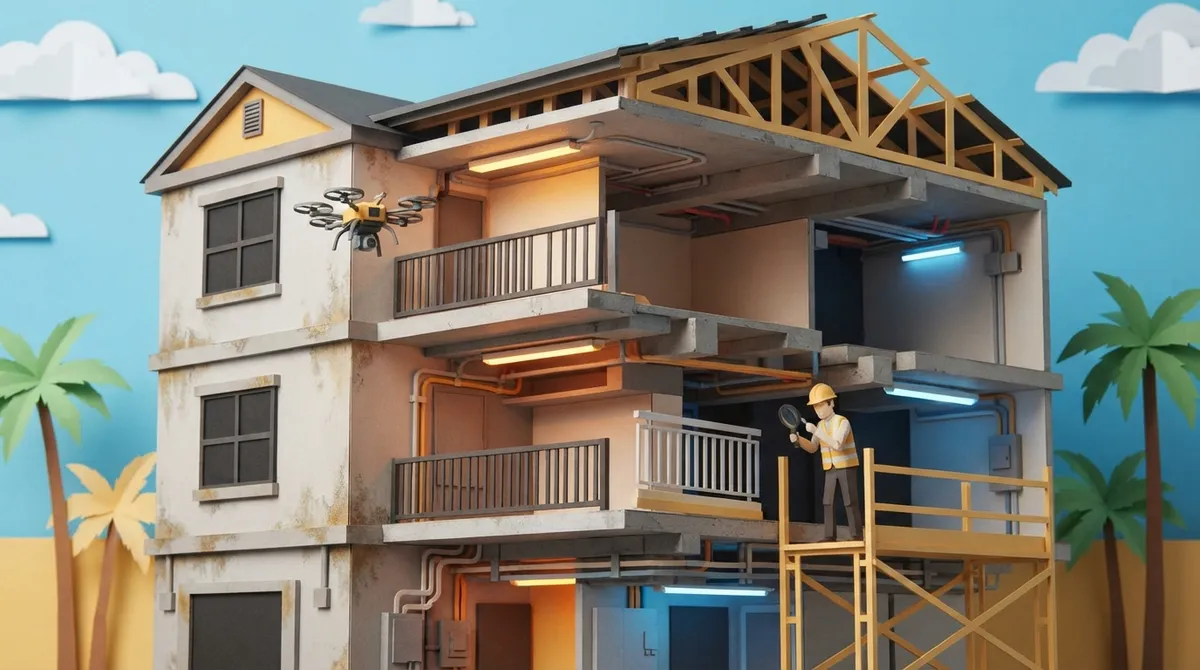
Think of it like a thorough health checkup for your building. Inspectors aren’t just glancing at things; they’re checking for hidden issues that could become expensive or dangerous later. Many inspection teams, including ours, use drones and 3D laser scanning to get a clearer, faster, and more accurate picture of hard-to-reach areas like rooftops and upper-level balconies. This technology helps catch problems early, often before they turn into costly repairs.
5. You Have 180 Days (Generally) to Submit Reports
Once you receive your official notice from the City of Pompano Beach, the clock starts ticking. Search results describing the Broward program indicate reports are generally due within 180 days of that notice. Repairs identified during the inspection may then have a separate completion timeline.
Here’s a simple breakdown of what typically happens after you get your notice:
| Step | What Happens | Who’s Involved |
|---|---|---|
| 1 | Receive official notice from the city | Building owner or association |
| 2 | Hire licensed structural and electrical professionals | Owner, board, or property manager |
| 3 | Arrange access to common and restricted areas | Property management, inspectors |
| 4 | Submit signed reports to the Building Official | Licensed professionals |
| 5 | Correct any identified deficiencies | Owner or association, with contractors |
The 180-day window can feel tight, especially if you’re also trying to coordinate resident access or board approvals. This is exactly why waiting for the notice before you start planning is risky. Our article on the building recertification process walks through each stage in more detail.
6. A Failed Inspection Doesn’t Mean Disaster
Let’s clear up a common fear: if your building doesn’t pass on the first try, it doesn’t automatically mean residents need to move out or the building gets shut down. In most cases, it simply means deficiencies need to be documented, addressed, and resubmitted for review.
Of course, if inspectors find something seriously hazardous, the city may require immediate safety measures or additional enforcement. But for the vast majority of buildings, a “failed” inspection just means there’s a repair list to work through. Taking it step by step, with guidance from experienced professionals, makes the whole thing far less overwhelming. Learn more about avoiding costly missteps in our piece on common building inspection mistakes to avoid.
7. Preparation Beats Panic Every Time
You don’t have to wait for a notice in your mailbox to start getting ready. In fact, the smartest property owners and association boards start prepping well in advance. Here’s a simple checklist to get you moving:
- Locate your certificate of occupancy and any prior recertification reports
- Note any known leaks, cracks, or concrete damage around the property
- Arrange access to roofs, balconies, garages, and electrical rooms ahead of time
- Budget for engineering fees, testing, permitting, and potential repairs
- Connect with a licensed, experienced inspection team before deadlines hit
If you’ve noticed hairline cracks or other concerning signs, our resource on understanding foundation and hairline cracks can help you figure out what’s normal wear and what needs professional attention.
Why Choose O’Reilly Consultants for Your Pompano Beach Milestone Inspection
This is where a little expert help goes a long way. O’Reilly Consultants has built a reputation across Broward and Miami-Dade Counties for handling building recertification with care, precision, and genuine warmth toward every client. Led by owner and qualifying architect Sherard O’Reilly, whose background includes deep experience with ASTM E2018 property condition assessments, the team also includes Construction Manager and Engineer Catalina Torres, who brings 27 years of civil engineering experience, and Project Engineer Rafael Ojeda, who has completed over 1,000 environmental site assessments across South Florida.
This isn’t a massive, impersonal firm. It’s a small, highly specialized team that genuinely cares about getting your building through the process smoothly, whether you’re managing a condo, an apartment complex, an office tower, or an HOA community. The team uses drones and 3D laser scanning to speed up assessments while keeping accuracy high, and they guide clients through every step, from the first notice to final sign-off.
Beyond milestone and recertification inspections, you can also tap into related services like electrical safety inspections, structural integrity reserve studies (SIRS), property condition assessments (PCA), and HOA reserve studies, all under one roof. That kind of one-stop support saves you time and reduces the stress of juggling multiple vendors.
Curious what past clients have experienced? You can visit us on Google — O’Reilly Consultants to read real feedback from property owners and association boards who’ve gone through this process with the team’s support.
How Pompano Beach Compares to Miami-Dade Requirements
If you own property in both Broward and Miami-Dade Counties, it helps to know the two systems aren’t identical. Miami-Dade’s recertification program has its own age thresholds and procedures, which you can review directly through Miami-Dade County’s recertification guidelines. Owners can also check specific building records using the county’s Miami-Dade building recertification case search tool.
Understanding these regional differences matters if you manage a portfolio spanning both counties. Our article on Miami-Dade building recertification requirements breaks down how that process compares to what Broward and Pompano Beach require.
Bringing It All Together
Navigating a Pompano Beach milestone inspection doesn’t need to feel overwhelming. Once you understand the timeline, the two required inspection components, and what the scope actually covers, the whole process becomes far more manageable. Remember, the City of Pompano Beach Building Department is your go-to authority for confirming applicability, deadlines, and accepted professional credentials. Reach out to them directly, or check their official building inspections page, before making any final decisions based on general information.
And if you’d rather have an experienced, friendly team handle the heavy lifting for you, that’s exactly what we’re here for. Whether you need help interpreting your city notice, scheduling structural and electrical inspections, or planning repairs on a realistic timeline, reaching out early makes everything smoother. Request a free quote today, or call us at (512) 567-1191 to talk through your building’s specific situation. You’ve got this, and we’re happy to help you get there.
FAQs
Q: What is a milestone inspection in Pompano Beach?
A: It’s a local safety review under Broward County’s Building Safety Inspection Program, checking the structural and electrical condition of qualifying older buildings. Think of it as a required health check for your building, administered by the City of Pompano Beach Building Department.
Q: Does my Pompano Beach building need a 25-year or 40-year recertification inspection?
A: Current Broward County program information generally points to an initial inspection around 25 years, with follow-ups every 10 years after that. Always confirm the exact age and deadline using your official city notice, since every building situation is a little different.
Q: What types of buildings are covered by Broward County’s Building Safety Inspection Program?
A: The program generally applies to qualifying buildings based on age, size, and use, including many condos, apartments, and commercial properties. Your official notice from the city will confirm whether your specific building falls under these requirements.
Q: Who is qualified to perform a structural or electrical recertification inspection in Pompano Beach?
A: Structural inspections must be done by a Florida-licensed professional engineer or architect, while electrical inspections need a properly licensed electrical professional. Working with experienced, qualified inspectors helps you avoid delays or rejected reports.
Q: What happens if a Pompano Beach building fails its milestone or recertification inspection?
A: In most cases, it simply means deficiencies get documented and repaired, then resubmitted for city review, not an immediate building shutdown. Serious hazards may trigger extra safety measures, but most issues are manageable with a clear repair plan and good professional support.