

Key Takeaways
-
PCAs follow the ASTM E2018-24 standard and evaluate all major building systems including structure, roofing, mechanical, electrical, plumbing, and life-safety features to estimate replacement costs and remaining useful life for capital planning.
-
In Broward County, PCAs support mandatory recertification by identifying deficiencies before county inspections, allowing owners to address issues proactively rather than within 90-day correction deadlines.
-
PCAs differ fundamentally from standard inspections by providing long-term cost projections, replacement reserve schedules, and detailed capital planning timelines rather than just pass/fail compliance checklists.
-
Update PCAs every 3-5 years for active properties, or 12-18 months before mandatory recertification deadlines to ensure sufficient time for repairs and compliance documentation.
-
Licensed professional engineers, registered architects, or equivalently qualified professionals with South Florida experience should perform PCAs to ensure reports meet local and national standards.
-
PCA reports provide essential documentation for lenders, insurers, and county officials during refinancing, sales, or recertification processes, demonstrating due diligence and professional property management.
If you own or manage a building in Plantation, Florida, you’ve probably heard the term “Property Condition Assessment” floating around. But what exactly does a Plantation Property Condition Assessment (PCA) cover, and why does it matter for your building’s future? Whether you’re a condo board member, a commercial property owner, or a real estate investor, understanding PCAs can save you time, money, and a lot of headaches down the road.
A PCA is not just another inspection checkbox. It’s a thorough evaluation of your building’s physical condition, designed to uncover issues before they become expensive emergencies. In South Florida’s demanding climate, buildings age faster than you might expect. A well-executed PCA gives you a clear picture of where your property stands today — and what it will need tomorrow.
Let’s walk through everything you need to know about Plantation Property Condition Assessments (PCA), from what’s included to how they connect to building recertification requirements.

What Is a Property Condition Assessment?
A Property Condition Assessment is a formal evaluation of a building’s physical condition. It looks at major systems, structural components, and site features to identify deficiencies and estimate future repair or replacement costs. PCAs are most commonly performed on commercial, multifamily, and institutional properties.
The industry standard for PCAs is ASTM E2018-24, which defines the baseline approach assessors must follow. This standard ensures consistency, thoroughness, and reliability across all assessments. In Florida, PCAs are frequently used to support recertification, capital planning, lender requirements, and real estate due diligence.
Think of a PCA as a detailed health report for your building. Just like a medical checkup, it tells you what’s working well, what needs attention soon, and what may require major treatment down the line. For Plantation buildings facing county inspection mandates, this report becomes an essential planning tool. You can also learn more about what a commercial building inspection covers to understand how PCAs and inspections work together.
What Does a Plantation PCA Actually Cover?
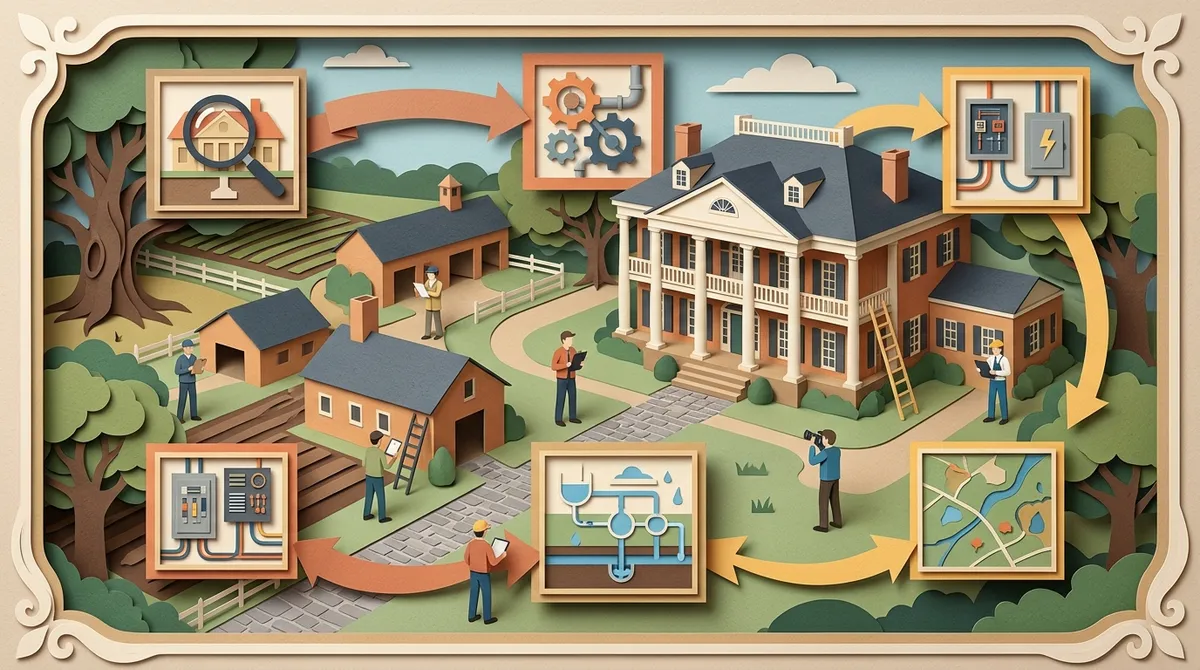
A comprehensive Plantation Property Condition Assessment (PCA) typically evaluates the following major systems and components:
- Structural systems — foundations, columns, beams, load-bearing walls, and slabs
- Roofing — membrane condition, drainage, flashing, and estimated remaining useful life
- Exterior walls and facades — cladding, stucco, windows, sealants, and waterproofing
- Mechanical systems — HVAC equipment, ductwork, and ventilation
- Electrical systems — panels, wiring, service capacity, and life-safety compliance
- Plumbing — supply lines, drain systems, fixtures, and water heaters
- Site improvements — parking lots, landscaping, drainage, and exterior lighting
- Life-safety features — fire suppression systems, alarms, exit signage, and emergency lighting
- Accessibility and code compliance — ADA considerations and known code deficiencies
Each of these areas is evaluated during a hands-on site visit by a qualified professional — typically a licensed engineer or registered architect. After the visit, a detailed report is produced that identifies deficiencies, estimates remaining useful life for key systems, and projects future capital expenditures. For a deeper look at structural concerns, check out this resource on foundation cracks and hairline cracks in commercial buildings.
How a PCA Differs from a Standard Building Inspection
Many people confuse a PCA with a standard building inspection, but they serve different purposes. Here’s a simple comparison to clarify the difference:
| Feature | Property Condition Assessment (PCA) | Standard Building Inspection |
|---|---|---|
| Primary Purpose | Capital planning, due diligence, recertification support | Code compliance, safety at time of sale |
| Property Types | Commercial, multifamily, institutional | Primarily residential |
| Output | Detailed report with cost estimates and reserve table | Pass/fail checklist with deficiency notes |
| Standard Followed | ASTM E2018-24 | Varies by jurisdiction |
| Future Cost Projections | Yes — replacement reserve schedule included | Typically not included |
As you can see, a PCA goes much deeper than a typical inspection. It’s built for property owners and investors who need a long-term view of their building’s financial health. To learn more about the differences in inspection types, visit our guide on certified vs. general inspectors for building recertification.
The Three Phases of a Property Condition Assessment
A proper PCA is not a one-step process. It’s organized into three clear phases, each building on the previous one. Here’s how it works:
- Preliminary Due Diligence: The assessor gathers existing documents about the property — original construction records, previous inspection reports, maintenance logs, permits, and any known deficiency notices. This phase sets the foundation for the site visit.
- Site Visit: A licensed engineer or qualified assessor performs a thorough walkthrough of the property. They visually inspect all accessible areas, photograph deficiencies, test observable systems, and take measurements. Advanced tools like drones and 3D laser scanning can be used for hard-to-reach areas.
- PCA Report: The assessor compiles all findings into a comprehensive written report. This includes identified deficiencies, cost opinions for repairs, a replacement reserve table, and recommendations for immediate versus long-term action items.
This three-phase structure aligns with Fannie Mae’s multifamily PCA form process, which organizes assessments into the same phases for lender-required evaluations. Following this framework ensures your report meets both local and national standards.
Why Plantation Buildings Need PCAs for Recertification
Plantation is located in Broward County, where buildings face strict recertification mandates. Florida’s building safety laws require older structures to undergo milestone inspections, and many buildings also face 40-year recertification requirements. A Plantation Property Condition Assessment (PCA) is a valuable tool that supports these mandatory reviews in several important ways.
First, a PCA identifies structural and electrical deficiencies before they are flagged during a county-mandated inspection. This gives building owners time to address issues proactively rather than scrambling to meet a 90-day correction deadline. For more on what these deadlines involve, see our guide on the 8 key steps in the building recertification process.
Second, a PCA provides documentation that lenders, insurers, and county officials may require when evaluating a property’s condition. If you’re refinancing, selling, or seeking coverage for an aging Plantation building, having a current PCA report on file demonstrates due diligence and professionalism. You can also explore the importance of 40-year building recertification for property longevity for additional context.
For those navigating Miami-Dade and Broward requirements, the Miami-Dade County Recertification program outlines specific timelines and documentation standards that PCAs can help you meet.
How Often Should You Update a Plantation PCA?
The recommended update frequency for a PCA depends on the type and use of your property. Here are common guidelines used in the industry:
- Active commercial or multifamily properties: Every 3 to 5 years, or after any major renovation, storm damage, or change in use
- Long-term investment properties: Every 5 to 7 years for stable, well-maintained buildings
- Properties approaching recertification deadlines: Before the mandatory inspection window opens — ideally 12 to 18 months in advance
- Properties being bought or sold: At the time of transaction to support due diligence
- Properties with known issues: As soon as deficiencies are suspected or identified
Staying current with your PCA means you’re never caught off guard by a county notice or an unexpected repair bill. It’s proactive property management at its best. If your building is located in Plantation and you’re curious about related electrical inspection requirements, take a look at our post on 7 mistakes to avoid with Plantation electrical safety inspections.
Who Can Perform a PCA in Florida?
In Florida, Property Condition Assessments must be performed by qualified professionals. Typically, that means:
- Licensed Professional Engineers (PE): Engineers with expertise in structural, mechanical, or electrical systems are the most common choice for commercial PCAs.
- Registered Architects: Architects with building evaluation experience are also qualified to lead PCA work.
- Professionals with equivalent competence: Under ASTM E2018, assessors must demonstrate the knowledge and experience needed to evaluate all major building systems — formal licensure alone is not the only measure.
The key is choosing a team that truly knows South Florida buildings — the local climate, construction practices, and county-specific requirements. That’s where a firm like O’Reilly Consultants brings real value. Led by qualifying architect Sherard O’Reilly, with deep experience in ASTM E2018 property condition assessments, the team combines architectural expertise with engineering rigor to deliver assessments that go well beyond the minimum standard.
PCA and Capital Planning: A Powerful Partnership
One of the most practical benefits of a Plantation Property Condition Assessment (PCA) is its role in capital planning. The replacement reserve table included in a PCA report gives property managers and condo boards a roadmap for future spending.
Here’s what that table typically projects:
- Which building systems are nearing the end of their useful life
- Estimated replacement or repair costs for each system
- Suggested timelines for addressing deferred maintenance
- Priority rankings based on safety, code compliance, and financial impact
This information is incredibly useful for HOA boards, condo associations, and property managers who need to plan annual budgets and reserve fund contributions. It also connects directly to Florida’s Structural Integrity Reserve Study (SIRS) requirements. For Plantation condo boards specifically, our article on 3 things Plantation condo boards must know about SIRS is a great companion read.
If you want to verify a building’s recertification status in your area, you can also search Miami-Dade building recertification cases through the county’s online portal.
Getting Started with a Plantation Property Condition Assessment
Ready to move forward? Here’s a simple step-by-step guide to getting your Plantation PCA underway:
- Gather your building documents: Pull together construction records, previous inspection reports, maintenance logs, and any county notices you’ve received.
- Choose a qualified assessor: Look for a licensed engineer or architect with experience in South Florida commercial and multifamily buildings and familiarity with ASTM E2018.
- Schedule the site visit: Coordinate access to all areas of the building, including rooftops, mechanical rooms, and parking structures.
- Review the report carefully: When the PCA report arrives, go through it with your assessor to understand priorities, timelines, and cost estimates.
- Build your action plan: Use the report findings to create a maintenance and capital improvement schedule aligned with your recertification deadlines.
For buildings in Broward County, connecting your PCA findings to your broader recertification plan is essential. Our guide to building inspection services and recertification walks you through how these pieces fit together.
You can also read reviews from other property owners in South Florida by visiting O’Reilly Consultants on Google to see firsthand what a thorough, professional PCA experience looks like.
Conclusion: Don’t Wait for a Problem to Get a PCA
A Plantation Property Condition Assessment (PCA) is one of the smartest investments you can make as a building owner or manager. It protects your residents, satisfies lender and county requirements, informs your capital budget, and gives you peace of mind that your building is in good hands.
South Florida’s climate is tough on buildings. The sooner you understand your building’s true condition, the sooner you can make smart, proactive decisions. Don’t wait for a county notice or a surprise repair bill to take action.
The team at O’Reilly Consultants is ready to help you navigate the entire process — from your first PCA to full recertification compliance. Request your free consultation today and take the first step toward a safer, better-documented, and fully compliant building.
FAQs
Q: What is included in a Plantation Property Condition Assessment?
A: A Plantation PCA covers all major building systems, including structure, roofing, exterior walls, mechanical, electrical, plumbing, site improvements, life-safety features, and accessibility. The report also includes cost estimates, remaining useful life projections, and a replacement reserve schedule to guide future capital planning.
Q: How is a PCA different from a standard building inspection?
A: A PCA is much more detailed than a standard inspection! While a typical inspection checks for immediate code compliance, a PCA evaluates long-term capital needs, estimates future repair costs, and follows the ASTM E2018-24 standard. It’s designed for commercial and multifamily properties, not single-family homes.
Q: Who can perform a Property Condition Assessment in Florida?
A: In Florida, PCAs should be performed by licensed professional engineers, registered architects, or professionals with equivalent competence in evaluating building systems under ASTM E2018. It’s important to choose someone with hands-on experience in South Florida’s building types and county-specific recertification requirements.
Q: How does a PCA support building recertification in Broward County?
A: A PCA identifies structural and electrical issues before mandatory recertification inspections, giving owners time to address problems proactively. It also provides documentation that county officials, lenders, and insurers may request during the recertification process, making your overall compliance journey much smoother.
Q: How often should a Plantation property owner update their PCA?
A: For most active commercial or multifamily properties, updating a PCA every 3 to 5 years is a solid approach. Buildings approaching recertification deadlines should ideally commission a new PCA 12 to 18 months in advance to allow enough time for any needed repairs before the inspection window opens.