Key Takeaways
-
A 40 year recertification is a local requirement, not a nationwide rule, so the covered buildings, deadlines, and forms depend on your county, such as Miami-Dade or Broward.
-
Recertification covers both structural condition and electrical systems, which is broader than Florida's state milestone inspection that focuses mainly on structure.
-
Miami-Dade may require a first inspection at 25 years for certain coastal condo or co-op buildings three or more stories tall, then repeat every 10 years.
-
A licensed Florida engineer or architect must prepare the signed and sealed report, so choose an inspector with real recertification experience early.
-
Many owners work within a roughly 90-day window after receiving the county notice, so confirm your building's age and deadline with the building department right away.
-
A failed inspection is not the end; you receive a list of required repairs, fix them within the county's timeline, and submit the updated report to avoid fines.
Getting a notice from the county about your building’s age can feel like a punch in the gut. One day you’re managing a building, and the next you’re staring at a letter about a 40 year recertification. Take a deep breath. You’re not alone, and this process is far more manageable than it first looks.
A 40 year recertification is a local safety program that asks owners of older buildings to prove their property is structurally and electrically safe. Miami-Dade County is the best-known example, and Broward County runs a similar program. If you own, manage, or sit on the board of an aging building in South Florida, this guide is for you.
We’ll walk through what the program is, which buildings it covers, what inspectors look at, and how to avoid costly delays. We’ll also clear up how it differs from Florida’s newer milestone inspection law. Think of this as a chat with a friendly neighbor who has been through it before.

What Is a 40 Year Recertification?
A 40 year recertification is a periodic building safety inspection required by local governments. It is not a single nationwide rule. Each local building authority decides which buildings are covered, what deadlines apply, and which forms to use.
Under Miami-Dade County Code Section 8-11(f), owners of buildings that have existed for 40 years or longer must arrange an inspection of the building’s general structural condition and electrical systems. They must then submit a written report to the Building Official. You can read the program basics on the Miami-Dade County Recertification page.
In plain terms, the county wants proof that your building is safe for people to keep using. If you want a deeper background read, our guide on what building recertification is and why it matters covers the basics.

Which Buildings Need 40 Year Recertification?
In Miami-Dade, buildings that are 40 years old or older fall under the program. The county usually calculates age from the certificate of occupancy date or other local records. Your building department can confirm the exact date they are using.
Here are the types of properties that commonly need to comply:
- Condominium and cooperative buildings
- Multi-family apartment buildings
- Office buildings and commercial plazas
- Hotels and industrial buildings
- Mixed-use properties
Some rules kick in earlier. For example, Miami-Dade guidance identifies a 25-year trigger for certain condominium or cooperative buildings that are at least three stories tall and within three miles of the coastline. After that first inspection, they repeat every 10 years.
Not sure where your building stands? Our post on Miami-Dade building recertification can help you sort it out, and our Broward 40 year recertification guide covers the neighboring county.
40 Year Recertification vs. Florida Milestone Inspections
This is where many owners get tangled up, so let’s untangle it. The 40 year recertification is a local program. Florida’s milestone inspection is a separate state requirement under Florida Statute 553.899.
| Feature | 40 Year Recertification | Florida Milestone Inspection |
|---|---|---|
| Source of rule | Local county or city code | State law (F.S. 553.899) |
| Typical first trigger | 40 years (25 years for some coastal buildings) | 30 years (25 years if set locally) |
| Covered buildings | Varies by local rules | Condo and co-op buildings, three or more habitable stories |
| Focus | Structural and electrical safety | Structural safety |
| Repeat cycle | Every 10 years | Every 10 years |
The state milestone inspection has two phases. Phase 1 is a visual review by a licensed architect or engineer. Phase 2 happens only if substantial structural deterioration is found. Because the state program focuses on structure, you should not assume it replaces a local recertification that also checks electrical systems.
Curious about how these rules play out city by city? Our article on SIRS vs. milestone inspections is a handy next read.
What Does the Inspection Include?
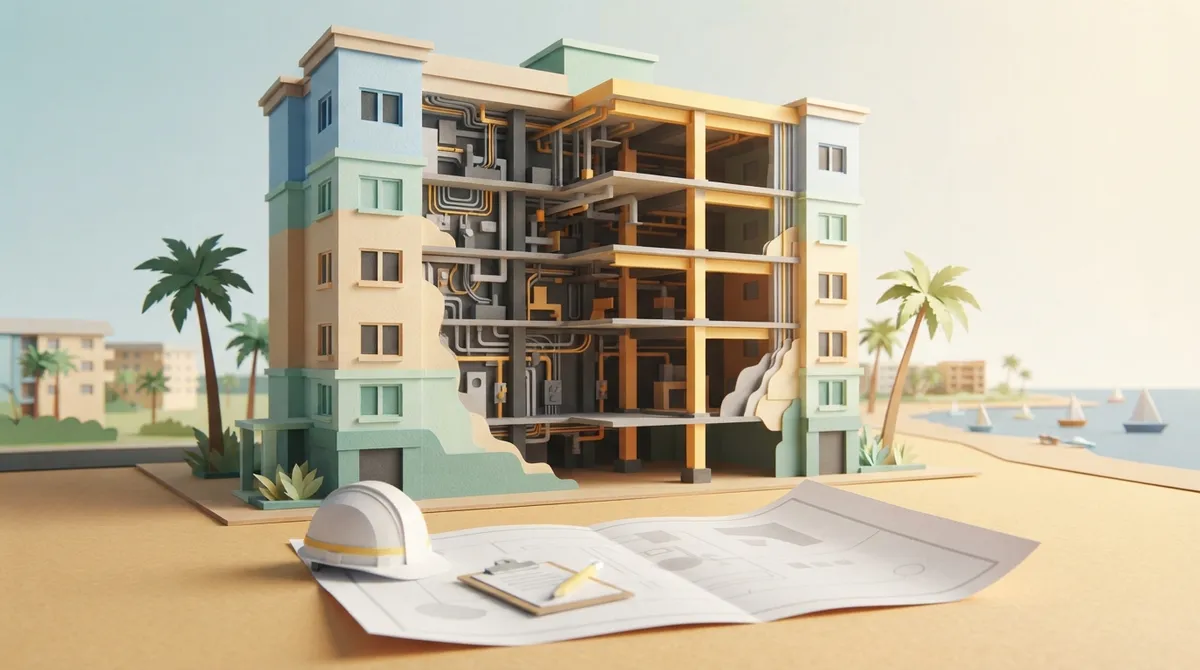
Many owners picture a quick walk around the lobby. The real inspection goes much deeper. Miami-Dade guidance describes a review of structural and electrical conditions, including items like structural components, lighting, and electrical panels.
Structural Review
The inspector looks at the bones of your building. This often includes:
- Foundations and load-bearing walls
- Roof framing and decking
- Balconies, walkways, and stairs
- Concrete cracking, spalling, and corrosion
- Signs of water intrusion or movement
Small cracks can point to bigger issues. If you’re curious, read about foundation cracks and hairline cracks in commercial buildings to see what inspectors watch for.
Electrical Review
The electrical side covers the systems that keep your residents and tenants safe. The professional checks service equipment, panels, wiring, grounding, emergency lighting, and exit lighting. Exact scope should always be confirmed with the local authority and your licensed professional.
If you want to dig in, see how to navigate electrical inspections for building recertification.
Who Can Perform the Inspection?
The report must be prepared by a Florida-registered professional engineer or architect. They certify whether the building is structurally and electrically safe for its specified use and continued occupancy. Local forms and procedures apply, so your inspector should know them well.
Choosing the right professional matters. Not every inspector has recertification experience. Our guides on choosing licensed building inspectors and certified vs. general inspectors walk you through what to look for.
This is where O’Reilly Consultants shines. We are a small, highly specialized engineering team that focuses on building recertification across Broward and Miami-Dade Counties. Our team is led by owner and qualifying architect Sherard O’Reilly, with Construction Manager and Engineer Catalina Torres bringing 27 years of civil engineering and construction experience. We also use drones and 3D laser scanning, which means faster, more accurate evaluations and clear reports you can actually use. You can learn more about O’Reilly Consultants on our site.
The Step-by-Step Process
Here’s the basic path most owners follow, from notice to final report:
- Receive the notice. The county sends a written notice that your building is due for recertification.
- Confirm your requirements. Check your building’s age, deadline, and any local rules with the building department.
- Hire a licensed engineer or architect. Pick a professional who knows local recertification forms and procedures.
- Schedule the inspection. Your inspector reviews structural and electrical conditions on site.
- Review the findings. You receive a report that lists any deficiencies and recommended repairs.
- Complete needed repairs. Fix issues within the timelines set by the county.
- Submit the final report. File the signed and sealed recertification with the Building Official.
Timelines can feel tight. Many owners work within a roughly 90-day window after the notice, so starting early is a smart move. Our 8 key steps in the building recertification process goes even deeper into each stage.
What Happens If a Building Fails?
A “fail” is not the end of the world. It usually means the inspector found items that need repair before the building can be certified as safe. You then fix those items and submit the updated report.
With Florida milestone inspections, the rules are specific. Phase 1 must be completed within 180 days after you receive the local agency’s written notice. If Phase 2 is needed, the inspector must submit a progress report and timeline within 180 days after the Phase 1 report. Repairs for substantial structural deterioration must begin within 365 days after the report is received.
Missing deadlines can lead to fines and other enforcement actions. The simple fix is to act early. You can also search the Miami-Dade building recertification cases database to check the status of a property.
Why It Matters for Different Owners
Every owner has a slightly different worry. Here’s how recertification touches each group:
- Condo boards: You protect residents and avoid fines, while keeping assessments predictable.
- Commercial owners: You show tenants and lenders that your building is safe and well maintained.
- HOA managers: You meet tight deadlines and keep homeowners informed.
- Apartment owners: You verify structure and electrical safety, which lowers legal and insurance risk.
- Investment firms: You keep property value strong and avoid delays during sales or refinancing.
For a closer look at why this matters long term, read the importance of 40 year building recertification for property longevity.
Tips to Make Recertification Smoother
A little prep goes a long way. Try these friendly tips:
- Gather old plans, permits, and past inspection reports early.
- Confirm your building’s official age with the building department.
- Book your inspector as soon as the notice arrives.
- Budget for repairs, since small fixes can add up.
- Keep residents informed so access to units and rooms is easy.
You can also avoid common pitfalls by reading about professional building inspection mistakes to avoid.
Why Choose O’Reilly Consultants
Recertification should feel supported, not stressful. O’Reilly Consultants guides you from the moment the county’s notice lands in your mailbox through final submission. We handle 10-, 25-, and 40-year recertification inspections for high-rise and multi-family apartments, offices, industrial buildings, and condos.
Our drone and 3D imaging tools help us evaluate your building thoroughly and quickly. You get detailed reports with clear, actionable recommendations, plus related services like electrical and illumination safety inspections, SIRS, PCA, and HOA reserve studies. Want to see how we treat our clients? Visit us on Google — O’Reilly Consultants and read what South Florida owners say about working with us.
For more on our approach, explore our 40 year recertification service page or our overview of building inspection services and recertification.
Final Thoughts
A 40 year recertification doesn’t have to be a headache. When you understand the rules, start early, and work with the right licensed professional, the process becomes a clear checklist rather than a mystery. You protect people, protect your investment, and keep the county happy at the same time.
Ready to get started on the right foot? Request a free quote today, or call us at (512) 567-1191 to talk through your building’s deadline. We’re happy to help, and we promise to keep it friendly.
FAQs
Q: What is a 40 year building recertification?
A: It’s a local safety program that requires owners of buildings 40 years or older to prove their property is structurally and electrically safe. In Miami-Dade, a Florida-registered engineer or architect inspects the building and submits a written report to the Building Official.
Q: How often must a building be recertified after the first inspection?
A: After the first recertification, buildings are generally inspected again every 10 years under Miami-Dade’s program. Some coastal condo and co-op buildings may need their first inspection earlier, at 25 years.
Q: Is Florida’s 30-year milestone inspection the same as 40 year recertification?
A: No, they’re two different programs. The milestone inspection is a state requirement focused on structural safety for certain condo and co-op buildings, while the 40 year recertification is a local rule that also examines electrical systems.
Q: Who is qualified to perform a recertification inspection in Florida?
A: A Florida-registered professional engineer or architect must prepare the report. It’s smart to choose a team with real recertification experience, like O’Reilly Consultants, so the process stays smooth and on schedule.
Q: What happens if my building fails its recertification inspection?
A: You’ll receive a list of needed repairs and a timeline to complete them. Once the work is done, your professional updates the report and you submit it to the Building Official, so acting early helps you avoid fines.